
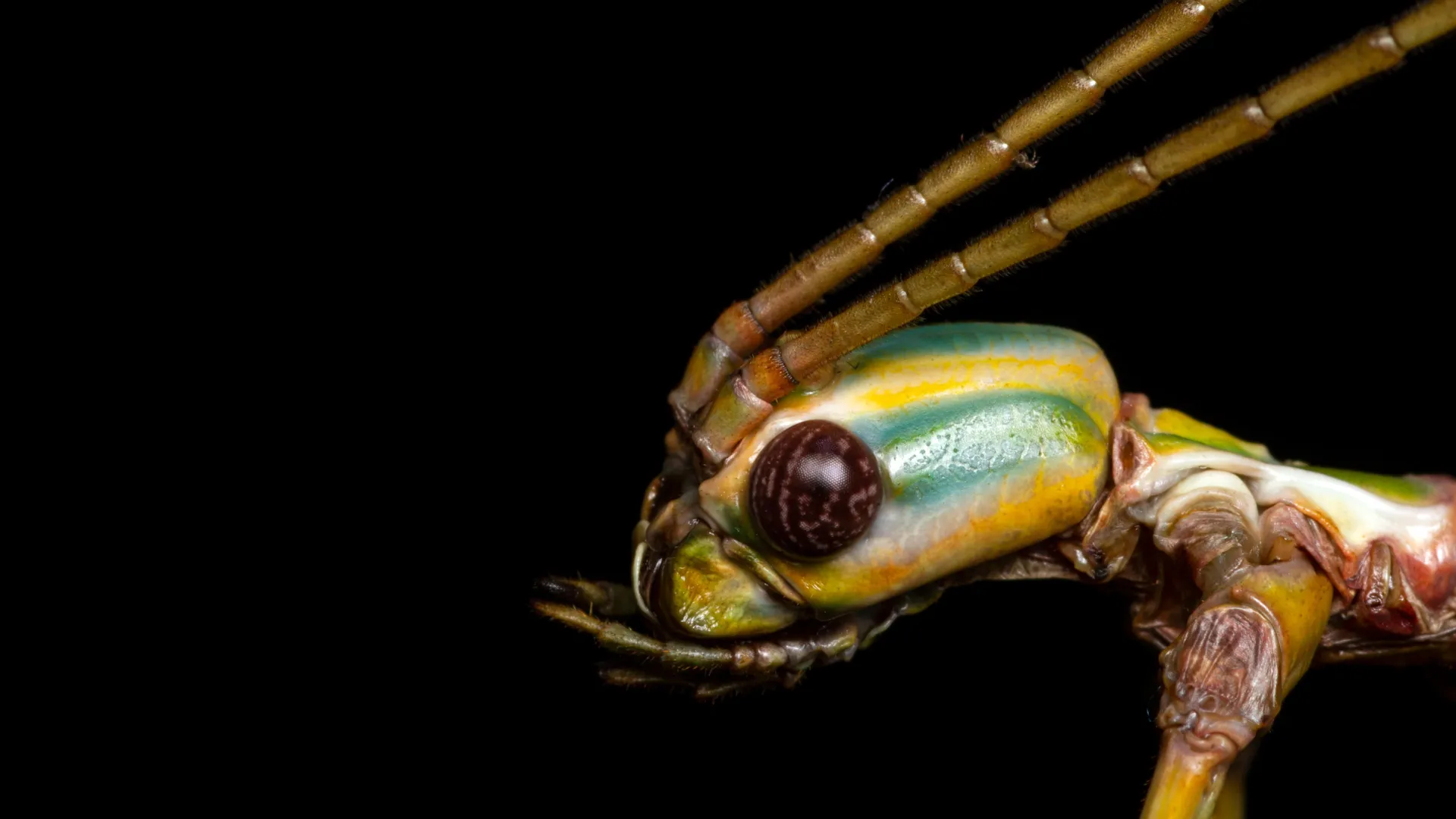
In a compelling reminder of the vast, undocumented frontiers that persist within some of the world’s most thoroughly studied ecosystems, a team of researchers at the University of Sydney has identified two previously unrecognized species of large stick insects in Australia. The discovery, which reshapes our understanding of the genus Anchiale, demonstrates that even conspicuous, heavily photographed, and frequently encountered insects can harbor deeply hidden taxonomic secrets.
The research team, operating out of the institution’s Aola Richards Sydney Insect Hub and the Molecular Ecology, Evolution and Phylogenomics Laboratory, published their findings in the peer-reviewed journal Austral Entomology. By blending traditional morphological examination with cutting-edge genetic analysis, the scientists successfully untangled a complex web of misidentifications that had persisted among Australian phasmatods for decades. What was once broadly categorized as merely two distinct species within the genus has now been rigorously expanded to five, changing the biological landscape of coastal and northern Australia.
Main Facts of the Taxonomic Revision
The comprehensive study centers on the revision of the Australian members of the stick insect genus Anchiale. These sizable insects are among the most visually striking invertebrates on the continent, known for their twig-like camouflage and substantial dimensions. Prior to this research, the group was officially recognized as comprising just two distinct species. However, through an exhaustive integrative taxonomic approach, the University of Sydney team revealed that these insects actually represent five separate, valid species distributed across a wide geographic range stretching from northern New South Wales through coastal Queensland and deep into the tropical realms of northern Australia.
Among the key breakthroughs of the study is the formal scientific description of Anchiale mabiensis, a brand-new species discovered within the shrinking confines of Queensland’s critically endangered Mabi rainforest on the Atherton Tablelands. Alongside its distinct genetic and physical characteristics, A. mabiensis produces remarkably unique eggs featuring an unusual structural lid-like mechanism—a morphological trait never before documented in any known stick insect or its closest phylogenetic relatives.
In addition to describing this new forest dweller, the researchers resurrected a third species that had languished in taxonomic obscurity for decades. Through careful detective work involving historical museum archives, field collections, and DNA extraction, the team established that a large stick insect long familiar to both professional entomologists and amateur naturalists had been systematically misidentified. This widespread insect is now formally recognized as a separate and distinct species, Anchiale robusta. Furthermore, the investigation has hinted at a potential sixth lineage—a suspected undescribed species hailing from the remote landscapes of Cape York—though researchers emphasize that additional specimens and genetic samples will be required before a formal description can be validated.
Chronology and Research Methodology
The journey toward this taxonomic revision spanned several years and relied heavily on a multidisciplinary framework that combined modern molecular tools with historical research methods. The chronology of the project underscores the slow, meticulous nature of modern taxonomy, where digital-age citizen science intersects with traditional laboratory curation.
Initial suspicions regarding the true diversity of the genus Anchiale arose as researchers began cataloging and sequencing specimens from various corners of Australia’s eastern seaboard. For decades, field guides and scientific databases operated under the assumption that the phenotypic variations observed in these large stick insects were merely natural polymorphisms within two broadly distributed species. However, inconsistencies in egg morphology, localized behavioral traits, and geographical distributions prompted a deeper inquiry.
To resolve these ambiguities, the research team initiated a multi-pronged methodological strategy. First, they harvested DNA from historical museum specimens housed across major Australian institutions to obtain genetic baselines of type specimens. This molecular data was then juxtaposed with fresh samples gathered during targeted field surveys conducted along the eastern coast of Australia.
Crucially, the scientists bridged the gap between professional research and public observation by integrating data from more than 1,000 citizen science submissions sourced through digital platforms such as iNaturalist and the Atlas of Living Australia. These crowdsourced photographs and location logs provided invaluable temporal and spatial data, highlighting population densities and distribution boundaries that might otherwise have been missed during brief expeditionary windows. Finally, the researchers studied live specimens raised in controlled captivity, observing life-cycle traits, feeding behaviors, and—most importantly—the ultrastructure of the eggs deposited by females. This convergence of lines of evidence provided the empirical weight necessary to formally split the genus into five distinct species.
Supporting Data and Biodiversity Context
The scale of the discovery is particularly striking when measured against the sheer volume of prior observation. Australia’s stick insects are hardly reclusive; their impressive size and dramatic camouflage make them frequent subjects for nature photographers, bushwalkers, and backyard naturalists. More than a thousand individual observations had been logged on public biodiversity portals prior to the publication of this study, reflecting a high degree of human interaction with these insects.
Despite this heavy public exposure, the underlying genetics and morphological subtleties remained obscured. The genus Anchiale belongs to the order Phasmatodea, an ancient lineage of herbivorous insects renowned for their exceptional camouflage. Australia boasts a rich diversity of phasmatods, yet many genera remain poorly revised due to challenges associated with collecting cryptic species, high rates of geographic variation, and the degradation of DNA in older museum collections.
The financial and institutional backing for this endeavor reflects a broader national recognition of the importance of foundational taxonomy. Funding for the research was provided by the Australian Biological Resources Study through the National Taxonomy Research Grant initiative administered by the Commonwealth Department of Climate Change, Energy, the Environment and Water. Additional support was delivered via a CSIRO postgraduate scholarship, highlighting the strategic investment being made in training the next generation of Australian biosystematists.
Official Responses and Perspectives from the Research Team
Leading the investigation was Dr. Braxton Jones, a Postdoctoral Research Associate in the Molecular Ecology, Evolution and Phylogenomics Laboratory and lead author of the study based at the Aola Richards Sydney Insect Hub. Dr. Jones has frequently emphasized the detective-like nature of modern taxonomic research, noting that the discovery of hidden species in well-traveled regions challenges assumptions about how much of Australia’s biodiversity has truly been cataloged.
"Taxonomy is often a bit like detective work," Dr. Jones explained following the publication of the findings. "Even among some of Australia’s most photographed and frequently reported insects, we’re still finding species that have escaped scientific recognition."
Dr. Jones also placed the discovery within the broader context of the global biodiversity crisis, pointing out that unlocking the true diversity of local insect populations is an urgent prerequisite for conservation planning. "These findings demonstrate the importance of protecting threatened ecosystems and documenting Australia’s extraordinary biodiversity before we lose species without us having even discovered them," he stated. While no official statements have yet been released by agricultural ministries regarding the immediate reclassification, academic entomologists and environmental managers have widely praised the study for providing the taxonomic clarity required for future ecological oversight.
Broader Impact, Practical Implications, and Ecological Significance
Beyond advancing our theoretical understanding of phylogenetics and speciation, the revision of the genus Anchiale carries tangible practical applications for Australian forestry, agriculture, and environmental management.
Among the stick insects previously lumped under broad classifications are populations known to occasionally experience explosive population growths. Under certain environmental conditions, these phytophagous insects can reach plague-like densities, stripping eucalyptus and other native or commercial trees of their foliage. Such defoliation events can exert significant stress on forestry assets and agricultural windbreaks. By unmasking the reality that these pest-associated outbreaks actually involve multiple distinct species rather than a single homogeneous entity, researchers and land managers are now better equipped to trace the specific ecological triggers, life cycles, and natural predators associated with each individual species.
Furthermore, the discovery of Anchiale mabiensis within the Mabi rainforest of the Atherton Tablelands highlights the acute vulnerability of localized insect endemics. The Mabi rainforest represents a critically endangered ecological community, having been reduced to a fraction of its pre-settlement footprint due to historical land clearing for agriculture. Species like A. mabiensis, which may rely on highly specific microhabitats and host plants within these shrinking forest fragments, face heightened risks of extinction.
As climate change and habitat fragmentation continue to exert pressure on Australian ecosystems, precise taxonomic frameworks serve as the bedrock for effective conservation legislation. Without accurate species identification, conservation planners cannot properly assess extinction risks, allocate funding, or establish protected zones tailored to the survival of micro-endemic invertebrates. The University of Sydney study thus serves as both a scientific triumph and an urgent cautionary tale: beneath the familiar canopy of Australia’s forests, countless biological stories remain unwritten, waiting for researchers to look closer before they disappear forever.
