
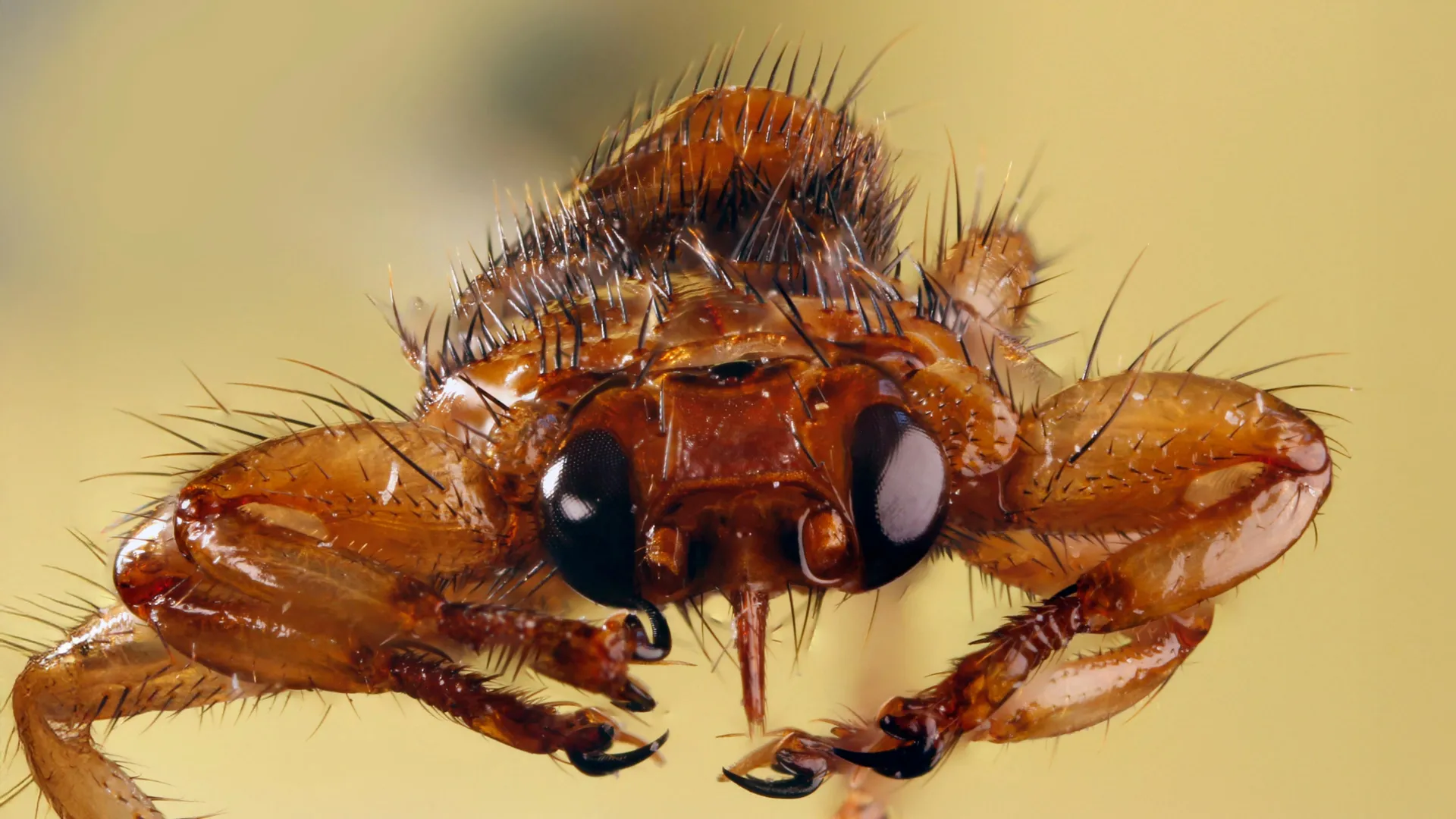
In the vast and complex theater of evolutionary biology, few transitions are as radical as the one experienced by the deer ked. A recent collaborative study conducted by researchers at Aberystwyth University in the United Kingdom and the University of Florence in Italy has shed new light on the physiological adaptations of this peculiar, blood-feeding insect. According to the findings, the deer ked—a biting fly found across Europe, Asia, Africa, and parts of the Americas—actively reduces its visual sensitivity once it has successfully located a host and abandoned flight for good. This biological downsizing highlights how metabolic efficiency dictates the survival strategies of parasites, offering a compelling glimpse into the energetic trade-offs that govern the natural world.
The research, published in the esteemed Journal of Experimental Biology, meticulously maps out how the deer ked transforms from an active, winged hunter into an obligate, wingless ectoparasite. By examining the genetic activity of these insects at distinct phases of their life cycle, scientists have uncovered a fascinating metabolic pivot: once the fly settles into the dense fur of a deer or, on rarer occasions, a human or other mammal, it drastically dials down the biological machinery responsible for sight. This discovery not only deepens our understanding of sensory evolution in parasites but also opens new avenues for exploring how biting insects manage energy constraints in dynamic environments.
The Dual Existence of the Deer Ked
To understand the magnitude of the deer ked’s biological transformation, one must first examine its unique life history. As immature pupae develop in the soil or forest litter, they eventually emerge as fully winged adults. In this initial phase of adulthood, the deer ked operates as an active, aerial predator. Relying on a combination of sharp vision and physical flight, the insect actively patrols forest edges and underbrush, scanning the horizon for the silhouette of a passing host. While deer represent their primary ecological targets, deer keds are opportunistic and have been documented biting humans, horses, and various other large mammals, much to the dismay of hikers and forest workers.
However, the moment a deer ked makes contact with a suitable host, its entire mode of existence is upended. Unlike many other flying insects that land, feed, and take off again, the deer ked commits to its host entirely. Upon settling into the animal’s coat, the fly engages in a drastic self-mutilation process: it permanently snaps off its own wings, rendering itself flightless for the remainder of its days. From that point onward, the insect navigates a dark, labyrinthine forest of hairs, spending its entire adult life feeding exclusively on the host’s blood and moving very little from its initial landing site.
This behavioral dichotomy—shifting from an energy-intensive, flying hunter to a sedentary, permanent parasite—has long fascinated entomologists. Until recently, however, the internal physiological and sensory adjustments that accompany this physical transformation remained largely unexplored.
Investigating the Sensory Shift
To bridge this knowledge gap, a team of evolutionary biologists and entomologists set out to investigate how the deer ked’s sensory systems adapt to its abrupt lifestyle change. The research was spearheaded by Dr. Roger Santer of the Department of Life Sciences at Aberystwyth University, alongside colleagues from the University of Florence.
The investigative team structured their study around a comparative analysis of deer keds captured at two critical junctures of their life cycle. First, the researchers collected winged adult keds that were still in their active, host-seeking phase. Second, they gathered wingless adult keds directly from host animals after the insects had successfully transitioned to their permanent parasitic lifestyle. By comparing these two cohorts, the research team aimed to pinpoint how the sensory apparatus of the fly responds to the sudden loss of environmental mobility.
The focus of the investigation quickly zeroed in on opsins—a group of light-sensitive proteins that form the foundational basis of visual systems across the animal kingdom. By measuring the expression and activity of these visual genes before and after the shedding of the wings, the scientists were able to quantify how the insect’s investment in sight fluctuates as its ecological niche changes.
Genetic Data Reveals Downscaled Vision
The genetic data yielded striking results. When analyzing the winged, host-seeking deer keds, the researchers discovered that the flies possessed a highly active and robust visual system. In fact, Dr. Santer and his team noted that the visual gene profile of an active deer ked closely mirrored that of the tsetse fly—a notorious blood-feeding insect renowned for its acute, highly developed vision used to hunt mammal hosts across the African continent.
However, the genetic picture changed dramatically when the team analyzed the wingless, post-settlement ectoparasites. In these stationary flies, the activity of opsin genes plummeted to approximately half of the levels observed in their winged counterparts.
"Vision plays a vital role in animal behavior, but it is also energetically expensive," Dr. Santer explained while discussing the implications of the findings. "Evolution favors sensory systems that are efficiently matched to an animal’s way of life. Some blood-feeding flies rely heavily on vision, while others live permanently on hosts and have little need for it. Deer keds are especially interesting because they switch between these two lifestyles."
Crucially, the data indicates that deer keds do not go completely blind upon finding a host. Instead of shutting down the visual cortex or losing their eyes entirely, the insects engage in a strategic downscaling. By halving the activity of their opsin genes, the keds appear to dial back their visual sensitivity to a baseline level that is just sufficient for their new, sheltered environment, thereby avoiding the heavy metabolic costs of maintaining a high-definition visual system in total darkness beneath a layer of fur.
Energy Conservation and Metabolic Trade-Offs
The discovery underscores a fundamental principle of evolutionary biology: every sensory organ and physiological trait comes with a metabolic price tag. Maintaining complex neural pathways, photoreceptor cells, and light-sensitive proteins requires a continuous and substantial supply of cellular energy and nutrients.
For a flying insect navigating the open air, the energetic cost of high-level vision is a necessary investment required to locate elusive, moving targets. But once a deer ked is firmly entrenched in a host’s coat, the necessity for sharp vision vanishes. Surrounded by darkness and skin, the fly no longer needs to calculate trajectories, detect motion at a distance, or navigate complex landscapes.
By downscaling its visual sensitivity, the insect frees up valuable metabolic resources. The research team hypothesizes that the energy saved by reducing visual function is systematically redirected toward other critical physiological demands of parasitic life—primarily digestion, metabolic maintenance, and reproduction. In the relentless pressure cooker of evolution, shedding unnecessary sensory capacity to optimize internal energy budgets represents a highly efficient survival strategy.
Broader Implications and Future Horizons
Published in the Journal of Experimental Biology, this study contributes significant new insights to the broader fields of sensory ecology and parasite evolution. By demonstrating how rapidly and dynamically an insect can adjust its sensory systems in response to ecological shifts, the research challenges static views of animal physiology.
Furthermore, entomologists and pest control specialists suggest that a deeper understanding of how deer keds and related biting flies deploy and manage their sensory faculties could eventually inform the development of improved monitoring and control strategies. While deer keds are primarily an ecological concern affecting wildlife populations and a seasonal nuisance for outdoor enthusiasts, related ectoparasites can vector debilitating diseases in livestock and humans. Unlocking the genetic and metabolic pathways that govern their host-seeking and host-adaptation behaviors provides researchers with new conceptual targets for intervention.
As science continues to probe the microscopic mechanisms of adaptation, the deer ked stands out as a prime example of nature’s ruthless efficiency. By trading the expansive horizons of the forest canopy for the dark, secure confines of a mammalian host, this remarkable fly proves that sometimes, to gain a permanent foothold in the world, an organism has to be willing to turn down the lights.
