

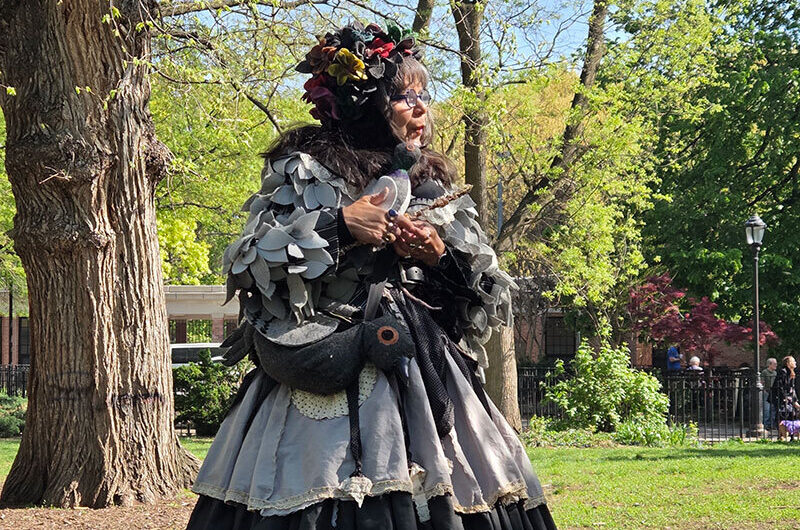
New York City, a metropolis renowned for its vibrant artistic scene and diverse population, is also home to a less celebrated, often maligned inhabitant: the common pigeon. Yet, for Tina Piña Trachtenburg, known artistically as "Mother Pigeon," these ubiquitous birds are not mere urban wildlife but deserving subjects of advocacy and artistic expression. Trachtenburg, a multifaceted street performer and dedicated animal rights activist, has embarked on a unique mission to challenge the exploitation of New York’s pigeons, transforming her passion into a compelling body of work that spans visual art, music, and digital media. Her efforts highlight a critical, albeit niche, animal welfare issue that resonates within the city’s complex ecosystem and beyond.
The Genesis of Mother Pigeon: A Call to Action
Trachtenburg’s artistic persona, Mother Pigeon, emerged as a direct response to the disturbing practice of capturing New York City’s pigeons for their use in live pigeon shoots. These events, predominantly held in Pennsylvania, involve releasing pigeons from mechanical traps to be shot at by participants in trap and block shooting competitions. This practice, which dates back to the late 19th century when live pigeon shooting was a popular sport, has drawn increasing condemnation from animal welfare organizations and individuals like Trachtenburg, who view it as an act of unnecessary cruelty.
The immediate catalyst for Trachtenburg’s amplified activism appears to be the ongoing capture of pigeons from public spaces, specifically Maria Hernandez Park in Brooklyn. She has publicly offered a $300 reward for photographic and video evidence that clearly identifies individuals engaged in the capture of these birds within the park. This initiative aims to not only deter such activities but also to gather crucial evidence to expose and potentially halt the practice. The commodification and subsequent endangerment of these urban birds, often perceived as pests, underscore a stark contrast between their perceived value by some and their inherent right to humane treatment, a principle Trachtenburg champions.
A Multifaceted Artistic and Activist Campaign
Trachtenburg’s advocacy is not confined to a single platform; she has strategically employed various artistic mediums to disseminate her message and engage a wider audience. Her YouTube channel, "Mother Pigeon’s Impeckable Musical Puppet Show," serves as a central hub for her creative output. Over the course of approximately one year, Trachtenburg produced ten engaging videos featuring hand puppets, notably Frankie the Pigeon and Max the Rat, bringing to life narratives that advocate for avian welfare. This project is more than just visual entertainment; it is a carefully crafted educational and awareness campaign.
Beyond the visual, Trachtenburg has also composed and released nine original songs, accompanied by a bonus reading of her published book. These artistic endeavors are accessible through her Bandcamp page, titled "It’s Me, Waiting in the Wings." This collection of work showcases her commitment to her cause through diverse creative expressions, allowing supporters to engage with her message on multiple sensory levels. The fusion of puppetry, original music, and literature demonstrates a comprehensive approach to art as a vehicle for social change.
Amplifying the Message: Digital Presence and Community Engagement
In the digital age, a strong online presence is crucial for amplifying any message. Trachtenburg has masterfully leveraged social media platforms to build a substantial following and foster a community around her cause. Her Instagram account, @motherpigeonbrooklyn, boasts over 38,000 followers and features more than a thousand posts. These posts meticulously document her work, her artistic creations, and her ongoing advocacy efforts, providing a vivid and consistent stream of information for her followers.
Complementing her Instagram presence, Trachtenburg also maintains a Facebook page, further expanding her reach. These platforms not only serve as channels for communication but also as vital tools for organizing, sharing information, and galvanizing support. The visual nature of Instagram, in particular, is well-suited for showcasing her art and the pigeons she champions, making her message both accessible and emotionally resonant. Her willingness to share personal insights into her motivations, as evidenced by a short YouTube video, further humanizes her campaign and strengthens her connection with her audience.
Legal and Institutional Opposition to Live Pigeon Shoots
Trachtenburg’s crusade is not an isolated one. It aligns with broader opposition to live pigeon shoots from established legal and advocacy groups. The New York City Bar Association’s Animal Law Committee, for instance, has formally expressed its opposition to the practice of releasing feral and domesticated pigeons from traps to be shot. This committee has actively supported legislative efforts to end such events.
Specifically, their support for H.B. 1097 (2025–2026) in Pennsylvania signifies a significant institutional backing for prohibiting the use of live pigeons as targets in trap and block shooting events. This legislative push, if successful, would directly address the core issue that Trachtenburg is fighting against, demonstrating that her artistic activism is part of a larger, more comprehensive movement toward animal welfare reform. The fact that a reputable legal body like the NYC Bar Association is involved underscores the legitimacy and seriousness of the concerns surrounding live pigeon shoots.
Supporting Data and Chronology of Advocacy
While a precise timeline of Trachtenburg’s entire artistic journey is not explicitly detailed, her "Mother Pigeon’s Impeckable Musical Puppet Show" YouTube channel has been active for at least a year, producing ten videos. This suggests a sustained period of dedication to her cause. The release of nine original songs and a bonus book reading on Bandcamp further indicates a concentrated period of creative output aimed at raising awareness.
The offering of a $300 reward for photographic evidence of pigeon capture in Maria Hernandez Park represents a more recent, direct interventionist tactic. This specific action highlights a growing concern over local pigeon populations and the methods used to remove them. The support for H.B. 1097 by the NYC Bar Association’s Animal Law Committee, which is a legislative bill from the 2025-2026 session, places the broader movement against live pigeon shoots within a contemporary legislative context. The continued presence and popularity of her social media accounts, with thousands of followers and hundreds of posts, suggest an ongoing and consistent engagement with her audience and her mission.
Analysis of Implications and Broader Impact
Tina Piña Trachtenburg’s work as Mother Pigeon has several significant implications. Firstly, it brings a largely overlooked animal welfare issue—the exploitation of urban pigeons—to the forefront of public consciousness. Pigeons, often perceived as vermin, are given a voice and a narrative through Trachtenburg’s art, challenging societal perceptions and fostering empathy. This re-framing of pigeons as sentient beings deserving of humane treatment is a crucial step in broader animal advocacy.
Secondly, her creative approach demonstrates the power of art as a tool for activism. By integrating puppetry, music, and digital media, she appeals to a diverse audience, making the issue accessible and engaging. This innovative method of advocacy can inspire other activists to explore unconventional approaches to raise awareness and promote social change. The success of her social media campaigns, with tens of thousands of followers, indicates that her message is resonating and building a supportive community.
Thirdly, Trachtenburg’s efforts contribute to the growing legal and ethical discourse surrounding animal cruelty. Her collaboration with, or alignment with, organizations like the NYC Bar Association’s Animal Law Committee signifies that her grassroots activism is part of a larger, coordinated effort to enact legislative and societal change. The potential passage of legislation like H.B. 1097, directly influenced by such advocacy, would have a tangible impact on the welfare of countless birds.
The fact that pigeons are captured from New York City and transported to Pennsylvania for these shoots highlights the trans-jurisdictional nature of animal welfare issues and the need for coordinated efforts across state lines. Trachtenburg’s work, therefore, not only impacts the local pigeon population but also contributes to a national conversation about animal rights and responsible practices in sports and entertainment. Her artistic crusade serves as a potent reminder that compassion and advocacy can manifest in myriad forms, even for the most common of urban dwellers. The long-term implications of her work may include a shift in public perception, increased support for animal welfare legislation, and a greater appreciation for the complex ecological and ethical considerations of urban wildlife.
