
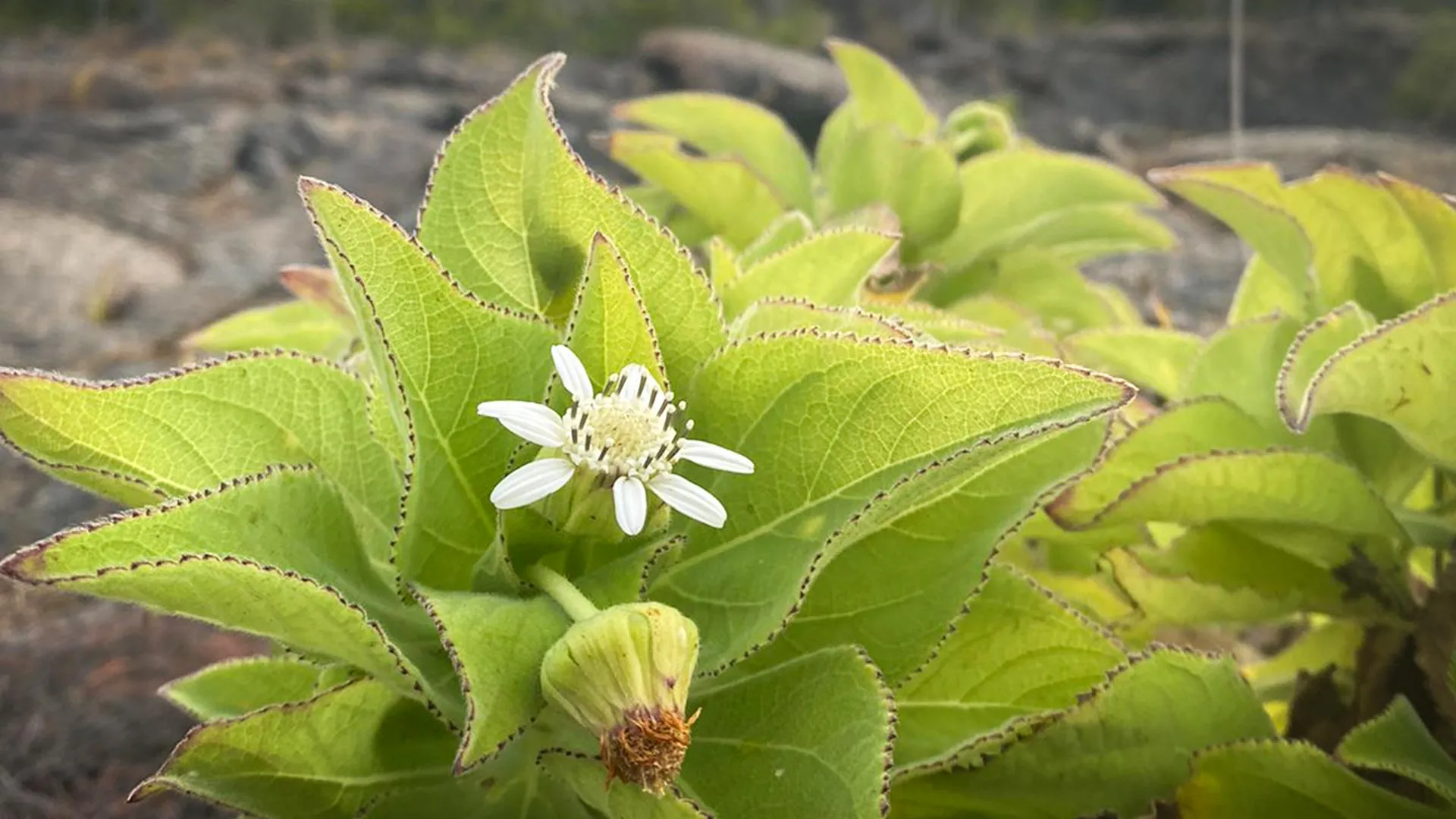
Nearly two centuries after Charles Darwin’s historic voyage aboard the HMS Beagle fundamentally altered our understanding of biology, the Galápagos Islands continue to serve as an irreplaceable living laboratory for the study of evolution. While Darwin’s meticulous collection of finches provided the empirical bedrock for his groundbreaking theory of natural selection, the archipelago’s flora has proven equally instrumental in decoding the complex mechanisms of speciation. In a comprehensive new genomic study published in the journal Nature Communications, an international team of scientists has unveiled fresh insights into the evolutionary dynamics of Scalesia, a diverse group of endemic plants commonly referred to as the Galápagos giant daisies. The research demonstrates how these remarkable plants underwent rapid adaptive radiation, mirroring the evolutionary trajectory of Darwin’s finches while offering a novel window into the phenomenon of parallel evolution.
The findings not only illuminate the genetic architecture underpinning physical adaptation in isolated island ecosystems but also carry significant implications for modern conservation strategies. By sequencing the complete genomes of every known Scalesia species, researchers discovered that distinct populations within the genus are diverging so rapidly they may represent entirely unclassified species. This revelation underscores the ongoing, dynamic nature of evolution in the Galápagos and highlights the urgent need to reassess how conservationists protect these fragile, isolated habitats.
Historical Context and the Legacy of the Beagle
To understand the magnitude of the recent discovery regarding Scalesia, one must look back to the autumn of 1835. When the HMS Beagle dropped anchor in the Galápagos archipelago, a young naturalist named Charles Darwin stepped ashore into a landscape unlike any he had previously encountered. The remote cluster of volcanic islands, situated roughly 1,000 kilometers off the coast of mainland Ecuador, hosted a unique assemblage of flora and fauna that appeared distinct to each island yet bore undeniable similarities to species found on the South American continent.
Among his many collections, Darwin gathered numerous plant specimens, carefully pressing and cataloging them alongside his better-known geological samples and animal skins. Decades later, botanical analyses revealed that seventy-eight of the plant specimens collected by Darwin belonged to species entirely new to science. Among these were four distinct species of Scalesia. At the time, however, the evolutionary mechanisms driving the staggering diversity of these plants remained entirely opaque.
Darwin’s observations of the archipelago’s finches—which he initially misidentified as a hodgepodge of unrelated families including sparrows, woodpeckers, and a tit—ultimately formed the cornerstone of his theory of natural selection. Published in 1859 in On the Origin of Species, the theory posited that populations gradually change over generations as individuals possessing traits better suited to their local environments enjoy higher rates of survival and reproduction. The Galápagos finches demonstrated how a single ancestral species, arriving from the mainland, could diversify into a multitude of specialized forms to exploit varying ecological niches. Yet, while the fauna of the Galápagos received exhaustive scientific attention for generations, the equally dramatic botanical radiation of plants like Scalesia has only recently become accessible through modern genetic sequencing technologies.
Chronology of the Recent International Study
The breakthrough published in Nature Communications is the culmination of years of collaborative fieldwork, advanced laboratory analysis, and computational biology. The research effort was spearheaded by an extensive international coalition, bringing together institutions such as the Norwegian University of Science and Technology’s (NTNU) University Museum, the Royal Botanic Gardens at Kew, the University of California, Davis, the University of Copenhagen, the Charles Darwin Foundation in the Galápagos, the University of Georgia, and the University of British Columbia, among others.
The project began with the systematic collection of tissue samples from across the archipelago, representing every recognized species and subspecies within the Scalesia genus. Researchers faced the logistical hurdles typical of fieldwork in remote protected areas, navigating rugged volcanic terrain and extreme microclimates ranging from searing coastal lowlands to misty, high-altitude forests.
Once the samples were secured, geneticists employed high-throughput sequencing platforms to decode the complete nuclear genomes of the entire Scalesia lineage. By comparing these vast datasets, the research team was able to construct a high-resolution family tree of the genus. This phylogenetic framework allowed scientists to trace the evolutionary history of the plants across time and space, mapping out how morphological traits emerged, disappeared, or reappeared over the span of the genus’s existence—a geological blink of an eye lasting approximately one million years.
Unraveling the Rapid Adaptation of Scalesia
The genus Scalesia offers one of the most striking examples of adaptive radiation in the botanical world. Similar to the rapid diversification observed in Darwin’s finches, Scalesia species evolved at an extraordinary pace after their ancestral lineage drifted or flew to the Galápagos from mainland South America. Today, the genus encompasses a diverse array of growth forms that belie their close genetic kinship.
As noted by the research team, individual Scalesia species vary dramatically in physical appearance. Some manifest as low-lying shrubs clinging to arid coastal rocks, while others tower overhead as substantial trees forming dense, humid highland forests. This structural diversity is matched by physiological adaptations tailored to the islands’ wildly contrasting microclimates.
Among the most visually striking adaptations found within the genus is leaf morphology. While some species possess large, unbroken leaves, others feature deeply lobed, intricately serrated foliage. Scientists have long hypothesized that these complex leaf shapes serve an adaptive function, helping plants regulate their internal temperature and minimize water loss in environments subject to intense solar radiation and prolonged drought. Until the recent genomic study, however, the precise genetic mechanisms governing the development of these serrated leaves remained a mystery.
Parallel Evolution Through Complex Genetic Networks
One of the most significant takeaways from the new research is the detailed documentation of parallel evolution within the Scalesia genus. Parallel evolution occurs when independent lineages independently develop similar physical traits or solutions to common environmental challenges, often driven by similar selective pressures in comparable habitats.
When the researchers analyzed the genomic data, they discovered that deeply lobed leaves had evolved independently on multiple occasions across entirely separate branches of the Scalesia family tree. In standard biological paradigms, scientists often look for a single "master gene" responsible for driving major morphological shifts. However, the Scalesia genome revealed a far more intricate and surprising reality.
According to the study’s lead author, Vanessa Bieker of the Royal Botanic Gardens, Kew, each time the deeply lobed leaf trait emerged in different lineages, it was produced through different underlying genes. Although these genes all belonged to the same overarching biological network controlling leaf development, evolution did not rely on a single genetic switch. Instead, natural selection acted on a complex, interacting network of genes, tweaking various components within the system to arrive at a remarkably similar phenotypic outcome.
This finding provides evolutionary biologists with a rare, empirically backed view of how complex traits can repeatedly evolve in unrelated populations. It demonstrates that nature possesses multiple distinct genetic pathways to reach the same adaptive destination, highlighting what researchers describe as the inherent flexibility and creativity of evolutionary processes.
Implications for Biodiversity and Modern Conservation
Beyond its theoretical contributions to evolutionary biology, the study carries urgent practical implications for the conservation of the Galápagos Islands. The genetic profiling revealed that many existing Scalesia populations exhibit profound internal genetic divergence and have remained geographically and reproductively isolated from one another for extensive periods.
This deep genetic structuring suggests that the taxonomic classification of Scalesia is currently underestimated. Numerous isolated populations likely represent distinct, evolutionarily significant units—or even entirely new species—that have not yet been formally recognized by science. Professor Michael D. Martin of NTNU’s University Museum emphasizes that these isolated populations are actively charting separate evolutionary paths, quietly giving rise to new biodiversity in real time.
This ongoing speciation presents a distinct challenge for conservation managers. Traditional conservation frameworks often categorize species based on broad taxonomic groups. However, the genetic evidence from the Scalesia study indicates that protecting the overarching genus is insufficient. To preserve the true breadth of biodiversity in the archipelago, conservationists must treat each isolated population as an individual management unit with its own unique evolutionary trajectory.
As climate change and anthropogenic pressures continue to threaten fragile island ecosystems worldwide, understanding the microscopic genetic underpinnings of plant adaptation is more critical than ever. The resilience and adaptability demonstrated by the Galápagos giant daisies offer both a testament to the power of natural selection and a roadmap for future conservation science. More than a century and a half after Charles Darwin first walked among the volcanic rocks of the Galápagos, the islands continue to challenge, surprise, and expand human understanding of life on Earth.
