
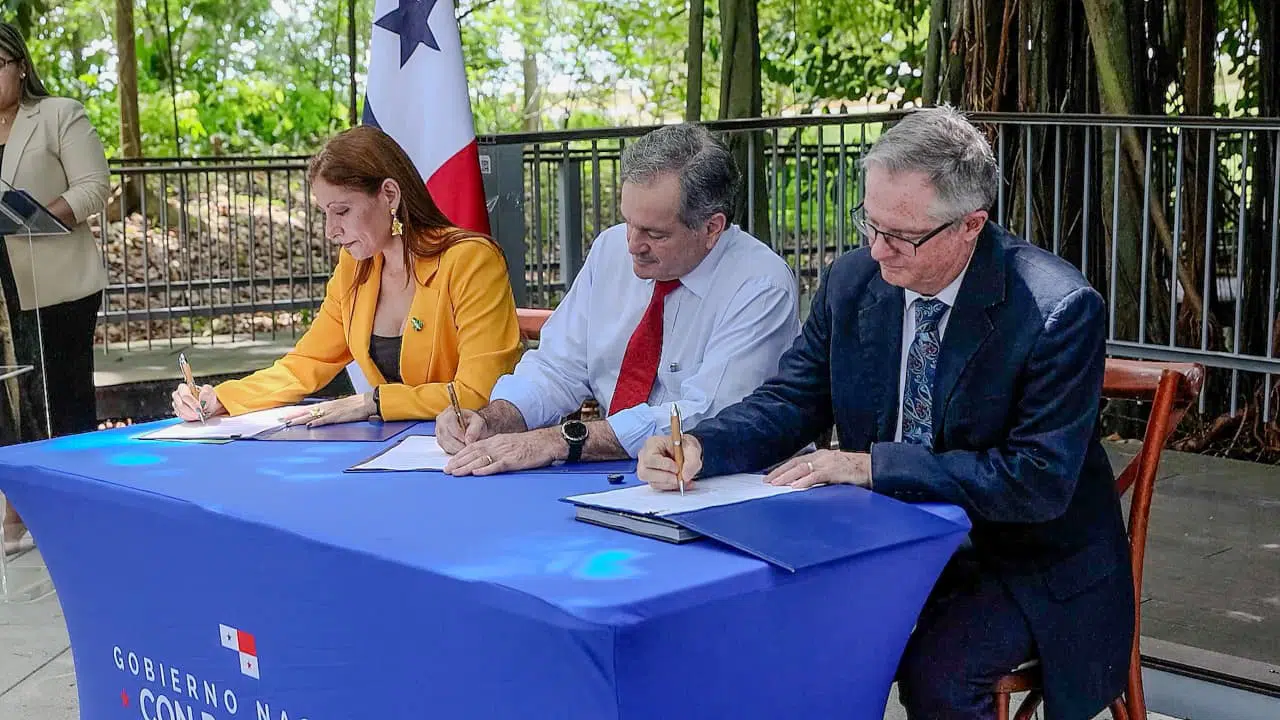
In a landmark move for environmental stewardship, Panama’s Ministry of Environment (MiAmbiente) formally initiated the process of evaluating and updating the nation’s network of Key Biodiversity Areas (KBAs) on May 18, 2026. This significant undertaking commenced with the signing of a Memorandum of Understanding (MOU) between MiAmbiente, the KBA Secretariat, and the Amphibian Survival Alliance (ASA), solidifying the government’s commitment to robust biodiversity conservation. This initiative is not merely a procedural update; it represents a crucial strategic step in advancing Panama’s commitments under the ambitious Kunming-Montreal Global Biodiversity Framework (KMGBF), particularly its targets related to biodiversity conservation, integrated spatial planning, ecosystem restoration, and the effective protection of areas deemed critical for global biodiversity.
The comprehensive national KBA assessment will involve a rigorous, scientifically-driven process to identify, map, and meticulously document sites across Panama that are essential for the long-term persistence of biodiversity. The anticipated results of this assessment are poised to directly inform and enhance the implementation of the country’s National Biodiversity Strategy and Action Plan (NBSAP), ensuring that conservation efforts are precisely targeted and maximally effective. Furthermore, this initiative will play a pivotal role in achieving national conservation priorities, most notably the ambitious "30×30" target, which aims to effectively protect and conserve at least 30% of both terrestrial and marine areas by the year 2030.
The Global Imperative for Biodiversity Conservation
The planet is currently grappling with an unprecedented biodiversity crisis, marked by alarming rates of species extinction and habitat degradation. In response to this global challenge, the scientific and policy communities have increasingly recognized the need for standardized, internationally accepted frameworks to identify and protect the most vital areas for life on Earth. Key Biodiversity Areas (KBAs) emerged from this necessity, representing sites of global significance for the conservation of biodiversity. Defined by a set of globally standardized criteria, KBAs are discrete geographical sites contributing significantly to the global persistence of biodiversity across all taxa and ecosystems. These criteria are based on quantitative thresholds for threatened species, geographically restricted species, ecological integrity, biological processes, and irreplaceability, ensuring a robust, evidence-based approach to conservation.
Panama, a narrow land bridge connecting two continents and two oceans, is renowned for its extraordinary biodiversity. Its unique geographical position has fostered a rich tapestry of ecosystems, from dense tropical rainforests and cloud forests to expansive marine environments, serving as a critical migratory corridor for countless species. The country boasts an impressive array of flora and fauna, including over 10,000 plant species, more than 1,000 bird species, 250 mammal species, and an astounding diversity of amphibians and reptiles. However, like many biodiverse nations, Panama faces significant threats from deforestation, agricultural expansion, infrastructure development, and climate change. The identification and effective management of KBAs are therefore paramount to safeguarding this irreplaceable natural heritage.
A Rich History: Panama’s Legacy in Conservation
The current initiative builds upon a strong foundation of conservation work within Panama, notably spearheaded by the Audubon Society of Panama, a long-standing partner of BirdLife International. The history of identifying critical biodiversity sites in Panama can be traced back to 1995 when the Audubon Society of Panama, with crucial funding from the Natura Foundation, launched the Important Bird Areas (IBA) Program in collaboration with BirdLife International. This pioneering program focused on identifying sites critical for bird conservation, laying the groundwork for broader biodiversity assessments.
By 2009, the diligent efforts of these organizations culminated in the publication of "The IBAs of the Americas," a seminal document that brought much-needed visibility to these vital bird sites. This publication officially recognized 53 global IBAs within Panama, collectively covering an expansive area of approximately 2,501,046 hectares – nearly 29% of the country’s entire land area. These sites were subsequently acknowledged in official Panamanian documents, including the Environmental Atlas (2010) and the National Biodiversity Strategy and Action Plan 2018-2050, underscoring their national importance.

A significant evolution occurred in 2016 with the publication of the "Global Standard for the Identification of Key Biodiversity Areas" and the official adoption of the comprehensive KBA criteria. This new framework served as an umbrella, encompassing sites important for various species groups beyond birds, including mammals, amphibians, reptiles, fish, invertebrates, and plants, as well as critical ecosystems. Following this global adoption, all of Panama’s previously identified IBAs were formally recognized as KBAs, forming the initial core of the country’s KBA network. However, acknowledging that the existing KBAs were predominantly identified through an avian lens, there arose a clear and pressing need for a more holistic and comprehensive assessment, incorporating other species groups and diverse ecosystems to ensure a truly representative and robust network. This critical gap is precisely what Minister of Environment Juan Carlos Navarro is now addressing, working closely with the Amphibian Survival Alliance to mobilize a broad spectrum of national biodiversity experts.
Strategic Alignment with Global Targets
Panama’s commitment to updating its KBA network is directly aligned with the ambitious goals set forth in the Kunming-Montreal Global Biodiversity Framework (KMGBF), adopted in December 2022. The KMGBF outlines four overarching goals and 23 specific targets designed to halt and reverse biodiversity loss by 2030, and to achieve a "living in harmony with nature" vision by 2050. Among these, Target 3, commonly known as the "30×30" target, is particularly relevant: "Ensure and enable that by 2030 at least 30 per cent of terrestrial, inland water, coastal and marine areas, especially areas of particular importance for biodiversity and ecosystem functions and services, are effectively conserved and managed through ecologically representative, well-connected and equitably governed systems of protected areas and other effective area-based conservation measures, recognizing indigenous and traditional territories, where applicable."
By systematically identifying and updating its KBAs, Panama is building the scientific foundation necessary to fulfill this target. KBAs provide a globally recognized, robust framework for identifying "areas of particular importance for biodiversity," thereby guiding the expansion and improvement of the country’s protected area network and other effective area-based conservation measures (OECMs). This strategic alignment not only enhances Panama’s national conservation efforts but also strengthens its position as a responsible global actor in the collective fight against biodiversity loss.
The Architects of Change: The National Coordination Group
A pivotal step in operationalizing the KBA assessment was taken on May 19, 2026, with the formal establishment of the National Coordination Group (NCG) for KBAs. This group is designed as a collective of leading experts drawn from diverse fields of biodiversity, encompassing specialists in various species groups (mammals, birds, amphibians, reptiles, fish, invertebrates, plants), marine and terrestrial ecosystems, and public policy professionals. The NCG’s mandate is two-fold: first, to spearhead the rigorous identification and assessment of key biodiversity sites across Panama; and second, in a subsequent phase, to guide their effective conservation and management.
The composition of the NCG reflects a multi-stakeholder approach, ensuring broad scientific expertise and institutional representation. Among its esteemed member organizations is the Audubon Society of Panama, whose historical contributions to identifying Important Bird Areas have been foundational. Rosabel Miró, Executive Director of the Audubon Society of Panama, underscored the significance of this collaborative effort: "In 2009, we published a map with Conservation International, a current member of the KBA Partnership, showing the 57 KBAs identified at that time in Panama. This helped influence national authorities to recognize them in official documents such as the Environmental Atlas (2010) and the National Biodiversity Strategy and Action Plan 2018-2050, among others. In this new, highly participatory process, we will collaborate so that many people throughout the country can contribute updated scientific information. A new chapter in the conservation of local and migratory biodiversity is beginning, and we will continue to disseminate its importance to all Panamanians." Her remarks highlight the participatory nature of the current assessment and its potential to engage a wider scientific community.
Gabriela Toscano, Biodiversity Conservation Manager for BirdLife Americas, who participated in the NCG formation meeting, provided crucial technical insights into the functions and responsibilities of the KBA NCG. Reflecting on the commencement of the process in Panama, she expressed profound optimism: "We are witnessing a historic milestone for nature in Panama! The beginning of this process fills us with joy and optimism, as it represents a great opportunity to unite science and action in favor of the country’s incredible biodiversity."
Voices from the Forefront of Conservation

The signing ceremony and subsequent NCG meeting drew prominent figures in global and national conservation. H.E. Juan Carlos Navarro, Panama’s Minister of Environment, emphasized the national commitment: "This agreement marks a new era for biodiversity conservation in Panama. By updating our KBA network, we are not only fulfilling our international obligations but also laying a stronger foundation for sustainable development and the well-being of our people. Protecting our natural capital is an investment in our future."
Dr. Andrew Plumptre, Head of the KBA Secretariat, articulated the broader impact of Panama’s leadership: "Panama’s proactive engagement in updating its KBA network serves as an exemplary model for other nations. This rigorous, science-based approach to identifying critical sites is fundamental to achieving global conservation targets. I look forward to supporting the Ministry of Environment, Amphibian Survival Alliance, and all of the institutions in the KBA National Coordination Group to make this update of their KBA network and then work to conserve it effectively."
Dr. Gina Della Togna, Executive Director of the Amphibian Survival Alliance (ASA), highlighted the particular importance of this initiative for one of the most threatened groups of species globally. "Amphibians are often considered indicators of ecosystem health, and unfortunately, many species are facing unprecedented declines. Our partnership in this KBA update is crucial to ensure that sites vital for the survival of Panama’s unique amphibian diversity are identified and given the highest level of protection. This collaborative effort will directly contribute to safeguarding these vulnerable populations and the habitats they depend on." Panama is particularly rich in amphibian diversity, including numerous endemic species facing severe threats from habitat loss and the chytrid fungus, making ASA’s involvement especially pertinent.
Broader Implications and Future Outlook
The comprehensive update of Panama’s KBA network is expected to yield far-reaching implications across several sectors. Environmentally, it will provide an unparalleled dataset for biodiversity planning, enabling more precise interventions for species recovery and habitat restoration. The identification of new or expanded KBAs will strengthen the rationale for establishing new protected areas or enhancing the management of existing ones, particularly in underrepresented ecosystems.
From a policy perspective, the updated KBA map will serve as a powerful tool for land-use planning, environmental impact assessments, and sustainable development initiatives. By clearly delineating areas of critical biodiversity importance, decision-makers can proactively avoid or minimize impacts from infrastructure projects, urban expansion, and resource extraction, fostering a more harmonious coexistence between human development and nature. This proactive approach will be instrumental in integrating biodiversity considerations into national economic planning, promoting sectors such as ecotourism and sustainable agriculture that directly benefit from a healthy environment.
Moreover, this initiative underscores Panama’s commitment to international cooperation and its role as a regional leader in conservation. By adhering to global standards for KBA identification, Panama contributes to a worldwide network of critically important sites, facilitating cross-border conservation efforts and fostering knowledge exchange with other nations. The collaboration between government agencies, international organizations, and local scientific bodies within the NCG represents a powerful model for effective, multi-stakeholder conservation governance.
While the undertaking is substantial, involving extensive data collection, scientific analysis, and stakeholder consultation, the enthusiasm and commitment demonstrated by all parties involved signal a strong potential for success. The process will necessitate significant capacity building, both in terms of technical expertise and community engagement, to ensure that the identified KBAs are not only scientifically sound but also socially accepted and effectively managed for generations to come. This updated KBA network is poised to become a cornerstone of Panama’s long-term environmental strategy, securing its natural heritage and reinforcing its position as a global champion for biodiversity.
