
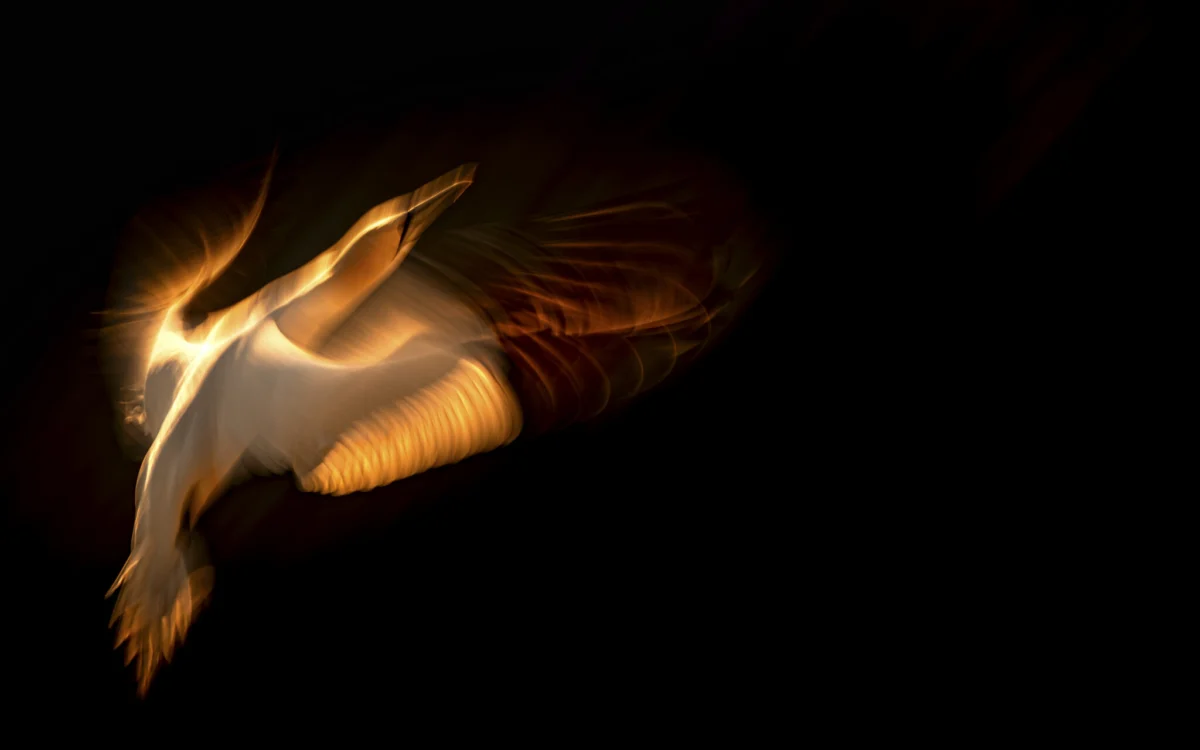
Rachel Bigsby, a distinguished voice in contemporary wildlife photography, champions an approach she terms "natural artistry," moving beyond the conventional pursuit of technical perfection to capture the profound essence and emotional reality of her subjects, particularly seabirds. Her philosophy posits that the most impactful images are not merely documentation but acts of witnessing, translating the intricate "grammar of nature" into a visceral experience for the viewer. This perspective challenges established norms, suggesting that true artistry lies in perceiving and conveying the inherent beauty and drama of the wild, even in its imperfections.
Bigsby defines "natural artistry" not as an aesthetic imposed upon a scene, but as an inherent quality waiting to be revealed. This manifests in the fluid grace of a seabird in flight, the nuanced interplay of light and feather, the stillness preceding a dive, or the dynamic chaos of a teeming colony. For her, the photograph should transcend a simple depiction of a creature, instead conveying its deeper story—its essence—through careful attention to light, movement, texture, color, behavior, environment, and perspective. A core tenet of her work is to photograph "what it feels like to be near them," rather than treating seabirds as mere objects.
A Deep-Rooted Connection to the Wild: Early Influences and Evolution
Bigsby’s profound relationship with the natural world predates her photographic endeavors. Her late grandfather, a keen naturalist and fisherman, instilled in her a foundational reverence for nature, teaching her to "truly see" rather than merely observe. This early tutelage emphasized attention and respect over rote factual knowledge. At the age of six, her involvement with the Scout Association further solidified this connection, immersing her in rugged landscapes where the distinction between "scenery" and "companion" dissolved through sustained outdoor engagement. Nature became her primary classroom, fostering an eager and lifelong student.

Photography entered Bigsby’s life more subtly. Introduced by a childhood friend, her initial experiments with an iPod camera were explorations of light on dewdrops or the graphic silhouette of a dandelion. While her friend’s interest waned, Bigsby’s deepened, marking the nascent stages of her artistic journey. The pivotal moment arrived when she observed a Northern Fulmar gliding effortlessly along cliffs near her home. Its "oceanic mastery" and "defiance of gravity" captivated her, sparking an urgent research into its connection to the legendary albatross, a bird that had populated her childhood dreams. This encounter transformed seabirds from a potential subject into her entire world.
The Formative Years: Dedication, Volunteering, and Understanding
The acquisition of her first DSLR camera marked a significant turning point, broadening her horizons to new species, colonies, and photographic challenges. As her images gained public visibility, opportunities emerged, albeit along a non-linear path. Bigsby committed to extensive volunteering on remote islands, exchanging labor for unparalleled access to seabird colonies. These experiences — ranging from scrubbing compost toilets and scything bracken in summer heat to repairing weathered structures with antiquated tools — were crucial. By day, she contributed to conservation efforts; by dusk, she immersed herself in the rhythm of the colonies, observing, listening, and learning. This immersive period, characterized by long hours of non-photographic engagement, provided her with an invaluable understanding of seabird behaviors, biology, and ecology, forming the bedrock of her credibility as a wildlife photographer. This deep contextual knowledge allows her to anticipate moments and capture authentic narratives, a distinction from photographers who might solely focus on technical capture without extensive field immersion.
Challenging the Orthodoxy: Beyond Technical Perfection
Traditional wildlife photography often prioritizes technical precision: razor-sharp focus, pristine backgrounds, and adherence to textbook compositions. Bigsby, however, argues that an overly rigid pursuit of such perfection can yield images that, while competent, are ultimately forgettable—depicting what a bird looks like but failing to convey its essence.

She recounts a seminal photograph of an Atlantic Puffin in flight, an image she cherishes despite its technical "imperfections"—soft focus, slow shutter speed, and a cluttered background. The golden light, piercing through the puffin’s delicate wings, transformed its movement into a "whisper of motion," an atmospheric blur that evoked a feeling rather than a frozen subject. This experience solidified her conviction that wildlife photography extends beyond mere documentation; it is fundamentally about storytelling, emotion, and artistry.
Bigsby observes that the wild is inherently chaotic and fluid, not neatly arranged for photographic convenience. Seabirds, driven by instinct, weather, tide, hunger, and devotion, do not conform to idealized backdrops or perfect lighting. To portray their world truthfully, she contends, images should embrace this complexity rather than pretend otherwise. A turning point came during a week of volunteering on an island plagued by relentless rain, fog, and mist. Initially despairing of the "bad weather," Bigsby realized she was imposing an external standard of perfection. For the birds, these were simply the conditions of life. By ceasing to resist and instead collaborating with the environment, she discovered new artistic avenues. The fog became a "blank page," the whiteness a "canvas," leading her inadvertently into high-key imagery—a visual signature that emerged organically from an honest response to the place. This experience fundamentally altered her perception of light, underscoring that meaningful images often arise from noticing "what is already there" rather than demanding what one desires.
The Pillars of Natural Artistry: Light, Shape, Texture, and Environment
At its heart, Bigsby’s "natural artistry" is an invitation to see beyond the superficial. It involves recognizing the inherent patterns, textures, forms, and quiet geometries that elevate nature to the status of a masterpiece. These elements, predating human observation by millions of years, are not invented by the photographer but noticed and translated into a still frame that retains their intrinsic energy.
Bigsby actively seeks artistry in elements often overlooked as "the subject":

- The rippling surface of the sea: Textured by the wind, it speaks of constant motion and power.
- Rugged cliff faces: Sculpted by millennia, they provide a dramatic and ancient backdrop.
- Fine barbs of a feather: Catching light at a specific angle, they reveal intricate detail and fragility.
- Negative space of the sky: It allows a single bird to appear weightless, conveying freedom or isolation.
- Density of a colony: Here, repetition transforms into pattern, and pattern evolves into a complex design, illustrating the sheer scale of life.
By moving away from the imperative for every image to be a pristine portrait, Bigsby encourages viewing nature through a more abstract and expressive lens. This shift redirects focus from merely "hunting for a good subject" to "listening for composition"—attending to shape, line, rhythm, contrast, and restraint. She advocates for the power of minimalism, where a single bird against a vast sky or a solitary gesture framed by emptiness can convey profound emotion: freedom, loneliness, resilience, or endurance. Allowing the frame to "breathe" deepens the narrative rather than forcing it.
This philosophy directly challenges the notion that a wildlife image must be perfect to be powerful. For Bigsby, "imperfection is artistry." A seabird with wind-battered, ruffled feathers tells a richer story of survival than one in still air. A motion blur can more truthfully convey the dynamism of flight than a perfectly frozen wing. Mist and rain are not obstacles but integral atmospheric elements, contributing to the emotional reality of a seabird’s existence.
The Emotional Spine of an Image: Light and Color
Light, for Bigsby, transcends a mere technical setting; it is the "emotional spine" of an image. While a subject’s existence is constant, light dictates its perception, its emotional impact, and its lasting impression. She recalls a morning in Shetland where the colony below remained in darkness, yet the highest rock peaks glowed with the first light. A single Gannet, lifting from shadow into this illumination, became a "brushstroke" of white against the black cliff, demonstrating that light is not just clarity, but drama and visible mood.
Similarly, color is approached with intentionality, serving to support the emotional tone of a scene rather than existing for its own sake. She notes that Northern Fulmars, with their subtle, stormy slate-grey tones, are often overwhelmed by bright blue backgrounds. Instead, a chalk-white cliff or dark grey rock can "cradle their palette," allowing their inherent mood to resonate. When color proves distracting, monochrome is employed deliberately, not as a shortcut to gravitas, but as a conscious decision to highlight shape, light, and texture—the fundamental "bones" of the image.

Texture makes a photograph tangible, allowing viewers to "feel salt in the air," while shape lends intentionality, transforming wildlife into compelling design through curves, arcs, symmetry, and contrast. Crucially, Bigsby emphasizes that the environment is not mere background but a character in itself. A bird without context is simply an animal; a bird honestly situated within its world becomes a narrative of scale, struggle, intimacy, resilience, or fragility. This environmental context can also convey challenging truths—beauty interwoven with grief, life alongside loss. Bigsby believes photography can hold this complexity without exploitation, provided it remains truthful, respectful, and intentional.
Patience, Presence, and the Language of Birds
Patience, in Bigsby’s lexicon, is not passive waiting but an active "knowing what you are waiting for." Understanding animal behavior is akin to learning a new language, where recognizing patterns and cues transforms the wild from random to readable. This enables anticipation over reaction, shifting photography from a game of chance to one of deliberate intention.
Bigsby dedicates countless hours to observing seemingly ordinary seabird behaviors—preening, shifting, calling, settling, rising. Yet, she notes, the subtlest changes—a tightening posture, a lifted glance, a repeated gesture—often signal impending action. This deep observational practice fosters a symbiotic relationship between photographer and subject, moving from "taking" to "listening."
This sustained presence yields profound "gifts": reunion rituals, courtship exchanges, synchronized movements of bonded birds, or moments of unexpected softness amidst the colony’s chaos. These are not just behaviors but compelling stories of devotion, endurance, and survival played out on the windswept cliff edges. Seabirds, for Bigsby, embody freedom and resilience, sculpted by time and tide, inhabiting the "edge of the world," and in their presence, she finds her own sense of liberation.

Implications and a New Paradigm for Wildlife Photography
Bigsby’s philosophy holds significant implications for the broader field of wildlife photography and its role in conservation. In an era where digital tools often allow for instantaneous capture and post-processing perfection, her emphasis on patience, presence, and embracing the authentic conditions of the wild offers a counter-narrative. Her work suggests that the emotional resonance of an image, its capacity to evoke feeling and understanding, can outweigh strict technical adherence, influencing how aspiring photographers approach their craft.
From a conservation perspective, Bigsby’s "natural artistry" fosters a deeper empathy for wildlife. By presenting seabirds not as scientific specimens but as beings with intricate lives, vulnerabilities, and incredible resilience, her photographs serve as powerful educational tools. They move beyond mere identification to cultivate a profound connection, which is often a precursor to conservation action. Organizations and environmental advocates increasingly recognize the value of art that can stir emotions and inspire stewardship, aligning well with Bigsby’s approach. Her focus on portraying the environment as an integral character also highlights the interconnectedness of species and their habitats, implicitly raising awareness about ecological fragility.
Ultimately, Bigsby’s work is an "invitation rather than a rulebook." While acknowledging the importance of technical skill as "scaffolding," she asserts that the true "soul" of a photograph emanates from the photographer’s unique vision, feeling, and connection. She challenges the prevailing "rules" of photography, arguing that enduring images are rarely those that meticulously follow convention but rather those that convey honesty and evoke genuine emotion. Her legacy lies in giving other photographers "permission" to create work that resonates personally, even if it deviates from expectations. In a world saturated with formulaic imagery, Bigsby advocates for photographs "made by heart," images that educate through beauty and honor the wild by revealing its unvarnished truth. Her call to "go gently, look closely, wait longer than you think you should," and to "photograph the world not only as it is, but as it feels," underscores a powerful shift towards a more intimate, respectful, and artful engagement with nature. Her distinctive vision serves as a reminder that the most compelling narratives are often those told through a truly individual lens.
