
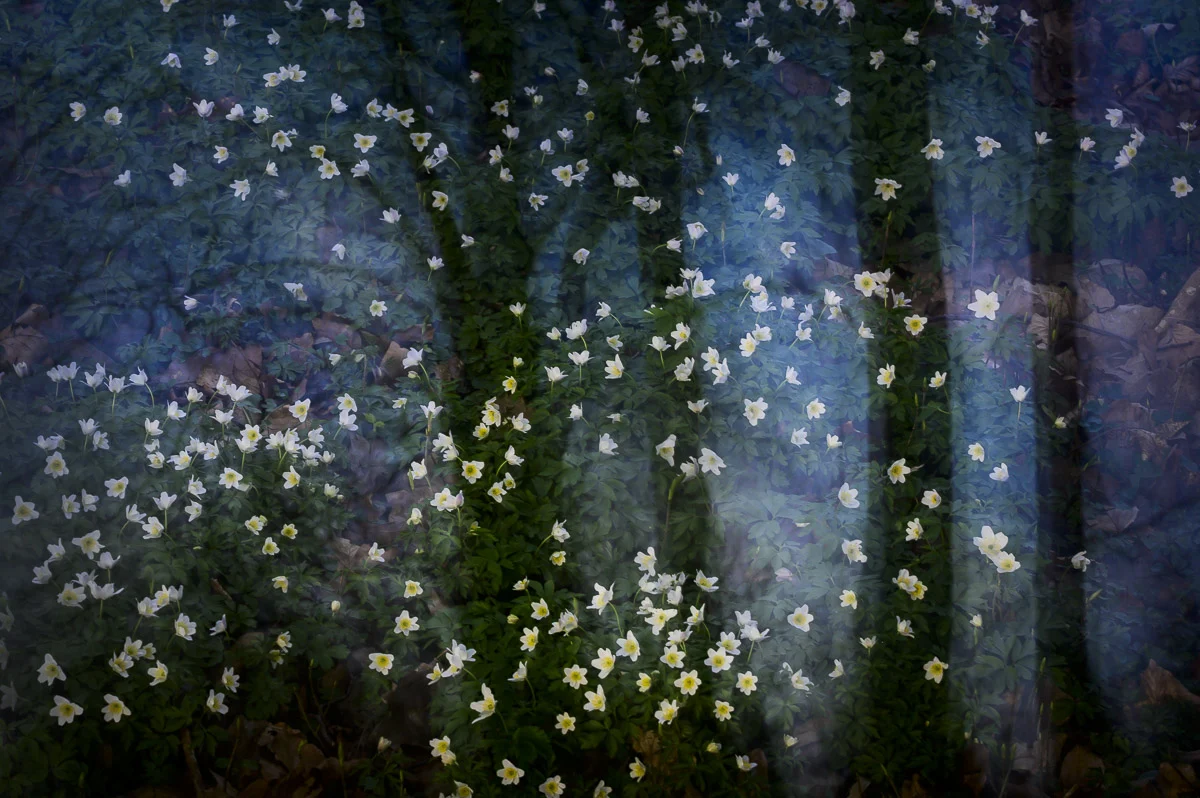
Photography, often perceived as the capture of a perfect, pre-visualized moment, is increasingly being redefined by practitioners who prioritize the dynamic process of creation over a static, predetermined outcome. While strong composition, clean technique, and pleasing color remain undeniable hallmarks of a good photograph, a growing philosophy among artists, particularly in nature photography, suggests that the truly crucial elements unfold before the shutter clicks – in the interactive dance between the photographer, the environment, and an evolving perception. This approach champions receptivity and improvisation, allowing the image to emerge organically from the conditions on location rather than being forced into a rigid, pre-conceived mold.
The conventional wisdom often dictates that a photographer embarks on a shoot with a "target photo" in mind, meticulously planning every detail from lighting to subject placement. However, this emerging perspective challenges such rigidity. Photographers adopting this fluid methodology arrive in a scene with an open mind, keenly observing the prevailing conditions – the quality of light, the behavior of wildlife, the atmospheric shifts. This isn’t about abandoning knowledge or technique; rather, it’s about recognizing that these are tools to be wielded in response to the moment, not a checklist to be mechanically fulfilled. The inherent unpredictability of natural environments frequently renders pre-conceived ideas obsolete, demanding adaptability and a willingness to let the scene dictate its own priorities. As one proponent articulates, "Even when I set out with ideas, they often fade once I’m on site. The light isn’t what I expected. The animals don’t show up, or not where I imagined… The scene sets its own priorities, and my job is to respond." This philosophy aligns with a broader trend in artistic expression that values spontaneity and the journey of discovery, rather than merely the execution of a blueprint.

The Foundational Triad: Nature, Perception, and Design
Central to this process-oriented approach is an interactive framework termed "the triad": Nature, Perception, and Design. This conceptual model offers a lens through which to understand the dynamic interplay that culminates in a photographic image.
-
Nature: This element represents the raw, unfiltered reality of the environment. It is the canvas, constantly shifting and unpredictable, offering a myriad of potential subjects, lighting conditions, and atmospheric phenomena. In nature photography, this means embracing everything from the dramatic shifts in weather to the subtle movements of flora and fauna. Unlike studio photography where elements can be controlled, nature demands a photographer’s constant readiness to adapt to the unexpected. For instance, a planned shot of a sunrise might be entirely transformed by an unexpected fog bank or a sudden burst of rain, requiring the photographer to pivot their focus and technique.
-
Perception: This is the photographer’s subjective engagement with nature. It’s the cognitive process that filters the immense complexity of a scene, highlighting what stands out, what is ignored, and what begins to hold significance. Perception reduces visual noise, condenses information, and continually shifts the center of gravity of the photographer’s attention. It’s an active, iterative process, where the initial glance gives way to deeper observation, guided by intuition and an evolving understanding of the scene’s potential. This aspect resonates with mindfulness practices, encouraging photographers to be fully present and responsive to their surroundings rather than imposing their will upon them. The subjective nature of perception ensures that no two photographers will interpret the same scene identically, leading to a diverse array of artistic expressions.

-
Design: This is the photographer’s active response to the perceived reality, translating it into a visual composition. While technique—mastery of camera settings, lenses, and lighting—is an integral part of design, it serves the emerging image, not a pre-determined one. This stage is characterized by flexibility, experimentation, and a willingness to embrace chance. The iterative feedback loop is crucial here: an initial photograph acts as feedback, informing the photographer’s perception and nudging subsequent decisions. This contrasts sharply with a purely technical approach where design principles are applied rigidly. Instead, design becomes an organic process of refinement, where "accidents" or unforeseen elements often become pivotal in shaping the final artwork. The digital age, with its instant preview screens, has significantly empowered this iterative design process, allowing photographers to make immediate adjustments and see the impact of their decisions in real-time.
Case Studies in Action: The Triad Illustrated
The effectiveness of this triad is best demonstrated through real-world scenarios where photographers navigate unforeseen circumstances to create compelling images. The following three examples, arising organically on location, vividly illustrate this interactive process.
Frost Leaf: Embracing Serendipity in Macro Photography
One frigid night, a photographer embarked on an unplanned journey to a park pond, drawn by the promise of frost. The scene presented a complex tapestry of ice, branches, stumps, and snow patterns. Amidst this intricate detail, a single leaf, encased in the frozen surface, captured the photographer’s attention.

The initial image, while showcasing the delicate crystal structure of the ice, failed to establish a strong connection between the leaf and its surroundings. This immediate feedback from the camera’s display prompted a shift in focus. The "design" phase began with experimentation. A flash, wirelessly triggered and placed directly on the ice, introduced low, side lighting. The photographer meticulously adjusted its position, observing how minute changes dramatically altered the interplay of light and shadow on the ice and around the leaf. This iterative process of "test, reject, adjust" continued, with an LED light later introduced to subtly open up shadows, further refining the scene.
A pivotal moment arrived through an "accident": the flash slipped, redirecting its beam more directly into the ice. The resulting image, visible on the display, revealed a profound transformation. The leaf now separated from the surface in a new, compelling way, and hidden structures beneath the ice became visible. What began as a simple "leaf on ice" evolved into a profound exploration of leaf, ice, and light as an integrated, coherent system. This instance underscores how chance, when embraced within a flexible design process, can lead to unforeseen artistic breakthroughs, transforming an ordinary observation into an extraordinary visual narrative.
Dragonfly in Backlight: The Art of Focused Anticipation
Approaching a familiar lake with expectations of recreating past dragonfly photographs, the photographer found conditions drastically altered. The initial draw was the reed grass, backlit by the low sun, creating a luminous glow. The "perception" phase shifted, focusing on framing an angle where the background would recede into darkness, allowing the glowing reeds to dominate.

As the photographer worked with the reeds, dragonflies darted across the scene, their fleeting movements pulling attention away from the static landscape. This combination of light, motion, and structure initiated a period of "focused waiting." The "design" involved framing with ample space for the insects and setting a very fast shutter speed – a critical technical decision given the unpredictable nature of dragonflies, which, as noted, "don’t hover politely."
Initial bursts of continuous shooting revealed a consistent issue: the dragonflies were frequently out of focus. This immediate feedback led to a crucial technical adjustment: switching to manual focus and stopping down the aperture. This trade-off, sacrificing some background blur for a deeper depth of field, ensured that both the reeds and the corridor of the dragonflies’ flight path were within the zone of focus. Further waiting and bursts of shots followed. Out of hundreds of frames, a single image finally harmonized focus, position, and the fleeting movement, capturing the essence of the moment. This example highlights the importance of adaptive technical skills and the meditative quality of patient observation in dynamic nature photography.
Slime Moulds: Unveiling Hidden Worlds through Micro-Observation
In the subdued light of autumn woods, the initial observations yielded no compelling subjects. The photographer, however, continued to shoot, using the camera’s display as a feedback mechanism. These initial images, lacking weight, subtly guided attention.

It was within one of these frames that fine, threadlike structures on a fungus, later identified as slime moulds, were first noticed. The camera, in essence, revealed what the naked eye had initially overlooked. This shifted the "perception" dramatically, drawing the photographer closer, to sit on the forest floor, attempting to deliberately frame this tiny, previously unseen world. The earthy scent of the woods deepened the immersive experience.
Extended observation revealed small swellings at the ends of the threads, providing a focal point around which attention tightened. The "design" phase intensified with the introduction of an LED light, instantly transforming the micro-scene. Shadows danced and reformed, creating an intense interaction of light, blur, and structure. Through a continuous loop of checking the display, adjusting the light and framing, the photographer was drawn deeper into this minute ecosystem, frame by frame. This narrative underscores how the camera can extend human perception, revealing hidden beauty and encouraging a meticulous, iterative process of discovery in macro photography.
Historical Context and Modern Implications
The philosophy articulated through these examples echoes sentiments found throughout the history of photography, from Henri Cartier-Bresson’s concept of the "decisive moment"—an intuitive capture of fleeting reality—to the more structured, yet equally responsive, approaches of landscape photographers like Ansel Adams, who, despite meticulous planning, were always ready to adapt to the light and atmospheric conditions. However, the advent of digital photography, with its instant feedback loop via LCD screens, has significantly democratized and amplified this iterative, process-driven approach. Photographers can now immediately assess the impact of their decisions, fostering a dynamic dialogue between their intention, the scene, and the camera’s output.

In an era increasingly dominated by heavily processed and often manipulated images, this emphasis on authentic, in-the-moment responsiveness carries significant implications. It champions a deeper engagement with the subject matter, promoting observational skills and a profound connection to the natural world. For aspiring photographers, it offers a liberating alternative to rigid rule-following, encouraging intuition, experimentation, and resilience in the face of unpredictable conditions. This approach suggests that technical competence, while vital, serves best when it becomes second nature, allowing the photographer’s mind to be fully present and responsive to the evolving scene.
Conclusion
The three diverse situations—a frozen leaf, a darting dragonfly, and microscopic slime moulds—demonstrate a consistent underlying logic: photographic decisions emerge from a constantly shifting and refining attention. What ultimately defines a powerful photograph, according to this philosophy, is not the slavish adherence to technical rules, but the synergy between seeing and choosing. Technical fluency in composition and camera operation becomes a silent enabler, receding into the background to allow for unfettered responsiveness to the environment.
Rules, accumulated experience, and technical prowess are invaluable tools, but they must remain subservient to the unfolding creative process. They support the work, rather than defining it, to be deployed when they enhance the image and set aside when they become a constraint. The triad of nature, perception, and design thus remains central: nature provides the immutable reality, perception guides the gaze through its complexities, and design articulates the artistic response. And within this dynamic interplay, the occasional, serendipitous shift introduced by chance often becomes the catalyst that elevates a mere capture into a profound artistic statement, reinforcing the notion that some of the most compelling images are not found, but discovered through a journey of patient, open-minded engagement.
