
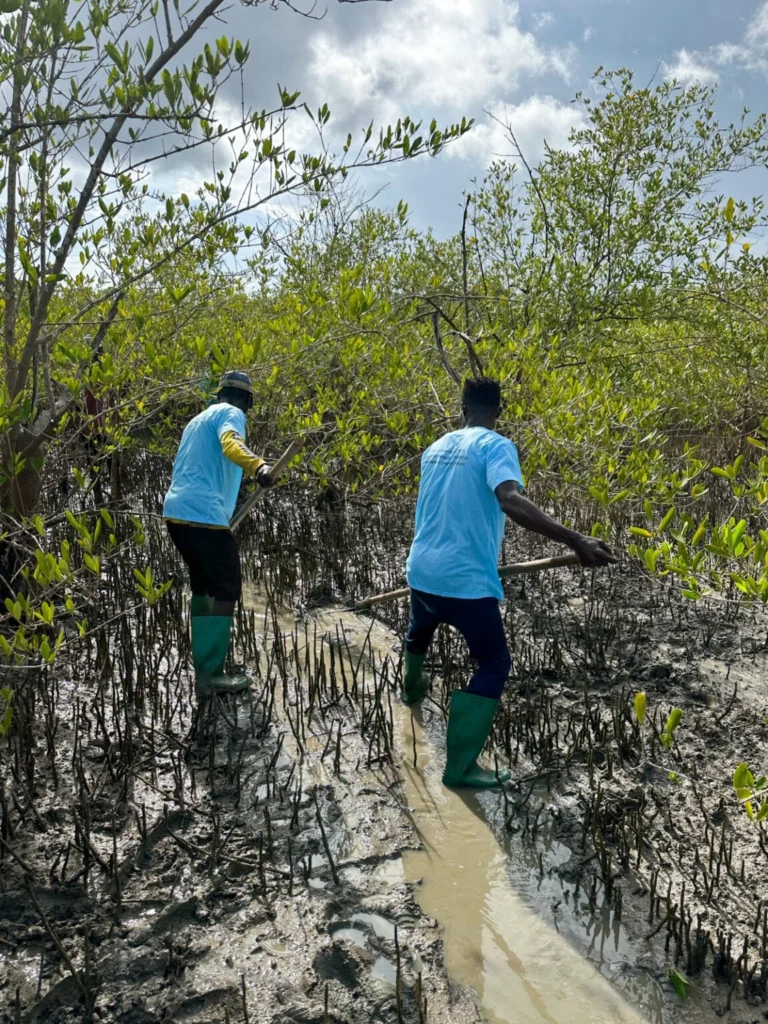
Coastal resilience and ecological recovery efforts in West Africa received a substantial boost this September as Wetlands International, in close collaboration with local communities, governmental bodies, and regional conservation partners, officially initiated its latest mangrove restoration campaign in Guinea-Bissau. Running from August 27 through September 10, 2026, the ongoing initiative targets 270 hectares of degraded coastal ecosystems across 18 carefully selected sites within and surrounding the Cantanhez National Park. This ambitious intervention marks a critical milestone in a broader, long-term national strategy designed to reverse decades of environmental degradation, enhance local livelihoods, and secure vulnerable coastlines against the accelerating impacts of global climate change.
The Ecological and Socio-Economic Significance of Guinea-Bissau’s Mangroves
Mangrove ecosystems occupy a foundational role in the environmental integrity and socio-economic framework of Guinea-Bissau. Characterized by intricate networks of salt-tolerant trees and shrubs that thrive in the intertidal zones of tropical and subtropical coasts, these wetlands function as multifaceted natural infrastructure. Ecologically, they act as indispensable nurseries for a diverse array of marine life, including commercially vital fish, crustacean, and mollusk species that sustain local artisanal fisheries and underpin regional food security. Furthermore, dense mangrove canopies and extensive root systems provide a formidable, natural buffer against severe coastal erosion, storm surges, and rising sea levels driven by changing climatic patterns.
Beyond their immediate protective and biological functions, mangroves are globally recognized as powerhouse carbon sinks. Often referred to as "blue carbon" ecosystems, they sequester atmospheric carbon dioxide at rates up to four times higher than terrestrial tropical rainforests, storing massive quantities of organic carbon in their underlying organic-rich soils. For Guinea-Bissau—a nation highly vulnerable to environmental shifts—the degradation of these coastal forests directly threatens both biodiversity and the economic survival of coastal communities who rely on the natural productivity of the tidal wetlands for agriculture, fishing, and daily sustenance.
The 2026 Campaign: Scale, Timeline, and Strategic Targets
The current restoration window, which spans two intensive weeks from late August to mid-September, concentrates physical interventions within 18 designated localities situated inside the Cantanhez National Park and its immediate periphery. The targeted 270 hectares scheduled for rehabilitation this year represent a significant operational push toward a much larger national objective. Wetlands International and its partners have established a cumulative target of restoring 1,000 hectares of degraded mangrove forests across the country. Successful execution of the 2026 campaign will elevate the total area successfully rehabilitated under the overarching programmatic framework to approximately 3,500 hectares.

This phased timeline is carefully synchronized with local ecological cycles and seasonal weather patterns. By deploying resources and mobilization teams immediately following the onset of peak seasonal precipitation, the initiative maximizes the hydrological conditions necessary for natural vegetative recovery. The formal launch events, which took place on the opening days of the campaign, were hosted across three prominent local settlements: Cassumba in Cacine, Kauntchintchi in Yemberem, and Weldekeia Wangha. These gatherings served as practical demonstration hubs, enabling restoration experts, park rangers, and resident stakeholders to review field methodologies, analyze historical drivers of habitat loss, and establish collaborative monitoring protocols.
Shifting Paradigms: Community-Based Ecological Mangrove Restoration
A defining characteristic of Wetlands International’s current methodology in Guinea-Bissau is its decisive departure from traditional, labor-intensive tree-planting campaigns. While historical conservation efforts frequently focused on cultivating and planting vast quantities of nursery-grown mangrove seedlings—often with mixed long-term survival rates—the 2026 campaign relies firmly on Assisted Natural Regeneration (ANR), widely practiced as Community-Based Ecological Mangrove Restoration (CBEMR).
CBEMR is grounded in a rigorous scientific understanding of the root causes of mangrove dieback. In many degraded coastal areas throughout West Africa, the primary impediment to natural forest recovery is not a lack of viable seeds or propagules, but rather the disruption of natural hydrological flows. Human activities—such as the construction of dikes, poorly planned road infrastructure, or the historical conversion of tidal wetlands into marginal rice fields—frequently alter tidal inundation patterns, trapping hypersaline water or cutting off essential freshwater and tidal exchanges.
Under the ecological restoration approach, field teams prioritize identifying and removing these physical hydrological blockages. By meticulously restoring tidal channels and reestablishing the natural ebb and flow of water, the intervention enables the environment to self-heal. Pioneer mangrove species, such as Avicennia (white mangroves), are given the hydrological conditions they require to recolonize soils—often previously colonized by salt-tolerant succulent vegetation like Sesuvium—and naturally regenerate. This approach leverages the intrinsic resilience of the ecosystem itself, resulting in higher survival rates, more structurally diverse forests, and significantly reduced long-term maintenance costs.
Rigorous Site Selection and Land Tenure Safeguards
To maximize the efficacy of limited conservation resources and prevent ecological mismatch, Wetlands International applies strict, multi-criteria screening protocols before designating any landscape for restoration. Not every degraded coastal area is deemed suitable for immediate intervention.

The sites selected for the 2026 campaign primarily consist of former tidal rice fields that have been abandoned from agricultural production for a minimum of two years, alongside severely deforested tracts where natural recovery has stalled due to persistent anthropogenic stressors. Crucially, candidate sites must exhibit clear evidence of disrupted hydrology and a total absence of active natural regeneration. Furthermore, projects are strictly precluded from areas currently involved in active land or resource-use disputes, or those slated for overlapping development interventions.
A cornerstone of this selection process is the requirement for free, prior, and informed consent (FPIC) from local landowners and resource users. By engaging communities at the inception phase of site mapping and planning, the program ensures that customary land rights are fully respected and that local populations maintain active ownership over the restored commons. This participatory model minimizes future land-use conflicts and aligns conservation outcomes with the socio-economic priorities of the villages that border the protected zones.
Multi-Stakeholder Partnerships and Institutional Frameworks
The scale and complexity of Guinea-Bissau’s mangrove restoration initiative necessitate a robust, multi-tiered institutional architecture. The 2026 campaign is implemented through a collaborative framework uniting non-governmental organizations, local communities, and key agencies of the Government of Guinea-Bissau.
Primary state oversight and coordination are provided by the Ministry of the Environment, Biodiversity and Climate Action, alongside the Institute for Biodiversity and Protected Areas (IBAP). Operational field execution relies heavily on grassroots mobilization and community-based organizations, with active contributions from local NGOs including Proativos, REDE AGIR, and AJUTS, alongside the dedicated efforts of local residents, park wardens, and volunteers.
Strategic alignment and technical support are further amplified through partnerships with national and international bodies, such as the BioGuinea Conservation Trust Fund, the International Union for Conservation of Nature (IUCN), the Regional Partnership for Coastal and Marine Conservation (PRCM), the World Bank’s West Africa Coastal Areas Management Program (WACA), and PLANTA, the national mangrove platform. Financial backing for the overarching program is provided by philanthropic and environmental donors, notably Greenchoice and DOB Ecology, whose sustained investments enable long-term planning, monitoring, and scale-up.

Adaptive Management and Long-Term Monitoring
Recognizing that ecological restoration is an iterative process, Wetlands International has integrated continuous monitoring protocols into the core of the Guinea-Bissau program. Field scientists and community monitoring teams routinely track biophysical indicators across the 18 restored sites, measuring variables such as vegetation density, soil salinity, hydrological connectivity rates, and the density of natural seedling recruitment.
This empirical feedback loop functions as an adaptive management tool. By systematically evaluating which hydrological interventions yield the fastest and most robust ecological responses, restoration teams can refine their technical approach in real-time, identify sites requiring supplementary remediation, and apply lessons learned to future phases of the national restoration strategy.
Broader Implications for Climate Resilience in West Africa
The continuation of mangrove restoration in Guinea-Bissau carries implications that extend far beyond the borders of the Cantanhez National Park. As West African nations face compounding vulnerabilities driven by climate change—including accelerated shoreline erosion, unpredictable precipitation regimes, and declining marine biodiversity—nature-based solutions like CBEMR offer a cost-effective, scalable defense mechanism.
By systematically restoring thousands of hectares of coastal wetlands, Guinea-Bissau is not only enhancing its national carbon sequestration capacity and fulfilling international commitments under global biodiversity and climate frameworks, but it is also directly safeguarding the economic security of rural populations. As local women and men continue to participate directly in site preparation, hydrological excavation, and ecological monitoring, the program fosters a deeply rooted culture of environmental stewardship. Ultimately, the 2026 campaign demonstrates that durable climate resilience in coastal West Africa is achieved most effectively when rigorous ecological science is harmonized with the traditional knowledge, active participation, and leadership of local communities.
