
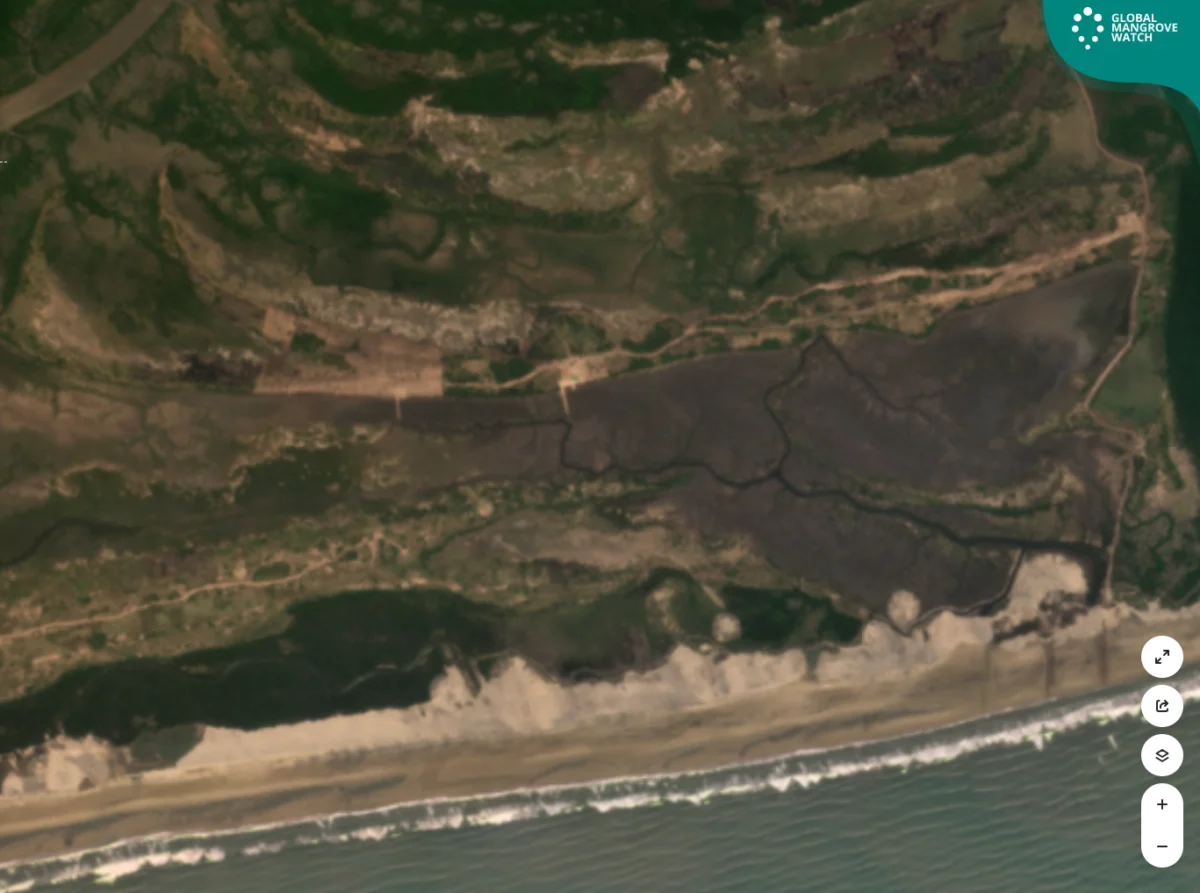
Mozambique’s invaluable coastal ecosystems are facing an escalating crisis as recent satellite surveillance uncovers significant and deeply concerning habitat destruction within the Zambezi Delta. Long celebrated as one of the most ecologically diverse and expansive mangrove systems in Africa, this vital wetland is now bearing the brunt of intense industrial pressures. Recent analyses powered by Global Mangrove Watch (GMW) alerts have pointed directly to heavy sand mining operations—specifically involving a leading Chinese mineral extraction firm—as a primary catalyst for the degradation. This unfolding environmental emergency threatens not only the delicate biodiversity of the region but also the climate resilience and economic livelihoods of hundreds of thousands of local inhabitants who rely on the delta for their daily survival.
Chronology of Environmental Pressures and Recent Discoveries
The mounting threats to Mozambique’s coastal habitats are not entirely new, but the rapid acceleration of industrial-scale exploitation marks a critical turning point for conservation efforts in the region.
Historically, the mangrove forests along the Mozambican coastline have contended with multiple localized pressures. For years, local communities and commercial actors have engaged in the harvesting of wood for firewood and timber. Furthermore, the relentless expansion of aquaculture ventures and coastal saltpan developments has steadily chipped away at the fringe forests. Urban encroachment, port infrastructure projects, and an increase in high-intensity extreme weather events—such as severe flooding and devastating cyclones driven by changing climatic patterns—have further compromised the structural integrity of these natural barriers.
However, the situation escalated sharply when conservation technologists utilizing the Global Mangrove Watch platform detected anomalous and rapid habitat loss in the Zambezi Delta. The findings, cross-referenced with recent investigative reports published by Mongabay in August 2026, exposed a direct link between the degradation and heavy sand mining operations conducted by major international firms. This revelation shifted the conservation narrative from general climate vulnerability to specific, localized industrial exploitation that requires immediate regulatory intervention and corporate accountability.
The Global and Local Crisis of Marine Sand Exploitation
To fully comprehend the gravity of the situation in the Zambezi Delta, analysts must view the crisis through the lens of worldwide resource consumption. Sand currently stands as the second-most exploited natural resource on Earth, surpassed only by water. Marine sand is an indispensable raw material for the global construction industry, fueling urban expansion, infrastructure development, and land reclamation projects across continents.
Despite its ubiquity and economic importance, the global extraction of sand operates largely within a regulatory vacuum. International environmental bodies, including the United Nations Environment Programme (UNEP), have repeatedly warned that the world’s sand reserves are being depleted at unprecedented rates. Crucially, there is currently no universal standard or binding global framework governing how sand is extracted, leaving developing nations particularly vulnerable to unchecked industrial exploitation.
When unregulated or poorly managed sand mining occurs in sensitive coastal zones, the collateral damage is immense. The short-term economic gains extracted from industrial mining pale in comparison to the long-term ecological and financial value of intact natural ecosystems. In the case of the Zambezi Delta, dredging and mineral extraction alter local hydrology, block tidal flows, and introduce high sediment loads that suffocate mangrove root systems. Wetlands International emphasizes that when sand mining cannot be entirely avoided due to economic demands, companies must collaborate closely with environmental experts to adopt the least invasive methodologies. Simple interventions, such as unblocking natural tidal channels or engineering alternative flow canals, could potentially revive compromised mangrove tracts, yet such practices remain voluntary rather than mandatory.

Ecological and Economic Significance of the Zambezi Delta
The Zambezi Delta is far from an ordinary coastal wetland; it is a cornerstone of East Africa’s marine and terrestrial biodiversity. Mozambique itself possesses the largest extent of mangroves in the Western Indian Ocean region, with its coastline accounting for roughly 10 percent of the entire continent’s mangrove coverage. Within the national borders, the Zambezi Delta stands out as the single largest continuous mangrove area, holding approximately 16 percent of Mozambique’s total mangrove endowment.
Recognized globally for its immense ecological value, the delta was officially designated as a Wetland of International Importance under the Ramsar Convention in 2004. Out of more than 2,500 Ramsar sites worldwide, Mozambique hosts only two, underscoring the irreplaceable nature of the Zambezi ecosystem.
Beyond its sheer physical scale, the delta serves as a critical blue carbon powerhouse. Mangrove forests are exceptionally efficient carbon sinks, capable of sequestering vast amounts of carbon dioxide in both their above-ground biomass and deep organic soils. Research indicates that Mozambique’s mangroves sequester well over a third—specifically 39 percent—of the nation’s annual fossil fuel emissions. As climate change accelerates global sea-level rise and intensifies tropical storm surges, the natural buffering capacity of the Zambezi Delta offers frontline protection for coastal human settlements.
The socioeconomic footprint of the delta is equally profound. Coastal communities in Mozambique are deeply intertwined with the health of these aquatic habitats. Approximately 400,000 people depend directly on mangrove-associated fisheries for their sustenance and income. Economic valuations suggest that Mozambique’s mangroves generate an estimated $7 billion in annual net benefits for the national economy, reinforcing the reality that environmental conservation and economic stability are inextricably linked.
Furthermore, the delta provides a sanctuary for a magnificent array of wildlife. It supports a substantial population of large mammals, including African elephants, lions, leopards, hippopotamuses, and African buffaloes. Avian species congregate here in massive numbers, featuring pink-backed and white-backed pelicans, various heron species, flamingos, and the critically vulnerable grey crowned crane. In the surrounding waters, marine life thrives, with regular sightings of humpback and bottlenose dolphins alongside a rich diversity of finfish and shellfish.
The Role of Global Mangrove Watch in Modern Conservation
Tracking, measuring, and responding to environmental degradation at this scale requires advanced technological tools. This is where platforms like Global Mangrove Watch (GMW) become indispensable assets for the international conservation community.
GMW is an online remote sensing platform designed to provide universal, near real-time access to high-resolution data concerning changes in global mangrove habitats. By integrating satellite imagery with detailed metrics on topography, soil composition, and hydrological dynamics, the platform equips park managers, coastal planners, conservationists, and policymakers with indisputable empirical evidence.
When environmental threats arise—such as the unauthorized clearing or hydrological disruption observed in the Zambezi Delta—GMW allows stakeholders to pinpoint the exact timing and geographic extent of the damage. This transparency facilitates rapid advocacy, targeted legal challenges, and science-based restoration planning. As nations strive to meet international climate adaptation and mitigation targets under the Paris Agreement, integrating tools like Global Mangrove Watch into national environmental policies will be crucial in ensuring that vital blue carbon ecosystems are protected, monitored, and sustained for generations to come.
