
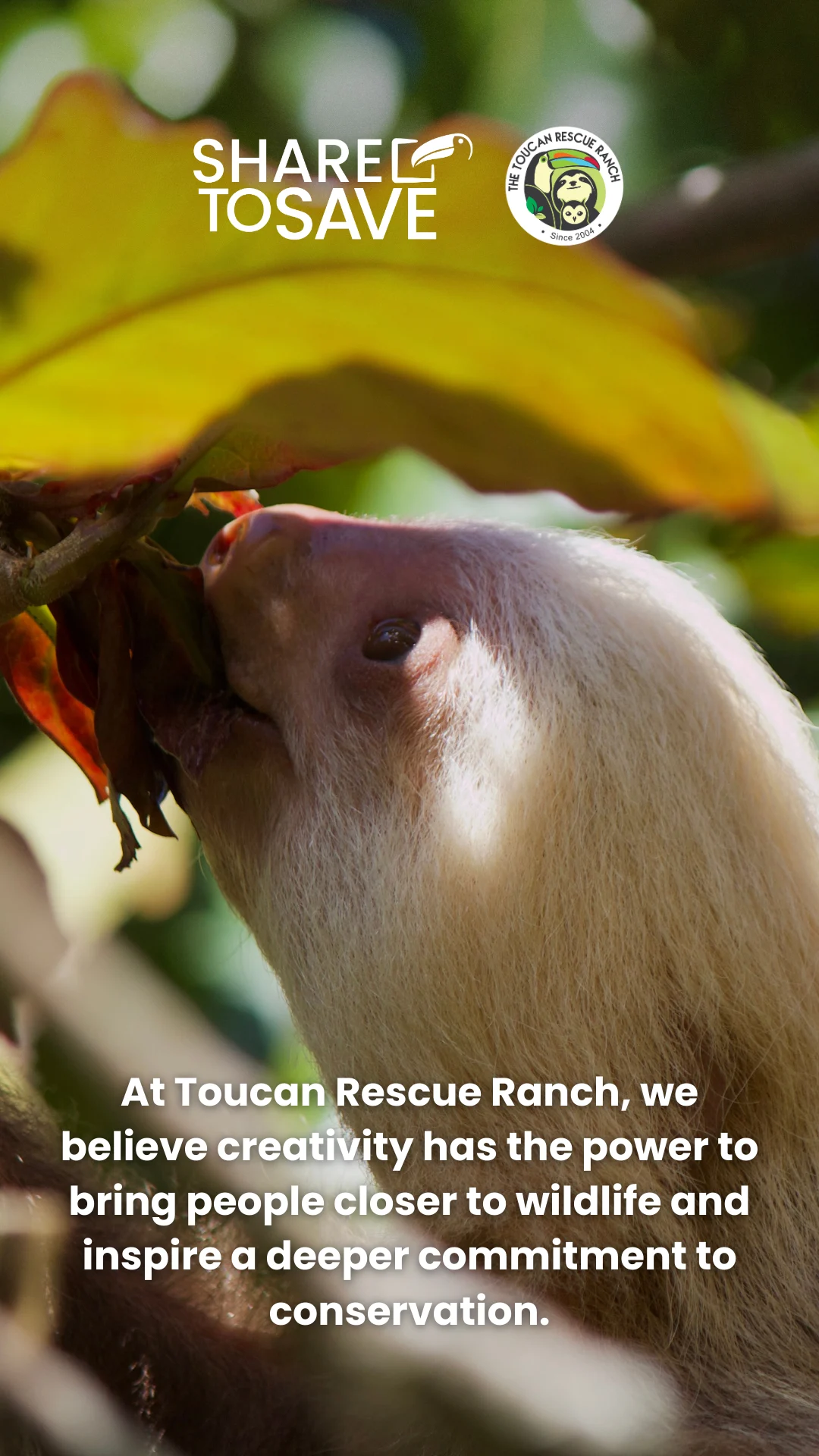
For five years, a global collective of photographers, visual artists, nature enthusiasts, and conservation advocates has united under a singular, powerful objective: granting Costa Rica’s vulnerable wildlife a crucial second chance at life. What began as a trio of grassroots social media campaigns—known widely by the hashtags #TRRShareYourShot, #CallForArtists, and #TunesForToucans—has steadily expanded into a far-reaching international movement. Today, organizers proudly introduce a new moniker that more accurately encapsulates the core philosophy and vital objective of the enterprise: Share to Save.
Operating at the intersection of creative expression and environmental stewardship, Share to Save harnesses the visual power of art, photography, and design to generate both critical public awareness and essential financial support. The initiative invites global creatives to contribute their original works to bolster wildlife rescue, veterinary rehabilitation, and habitat preservation efforts. As this year’s campaign officially opens its submissions under the guiding theme "Creatives for Conservation," the initiative stands poised to broaden its impact on international wildlife welfare.
Five Years of Evolution: The Growth of a Global Conservation Movement
The inception of Share to Save traces back half a decade, rooted in the recognition that creative mediums possess a unique capacity to bridge the psychological gap between human populations and wild ecosystems. In its early iterations, digital campaigns engaged scattered communities of photographers and musicians who utilized their talents to amplify the plight of displaced fauna in Central America. Over the years, these disjointed efforts coalesced into a structured annual event that has successfully galvanized thousands of participants across multiple continents.
The transition to the unified banner of Share to Save marks a strategic maturation for the organization. By consolidating diverse artistic streams into a single, cohesive brand, organizers aim to streamline global outreach, simplify donor engagement, and maximize fundraising efficiency. This evolution reflects a growing understanding within the modern conservation sector that protecting biodiversity requires interdisciplinary collaboration, drawing not only on traditional scientific research and field biology but also on the cultural and emotional resonance provided by the arts.
The 2026 Theme: Creatives for Conservation
At the heart of the current campaign is the 2026 central theme, Creatives for Conservation. The initiative issues an open call to artists, photographers, graphic designers, and visual creators of all backgrounds, inviting submissions inspired by indigenous fauna, delicate ecosystems, and the urgent necessity of ecological preservation.
Unlike traditional art competitions that demand the physical shipping of delicate pieces across international borders, Share to Save employs a decentralized, eco-conscious model. Selected artworks will be printed locally in Costa Rica for a high-profile live gallery exhibition. This innovative framework ensures that artists from any corner of the globe can participate seamlessly without incurring heavy shipping expenses or carbon footprints, while maintaining absolute ownership of their intellectual property.
The live gallery exhibition in Costa Rica serves a dual purpose. It functions as a public showcase where visual arts and environmental science intersect, narrating the complex stories of native wildlife alongside the arduous daily labor of the caretakers, veterinarians, and volunteers dedicated to their protection. Through these curated exhibits, visitors and international observers alike are confronted with the tangible realities of human-wildlife conflict, habitat fragmentation, and climate pressures facing Mesoamerican biodiversity.
The Financial Realities of Wildlife Rescue in Costa Rica
While the cultural impact of the gallery is substantial, the operational necessity of the fundraising apparatus cannot be overstated. Costa Rica is globally celebrated for its progressive environmental policies, high forest-cover retention, and robust eco-tourism sector. However, the administrative and infrastructural burden of caring for injured, orphaned, and displaced fauna falls heavily upon private rescue centers and non-governmental organizations.
Annually, more than 500 animals are admitted to the facilities of the Toucan Rescue Ranch—the primary beneficiary of the Share to Save initiative. These incoming patients arrive bearing the heavy toll of anthropogenic pressures: electrocutions from urban power lines, vehicular strikes, illegal wildlife trafficking, domestic animal attacks, and habitat loss driven by rapid agricultural and real estate expansion.
The rehabilitation process for such a diverse array of species—ranging from apex predators like jaguars and ocelots to arboreal mammals like sloths and howler monkeys, as well as myriad avian and reptilian species—demands immense resources. Comprehensive veterinary care requires specialized diagnostics, pharmaceuticals, surgical suites, and round-the-clock nursing. Furthermore, daily nutritional requirements must be meticulously tailored to each species’ natural diet, while spacious, secure pre-release enclosures are vital to ensuring recovering animals retain their natural behaviors and fear of humans.
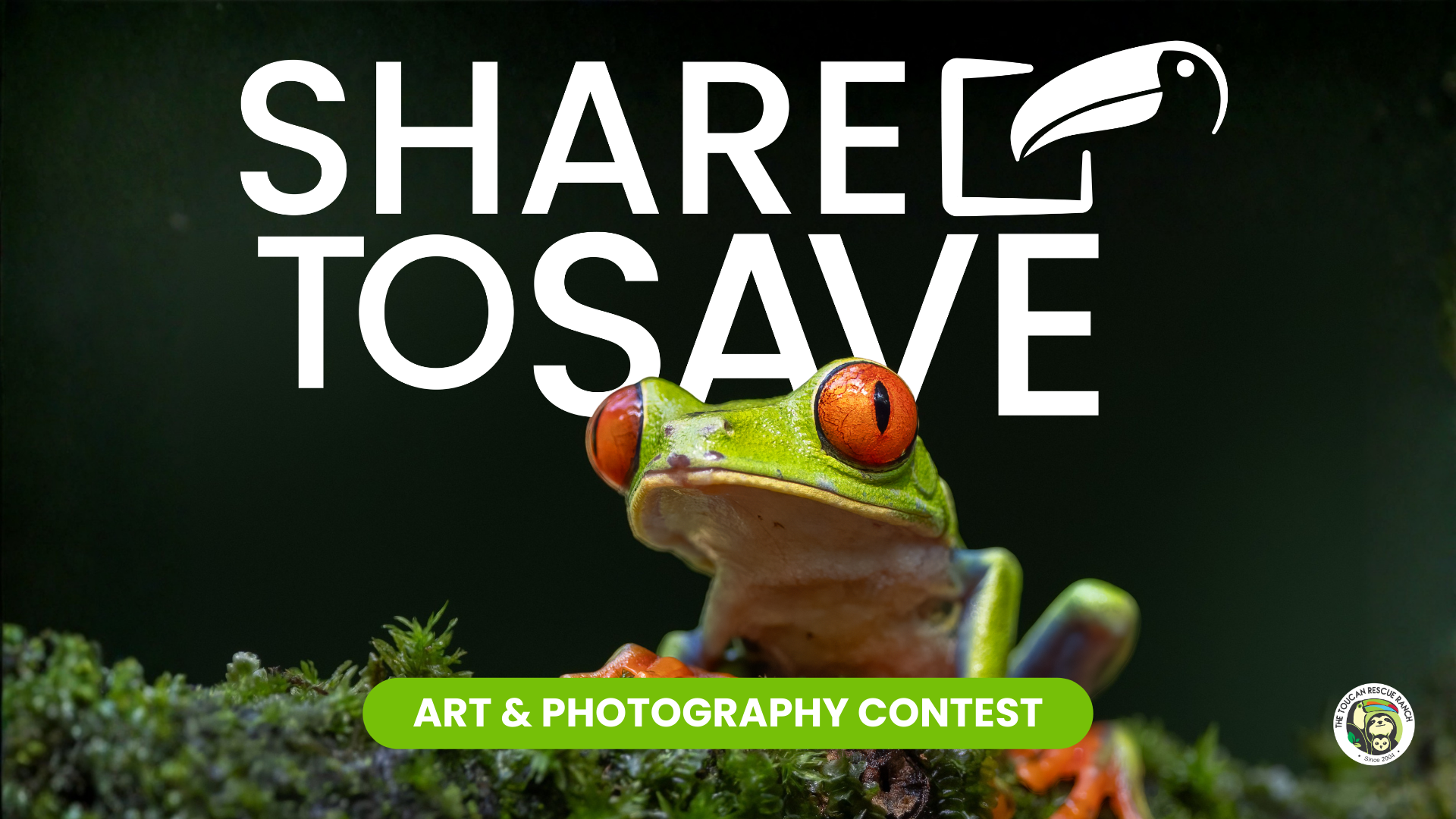
Operating this complex network of rescue centers, permanent sanctuaries, and remote release sites incurs staggering financial costs, exceeding $50,000 every single month. Contrary to a widespread public misconception, wildlife rescue and rehabilitation facilities in Costa Rica receive zero direct operational funding from the national government. Instead, these institutions operate entirely on private philanthropy, corporate sponsorships, grants, and grassroots fundraising campaigns such as Share to Save. Consequently, every dollar raised through the initiative flows directly into the operational ledger, sustaining the daily care, medical treatment, and eventual rewilding of vulnerable patients.
Diverse Perspectives: A Global Gallery of Endangered Beauty
The 2026 submission pool reflects a remarkable geographical and stylistic diversity, featuring works that capture both the delicate fragility and the fierce resilience of the natural world. Participating artists have translated their personal encounters with nature into striking visual commentaries on conservation.
Among the featured pieces, Brazilian artist Cibele Manfredini presents "Coexist," driven by the philosophy that increased ecological literacy fosters deeper affection for the natural world. Similarly, wildlife filmmaker and photographer Francesca Larrain contributes "Manta," emphasizing the urgent need for marine conservation, while German photographer Felix Hinsch documents an intimate encounter with a healthy wild sloth near his residence in "Unexpected Visitor," illustrating the fading boundary between human settlements and natural habitats.
Sculptural and tactile mediums are also well represented. American artist Mike Toppe contributes a hand-sculpted, hand-painted clay model of a Golden Lion Marmoset, designed specifically to raise awareness regarding endangered primates. In the realm of avian portraiture, British artist Darren James Sturrock offers "Highlands," a vibrant painting celebrating Costa Rica’s intricate orchid species and highland birds, echoing the nation’s enduring national ethos of Pura Vida.
Other contributors draw attention to the often-overlooked architects of global ecosystems. Costa Rican artist Adriana Blanco Rojas presents "Sin polinizadores no hay alimentos," highlighting the irreplaceable role of bees and other pollinators in securing agricultural and ecological stability. Meanwhile, photographer Freddy captures the microscopic fragility of endemic Mesoamerican biodiversity with "Hanging on!", portraying a rare salamander clinging to a forest branch—a powerful visual metaphor for the precarious state of cloud forest amphibians facing fungal pathogens and habitat degradation.
Historical and cautionary themes also find a place within the exhibition. Artist Carvings and Canvas submits "Gone.. but not forgotten," a tribute to the extinct thylacine, serving as a stark reminder of the irreversible consequences of anthropogenic extinction. In direct contrast, pieces like Michaela Schwenk’s "Becoming wild" and Katia Hougaard’s "Protecting The Future of Sloths" focus on proactive solutions, highlighting the construction of artificial canopy wildlife bridges across busy Costa Rican roadways to mitigate vehicular mortality and guide mother sloths and their young safely through fragmented canopies.
Mechanics of Impact: How the Voting Process Operates
To foster deep community engagement and maximize financial transparency, the organizers have structured the competition around a direct philanthropic voting model. Supporters from across the globe participate directly in determining the contest winners through a straightforward contribution structure: every $1 donation equates to one vote for a preferred art piece.
Supporters are permitted to cast votes for as many individual artworks as they wish, allowing patrons to distribute their philanthropic support across multiple creators while bolstering the central conservation fund. Furthermore, all financial contributions processed through the Share to Save Art and Photography Contest are fully tax-deductible, providing an added incentive for international donors seeking to maximize the fiscal efficiency of their charitable giving.
The funds accumulated through this democratic voting process are channeled immediately into the operational bloodstream of the rescue facilities. By tying public participation directly to artistic appreciation, the campaign ensures that every vote cast translates into tangible veterinary supplies, specialized infant formulas, structural habitat enrichments, and security measures for animals on the threshold of rehabilitation and release.
Broader Implications for Ecological Stewardship
The longevity and expansion of the Share to Save initiative highlight a broader paradigm shift in modern conservation economics. As traditional philanthropic streams experience volatility and state funding for biodiversity protection remains constrained across developing tropical nations, grassroots initiatives that leverage digital connectivity and global creative networks offer a resilient alternative model.
By transforming passive art consumers into active financial stakeholders in wildlife rescue, campaigns of this scale do more than merely balance monthly operational ledgers. They cultivate an informed, emotionally invested international constituency capable of advocating for systemic environmental policy changes far beyond the borders of Costa Rica. As the 2026 gallery exhibition prepares to open its doors, the collective message from artists, scientists, and animal advocates remains resolute: through the fusion of creative expression and targeted conservation action, vulnerable wildlife is being handed the vital second chance it so richly deserves.
