
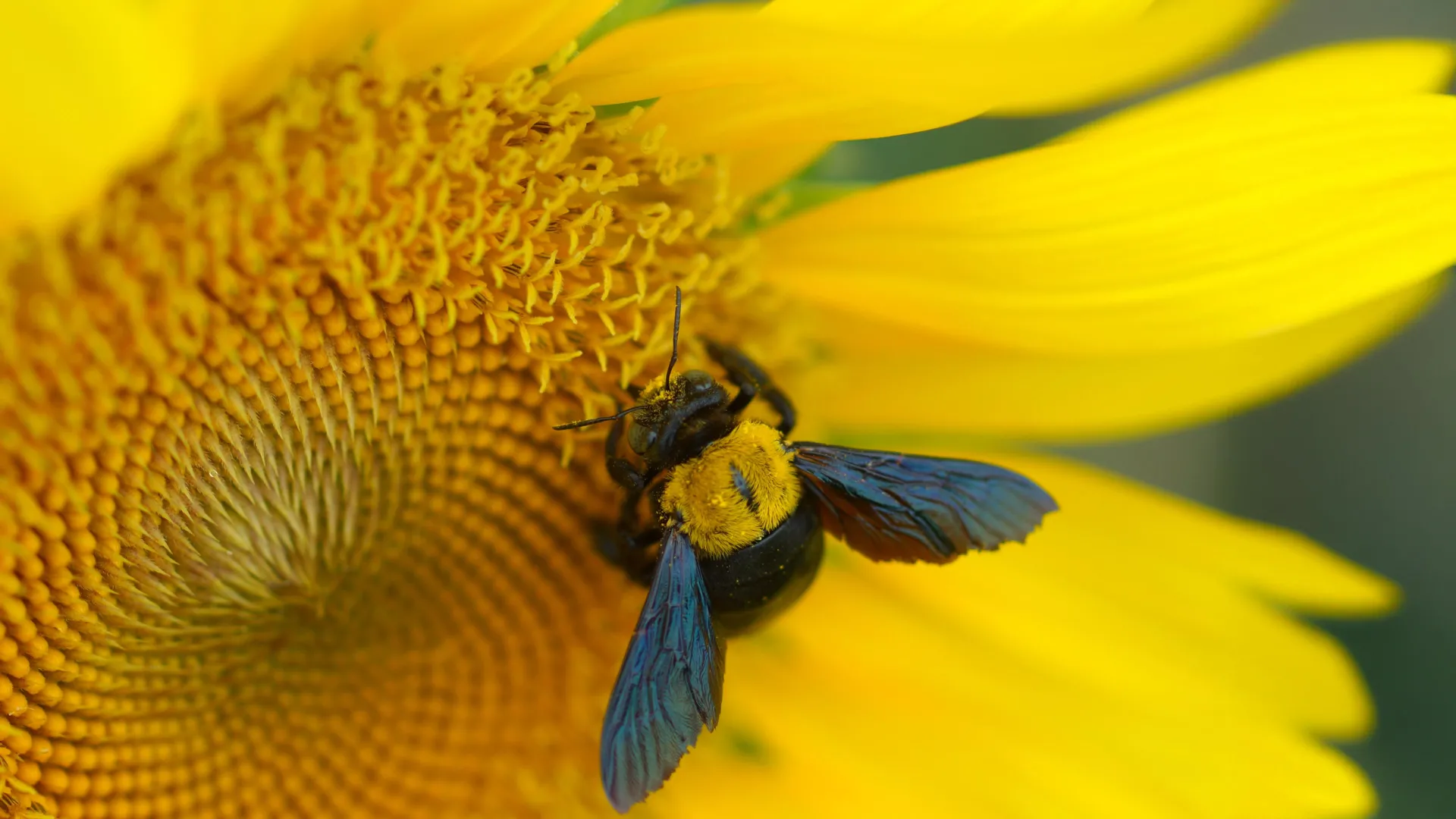
New research suggests that native bee species that build their nests inside plant stems may face the greatest immediate threat from rising temperatures linked to climate change. In stark contrast, bees that nest underground appear significantly better equipped to avoid dangerous heat, offering a crucial insight into species vulnerability in a warming world. This distinction, highlighted in a comprehensive study, underscores the complex interplay between species-specific behaviors and environmental stressors, providing critical data for conservation efforts.
The groundbreaking study, recently published in the esteemed journal Nature Communications, meticulously examined the heat tolerance of 95 distinct native bee species. The geographic scope of the research was extensive, covering eastern mainland Australia, a region renowned for its vast ecological diversity, stretching from the sweltering tropical north down to the cooler, more temperate southern regions. This broad sampling allowed researchers to capture a wide spectrum of climatic adaptations and vulnerabilities inherent to Australia’s unique bee fauna.
A collaborative team of researchers, drawing expertise from a consortium of leading Australian academic institutions including Macquarie University, The University of Sydney, La Trobe University, Flinders University, University of Wollongong, Adelaide University, and The University of Queensland, spearheaded this ambitious project. Their collective objective was multifaceted: to unravel the evolutionary trajectory of heat tolerance across various bee species and, crucially, to assess their inherent vulnerability to the intensifying effects of a warming climate. This interdisciplinary approach, combining entomology, evolutionary biology, and climate science, has yielded insights that are both profound and immediately actionable for conservation planning.
How Nesting Habits Dictate Heat Exposure and Survival
Australia boasts an astonishing biodiversity of approximately 1,700 native bee species, each playing an indispensable role in the nation’s ecosystems. These diverse insects typically fall into one of three primary nesting categories, a behavioral trait now identified as a critical determinant of their resilience to climate change. Some species are geophilous, constructing intricate burrows in the ground, often preferring compacted soil or sandy substrates. Others are xylophilous, utilizing existing cavities within wood, such as natural tree hollows, fallen branches, or even decaying timber. A third, and now identified as the most vulnerable, group are those that nest inside the hollows of plant stems or leverage small, pre-existing holes within twigs and woody plant material.
Dr. Carmen da Silva, the lead author of the study and a distinguished Research Fellow in the Pollinator Futures Research Centre at Macquarie University in Sydney, elaborated on the critical differences in thermal buffering provided by these nesting strategies. "Bees that nest underground can effectively hide from extreme heat," Dr. da Silva explained. "As a result, they are not exposed to temperatures as high as those experienced by bees living above ground, particularly species that inhabit thin plant stems which offer very little insulation from the external heat." The subterranean environment provides a relatively stable microclimate, shielded from the dramatic diurnal and seasonal temperature fluctuations experienced on the surface. Soil acts as an excellent insulator, maintaining cooler temperatures during heatwaves and warmer temperatures during cold snaps, thus offering a crucial thermal refuge.
In stark contrast, stem-nesting species are inherently exposed. The thin walls of plant stems provide minimal, if any, thermal buffer against ambient air temperatures, which are escalating rapidly due to global warming. "Stem-nesting species appear to have the lowest capacity to escape unfavorable environmental temperatures and are likely to be the most impacted by anthropogenic climate change in the near term," Dr. da Silva asserted. This finding is particularly concerning given the projected increases in the frequency and intensity of heatwaves across Australia and globally. The findings unequivocally indicate that the chosen nesting location plays a pivotal role in determining the efficacy with which different bee species can cope with the challenges posed by rising temperatures. This ecological insight provides a potent lens through which to view and prioritize conservation strategies.
The Indispensable Role of Bees in Ecosystems and Agriculture
The survival of bee populations extends far beyond their intrinsic value as fascinating creatures; it is fundamentally intertwined with the health and stability of both natural ecosystems and global agricultural systems. As Dr. da Silva emphasized, "Bees are critical in ecosystems all over the world because of their role as pollinators, and they’re under threat from warming and drying climates." Their decline poses a severe threat to biodiversity and food security alike.
Pollination, the transfer of pollen from the anther to the stigma of a flower, is a fundamental ecological process that underpins the reproduction of over 85% of the world’s flowering plants, including many food crops. Bees, particularly native bees, are the most efficient and diverse group of pollinators. In natural ecosystems, their activity is vital for the propagation of native flora, which in turn supports a vast web of other species, from herbivores to predators, maintaining ecosystem balance and resilience. A decline in native bee populations can lead to reduced plant reproduction, impacting seed and fruit production, and potentially cascading through food webs, threatening the survival of dependent wildlife.
Economically, the stakes are equally high. The global economic value of insect pollination services has been estimated to be in the hundreds of billions of dollars annually, with native bees contributing a significant portion of this value, often complementing or even surpassing the pollination services provided by the introduced European honeybee (Apis mellifera). Dr. da Silva highlighted their crucial role in Australian agriculture: "Bees sustain native ecosystems and play a crucial role in agricultural crop production – tropical native bees are vital pollinators for crops like macadamia nuts, avocados, mangos, and lychees." Beyond these specific examples, native bees contribute to the yields of numerous other crops, including blueberries, cotton, and various vegetables and oilseeds. The potential for a "pollination deficit" due to declining native bee populations could translate into substantial economic losses for farmers, reduced food availability, and increased food prices, thereby impacting global food security.
Tropical Bees Face Exacerbated Climate Risks
The research also unveiled a distinct geographical pattern of vulnerability, directly linked to proximity to the equator. Bee species inhabiting regions closer to the equator, particularly those in Australia’s tropical zones, appeared to be inherently more vulnerable to the overarching impacts of climate change, facing the highest overall risk. This finding aligns with broader ecological principles suggesting that species in tropical environments often live closer to their physiological thermal limits, making them disproportionately sensitive to even modest increases in temperature.
Dr. Vanessa Kellermann, a Senior Lecturer in the Department of Ecology, Plant and Animal Sciences at La Trobe University and a senior author of the study, underscored the inherent complexity in forecasting which species will succumb to the pressures of global warming. "Predicting which species will be vulnerable to climate change is one of the biggest challenges in ecology," Dr. Kellermann stated. She further elaborated on a counterintuitive but critical insight: "We found bee species with the highest heat tolerance were not necessarily the safest from warming, because many of them already live in extremely hot environments."
This implies a critical concept: a species’ absolute heat tolerance is not the sole determinant of its climate change resilience. Instead, it is the margin between its current environmental temperature and its physiological thermal maximum that dictates its vulnerability. In other words, even species that have evolved to withstand high temperatures in their current habitats may possess very little, if any, physiological headroom left to cope with additional warming. For tropical species, which already contend with consistently high temperatures, even a slight increase can push them beyond their adaptive capacity, leading to heat stress, reduced reproductive success, or outright mortality. This phenomenon, known as "thermal safety margins," is a crucial metric for predicting species’ responses to ongoing climate change.
Background Context: A Decade of Growing Concern for Insect Decline
The findings of this study arrive amid a growing global alarm regarding the precipitous decline of insect populations, a phenomenon often referred to as the "insect apocalypse." Over the past decade, numerous scientific reports have highlighted significant decreases in insect biomass and diversity across various taxa and regions. While habitat loss and pesticide use are frequently cited as primary drivers, climate change, with its associated rising temperatures, altered precipitation patterns, and increased frequency of extreme weather events, is increasingly recognized as a major contributor.
Australia, a continent already characterized by extreme climates and high biodiversity, is particularly susceptible to these impacts. The Intergovernmental Panel on Climate Change (IPCC) reports project global average temperatures to continue rising, with regional variations often exceeding the global mean. Australia has already experienced significant warming, with more frequent and intense heatwaves becoming a new norm. For insects, including native bees, these temperature shifts can have profound physiological consequences. Elevated temperatures can directly impact metabolic rates, development times, reproductive success, and immune function. Moreover, climate change can indirectly affect insects by altering the distribution and phenology (timing of biological events) of the plants they rely on for food and nesting materials, leading to potential "mismatches" that disrupt delicate ecological interactions.
Previous research on insect thermal biology has established the concept of Critical Thermal Maximum (CTmax), the temperature at which an organism loses motor control and typically succumbs to heat stress. This study’s systematic approach to measuring CTmax across a wide range of native bee species, combined with an understanding of their nesting ecology, offers a sophisticated prediction model for species vulnerability, moving beyond generalized assumptions about insect resilience.
Implications and Urgent Conservation Strategies
The insights gleaned from this research carry profound implications for biodiversity conservation policy and land management practices in Australia and beyond. Given the disproportionate vulnerability of stem-nesting bees and tropical species, targeted conservation efforts are urgently needed.
One immediate implication is the necessity for enhanced habitat protection and restoration, particularly focusing on areas that provide suitable nesting sites for vulnerable species. For stem-nesting bees, this might involve careful management of native vegetation, ensuring the availability of appropriate plant stems (e.g., pithy stems of certain native plants) for nesting, and avoiding indiscriminate clearing or burning practices that remove these crucial resources. Creating and maintaining structural diversity in landscapes, including areas with fallen timber and dead plant material, can provide varied nesting opportunities and potential thermal refugia.
Furthermore, the study’s findings should inform urban planning and agricultural practices. Promoting pollinator-friendly landscapes in urban areas, through the planting of native species that offer both floral resources and nesting materials, can create crucial stepping stones for bee populations. In agricultural settings, incorporating native vegetation corridors, reducing pesticide use, and exploring agroecological practices that support biodiversity can mitigate some of the climate change pressures. While "bee hotels" (artificial nesting structures) are popular, their design and placement must be carefully considered to avoid concentrating pathogens or inadvertently attracting non-native species. The focus should remain on creating and restoring natural, resilient habitats.
Government agencies and environmental organizations are likely to integrate these findings into their climate adaptation strategies. A spokesperson for the Australian Department of Agriculture, Water and the Environment, while not directly commenting on this specific study, has previously stated that "understanding the impacts of climate change on Australia’s unique biodiversity is paramount to developing effective conservation strategies. Research that identifies specific vulnerabilities, such as those related to nesting habits, is invaluable for guiding targeted interventions." Conservation groups, such as the Australian Wildlife Conservancy, are expected to leverage this research to advocate for increased funding for native pollinator research and habitat restoration programs, particularly in vulnerable tropical regions. The agricultural sector, represented by industry bodies like the Australian Macadamia Society, will likely consider these findings in their discussions around sustainable farming practices and the long-term resilience of crop yields, potentially investing in research to support native pollinator populations on their farms.
Understanding Native Bee Behavior: A Foundation for Future Research
Despite the significant advances presented by this study, much remains unknown about Australia’s incredibly diverse native bee populations. Dr. Ros Gloag, a co-senior author of the study and Senior Lecturer in Evolutionary Biology in the School of Life and Environmental Sciences at the University of Sydney, underscored this knowledge gap. "We still know so little about most of Australia’s amazing native bees," Dr. Gloag remarked. "This study helps us recognise that having a better understanding of native bee behavior is key to identifying the greatest threats to their wild populations."
Future research must delve deeper into the intricate behavioral ecology of these bees. This includes conducting detailed microclimate studies within different nest types to precisely quantify the thermal buffering capacity of various nesting substrates. Genetic studies can shed light on the evolutionary pathways of heat adaptation and identify populations that may possess greater genetic resilience. Long-term monitoring programs for bee populations, coupled with environmental data, are essential to track demographic trends and assess the effectiveness of conservation interventions. Furthermore, understanding the synergistic effects of multiple stressors – such as the combined impacts of climate change, habitat loss, and pesticide exposure – will be crucial for developing holistic conservation strategies.
The chronology of scientific understanding regarding insect decline and climate change vulnerability has evolved rapidly. From initial observations of localized declines, research has progressed to continental and global assessments, identifying key drivers and vulnerable traits. This latest study marks a significant step forward by pinpointing specific behavioral and geographical vulnerabilities within native bee communities. It serves as a clarion call for intensified research, informed policy-making, and proactive conservation action to safeguard these essential pollinators against the escalating threat of a warming planet. The fate of countless plant species and vital agricultural crops hinges on our ability to understand and protect them.
