
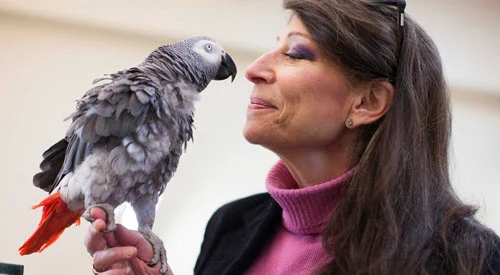
The author, Dr. Irene Pepperberg, recounts her harrowing experience of being stranded in Dubai due to escalating geopolitical tensions and the subsequent cancellation of flights, detailing her arduous journey back to the United States. The narrative, originally shared as a personal blog, sheds light on the bureaucratic challenges and personal anxieties faced by civilians caught in the crossfire of international conflict. This article aims to expand upon Dr. Pepperberg’s account, providing a more comprehensive and contextualized report of the events, their broader implications, and the systemic issues that contributed to her prolonged displacement.
The Unfolding Crisis and Its Impact on Civilian Travel
In late February and early March of 2023, the geopolitical landscape experienced significant shifts, leading to widespread flight cancellations and travel disruptions across various regions. While the specific details of the conflict that precipitated Dr. Pepperberg’s situation remain alluded to, the impact on civilian aviation was undeniable. Airlines, citing safety concerns and operational challenges stemming from the escalating tensions, began grounding flights, leaving numerous travelers stranded in transit hubs like Dubai International Airport (DXB), one of the world’s busiest airports.
Dubai, a global nexus for international travel, found itself hosting a growing number of expatriates and tourists unable to depart. The United Arab Emirates (UAE) government, while extending certain courtesies, often stipulated conditions for assistance, such as requiring passengers to be flying on specific national carriers, which inadvertently excluded many individuals. This created a complex web of logistical and financial challenges for those caught in the disruption.
A Scientist’s Ordeal: Dr. Pepperberg’s Experience
Dr. Irene Pepperberg, a renowned researcher in animal cognition, particularly known for her work with the African grey parrot Alex and his successor Griffin, found herself in Dubai for reasons tied to her professional endeavors. The escalating conflict led to a cascade of flight cancellations, transforming her planned transit into an extended and increasingly anxious stay.
Initially, Dr. Pepperberg, like many others, relied on the assurances of airline representatives and the assistance of diplomatic channels. However, her experience highlights the systemic inefficiencies and communication breakdowns that can occur during such crises. Repeated flight reschedulings and subsequent cancellations created a sense of futility and mounting stress. The State Department, while reportedly cordial, proved to be largely ineffective in providing concrete solutions. A specific instance cited involved a promised flight to Dulles, which, despite an affirmative response and instructions to prepare, never materialized due to a lack of communication between different departmental desks. This bureaucratic disconnect left Dr. Pepperberg in a state of uncertainty, forcing her to extend her hotel stay repeatedly.
Furthermore, the UAE’s offer of support for stranded travelers was found to be conditional, primarily benefiting passengers of Emirates Airlines. This meant that individuals like Dr. Pepperberg, whose travel plans were routed through other carriers, had to bear the financial burden of extended accommodation and sustenance. She resorted to purchasing food from a nearby supermarket, a more economical alternative to hotel dining, underscoring the financial strain faced by many. Her airline, Qatar Airways, remained grounded for flights departing from Dubai, severing her connection to the United States.
The Role of Philanthropy and the Dawn of Hope
The turning point in Dr. Pepperberg’s predicament arrived through an unexpected channel: a donor to The Alex Foundation, an organization supporting her research. Upon learning of her situation, the donor offered unconditional financial support for any measures necessary to ensure her safe return. This act of generosity provided a crucial lifeline, enabling Dr. Pepperberg to explore options that were previously financially prohibitive.
The possibility of overland travel to Oman, a journey of over ten hours, was considered. However, this route was primarily facilitated for British citizens who could access chartered flights from Oman back to the UK. As a U.S. citizen, this option offered no direct advantage. The narrative here underscores a critical observation: while official government channels struggled to provide timely and effective assistance to private citizens, private philanthropic efforts proved instrumental in resolving the crisis for Dr. Pepperberg. This highlights a potential gap in governmental emergency response protocols for civilians caught in international disruptions.

A Glimmer of a Solution: Commercial Flights Emerge
Amidst the ongoing uncertainty, a ray of hope appeared with the announcement of Emirates Airlines resuming direct commercial flights to select U.S. cities. Dr. Pepperberg, acting swiftly, secured a business-class seat on a flight to New York City scheduled for March 9th. The substantial cost of the ticket, initially a point of hesitation, was mitigated by the donor’s generous pledge. This moment represented a significant shift from a state of prolonged limbo to the tangible prospect of returning home.
However, the journey was not without its final hurdles. A significant explosion near the airport on the morning of her scheduled departure caused a temporary closure, injecting a fresh wave of anxiety. While the airport reopened after a few hours, the incident served as a stark reminder of the volatile environment. The subsequent check-in process was also fraught with uncertainty, with Dr. Pepperberg unable to obtain her boarding pass until her arrival at the airport, a mere 12 hours before departure, which offered little reassurance.
The Final Leg of the Journey: Navigating Airport Protocols
Upon reaching the airport, Dr. Pepperberg encountered further administrative challenges in locating the correct check-in area. The sheer scale of the airport and the prevailing stress of the situation made navigating the procedures difficult. It was only through the intervention of a remarkably helpful airport staff member, who recognized her age and predicament, that she received personalized assistance. This included a wheelchair, which she gratefully accepted given the immense stress she had endured.
The business-class lounge provided a much-needed respite before boarding. During the flight, which offered Wi-Fi, Dr. Pepperberg was able to send out updates to concerned friends and colleagues, signaling her imminent return. The relief of finally being airborne and en route to U.S. soil was palpable.
Reintegration and Lingering Effects
The arrival in the United States, despite the subsequent steps of customs, TSA security checks, a layover in New York, and the final flight to Boston, was met with profound gratitude. The author emphasizes that none of these subsequent stages mattered as much as the knowledge that she was no longer in a war zone.
The past month since her return has been dedicated to rescheduling appointments and addressing the logistical disruptions caused by her prolonged absence. Dr. Pepperberg candidly admits to experiencing residual post-traumatic stress symptoms, a testament to the psychological toll of her ordeal. Witnessing even a fraction of life in a conflict zone has profoundly impacted her perspective, leading her to contemplate the resilience and coping mechanisms of individuals living in such environments for extended periods.
Her colleagues in Dubai remain safe but stressed, and discussions are ongoing about finding ways to conclude their research studies without the necessity of a return trip in the following year.
A Promise of Return to Scientific Discourse
While the experience in Dubai has undeniably left a lasting impression, Dr. Pepperberg intends to resume her regular blogging schedule next month, shifting the focus back to her scientific work and the lab. She reiterates her profound gratitude to her donors, whose crucial support was instrumental in facilitating her safe return. The narrative serves not only as a personal account of survival but also as a broader commentary on the vulnerabilities of civilians caught in geopolitical crises and the critical role of both governmental preparedness and individual acts of kindness. The events in Dubai serve as a stark reminder of the interconnectedness of global stability and the human cost of conflict, even for those merely transiting through affected regions.
