
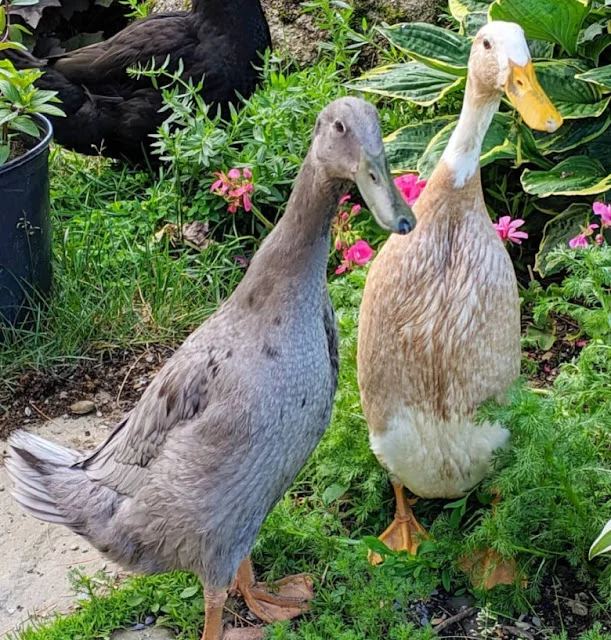
The Indian Runner duck, scientifically categorized within the Anas platyrhynchos domesticus lineage, represents one of the most anatomically and behaviorally distinct breeds in the domestic avian world. Characterized by an extraordinary upright posture that has earned it the colloquial nickname "penguin duck," this breed deviates significantly from the horizontal waddle associated with most waterfowl. Beyond its aesthetic novelty, the Indian Runner duck possesses a rich historical pedigree and a specialized physiological profile that has rendered it a vital asset in sustainable agriculture and pest management for over two millennia.

Anatomical Distinctions and Morphological Profile
The most striking feature of the Indian Runner is its vertical carriage. While standard domestic ducks maintain a horizontal orientation, the Indian Runner stands at an angle ranging from 50 to 80 degrees, often reaching a fully vertical 90-degree stance when alert or foraging. This posture is the result of a specific genetic evolution in pelvic structure; the legs are set much further back on the body than in other breeds. This anatomical shift facilitates a running gait rather than a waddle, allowing the birds to cover significant distances with a speed and agility that is unique among domestic ducks.
In terms of physical dimensions, the Indian Runner is classified as a "light" breed. Mature individuals typically weigh between 3 and 5 pounds (1.4 to 2.3 kilograms). Despite their slender frames, they are surprisingly tall, with standard specimens reaching a height of approximately two feet, while larger drakes can stand up to 2.5 feet. Their necks are long and slender, tapering into a wedge-shaped head with a straight bill.

A notable biological constraint of the breed is its inability to fly. While they possess wings, the muscle-to-weight ratio and wing structure have been diminished through centuries of selective breeding for ground-based activity. This lack of flight is compensated for by their exceptional terrestrial mobility. Furthermore, the breed boasts the highest degree of color diversity recognized by poultry associations, with 16 distinct varieties including blue, chocolate, black, white, trout, and fawn.
Historical Chronology: From Southeast Asian Rice Paddies to Western Science
The history of the Indian Runner duck is a testament to the long-standing relationship between human agriculture and animal husbandry. Archaeological evidence, including stone carvings found in Java and other parts of Southeast Asia, suggests that the breed’s ancestors were established as far back as 2,000 years ago.

For centuries, these ducks were integral to the agrarian economies of Indonesia and Indochina. Farmers developed a nomadic herding system where the ducks served as a mobile pest-control workforce. Each morning, large flocks were driven into rice paddies to forage. Their diet consisted of high-protein pests including snails, slugs, grasshoppers, and various insect larvae that would otherwise devastate rice crops. This symbiotic relationship allowed the ducks to receive ample nutrition while providing farmers with a chemical-free method of crop protection. At dusk, the birds were herded back to enclosures, a practice that selected for birds with high stamina, intelligence, and the ability to travel long distances on foot.
The breed’s introduction to the Western world occurred in the mid-19th century. Shipments arrived in the United Kingdom around the 1830s and 1840s, immediately drawing the attention of naturalists. Among those fascinated by the breed was Charles Darwin, who famously referred to them as "penguin ducks" due to their silhouette. Darwin utilized the Indian Runner as a case study in his research on phenotypic variation within domesticated species, noting how selective pressure could radically alter the skeletal structure of the Mallard descendant.

By the late 19th century, the breed had transitioned to the United States, where it was officially recognized by the American Poultry Association in 1898. Its arrival sparked a "duck fever" among farmers, not only for its appearance but for its unparalleled egg-laying capabilities.
Agricultural Utility and Integrated Pest Management (IPM)
In the modern era, the Indian Runner duck has seen a resurgence in popularity due to the global shift toward organic farming and Integrated Pest Management (IPM). Traditional agriculture often relies on synthetic molluscicides and insecticides, which can have detrimental effects on soil health and local ecosystems. The Indian Runner duck offers a biological alternative.

Vineyards, particularly in South Africa, France, and the United States, have become prominent employers of these birds. A notable example is the Vergenoegd Löw Wine Estate in Stellenbosch, South Africa, which maintains a "workforce" of over 1,000 Indian Runner ducks. These birds are released into the vineyards daily to hunt white dune snails, a primary pest for grapevines. This practice has allowed the estate to significantly reduce its reliance on pesticides, showcasing the breed’s continued relevance in high-value commercial agriculture.
The benefits of utilizing Runners in agriculture extend beyond pest control. As the birds forage, they provide natural fertilization through their droppings, which are high in nitrogen, phosphorus, and potassium. Their constant movement also provides a light aeration of the topsoil, enhancing water penetration and root health.

Reproductive Metrics and Egg Production Data
From a production standpoint, the Indian Runner is often described as the "Leghorn of the duck world." While most ducks lay eggs seasonally, selective breeding has optimized the Runner for year-round production.
Statistical data indicates that a healthy female Indian Runner can produce between 180 and 250 eggs per year, with some high-performance strains exceeding 300 eggs under optimal conditions. The eggs are medium to large in size, typically weighing between 65 and 80 grams, and vary in color from pristine white to a subtle light green or blue.

One behavioral quirk of the breed is its lack of "broodiness." Because they were historically bred for continuous movement and egg production, the maternal instinct to sit on a nest for the 28-day incubation period has been largely bred out of the population. In a commercial or farm setting, this necessitates the use of incubators or "broody" foster hens of other breeds to hatch Runner ducklings. However, anecdotal reports from contemporary breeders suggest that in stable, low-stress environments, some individuals may still exhibit traditional nesting behaviors, successfully hatching and rearing offspring.
Behavioral Traits and Social Structure
The temperament of the Indian Runner is characterized by high energy, curiosity, and a strong flocking instinct. Unlike more sedentary breeds such as the Pekin or the Muscovy, Runners are perpetually active. They are known for their "busy" nature, constantly probing the ground for forage and communicating with the flock through a series of vocalizations.

While they are generally docile and non-aggressive toward humans or other poultry, they possess a high startle reflex. Their upright posture becomes even more pronounced when they sense a potential threat, allowing them to scan the horizon for predators. Because they are ground-bound, they are vulnerable to terrestrial predators such as foxes, coyotes, and domestic dogs. Their primary defense is their speed; they are capable of running at a pace that far exceeds the waddle of a standard duck, though they cannot sustain high speeds over long distances.
Sociability is a hallmark of the breed. They thrive in groups and exhibit complex social hierarchies. Breeders recommend keeping them in flocks of at least three to five individuals to prevent stress. When raised from ducklings with frequent human interaction, they can become quite tame, though they rarely lose their inherent skittishness.

Conservation Status and Genetic Preservation
Despite their historical prominence, the Indian Runner duck was once categorized as a breed at risk due to the industrialization of poultry farming, which favored heavy, meat-focused breeds or highly specialized hybrid layers. The Livestock Conservancy currently lists the Indian Runner duck in the "recovering" category.
This classification indicates that while the breed is no longer in immediate danger of extinction, its population numbers and genetic diversity still require careful monitoring. The "recovering" status is granted to breeds that have exceeded the numbers required for the "watch" category but still lack the massive, stable populations seen in mainstream commercial breeds.

Conservation efforts are focused on maintaining the 16 recognized color varieties and ensuring that the structural integrity of the breed—specifically the upright carriage and running ability—is not lost to poor breeding practices. Organizations like the Livestock Conservancy emphasize that the preservation of the Indian Runner is vital not just for historical reasons, but for maintaining a genetic reservoir of hardy, pest-resistant, and highly productive waterfowl.
Economic and Ecological Implications
The continued breeding and utilization of Indian Runner ducks carry significant implications for the future of sustainable food systems. As climate change and pesticide resistance pose new challenges to global agriculture, the "low-tech" solution provided by specialized livestock becomes increasingly attractive.

Economically, the Indian Runner provides a dual-purpose value for small-to-medium-scale farmers. The sale of high-quality, nutrient-dense duck eggs provides a steady revenue stream, while the reduction in pesticide costs and the increase in soil fertility provide indirect financial benefits. Ecologically, the integration of these birds into farming systems promotes biodiversity and reduces the chemical runoff that often contaminates local watersheds.
In conclusion, the Indian Runner duck is far more than a biological curiosity. It is a highly specialized agricultural tool with a history that spans millennia and a utility that addresses modern ecological concerns. From the ancient rice paddies of Indonesia to the cutting-edge organic vineyards of the 21st century, the "running duck" remains a paragon of avian evolution and human-animal cooperation. As the agricultural sector continues to seek sustainable alternatives to industrial practices, the Indian Runner is poised to remain a central figure in the landscape of restorative farming.
