
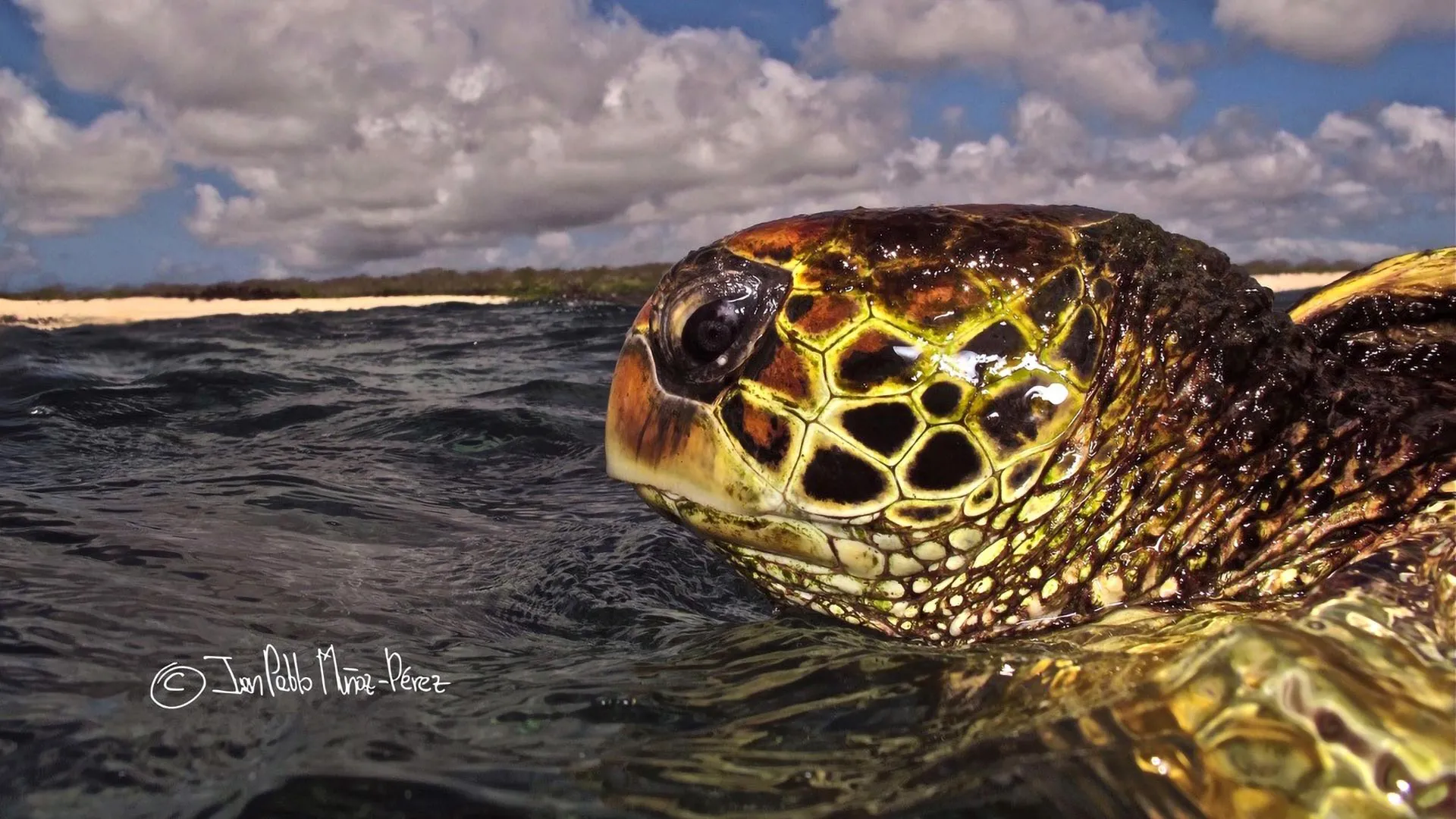
Sea turtles have long captivated marine biologists and nature enthusiasts alike with their epic, transoceanic odysseys. Utilizing an innate biological compass tuned to Earth’s magnetic field, the position of the sun, and the flow of ocean currents, these marine reptiles routinely traverse vast expanses of open water. Their journeys are legendary: they swim thousands of kilometers between productive foraging grounds and the ancestral beaches where they hatched, driven by an ancient imperative to reproduce. Given this well-documented instinct for global navigation, a recent scientific discovery centering on a unique population of green sea turtles in the Galápagos Islands has upended long-held assumptions about marine reptile behavior, revealing a remarkably sedentary lifestyle in an unexpected corner of the Pacific.
The Galápagos Melting Pot: Yellow and Black Morphs
At the center of this surprising revelation are the green sea turtles (Chelonia mydas), a species that occupies a unique ecological niche among the world’s seven living sea turtle species. While juveniles start life as omnivores, consuming a mix of animal and plant matter, adults transition into strict herbivores, subsisting almost entirely on marine algae and lush seagrass meadows.
Within the archipelago, researchers study two genetically distinct forms of green sea turtles: the "yellow morph" and the "black morph." Globally, yellow-morph green sea turtles are predominantly distributed across the tropical and subtropical waters of the western Pacific. Conversely, black morphs are native to the eastern Pacific, inhabiting coastal waters west of the Americas and south of Southern California.
The Galápagos Islands represent a rare geographic intersection—the only known location on Earth where these two distinct forms converge, sharing the exact same marine habitat and feeding on identical types of underwater vegetation. Despite their shared diet and overlapping territories, the two groups are not entirely identical. Observational data indicates that young yellow morphs exhibit faster growth rates than their black-morph counterparts, hinting at underlying physiological, metabolic, or ecological differences that science has yet to fully understand.
Unprecedented Satellite Tracking Campaign
To unravel the mysteries of this dual-morph ecosystem, an international research team set out to investigate the spatial ecology of the yellow-morph green sea turtles in the Galápagos. Led by Dr. John W. Rowe, a professor at Alma College in the United States and corresponding author of the study published in Frontiers in Amphibian and Reptile Science, the team sought to quantify how much territory these animals utilize, whether they move between islands, and how they interact with the vast protected waters of the 198,000-square-kilometer Galápagos Marine Reserve.
The fieldwork commenced in 2015, a pivotal year for baseline ecological data collection in the region. Researchers carefully captured nine adult yellow-morph green sea turtles in the shallow coastal waters surrounding four distinct islands within the archipelago. The cohort comprised seven males and two females. To monitor their movements in real-time, the scientists affixed advanced electronic satellite transmitters to the carapaces of the turtles. These devices were programmed to relay precise geographic coordinates via the low-orbit Argos satellite network whenever the animals surfaced to breathe.
The monitoring phase was extensive. Individual turtles were tracked for varying durations, with the longest continuous tracking period reaching 418 days. In most cases, tracking concluded naturally when the satellite tags eventually detached from the shells or ceased transmission due to battery depletion or biofouling.
Spatial Patterns and Island-Hopping Habits
When the telemetry data finally streamed in, the results challenged prevailing scientific expectations. Rather than embarking on long-range foraging migrations or utilizing the open ocean, the tagged yellow morphs demonstrated an overwhelming preference for shallow coastal habitats close to shore. While occasional excursions took individual turtles up to 25 kilometers away from the nearest landmass, the vast majority of their time was spent within the immediate littoral zones of the archipelago.
The study mapped varied behavioral patterns among the nine subjects. Five of the turtles maintained restricted home ranges centered almost entirely around a single island for the duration of the monitoring period. Others proved to be more mobile, acting as localized commuters within the reserve. For instance, individuals nicknamed Bernardo and Sara regularly traversed the oceanic channels separating Isabela and San Cristóbal islands. Meanwhile, a turtle named Leandro routinely moved back and forth between Isabela and Española.
The most exploratory individual of the cohort was a female named Ainoa. Initially tagged near San Cristóbal Island, Ainoa embarked on a multi-island journey that took her first to the shores of Santa Cruz Island and subsequently onward to Isabela.
Further analysis of the tracking data revealed a distinct temporal rhythm to these movements. Inter-island travel was not random; rather, it occurred exclusively during the cooler seasonal period spanning from April through October. Across the entire cohort, each turtle maintained an average home range spanning approximately 1,498 square kilometers, though the precise size of these territories varied considerably from one animal to the next.
The Paradox of the Homebound Migrants
For Dr. Rowe and his colleagues, the overarching takeaway was unmistakable: despite belonging to a species renowned for oceanic voyaging, the yellow-morph green sea turtles residing in the Galápagos can be exceptionally homebound. Over a three-year observation window, not a single one of the satellite-tagged turtles ventured outside the boundaries of the Galápagos Marine Reserve.
However, the researchers emphasize the necessity of contextualizing these findings within the broader arc of a sea turtle’s life cycle. Because the study captured a specific snapshot in time, the possibility remains that these resident adults undertake longer, multi-year migrations at stages outside the monitoring window.
This caveat applies particularly to female yellow morphs. Because female yellow morphs are entirely absent from the historical nesting records of the Galápagos beaches, scientists hypothesize that these individuals must eventually abandon their secure island habitats to undertake monumental reproductive migrations back to their natal breeding grounds in the western Pacific.
This behavioral dichotomy stands in stark contrast to the resident black-morph green sea turtles. As co-author Dr. Juan Pablo Muñoz Pérez, a professor at the Universidad San Francisco de Quito in Ecuador, points out, some female black morphs do utilize Galápagos beaches for nesting. Depending on the specific individual, these black morphs may act as year-round residents within the archipelago, undertake localized migrations to nearby oceanic islands, or even swim thousands of kilometers away to distant feeding grounds off the coasts of Central and South America.
Conservation Implications for the Galápagos Marine Reserve
Beyond its contributions to behavioral ecology, the study delivers critical insights for regional conservation policy. Marine reserve management strategies have historically focused on protecting static, localized hot spots. However, the discovery that yellow-morph green sea turtles routinely navigate between multiple islands complicates traditional conservation boundaries.
Because individual turtles depend on an interconnected network of habitats spread across several islands, protecting a single localized feeding ground is demonstrably insufficient to ensure their long-term survival. Environmental degradation in the oceanic corridors or secondary island habitats utilized during the cooler months could severely disrupt the natural movement ecology of these populations.
"Since individual turtles may rely on waters around multiple islands, the quality of habitat that is available for foraging should be maintained intact across all islands, and not allowed to degrade anywhere," Dr. Rowe stated, underscoring the need for holistic, reserve-wide environmental protections.
As human pressures, climate change, and shifting ocean temperatures continue to alter marine ecosystems worldwide, understanding the fine-scale movements of keystone species like the green sea turtle is more critical than ever. The homebound giants of the Galápagos serve as a poignant reminder of how much remains to be discovered about the natural world, proving that even the most well-traveled species can still harbor surprising secrets close to home.
