
A quiet transformation is taking place across the American landscape, where the traditional, resource-heavy model of interment is being challenged by a philosophy that views the deceased not as a burden on the environment, but as a final contribution to it. A growing number of properties across the United States are being protected as a final resting place for humans and a permanent habitat for wildlife, marking a shift in how society approaches the end of life. This movement, known as conservation burial, marries the solemnity of funeral rites with the urgent necessity of land preservation, offering a tangible way for individuals to leave a legacy that supports biodiversity rather than depleting it.
The Philosophy of Natural Return
The current standard for American funerals—involving chemical embalming, steel or concrete vaults, and non-biodegradable caskets—carries a significant environmental footprint. Research indicates that traditional burials in the United States account for the annual interment of millions of gallons of formaldehyde-based embalming fluids, thousands of tons of steel, and enough concrete to build a small city. In contrast, conservation burial practitioners strictly adhere to the guidelines of the Green Burial Council, which mandate that bodies be laid to rest without chemical intervention, placed instead in biodegradable materials such as cotton shrouds or simple wooden caskets.
By eschewing the traditional vault, which prevents the body from interacting with the earth, conservation burial allows for a natural decomposition process. Microorganisms break down the organic material, facilitating the return of nutrients to the soil and fostering a cycle of renewal. This practice, while ancient in its simplicity, has become a modern beacon for those seeking a sustainable alternative to the carbon-intensive death industry.
Chronology of the Green Burial Movement
The rise of conservation burial is not a sudden trend but the culmination of several decades of shifting environmental consciousness. The movement gained its first major institutional traction in the late 1990s and early 2000s, as the Green Burial Council began establishing standards to differentiate between "green" burials (which minimize environmental impact) and "conservation" burials (which actively protect land).
By the mid-2000s, the first dedicated conservation burial grounds began to emerge, often on private lands managed by land trusts or non-profit organizations. Throughout the 2010s, the movement expanded into a national network, supported by the formation of the Conservation Burial Alliance. This organization has played a pivotal role in creating frameworks for how cemeteries can simultaneously function as ecological restoration sites. Today, there are dozens of such sites across the country, from the lush forests of Washington State to the restored prairies of Texas, with many more currently in the planning stages in states like Arkansas and beyond.
Case Studies in Ecological Stewardship
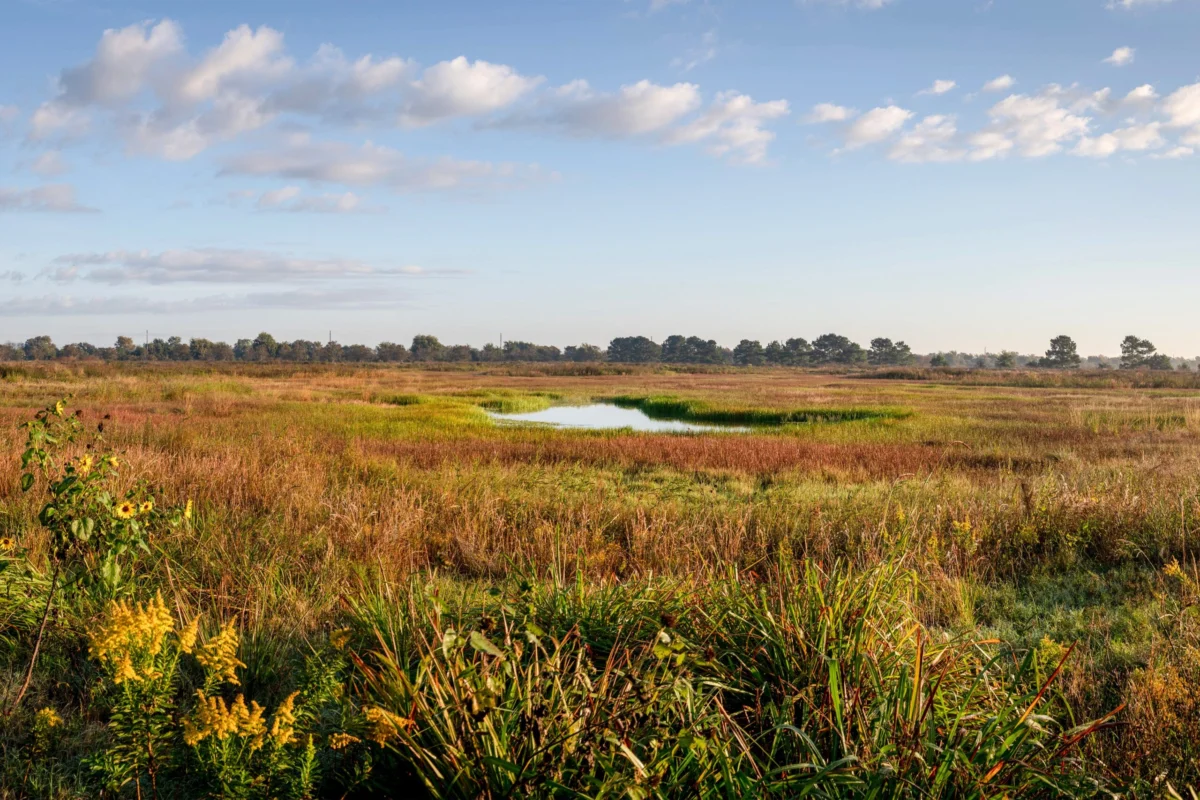
The Katy Prairie Preserve, located just west of the Houston metropolis, serves as a primary example of this dual-use model. Spanning 20,000 acres of diverse ecosystems—including wetlands, working lands, and grasslands—the preserve provides a vital sanctuary for more than 300 native bird species. Within this vast expanse lies the Blazing Star Sanctuary, a designated conservation burial ground.
For residents like Bernice Hotman, a dedicated birder, the choice to be interred at Blazing Star is deeply personal. "My choices were the columbarium at my church or Blazing Star," Hotman explains. "I decided I’d rather be with the bobwhite and the Dickcissel music than the organ music."
At Blazing Star, the management team, led by cemetery manager Bethany Foshée, focuses on returning former farmland to a thriving wetland state. The burial mounds are crowned with native flora such as Gulf vervain and Texas bluebonnets, providing essential nectar for pollinators. The success of these sites is measurable: the return of species like the Roseate Spoonbill and the Eastern Meadowlark is often accelerated by the managed restoration efforts funded by burial fees.
Similarly, in southern Washington State, the White Eagle Memorial Preserve—situated on the 1,300-acre Ekone Ranch—utilizes prescribed burns to maintain the health of oak and ponderosa pine forests. According to cemetery director Jodie Buller, the process is highly communal and personalized. Families often participate in the closing of graves by hand, decorating the sites with flat stones and seasonal flowers. "It’s so very unique and distinct to the person, and that, to me, just feels like a gift," Buller observes.
Data and Environmental Implications
The environmental implications of this shift are profound. When burial fees are tied to land conservation, the death care industry moves from a model of resource consumption to one of land stewardship. According to the Conservation Burial Alliance, these sites are often protected by permanent conservation easements, ensuring that the land can never be developed, regardless of who owns the property in the future.
Beyond the carbon sequestration provided by protected forests and grasslands, these sites serve as "living" memorials. They are frequently open to the public, functioning as nature preserves that offer community programming such as bird walks, educational workshops, and musical performances. This accessibility bridges the gap between the living and the dead, transforming the cemetery from a place of exclusion into a vibrant community space.
Official Perspectives and Future Challenges
The growth of this movement has caught the attention of both religious and secular leaders. Ragan Sutterfield, an Episcopal priest and founder of Mourning Cloak, a group establishing a conservation burial ground in Arkansas, views the practice as a bridge between the spiritual and the biological. "Whether you’re religious or not, when we have these major life transition moments, people want to mark them and recognize them in a particular way," Sutterfield notes. "This provides a very powerful way of seeing our lives return to the Earth while also giving new life."
However, the path to widespread adoption is not without hurdles. Regulatory frameworks in many states were written with traditional, vault-based burial in mind, often complicating the permitting process for natural burial grounds. Additionally, the public perception of death remains tied to the conventional funeral home experience, requiring a significant shift in consumer education. Organizations like the Green Burial Council are working to address these challenges by providing comprehensive maps of certified providers and guidance on how to navigate local laws.
Lee Webster, a co-founder of the Conservation Burial Alliance, emphasizes that the movement is ultimately about reclaiming a lost connection to the landscape. "What conservation burial affords people is a vision and a place where they can be part of that larger ecosphere, in peace and serenity," Webster says. "That just might be the ultimate celebration of life."
The Broader Impact: A Legacy of Preservation
As climate change continues to threaten natural habitats, the concept of "conservation through burial" offers a novel solution to land preservation funding. While not a replacement for broader environmental policy, it creates a sustainable, self-funding mechanism for the protection of biodiversity. Each burial acts as an endowment for the future, ensuring that as one life ends, a piece of the planet is secured against the encroaching threats of urban sprawl and environmental degradation.
For many, the appeal lies in the permanence of the impact. Unlike a traditional monument that may eventually crumble or be forgotten, a conservation burial site continues to function as a dynamic, evolving ecosystem. The birds continue to sing, the wildflowers bloom, and the cycle of the seasons persists, effectively allowing the deceased to participate in the ongoing narrative of the natural world.
As the movement matures, it is likely that we will see an increase in interdisciplinary collaborations between ecologists, funeral directors, and land trust managers. By aligning the needs of the grieving with the needs of the environment, conservation burial grounds are redefining the final chapter of human life, transforming it from a static end into a meaningful, lasting contribution to the living Earth. Whether through the quiet rustle of prairie grass or the shade of a ponderosa pine, the land remembers those who have chosen to remain part of it.
