
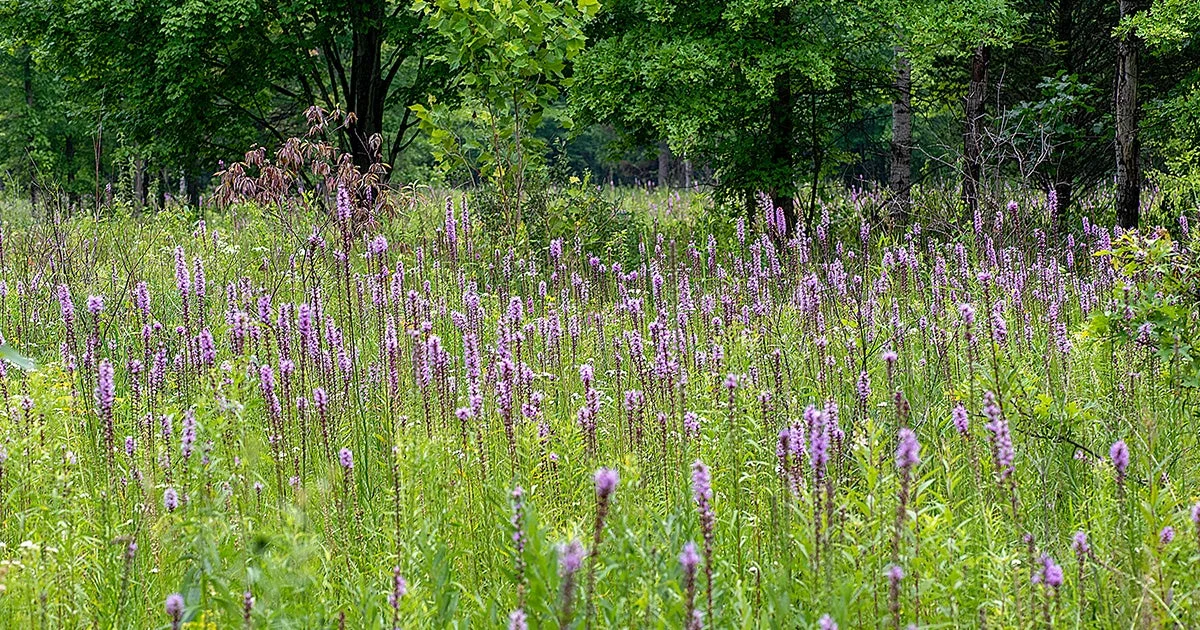
Just fifteen miles from the industrial heart of Detroit, a silent, verdant sanctuary clings to existence. Here, where the horizon meets a sea of swaying bluestem and Indian grass, goldenrods, asters, and blazing stars provide a vibrant tapestry that defies the encroaching sprawl of the Motor City. Sibley Prairie, Michigan’s largest remaining lakeplain prairie, is not merely a local plot of land; it is a globally rare, fire-dependent ecosystem that once stretched across vast swaths of the Great Lakes basin. Today, however, its future hangs in a precarious balance, with a December 2026 deadline looming for a $6 million fundraising effort to prevent the 440-acre property from falling to commercial development.
A Legacy at Risk: The Crisis of Fragmentation
The current parcel, owned by the scrap metal processing firm Fritz Enterprises, has long been a quiet neighbor to the industrial complexes that define the Downriver region of Michigan. For years, the land remained relatively undisturbed, allowing a rich, complex habitat to thrive. That status changed abruptly last summer when the owners scheduled the property for auction. The move threatened to replace this vital biodiversity hotspot with the same asphalt, concrete, and commercial sprawl that has already swallowed thousands of acres of similar habitat across the Midwest.
In a desperate, eleventh-hour intervention, the Michigan Land Conservancy secured an option to purchase the land, backed by private lending. This action halted the immediate threat of auction, but it also initiated a high-stakes financial campaign. The Save Sibley Prairie Coalition, a partnership of thirteen organizations including the Detroit Bird Alliance and the Southeast Michigan Land Conservancy (SMLC), now faces the daunting task of securing the necessary capital to permanently protect the site.
The Ecological Significance of Lakeplain Prairie
To understand the urgency of this campaign, one must understand the scarcity of the landscape. Before European settlement, the region boasted approximately 160,000 acres of lakeplain prairie—a unique tallgrass formation that characterizes the sandy, poorly drained soils of the Great Lakes coastline. Today, that number has plummeted to fewer than 1,000 acres in total. Sibley Prairie is, quite literally, a relic of a vanished world.
The site is a mosaic of habitats, including woodlands, wetlands, and oak savannas. It serves as a critical refuge for over 200 plant species and a host of animal life that is increasingly struggling to find footing in the modern landscape. Among the residents of Sibley are species currently classified as at-risk in Michigan, including the American bumblebee, the Blanding’s turtle, the pickerel frog, and the northern flying squirrel.
A Vital Corridor for Migratory Birds
The ecological value of the prairie extends far beyond its borders, acting as a crucial link in the continental chain of survival for migratory birds. Situated just five miles from the Detroit River, the site sits at the convergence of the Mississippi and Atlantic Flyways. This geographic positioning makes it an essential stopover point for species traversing thousands of miles.
The plight of grassland birds serves as a bellwether for the health of North American ecosystems. According to recent data from the Audubon Society, grassland bird populations have declined by more than 40 percent in the last half-century, a rate of loss that outpaces any other avian group on the continent. Sibley Prairie provides a sanctuary for species such as the Eastern Meadowlark, the Dickcissel, the Upland Sandpiper, and the Bobolink. For these birds, every acre of protected, undisturbed grassland is a lifeline. Without sites like Sibley, the ability of these species to successfully breed and migrate is severely compromised.
Historical Context and Traditional Stewardship
The significance of Sibley Prairie is not limited to biology; it is deeply rooted in the history of the region. Indigenous peoples inhabited these lands for millennia, employing sophisticated land management techniques, most notably the use of prescribed fire. These controlled burns prevented the encroachment of woody vegetation, keeping the grasslands open and productive, which in turn sustained populations of bison.
Historical records indicate that the last bison in Michigan was reportedly shot on the grounds of Sibley Prairie, marking a tragic end to an era of megafauna that had thrived here for centuries. Later, during the Great Migration, the land provided a different form of sustenance. While many Black families moved into Detroit for industrial work, others sought out the wet, affordable prairie soils to establish small farms. The coalition is committed to honoring this history, with plans to integrate educational exhibits and signage that recognize both the Indigenous stewardship of the past and the contributions of Black farmers who cultivated the land in the 20th century.
The Quest for Environmental Justice
The campaign to save Sibley is also an argument for environmental equity. Southeast Michigan is home to nearly 5 million people, yet access to quality green space remains starkly unequal. In Detroit, parkland accounts for only 6 percent of the total land area, significantly lower than the 19 percent average found in other major U.S. cities.
As a Black-majority city, the lack of nature access in Detroit is a clear manifestation of systemic environmental injustice. Nationwide, research indicates that communities of color are three times as likely to be "nature-deprived" as white communities. The Save Sibley Prairie Coalition envisions the site not just as a nature preserve, but as a public asset that democratizes access to the outdoors. Plans include connecting the area to existing public transit lines, building trails, and creating community programming that invites schools, hiking clubs, and families to experience the prairie firsthand.
Financial Milestones and the Path Forward
The coalition has made significant progress toward its $6 million goal. To date, they have secured two separate million-dollar gifts, alongside over $760,000 in contributions from individual donors, foundations, and corporations spanning 45 U.S. states and international locations. However, the "nail-biting" nature of the funding effort means that the final stretch will require a sustained, collective effort.
If the $6 million is raised, the land will be secured. But the work will not end there. The coalition has projected an additional $3.7 million requirement for long-term restoration and management. This secondary phase of funding is essential to address the decades of neglect and fragmentation that have allowed invasive species to take root. Restoration efforts will involve professional staffing, intensive native planting, and the reintroduction of prescribed burns to mimic the natural fire cycles that originally shaped the prairie.
Analysis of Implications
The success or failure of the Sibley Prairie project serves as a test case for urban conservation in the 21st century. As cities continue to expand, the pressure on "leftover" wild spaces becomes immense. If the coalition fails to meet its goal, the sale of the property will likely lead to rapid development, resulting in the permanent loss of a globally rare ecosystem that can never be replicated once destroyed.
Conversely, if the land is saved, it will represent a victory for a new model of conservation—one that prioritizes biodiversity, historical memory, and equitable access simultaneously. By transforming a private industrial asset into a public ecological and cultural resource, the Save Sibley Prairie Coalition is demonstrating how modern cities can proactively protect their heritage.
"It’s survived all these years, despite development around it," says Jill Lewis, executive director of the Southeast Michigan Land Conservancy. "With some help, it can thrive, expand and become this beautiful destination down the road from Detroit."
As the clock ticks toward the final deadline, the future of the prairie rests on a combination of corporate support, philanthropic investment, and the active engagement of the local community. The outcome will ultimately determine whether this rare slice of Michigan’s past will be erased by the march of progress, or whether it will be protected as a thriving, living legacy for generations to come.
