
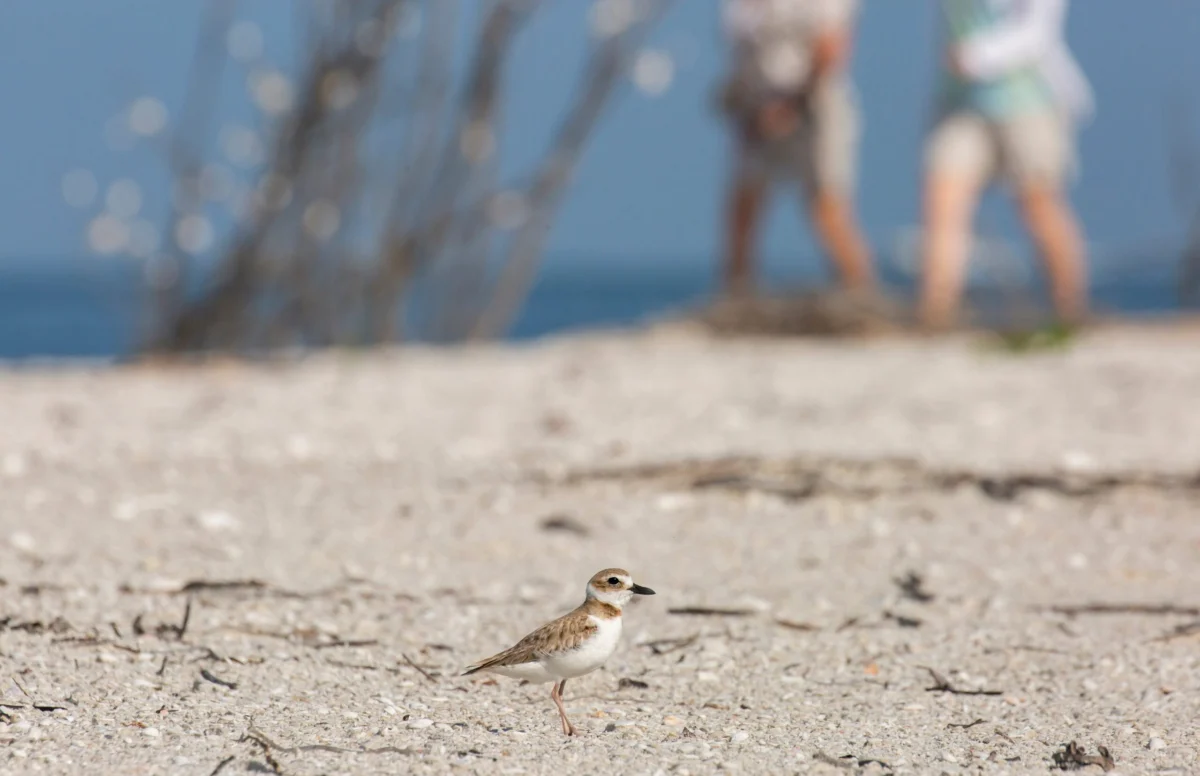
The sprawling spit of sand at the southern end of South Litchfield Beach, where the relentless interplay of tides and waves sculpts a wide, inviting expanse, has long been a favored haunt for both human beachgoers and a diverse array of nesting birds. It was precisely this dynamic environment that led Robert Purkerson, during a routine beach walk last spring, to an astonishing discovery: a bustling, unfenced colony of hundreds of Least Terns, nesting directly on the open beach. This serendipitous finding, occurring perilously close to the very activities that often threaten such fragile ecosystems—people strolling along the shoreline and dogs enthusiastically chasing balls through the surf—ignited a rapid, coordinated conservation response that underscores the critical importance and expanding reach of South Carolina’s shorebird stewardship programs.
The Genesis of a Conservation Success Story at South Litchfield
Robert Purkerson’s discovery in the spring marked a pivotal moment for coastal wildlife protection in South Carolina. While the presence of nesting birds on such a prime coastal habitat was not entirely unexpected, the sheer size of the Least Tern colony and its immediate vulnerability were striking. Hundreds of these tiny, agile seabirds, known for their distinctive calls and swift flight, had chosen this accessible stretch of sand as their nursery, laying camouflaged eggs directly on the ground—a nesting strategy common among shorebirds but one that leaves them highly susceptible to disturbance. What made the situation particularly urgent was the absence of any protective barriers, a stark contrast to many other known tern nesting sites along the South Carolina coast, which are typically cordoned off to safeguard vulnerable nests and chicks.
Recognizing the immediate peril to the burgeoning colony, Purkerson did not hesitate. He promptly reported his observations to both Audubon South Carolina and the South Carolina Department of Natural Resources (SCDNR). This swift communication activated a crucial rapid response mechanism. Within a short period, SCDNR personnel were on-site, assessing the situation and installing protective fencing around the entire colony. This physical barrier served as the immediate line of defense, creating a safe zone for the nesting birds and signaling to beach visitors the presence of sensitive wildlife.
However, the intervention did not stop at fencing. The long-term success of such a colony hinges on consistent monitoring and public engagement. Purkerson, already a passionate advocate, further galvanized efforts by collaborating with Audubon to recruit and organize a team of dedicated volunteers. Throughout the summer, these stewards became the frontline guardians of the South Litchfield colony. Their duties extended beyond passive observation; they actively monitored the birds, documented nesting success, and, crucially, engaged with beachgoers. These interactions were vital, transforming casual visitors into informed participants in conservation, educating them about the importance of sharing the shore with these delicate avian residents. Abby Burke, Senior Coastal Coordinator at Audubon South Carolina, lauded Purkerson’s initiative, stating, "Robert is a great example of all the ways that our stewards are on the frontlines of shorebird conservation. They are out there all spring and summer, walking the beach and engaging the public." This sentiment highlights the indispensable role of community involvement in the broader conservation strategy.
The Broader Imperative: Understanding Shorebird Vulnerability and Decline
The South Litchfield incident serves as a powerful microcosm of the larger challenges facing shorebird populations across the globe and particularly along the rapidly developing South Carolina coast. Shorebirds, a diverse group of birds that inhabit coastal areas, beaches, and wetlands, have experienced a precipitous decline in recent decades. Scientific data indicate that these populations have plummeted by an alarming 33 percent over the last half-century. This drastic reduction is attributable to a confluence of factors, primarily habitat loss, the pervasive impacts of climate change, and chronic human disturbance.
Species like the Least Tern, Wilson’s Plover, and American Oystercatcher are particularly vulnerable because of their ground-nesting habits. Unlike many other bird species that build nests in trees or shrubs, these birds lay their eggs directly on the sand, often in shallow scrapes that offer minimal protection. Their eggs and newly hatched chicks are incredibly well camouflaged, blending seamlessly with the surrounding shells, sand, and debris. While this camouflage is an evolutionary advantage against natural predators, it makes nests virtually invisible to humans and pets, leading to accidental trampling.
The proximity of human activity poses another significant threat. When people, dogs, or even vehicles get too close to a nesting site, adult birds "flush" or fly off their nests. Even brief periods of absence can have fatal consequences for eggs and hatchlings. Eggs, exposed to direct sunlight, can quickly overheat and become unviable. Conversely, during cooler weather or at night, exposure can lead to hypothermia. Chicks, left unprotected, become easy prey for gulls, crows, raccoons, and other opportunistic predators. Furthermore, repeated flushing expends critical energy reserves that adult birds need for foraging and caring for their young. The cumulative effect of these disturbances significantly reduces nesting success rates, pushing already declining populations further towards vulnerability.
Habitat loss remains a relentless pressure. Coastal development, erosion exacerbated by sea-level rise, and the hardening of shorelines (e.g., seawalls, jetties) permanently remove or degrade critical nesting and foraging grounds. Climate change introduces further complexities, with increased storm intensity leading to more frequent and severe overwash events that can inundate entire nesting colonies, destroying eggs and chicks. The ongoing struggle for space along the coast, therefore, necessitates proactive and adaptive conservation strategies.
Scaling Conservation: The Audubon South Carolina Stewardship Program
The successful intervention at South Litchfield Beach is emblematic of the growing momentum behind Audubon South Carolina’s Coastal Stewardship Program. Heading into the 2026 summer season, the program is more active and expansive than ever before. The year 2025, which saw South Litchfield added as the newest stewardship site, was a landmark period for the initiative. Audubon, in close collaboration with numerous conservation partners including SCDNR, local governments, and other environmental organizations, mobilized an impressive network of volunteers.
During the 2025 season alone, the program tallied 150 dedicated volunteers who contributed countless hours across 13 beaches. This extensive network spanned nearly the entire South Carolina coast, from the iconic Huntington Beach State Park in the north to Hunting Island near Beaufort in the south. This geographical reach underscores the program’s strategic intent: to establish a pervasive presence that can effectively monitor and protect vulnerable shorebird populations across the state’s diverse coastal habitats.
The core function of these stewards is multifaceted. They are trained to identify shorebird species, locate nesting sites, and recognize signs of disturbance. Their presence on the beaches serves as a visible deterrent to potential threats and an invaluable source of information for the public. Stewards engage beachgoers in friendly, informative conversations, explaining why certain areas are cordoned off, the importance of keeping dogs leashed, and the simple actions individuals can take to minimize their impact on nesting birds. They also play a crucial role in collecting data, which informs scientific understanding of nesting success, population trends, and the efficacy of different management strategies. This blend of community engagement, scientific monitoring, and direct protective action forms the bedrock of Audubon’s scalable conservation model.
Highlights from the 2025 Stewardship Season: Beyond South Litchfield
While South Litchfield Beach captured immediate attention, the 2025 stewardship season was rich with other significant achievements, demonstrating the breadth and depth of the program’s impact:
Wilson’s Plover Flagging Project at Folly Beach Lighthouse Inlet Heritage Preserve:
In a significant scientific endeavor, Audubon South Carolina joined forces with biologists from the Town of Kiawah Island to initiate a crucial research project focused on Wilson’s Plovers. At the Folly Beach Lighthouse Inlet Heritage Preserve, six Wilson’s Plovers were fitted with field-readable flags. These distinctive plovers, characterized by their large bills perfectly adapted for hunting fiddler crabs, are surprisingly understudied despite their prevalence in coastal ecosystems. The application of these unique flags, each bearing a green color and a three-digit alphanumeric code, allows researchers to track individual bird movements across different seasons. This data is invaluable for understanding their migratory patterns, habitat use, and overall population dynamics, providing critical insights for more targeted conservation strategies. The project also empowers the public: if a Wilson’s Plover with a green flag and a three-digit alphanumeric code is sighted, individuals are encouraged to report it to Abby Burke at [email protected] and Town of Kiawah Island Wildlife Biologist Aaron Given at [email protected]. This citizen science component amplifies data collection and fosters public participation in research.
Remote Boating Area Stewardship:
Addressing the unique challenges of remote coastal areas, Audubon successfully restarted a stewardship program at a heavily used boating location. This initiative was spearheaded by a dedicated volunteer named Scott Glass, who utilized his personal boat to regularly access the island. Recognizing that remote sites, while often perceived as pristine, are equally vulnerable to human disturbance—particularly from recreational boating activities—Glass recruited additional volunteers to join him. Their mission was to educate boaters about the critical importance of sharing these secluded spaces with nesting birds. Boaters often inadvertently disturb nesting colonies by landing too close, generating wakes that can flood nests, or allowing pets to roam freely. The presence of stewards at these remote sites provided an essential educational bridge, fostering a culture of responsible recreation that prioritizes wildlife protection.
Intensive Nest Monitoring at Folly Beach Lighthouse Inlet Heritage Preserve:
Audubon staff also piloted an intensive shorebird nest monitoring project at Folly Beach Lighthouse Inlet Heritage Preserve. This project involved closely following every single nest within the preserve, a detailed and labor-intensive effort designed to gather granular data on nesting success and failure. Researchers meticulously tracked 14 Wilson’s Plover pairs and one American Oystercatcher pair throughout their breeding cycle. The results were encouraging: the project documented that 8 plover chicks successfully fledged from their nests. Critically, for the nests that did not succeed, the primary causes of failure were identified as natural events such as flooding and predation, rather than direct human disturbance. This finding suggests that the combination of active stewardship efforts and the strategic placement of protective fencing is highly effective at this particular site in preventing human-induced nest loss. Audubon plans to continue this rigorous nest monitoring project in subsequent years to determine if this pattern of success is consistent and to use the accumulated data to continuously refine and improve stewardship and outreach strategies at the preserve.
Official Perspectives and Collaborative Imperatives
The success of these programs is deeply rooted in collaboration. Abby Burke’s perspective, representing Audubon South Carolina, highlights the strategic vision: "Audubon’s growing volunteer stewardship network offers a model for how conservation can scale: locally driven, science-informed, and rooted in the simple act of showing up." This philosophy emphasizes empowering local communities with scientific guidance to effect tangible change.
The South Carolina Department of Natural Resources (SCDNR) is an indispensable partner in these efforts. As the state agency responsible for managing South Carolina’s natural resources, SCDNR provides critical expertise, regulatory enforcement, and logistical support, such as the rapid installation of fencing at South Litchfield. A representative from SCDNR, speaking on the broader collaboration, would likely emphasize the shared responsibility in protecting the state’s natural heritage. "The health of our coastal ecosystems and the survival of our shorebird populations depend on a concerted effort from state agencies, non-profits, and the public," a hypothetical SCDNR official might state. "Partnerships like those with Audubon allow us to extend our reach, engage more citizens, and implement effective, on-the-ground conservation measures that are vital for these vulnerable species."
Local governments, such as the Town of Kiawah Island, also play a crucial role by providing resources, land access, and local expertise. Their involvement, as seen in the Wilson’s Plover flagging project, demonstrates how integrated approaches can yield comprehensive and impactful results. This multi-stakeholder model ensures that conservation efforts are robust, well-resourced, and responsive to local needs and conditions.
Broader Implications and The Future of Coastal Conservation
The experiences at South Litchfield Beach and the expanded stewardship efforts across South Carolina offer a compelling model for coastal conservation in an era of unprecedented environmental challenges. The success stories, particularly the observed reduction in human-caused nest failures at sites like Folly Beach, demonstrate that dedicated stewardship and public education can indeed mitigate the impact of human presence on fragile ecosystems. This provides a glimmer of hope amidst the broader narrative of declining biodiversity.
However, the challenges persist and are indeed growing. South Carolina’s coast is experiencing rapid human population growth, leading to increased recreational pressure and further coastal development. The impacts of climate change, including accelerated sea-level rise and more intense storm events, threaten to continually reshape and diminish critical shorebird habitats. Therefore, the need for scalable, adaptable conservation strategies is more urgent than ever.
The Audubon South Carolina Coastal Stewardship Program, with its emphasis on local engagement, scientific rigor, and public education, represents a proactive and vital response to these pressures. It is not merely about protecting individual nests but about fostering a deeper understanding and appreciation for coastal wildlife among the public, transforming passive observers into active participants in conservation. Healthy shorebird populations are often indicators of healthy coastal ecosystems, which in turn support robust tourism industries and provide invaluable ecological services.
For individuals who wish to contribute, there are multiple avenues. Direct involvement through volunteering is highly encouraged, and interested parties can contact Abby Burke at [email protected] to get involved. Beyond formal volunteering, every beach visitor can make a significant difference through simple, responsible actions: always leashing dogs on the beach, walking around flocks of birds rather than through them, strictly obeying closed area signs, and maintaining a respectful distance from any nesting birds or active foraging areas. These collective actions, rooted in awareness and responsibility, are the enduring foundation for ensuring that South Carolina’s vibrant coastal ecosystems remain a haven for its precious shorebird populations for generations to come. The lessons learned from a small colony of Least Terns at South Litchfield Beach resonate far beyond its sandy shores, echoing a call to action for shared stewardship of our invaluable natural world.
