

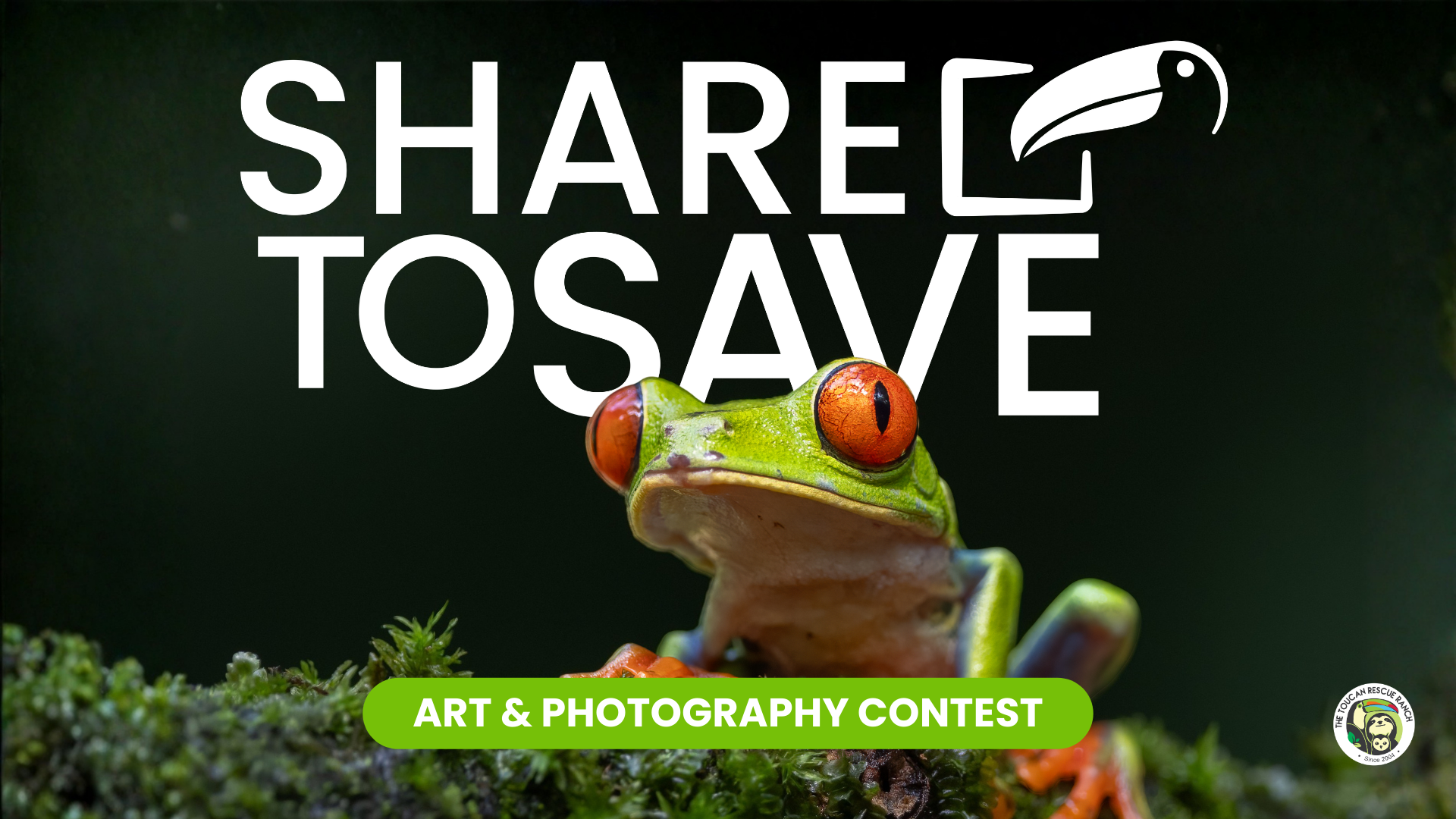
The Toucan Rescue Ranch, a prominent wildlife rescue and rehabilitation facility based in Costa Rica, has officially announced the rebranding of its long-standing creative fundraising campaign. After five years of operating under various social media-driven titles, the initiative has been unified under the new name, Share to Save. This strategic transition marks a significant milestone in the organization’s history, signaling a move toward a more cohesive global identity while maintaining its core mission: providing a second chance for Costa Rica’s diverse and often threatened wildlife.
The Share to Save initiative represents the evolution of several successful digital campaigns, including #TRRShareYourShot, #CallForArtists, and #TunesForToucans. By consolidating these efforts, the Toucan Rescue Ranch aims to streamline its outreach to photographers, artists, and nature enthusiasts worldwide. The 2024-2025 cycle of the program is centered on the theme "Creatives for Conservation," an invitation for visual storytellers to leverage their craft in support of biological preservation.
The Economic Reality of Wildlife Rehabilitation in Costa Rica
The rebranding comes at a critical time for the Toucan Rescue Ranch. As a non-governmental organization (NGO), the facility operates in a complex financial landscape. Despite Costa Rica’s international reputation as a leader in environmental protection and "green" policy, wildlife rescue centers within the country do not receive direct government funding. Instead, these institutions rely entirely on private donations, educational tourism, and creative initiatives like Share to Save.
Operational data provided by the ranch highlights the scale of the challenge. The facility currently manages a Rescue Center, a permanent Sanctuary, and a dedicated Release Site. On average, more than 500 animals arrive at the ranch annually. These animals are typically victims of habitat loss, vehicular collisions, power line electrocutions, or the illegal pet trade. Many arrive as orphans requiring round-the-clock neonatal care, while others require complex orthopedic surgeries and long-term physical therapy.
The financial burden of this work is substantial. Monthly operational costs for the Toucan Rescue Ranch exceed $50,000. These funds cover specialized veterinary equipment, high-protein nutritional diets for various species, the maintenance of secure enclosures, and the salaries of professional biological and medical staff. The Share to Save campaign is designed to bridge the gap between these high overhead costs and the lack of state-sponsored financial support.
Evolution of a Creative Movement: A Five-Year Chronology
The journey to Share to Save began half a decade ago as a grassroots social media effort. Initially, the ranch utilized hashtags like #TRRShareYourShot to encourage amateur and professional photographers to share images of Costa Rican fauna. This fostered a digital community of conservation-minded individuals who used their platforms to highlight the beauty and fragility of tropical ecosystems.
As the community grew, the ranch expanded the scope to include "Call for Artists," inviting illustrators and painters to submit works inspired by specific rescue cases, such as the famous "Millie the Two-Toed Sloth" or various toucan species that had undergone beak reconstruction. The success of these individual drives led to the realization that a unified brand was necessary to maximize impact.
Today, Share to Save is defined as a comprehensive creative initiative that integrates art, photography, and design. The program not only raises funds but also serves as an educational tool, using visual media to explain the biological importance of "umbrella species" and the intricacies of the rewilding process.
The 2024 Theme: Creatives for Conservation
This year’s theme, "Creatives for Conservation," emphasizes the role of the artist as an advocate. The initiative invites submissions from around the globe, spanning various mediums including digital design, traditional painting, clay sculpture, and high-resolution photography. A unique aspect of the program is its commitment to local economic support; all selected pieces for the physical exhibition are printed locally in Costa Rica. This reduces the carbon footprint of international shipping while ensuring that the artists retain full ownership of their intellectual property.
The selected works will be showcased in a live gallery in Costa Rica. This exhibition serves as a bridge between the digital world and the physical reality of conservation. By viewing art in proximity to a rescue center, visitors are granted a deeper understanding of the narratives behind the animals—moving beyond the aesthetic value of the art to the survival of the subjects themselves.
Highlights from the Current Participant Gallery
The diversity of submissions in the current cycle reflects a global concern for ecological stability. Each piece is accompanied by an artist’s statement detailing the inspiration behind the work, often linking the art to specific conservation challenges.
Among the notable submissions is "Coexist" by Cibele Manfredini, which emphasizes the necessity of human-wildlife harmony. Francesca Larrain’s "Manta" focuses on marine conservation, a vital component of Costa Rica’s biodiversity that is often overshadowed by terrestrial fauna. Felix Hinsch’s "Unexpected Visitor" captures a healthy sloth in its natural habitat, providing a stark contrast to the injured sloths frequently seen in the ranch’s clinical wards.
The inclusion of diverse species is a hallmark of the gallery. Maruquel Gill’s "La Belleza de las Mariposas" highlights the role of invertebrates in the ecosystem, while Mike Toppe’s hand-sculpted "Golden Lion Marmoset" brings attention to primate conservation. The "Creatives for Conservation" theme is further exemplified by Luisa Vidales Reina, who utilized repurposed packaging paper for her drawing, integrating the medium into the message of sustainability.
Technological and biological intersections are also present. Katia Hougaard’s "Protecting The Future of Sloths" illustrates the importance of wildlife bridges—man-made rope structures that allow arboreal mammals to cross roads and avoid power lines. This piece serves as a direct educational tool regarding one of the primary causes of wildlife injury in the Guanacaste and Central Valley regions.
The Voting Mechanism: A Direct Impact Model
The Share to Save campaign utilizes a "Donate to Vote" model, which transforms public engagement into tangible resources. Every $1 donation constitutes one vote for a chosen art piece. This system democratizes the judging process while ensuring that the competition serves its primary purpose: fundraising.
Because all contributions made during the Share to Save Art and Photography Contest are tax-deductible under applicable laws, the program appeals to a wide range of international donors. The funds raised are funneled directly into the ranch’s "operational lifeline," supporting the transition from rescue to release.
Broader Implications for Global Conservation
The rebranding of this initiative reflects a broader trend in the conservation sector: the move toward "Conservation Marketing." As traditional fundraising methods face donor fatigue, NGOs are increasingly turning to creative partnerships to maintain public interest. The Toucan Rescue Ranch’s model demonstrates that art can be more than a decorative byproduct; it can be a functional component of a biological mission.
Furthermore, the initiative highlights the "Rewilding" philosophy. The ranch’s ultimate goal is not to keep animals in captivity but to restore them to their natural roles within the ecosystem. Art pieces like "Becoming Wild" by Michaela Schwenk, which depicts a juvenile sloth named Bonnie training for her eventual release, help the public understand the long and difficult road to rehabilitation.
The success of Share to Save also underscores the importance of the "Endemic Perspective." Many artists, such as Darren James Sturrock and Fernanda M, focus on species unique to the neotropics, such as the Resplendent Quetzal or specific orchid varieties. By celebrating these endemic treasures, the campaign reinforces the global value of Costa Rican biodiversity—a region that holds nearly 6% of the world’s species despite its small landmass.
Conclusion and Future Outlook
As the Share to Save Art and Photography Contest continues to gain momentum, the Toucan Rescue Ranch is setting a precedent for how small-scale NGOs can achieve large-scale impact through digital integration and creative collaboration. The transition from a series of hashtags to a unified brand represents a professionalization of their outreach efforts, ensuring that the stories of Costa Rica’s wildlife continue to be told in vibrant, compelling ways.
The initiative is not merely a contest but a call to action. It challenges the global community to view themselves as stakeholders in the survival of the rainforest. Through the lens of a camera or the stroke of a brush, Share to Save proves that creativity is a powerful tool in the fight against extinction, providing the necessary resources to ensure that the "howler’s whisper" and the "toucan’s flight" remain a reality for generations to come.
