
For centuries, poets, composers, and naturalists have celebrated the dawn chorus as one of the natural world’s most profound aesthetic experiences. While personal preference has long been considered the primary driver of why an individual might favor the trill of a thrush over the call of a crow, recent scientific inquiry suggests that the human appreciation for avian vocalizations is grounded in objective acoustic architecture rather than mere subjective taste. A study published last week in the journal Frontiers in Bird Science has provided the first quantitative evidence that human preference for birdsong is remarkably consistent, revealing that our brains are hardwired to favor specific frequencies, complexities, and amplitudes.
The Methodology of Sound
The study, conducted by a team of researchers led by biologist Christoph Randler of the University of Tübingen in Germany, sought to move beyond anecdotal evidence by quantifying the "pleasantness" of the European soundscape. Researchers recruited 84 participants and tasked them with evaluating 123 distinct bird songs. Participants rated each recording on a scale of one to five. By cross-referencing these subjective rankings with complex acoustic data—including amplitude (loudness), frequency (pitch), bandwidth (range), and temporal complexity—the team identified a distinct "acoustic signature" that separates music from noise in the avian world.
The results were striking: listeners reached a high level of consensus, regardless of their prior knowledge of bird species or their experience with birding. The findings suggest that the human response to these sounds is not a learned cultural behavior but rather an innate biological response to specific soundscapes.
The Hierarchy of Melody: From Blackbirds to Barn Owls
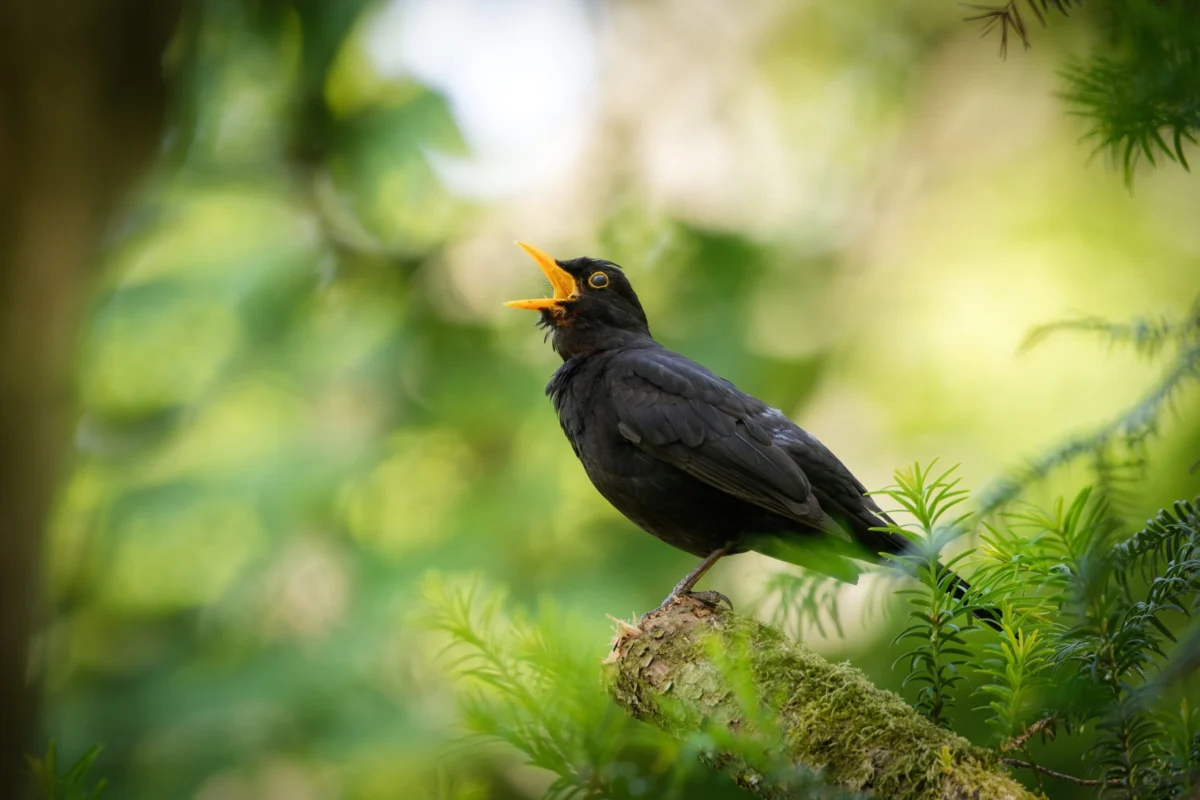
At the pinnacle of the study’s rankings stood the Eurasian Blackbird (Turdus merula). Often mistaken for its North American counterparts, the Eurasian Blackbird is a member of the thrush family, a group evolutionarily adapted for rich, flute-like vocalizations. The bird’s song, which famously inspired The Beatles’ classic anthem "Blackbird," achieved the highest marks for its intricate, melodic structure.
Rounding out the top tier of the most "pleasant" species were the Willow Warbler, the Blackcap, the Mistle Thrush, and the Garden Warbler. Conversely, the songs rated as the least pleasant were characterized by sharp, jarring, or monotone qualities. These included the Eurasian Jay, the Peregrine Falcon, the Gray Heron, the Egyptian Goose, and the Barn Owl. The Barn Owl’s ranking, in particular, illustrates the role of human perception in classifying nature; its signature raspy, hissing scream—while biologically efficient for communication—is fundamentally discordant to the human ear compared to the soft, rhythmic trills of the songbirds.
Decoding the Acoustic "Sweet Spot"
The analysis revealed that human preference is dictated by four primary acoustic variables:
- Frequency: Higher-pitched sounds were consistently rated as more pleasant.
- Complexity: Contrary to expectations, listeners preferred complex songs featuring rapid jumps, trills, and varied notes over repetitive, simplistic calls.
- Bandwidth: A narrow frequency range proved more soothing, as it avoids the "grating" effect that can occur when sounds span too wide a spectrum and clash with the specific ranges where human hearing is most sensitive.
- Amplitude: Quiet, lower-amplitude songs were perceived as more restorative than loud, aggressive calls.
"It reminds us that bird vocalizations have an important dimension beyond communication between birds: They also form a major part of the soundscape experienced by humans," Dr. Randler noted in his correspondence regarding the findings. The study suggests that humans gravitate toward a "Goldilocks zone" of complexity—enough variety to be engaging, but structured within a frequency range that does not trigger auditory stress.
Evolutionary Perspectives and the "Safe Haven" Hypothesis
The implications of this research extend far beyond mere aesthetics. Experts like Clinton Francis, an ecologist at California Polytechnic State University, argue that our preference for these specific songs may be deeply rooted in evolutionary biology. Throughout human history, the presence of melodic birdsong has served as an "acoustic indicator" of a safe, healthy environment.
"Throughout our evolutionary history, hearing birdsong has been a signal that there isn’t any danger," Francis explained. In an evolutionary context, a landscape filled with complex, melodic birdsong suggests the presence of vegetation, water, and an absence of immediate predators, which would likely remain silent or alert in the presence of danger. This "safe haven" hypothesis aligns with growing psychological research demonstrating that exposure to natural soundscapes significantly reduces cortisol levels, alleviates anxiety, and restores cognitive function in humans. By listening to the "most pleasant" songs identified in the study, humans may be subconsciously signaling to their nervous systems that they are in a restorative, non-threatening environment.
The Role of Biodiversity in Public Health
The study arrives at a critical juncture for environmental conservation. As bird populations face unprecedented threats from climate change, habitat loss, and pollution, the "silencing" of the natural soundscape has become a major concern for ecologists. If specific bird species are responsible for the sounds that humans find most therapeutic, their disappearance could have measurable impacts on human psychological well-being.
The researchers propose that these findings could be utilized to bolster conservation efforts. By identifying which species provide the greatest "ecosystem service" to human mental health, policymakers can better frame the argument for protecting specific habitats. If the public understands that the loss of a species like the Blackcap is not just a loss of biodiversity, but a loss of a specific, restorative sound element in their daily environment, it may foster a deeper, more personal connection to conservation initiatives.
Future Research and Global Implications
While this study provides a robust foundation for understanding human-bird acoustic interactions, the research team acknowledges several limitations. The current study focused on a European cohort and European bird species. Future iterations of the study aim to broaden the scope to include participants from diverse cultural and geographic backgrounds. Such research will help determine if these preferences are universal human traits or if they are subject to cultural conditioning.
Furthermore, the team intends to transition from laboratory settings to field studies. Understanding how these preferences shift when competing with anthropogenic noise—such as traffic, industrial activity, or urban sprawl—will be vital for urban planners. If urban environments are designed to preserve the soundscapes of high-preference bird species, it could lead to more "biophilic" city planning, effectively using nature to mitigate the stress of urban life.
Conclusion: A New Language for Conservation
The findings of the study published in Frontiers in Bird Science represent a bridge between the biological sciences and the humanities. By demonstrating that the human appreciation for birdsong is not arbitrary, but rather a sophisticated, measurable reaction to acoustic structure, the study gives conservationists a new, compelling vocabulary.
As the world continues to urbanize and the threats to global biodiversity mount, the quiet disappearance of these songbirds is not merely an ecological statistic—it is the loss of a vital component of the human experience. By valuing the species that provide the most pleasant and restorative soundscapes, humanity may find a renewed impetus to protect the wild spaces that ensure those songs continue to fill the air. The "human side" of biodiversity, as Dr. Randler calls it, is perhaps the strongest argument yet for the preservation of our natural world: we do not just need these birds for the sake of the ecosystem; we need them for the sake of our own mental clarity, peace, and connection to the environment.
