
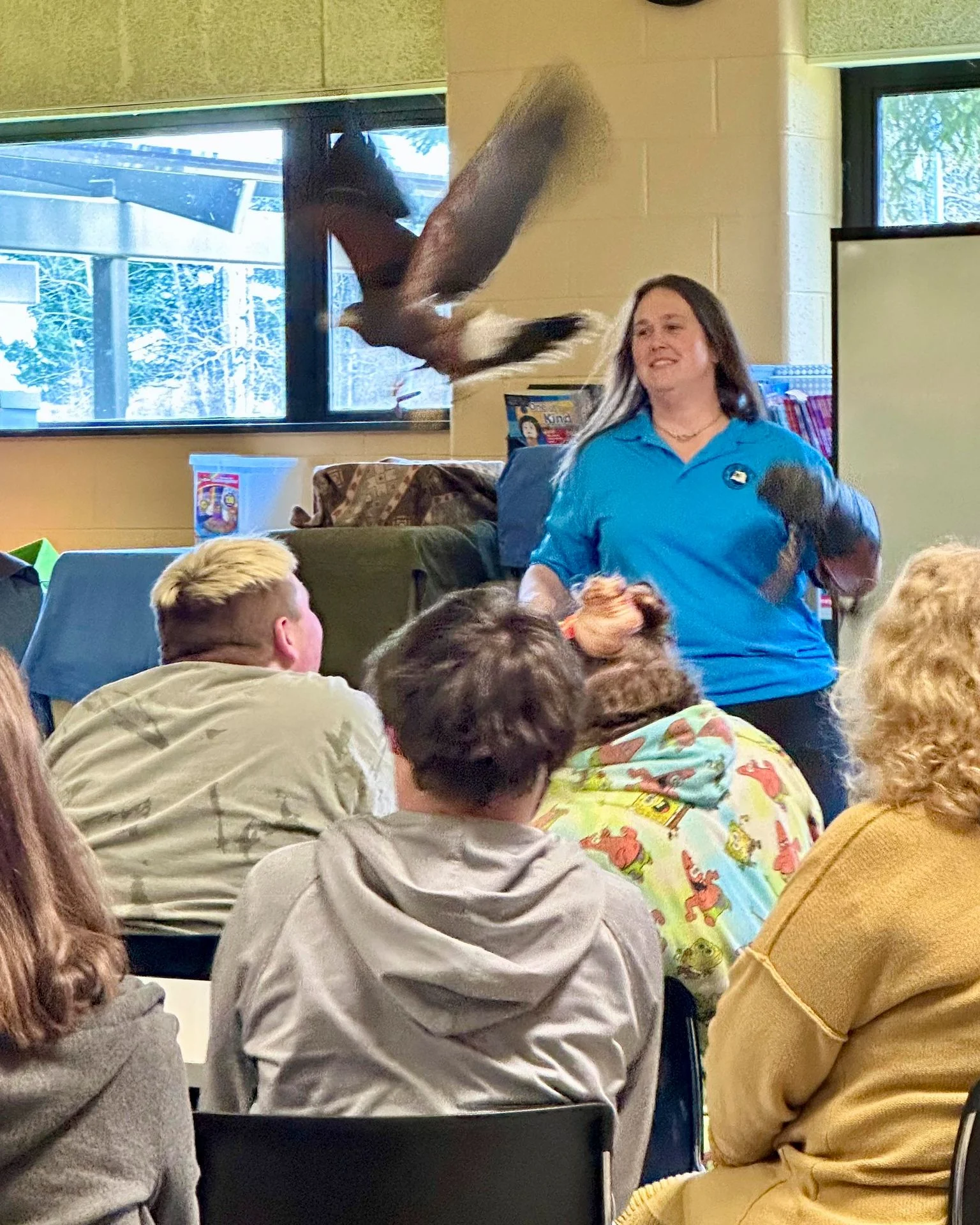
Students at the Hewes Educational Center recently experienced an immersive and educational encounter with the natural world, thanks to a dynamic visit from the Hawk Creek Wildlife Center Inc. The renowned organization, dedicated to fostering compassion, saving species, and restoring ecological balance, brought its acclaimed educational programs directly to the students, igniting curiosity and a deeper appreciation for wildlife. This engaging event served as a powerful reminder of the importance of hands-on learning in environmental education.
The program, designed to bring the natural world to life for students of all ages, featured a captivating presentation by two seasoned wildlife naturalists from Hawk Creek. These experts introduced the young learners to a diverse and fascinating array of animals, including majestic raptors, intriguing mammals, and resilient snakes. Each animal was presented with detailed information about its natural habitat, unique behaviors, and ecological role. The educational approach transcended simple observation, aiming to cultivate a profound understanding of the interconnectedness of ecosystems and the importance of conservation efforts.
A particularly memorable moment, as described by attendees, was the awe-inspiring flight of a raptor soaring directly over the students’ heads. This visceral experience provided a tangible connection to the wild, leaving a lasting impression on the young minds. Such direct interactions are crucial for fostering empathy and a sense of responsibility towards the animal kingdom, moving beyond abstract concepts to create concrete, emotional connections.
The Significance of Wildlife Education Programs
Programs like the one conducted by Hawk Creek Wildlife Center play a pivotal role in contemporary environmental education. In an era where urban sprawl and digital distractions often distance children from the natural world, these initiatives provide invaluable opportunities for direct engagement. Research consistently shows that early exposure to nature and wildlife positively influences cognitive development, emotional well-being, and the formation of pro-environmental attitudes.
According to a study published in the Journal of Environmental Education, students who participate in wildlife-focused educational programs demonstrate significantly higher levels of ecological literacy and a greater willingness to engage in conservation behaviors later in life. The interactive nature of these programs, which often involve live animal demonstrations, is particularly effective in capturing and retaining student attention, making complex ecological concepts accessible and engaging.

Hawk Creek Wildlife Center: A Legacy of Conservation and Education
Hawk Creek Wildlife Center Inc. has a long-standing reputation for its commitment to wildlife rehabilitation, conservation, and education. Founded on the principles of compassion and scientific understanding, the center works tirelessly to rescue, rehabilitate, and release injured and orphaned wildlife. Beyond its direct rescue efforts, Hawk Creek is deeply invested in educating the public about the challenges facing wildlife populations and the critical role each species plays in maintaining healthy ecosystems.
Their educational outreach programs are a cornerstone of their mission. By bringing live animals into classrooms and community settings, they aim to demystify wildlife, dispel common myths, and foster a sense of stewardship. These programs are meticulously designed to align with educational standards, offering valuable learning experiences that complement traditional classroom curricula. The center’s dedication to using live animals, all of which are non-releasable due to injury or habituation, underscores their ethical approach to education, providing a unique opportunity for students to observe and learn from animals they might otherwise never encounter.
The Hewes Educational Center Visit: A Chronological Overview
While the exact date of the visit is not specified in the provided content, such events typically follow a structured format. The process likely began with an outreach request from the Hewes Educational Center to Hawk Creek Wildlife Center, detailing the age group of the students, the desired learning objectives, and logistical considerations.
Following confirmation, the Hawk Creek team would meticulously plan the animal roster, ensuring a diverse and engaging selection that aligns with educational goals. Preparation would also involve ensuring the welfare of the animals, including safe transport and appropriate handling protocols.
On the day of the visit, the wildlife naturalists would arrive well in advance to set up their presentation area. The program would likely commence with an introduction to the center’s mission and the importance of wildlife conservation. This would be followed by the introduction of the animals, with each presentation tailored to the specific species and the age of the students. The naturalists would share fascinating facts about each animal’s diet, habitat, adaptations, and its role in the local ecosystem. The interactive nature of the presentations would allow students to ask questions, fostering a dynamic learning environment. The climax of the program, as noted, would be the demonstration of a raptor’s flight, a powerful visual and experiential component.
The visit would likely conclude with a Q&A session and a final message about how students can contribute to wildlife conservation in their own communities, perhaps through responsible pet ownership, reducing waste, or supporting local conservation initiatives.

Supporting Data and Broader Implications
The impact of such educational initiatives extends far beyond a single school visit. By exposing students to wildlife in a positive and informative way, Hawk Creek Wildlife Center is contributing to the development of a future generation of informed and engaged environmental stewards. This is particularly critical given the increasing threats to biodiversity worldwide.
According to the International Union for Conservation of Nature (IUCN) Red List, a significant number of species are facing extinction due to habitat loss, climate change, pollution, and other human activities. Educational programs that foster an early connection with nature are seen as a vital tool in combating this crisis. By understanding the challenges that wildlife face, students are more likely to develop a sense of urgency and a desire to protect these vulnerable populations.
The success of the Hewes Educational Center visit can be seen as a microcosm of the broader impact of wildlife education. Similar programs across the country are vital for cultivating a populace that understands and values the natural world. The data suggests that such initiatives are not merely enjoyable experiences but essential investments in the long-term health of our planet.
Inferred Reactions and Future Outlook
While direct statements from Hewes Educational Center staff or students are not provided, it is reasonable to infer a highly positive reception. Educators are consistently seeking innovative ways to engage students and make learning relevant. A visit from a wildlife center like Hawk Creek offers a unique and memorable educational experience that transcends textbook learning. The enthusiasm generated by such an event can spark a lifelong interest in science, nature, and conservation.
For Hawk Creek Wildlife Center, successful visits like this validate their mission and operational model. Each engagement serves to raise awareness about their rehabilitation efforts and the broader conservation challenges. The positive feedback and the educational impact on students contribute to their ongoing support base, both in terms of public engagement and potential future donations.
The broader implication of this event is the reinforcement of the critical role that non-profit organizations play in supplementing formal education. These centers, with their specialized knowledge and resources, can provide unparalleled learning opportunities that enrich the curriculum and inspire young minds. As environmental challenges continue to mount, the work of organizations like Hawk Creek Wildlife Center becomes increasingly vital. Their ability to connect students with the wonders of the natural world is not just an educational endeavor, but a fundamental step towards securing a sustainable future for both wildlife and humanity. The ripple effect of such a visit can inspire not only the participating students but also their families and wider communities, fostering a collective commitment to conservation.
