
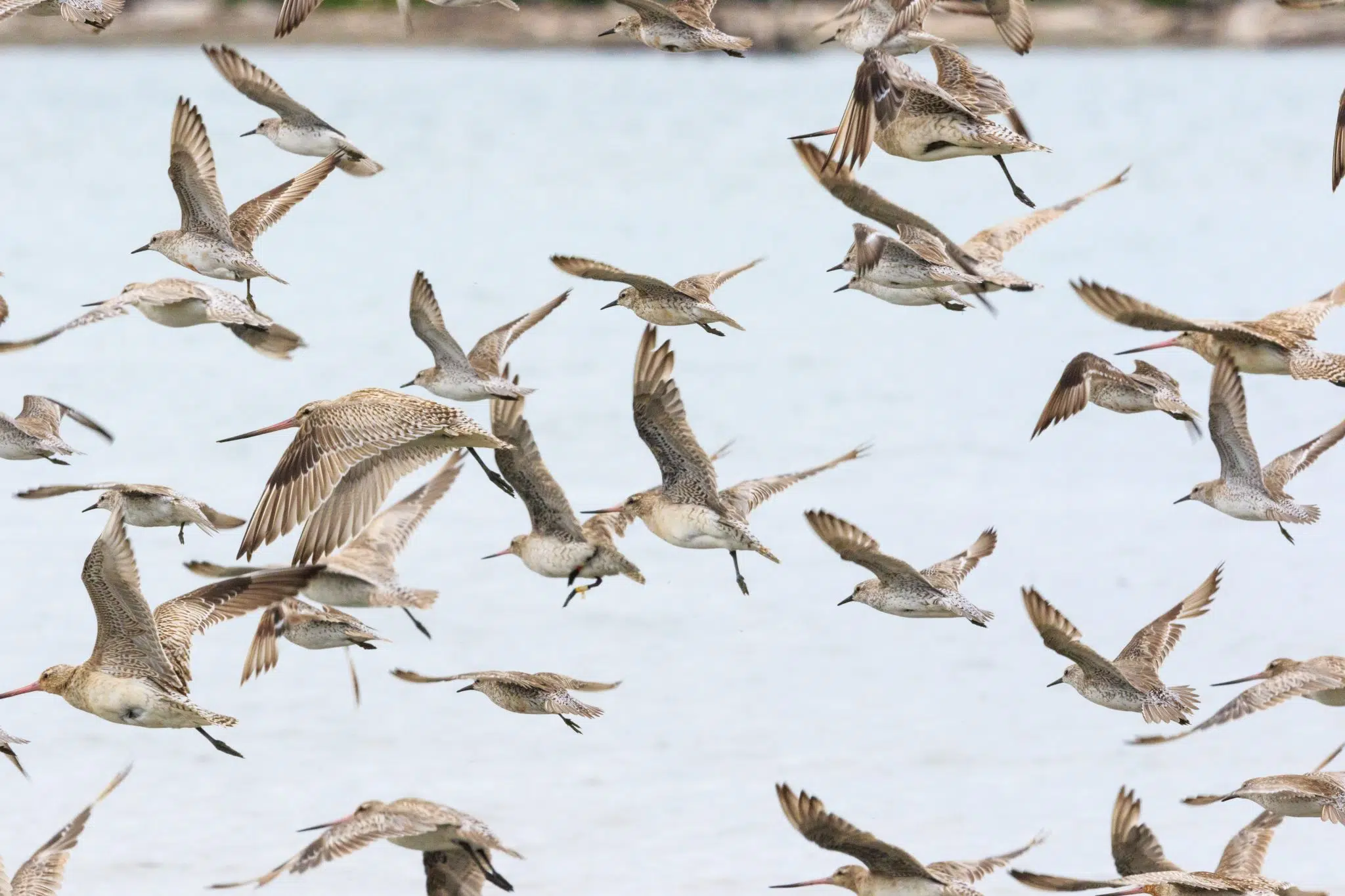
As the peak of spring migration unfolds this May, the arduous journeys of the world’s migratory birds are revealing profound and concerning shifts, serving as a stark indicator of the immense pressure on the natural systems indispensable to all life on Earth. Far from merely a spectacle of wonder, these annual movements are now echoing a critical warning about the deteriorating health of our planet, with over 40% of bird species globally experiencing a decline.
The Annual Call to Action: World Migratory Bird Day’s Significance
Observed biannually in May and October, World Migratory Bird Day (WMBD) strategically aligns with the apex of migratory periods in both the northern and southern hemispheres. This global campaign, initiated by the Convention on Migratory Species (CMS) and the African-Eurasian Waterbird Agreement (AEWA), aims to raise awareness about migratory birds and the urgent need for their conservation. The dual observation dates allow communities worldwide to engage with this natural phenomenon as it unfolds in their respective regions, fostering a shared appreciation for one of nature’s most extraordinary feats. This year, the overarching message from conservation organizations like BirdLife International emphasizes moving beyond admiration to actively interpret the signals birds are sending about our planet’s ecological integrity.
Migratory birds are not merely captivating; they are linchpins in maintaining healthy ecosystems across vast geographical scales. They perform invaluable ecological services: transporting essential nutrients across oceans through guano, acting as crucial pollinators for various plant species, dispersing seeds vital for forest regeneration and plant diversity, and playing a significant role in pest control by consuming vast quantities of insects, thereby helping to sustain agricultural productivity and control disease vectors. Yet, despite these indispensable contributions, the widespread decline of migratory bird populations underscores a systemic crisis that transcends national borders and affects the fundamental processes underpinning life itself.
Martin Harper, CEO of BirdLife International, articulates this urgency: “Migratory birds connect us across countries, continents, and ocean currents. Protecting the major migratory highways of the world is how we reverse those declines. And when we do, people gain too: cleaner water, food security, flood protection, and more resilience to a changing climate.” This statement encapsulates the core message of WMBD: that the fate of migratory birds is inextricably linked to human well-being, highlighting the reciprocal benefits of conservation efforts.
Highways of the Sky: Understanding Global Flyways

At the heart of migratory bird conservation lies the concept of global flyways – the intricate, often ancient, aerial routes birds utilize as they travel between breeding grounds, non-breeding grounds, and crucial stopover sites. These pathways are far more than simple flight paths; they represent vital ecological corridors, linking diverse habitats that can be thousands of kilometers apart. BirdLife International, as the sole global partnership dedicated to conserving birds and all life on Earth, recognizes WMBD as a crucial opportunity to deepen understanding of these natural migration routes and their broader environmental implications.
Scientists have identified four major land-based flyways:
- The African-Eurasian Flyway: Spanning from the Arctic Circle to the southernmost tip of Africa, connecting Europe and Asia.
- The East Asian-Australasian Flyway: Extending from the Arctic tundra of Siberia and Alaska down through East and Southeast Asia to Australia and New Zealand.
- The Americas Flyway System: Encompassing routes across North, Central, and South America, from the Arctic to Patagonia.
- The Central Asian Flyway: Stretching from Siberia to the Indian Ocean, covering a large continental area.
In addition to these terrestrial arteries, six critical marine flyways guide seabirds across vast oceanic expanses. These pathways are dynamic and complex, influenced by weather patterns, food availability, and geomagnetic fields that aid in navigation. The integrity of each flyway is dependent on the health of every habitat along its course. When a single link in this chain is broken – be it a wetland drained for agriculture, a coastline degraded by development, or a crucial stopover site lost to pollution – the cascading effects can be devastating, leading to declines across entire species populations.
A Crisis in Flight: The Alarming Decline of Migratory Species
The statistic that over 40% of bird species are in decline is a grave signal, reflecting a biodiversity crisis unfolding globally. This decline is not uniform; certain groups, particularly shorebirds, seabirds, and raptors, are experiencing disproportionately high rates of population loss. For instance, many long-distance migratory shorebirds, which rely on a network of coastal wetlands for refueling, have seen their numbers plummet by as much as 70-80% over recent decades.
The threats driving these declines are multifaceted and interconnected:
- Habitat Loss and Degradation: This remains the primary driver. Wetlands, grasslands, forests, and coastal areas crucial for breeding, feeding, and resting are continually converted for agriculture, urban development, and infrastructure. The loss of critical stopover sites means birds cannot replenish energy reserves for their epic journeys, leading to starvation or exhaustion.
- Climate Change: Shifting weather patterns, altered timing of seasons, and extreme weather events directly impact migratory cycles. Birds may arrive at breeding grounds too early or too late for peak food availability, or face unprecedented storms during migration. Sea-level rise threatens coastal nesting and feeding sites.
- Pollution: Pesticides, herbicides, and other industrial pollutants contaminate food sources and directly poison birds. Plastic pollution poses a significant threat to seabirds, which often ingest plastic debris or become entangled in it. Light pollution from urban areas disorients nocturnal migrants, leading to collisions.
- Illegal Hunting and Poaching: Despite international protections, illegal hunting remains a significant threat in many parts of the world, particularly along migratory bottlenecks in the Mediterranean and parts of Asia.
- Infrastructure Development: Wind turbines, power lines, and communication towers pose collision risks, especially during low visibility or intense migratory periods.
- Unsustainable Agricultural Practices: Monoculture farming, widespread pesticide use, and habitat fragmentation reduce insect populations and safe foraging areas, impacting many insectivorous migratory birds.
The recent, tragic extinction of the Slender-billed Curlew (Numenius tenuirostris) serves as a poignant reminder of the irreversibility of such losses. Once a widespread Eurasian migratory wader, its population plummeted in the 20th century due to habitat loss, hunting, and possibly other factors, with the last confirmed sightings dating back decades. Its formal declaration of extinction in late 2023 by BirdLife International underscores the critical importance of proactive, integrated conservation efforts to prevent similar fates for other vulnerable species. Each extinction represents not just the loss of a unique species, but also a disruption to the intricate web of life and the ecological services it provides.

Expert Voices: The Urgency of International Cooperation
The complexity of migratory bird conservation necessitates a level of international cooperation that mirrors the birds’ own border-crossing journeys. As Martin Harper emphasizes, “Migration is one of the wonders of the natural world. It also carries a very practical lesson. International challenges need international cooperation. Protecting flyways helps bring birds back. It also brings real benefits to people: healthier wetlands, more reliable food, and stronger resilience as the climate keeps shifting.” This perspective highlights that conservation is not merely an environmental concern but a fundamental investment in human prosperity and resilience. Healthy wetlands, for example, filter water, mitigate floods, and support fisheries, all of which directly benefit human communities.
The African-Eurasian Flyway, linking three continents and stretching from the Arctic to southern Africa, exemplifies this interconnectedness. Birds like the Bar-tailed Godwit and Lesser Flamingo undertake epic journeys, relying on a network of diverse habitats across dozens of nations. Dr. Paul Matiku, Executive Director of Nature Kenya, BirdLife’s Partner in Kenya, stresses Africa’s pivotal role: “Africa is at the heart of some of the world’s great flyways. The health of our wetlands, rangelands, and coastlines matters far beyond our borders. When we protect these habitats, we protect birds, biodiversity, and the communities that live alongside them.” His statement underscores that local conservation actions have global repercussions, particularly for countries that serve as crucial wintering grounds or stopover points for millions of birds.
Nairobi to Host Global Flyways Summit: A Pivotal Moment
In a significant development for global conservation, the Global Flyways Summit is scheduled to take place in Nairobi, Kenya, this September. This marks a historic occasion, as it will be the first time this critical summit is hosted on the African continent. Co-hosted by BirdLife International and Nature Kenya, the summit is poised to bring together a diverse array of stakeholders, including leaders from science, policy-making, finance, business, and civil society. The primary objective is to forge concrete agreements and catalyze concerted action needed to safeguard migratory birds and the fragile ecosystems they depend upon.
The choice of Nairobi as the venue is particularly meaningful, given Africa’s central position within several major flyways and the continent’s rich biodiversity. The summit is expected to serve as a platform for sharing scientific insights, discussing innovative conservation strategies, mobilizing financial resources, and strengthening policy frameworks. A key highlight of the summit will be the launch of the new edition of the "State of the World’s Birds" report by BirdLife International scientists. This highly anticipated report will feature a special focus on flyways, offering the latest, comprehensive picture of bird populations globally and providing critical data on what these trends reveal about the wider health of nature and the effectiveness of current conservation efforts. The findings from this report will undoubtedly inform policy decisions and funding priorities for years to come.
Beyond Observation: Citizen Science and Collective Action

While the challenges are immense, there is also significant hope, much of it stemming from collective action and the power of citizen science. World Migratory Bird Day actively invites people from all walks of life to participate in this worldwide celebration of birdwatching and citizen science. By heading outdoors, observing birds, and recording what they see through platforms like eBird or local bird survey initiatives, individuals contribute invaluable data that directly informs conservation action. Every observation, no matter how small, adds to a vast global dataset that helps scientists track population trends, identify critical habitats, and understand the impacts of environmental changes.
As Martin Harper concludes, “You don’t need to be an expert to care about birds. When we notice the wildlife around us, we start to understand the condition of the places we all rely on. Birds give us both a warning and an opportunity. They show us where nature needs urgent action, and where there is still hope.” This message empowers individuals, emphasizing that personal engagement can translate into meaningful conservation outcomes.
To further galvanize public involvement, BirdLife International is promoting its "Race to Save Birds Challenge" on May 9th. This initiative encourages participants to engage in birdwatching not as a competition of speed or endurance, but as an act of care and commitment. By observing birds, contributing vital data, and potentially raising funds, participants directly support ongoing conservation efforts that are crucial for helping birds and the broader natural world thrive. These citizen science efforts are particularly vital for migratory species, as their wide-ranging movements make them difficult to monitor comprehensively through traditional scientific methods alone. The cumulative data provided by thousands of citizen scientists offers an unparalleled scope of information, enabling more targeted and effective conservation strategies along the entire length of the flyways.
The Wider Implications: Birds as Barometers of Planetary Health
The narrative of migratory birds is a powerful metaphor for the interconnectedness of global ecosystems. Their struggles are not isolated events but symptoms of broader environmental degradation that ultimately affects humanity. The decline in bird populations signals a breakdown in the natural processes that purify our water, pollinate our crops, control agricultural pests, and regulate our climate. Investing in flyway conservation, therefore, is not merely about saving birds; it is about securing essential ecosystem services that underpin human civilization.
Economically, migratory birds contribute significantly through ecotourism, particularly birdwatching, which supports local economies in many regions. Culturally, these birds have inspired art, literature, and folklore for millennia, embodying freedom, hope, and the changing seasons. The loss of these species diminishes not only biodiversity but also our shared cultural heritage.
Looking forward, the insights gleaned from World Migratory Bird Day and the upcoming Global Flyways Summit must translate into robust policy action. This includes strengthening international environmental agreements like CMS and AEWA, expanding networks of protected areas, implementing sustainable land and marine management practices, and investing in climate change mitigation and adaptation strategies. The future of migratory birds, and by extension, the health of our planet, hinges on a renewed commitment to global cooperation and sustained, collective action. The joy we derive from watching these magnificent travelers is inseparable from our responsibility to ensure their continued existence and the vitality of the ecosystems they traverse.
