
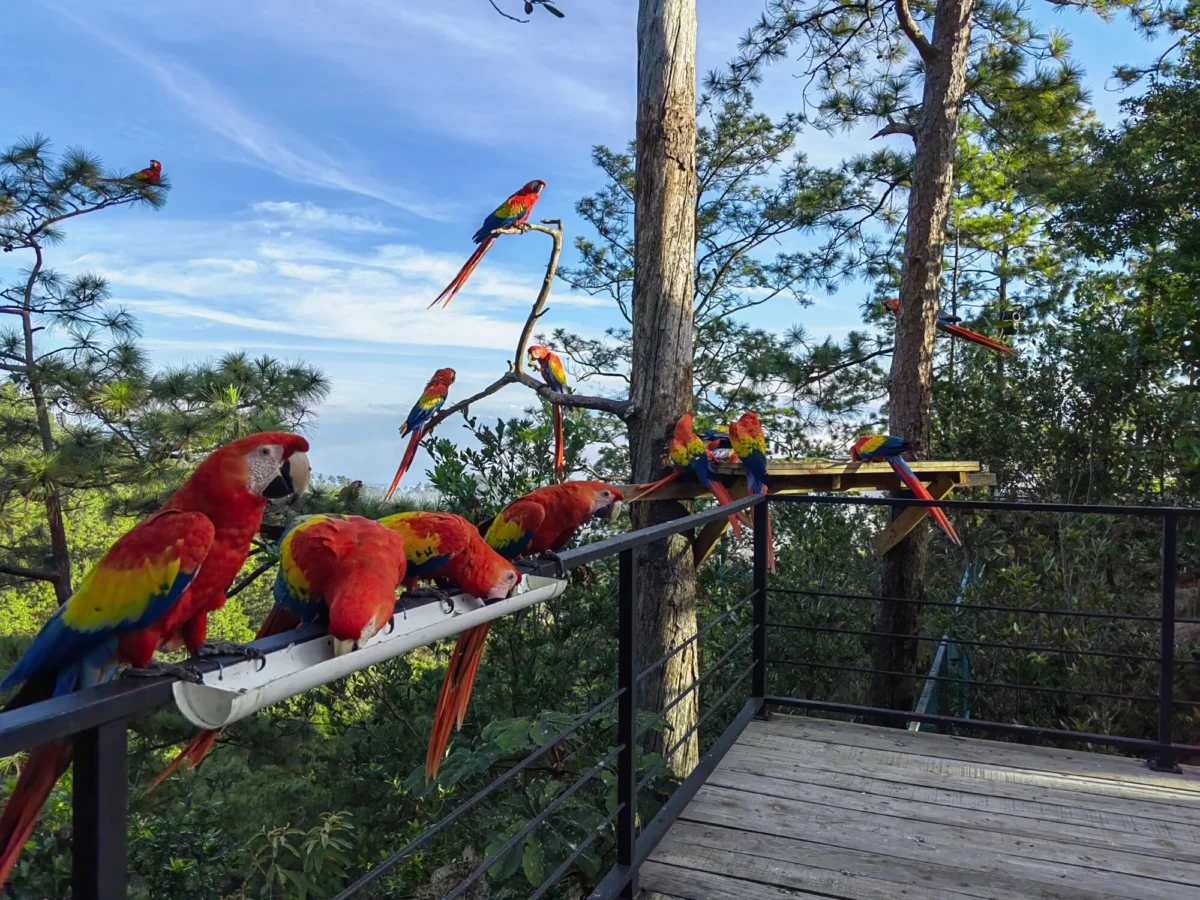
A flash of crimson, gold, and azure painted the sky above Esquipulas, Guatemala, in 2018, a vivid splash of color against the backdrop of a nation grappling with its own challenges. This was no ordinary sighting; it was a scarlet macaw ( Ara macao ), a creature of breathtaking beauty and a poignant symbol of nature’s resilience. Its appearance near the Honduran border was a testament to the remarkable success of reintroduction programs in neighboring Copán Ruinas, Honduras. For the family who witnessed this majestic avian visitor, it was a moment of profound awe. However, for the wider community, the encounter unfortunately highlighted a concerning reality: the wild bird was perceived not as a symbol of ecological recovery, but as a potential prize, with local residents attempting to capture it for the pet trade. Fortunately, the macaw evaded its pursuers and vanished back into the wild, but its brief, perilous visit ignited a crucial realization that reverberates to this day: conservation efforts are often hindered by arbitrary human-defined borders, while the instinct for survival knows no such boundaries. This single incident has spurred a passionate, volunteer-driven movement in Guatemala, dedicated to transforming border communities from potential threats into vital sanctuaries for these magnificent birds as they traverse the international divide.
The Copán Success Story and the Shadow of the Border
Just a stone’s throw from the Guatemalan frontier lies Copán Ruinas, Honduras, a region that has become synonymous with the resurgence of the scarlet macaw. At the heart of this transformation is Macaw Mountain, an organization dedicated to the reproduction, rehabilitation, and release of these iconic parrots, working in close partnership with the NGO PRO ALAS. For years, these dedicated entities have orchestrated a profoundly successful conservation initiative, reintroducing over 150 wild scarlet macaws into their ancestral habitats. This remarkable achievement has not only restored a vital element of the local ecosystem but has also fostered a deep sense of pride and connection to nature within the Honduran community.
However, the escalating success of the Copán reintroduction program has inadvertently created a new set of challenges. As the macaw population flourishes, an increasing number of these birds are venturing across the border into Guatemala. Once they enter Guatemalan airspace, they face immediate and severe threats. Anecdotal evidence and consistent reports from the region paint a grim picture: children have been observed pelting the birds with stones, and adults have been implicated in attempts to capture them for the lucrative and destructive illegal pet trade. The stark contrast between the protective environment of Copán and the perilous reception in Guatemalan border villages underscores a critical conservation imperative: the groundbreaking environmental education efforts that have underpinned the Copán success story must be effectively replicated on the Guatemalan side of the border. Without this crucial intervention, the very survival of the macaws that migrate across this international boundary remains precariously balanced.
Cultivating Guardianship: From Apples to Advocacy
The urgency to address this cross-border conservation crisis galvanized a young Guatemalan biologist, Christian Chinchilla. Driven by the firsthand accounts of macaws being threatened, Chinchilla, armed with specialized training from One Earth Conservation’s Parrot Conservation Corps and a modest initial grant, embarked on a mission to foster a protective ethos within Guatemalan border communities. Teaming up with his girlfriend, he initiated a grassroots campaign, fueled entirely by volunteer hours and an unwavering commitment to changing local perceptions. Their chosen focal point was the village of Caparjá, a community situated directly in the migratory path of the scarlet macaws.
Recognizing that lasting conservation requires deep community buy-in, Christian and his team prioritized building trust and fostering respect before engaging with the younger generation. Their strategic approach involved a pivotal collaboration with Plan Trifinio, a tri-national development agency, and the Municipality of Camotán. This partnership facilitated a groundbreaking field trip, bringing local village leaders and primary school teachers directly to Macaw Mountain. This immersive experience allowed them to witness firsthand the vibrant beauty and ecological significance of the scarlet macaws, fostering a profound sense of connection and responsibility.
With the community’s endorsement secured, the project then transitioned into the heart of local education: the classrooms. The initiative adopted an innovative, multi-faceted approach to engage young minds. Colorful educational materials, including vivid posters and informative pamphlets, were distributed, depicting the macaws in their natural splendor and highlighting their importance to the ecosystem. Complementing these visual aids, interactive storytelling sessions brought the macaws to life, weaving narratives of their migratory journeys and their role in the natural world. A particularly impactful element was the distribution of coloring books, which allowed children to creatively express their newfound understanding and appreciation for the birds. Simple yet effective tools, such as apples, were also incorporated into lessons, serving as tangible examples of the food sources available to macaws, thereby demystifying their ecological needs.
The response from the children was nothing short of transformative. The educational sessions transcended abstract biological concepts, connecting directly with the very birds they had observed soaring above their homes. The children were not merely learning about macaws; they were being empowered to become their protectors. This shift in perspective was palpable, with the young inhabitants of Caparjá evolving from potential threats into enthusiastic guardians of their avian neighbors. This grassroots endeavor, fueled by passion and strategic community engagement, demonstrated the profound impact of localized conservation education.
Reclaiming a Living Legacy: Macaws and Mayan Heritage
The significance of this conservation work extends far beyond ecological restoration; it is deeply intertwined with the cultural fabric of the region. The border area is home to the indigenous Chorti Maya population, a people whose ancestral lands have spanned both sides of the present-day international divide for millennia. A testament to this enduring connection can be found at the Copán Ruins archaeological site, a magnificent city built by the ancestors of the Chorti. Here, ancient stone glyphs, statues, and sculptures are adorned with intricate depictions of macaws. For centuries, these magnificent birds were not merely fauna; they were revered as potent symbols of the sun, the sky, and the spiritual realm.
By educating the Chorti children in Guatemala about the scarlet macaws, this project is actively contributing to a profound cultural reconnection. It is not simply imparting scientific knowledge; it is helping a community reclaim a living, breathing piece of its own rich history. The presence of these vibrant birds serves as a tangible link to their ancestral past, a reminder of the deep reverence their forebears held for the natural world. This initiative, therefore, represents a powerful fusion of modern conservation science and the preservation of ancient cultural heritage, underscoring the holistic nature of ecological stewardship.
Sustaining Momentum: Navigating Challenges and Securing Future Support
Despite the undeniable success of the initial school visits and the burgeoning enthusiasm within the community, the project encountered a familiar and frustrating hurdle: the depletion of its initial seed funding. At present, the entire conservation campaign is being sustained by the unwavering dedication of Christian Chinchilla and his girlfriend, who are generously volunteering their time and resources to maintain community engagement and momentum. Their persistent efforts, however, have not gone unnoticed.
The advocacy of Plan Trifinio has been instrumental in bringing the project to the attention of high-level government officials. This culminated in a significant personal visit by the Vice President of Guatemala, Dr. Karin Herrera, to Macaw Mountain in Honduras. Impressed by the initiative’s innovative, border-bridging vision and its tangible community impact, Dr. Herrera pledged government support for the conservation efforts in Guatemala. While the precise nature and timeline of this promised aid remain to be fully materialized, the endorsement from the highest echelons of government represents a critical turning point, offering a beacon of hope for the long-term sustainability of the project.
Building a Safe Haven: Urgent Needs and Future Aspirations
While the prospect of sustained government assistance offers a promising horizon, the scarlet macaws continue to traverse the border daily, facing ongoing risks. Immediate bridge funding is critically needed to re-initiate the vital school visits and to complete the primary education campaign across the remaining border villages. This short-term financial injection is essential to maintain the positive trajectory of community engagement and to prevent any erosion of the hard-won progress.
Once the anticipated government funding becomes available, the team has ambitious plans to leverage these larger institutional resources for a broader spectrum of conservation activities. These include crucial initiatives such as habitat protection, the establishment of nesting monitoring programs, and community-led reforestation efforts in collaboration with the villagers. The ultimate goal is to create a robust and sustainable safe haven for the scarlet macaws, transforming the border region into a testament to successful cross-border conservation and community empowerment.
The dedication of individuals like Christian Chinchilla, supported by organizations such as One Earth Conservation and now potentially by national governments, highlights the power of collaborative action in safeguarding biodiversity. The story unfolding in the borderlands of Guatemala and Honduras serves as a compelling reminder that the fate of migratory species, and indeed the health of our planet, depends on our collective ability to transcend political boundaries and foster a shared commitment to the natural world. By supporting these vital efforts, we can ensure that when a scarlet macaw graces the skies, it finds not peril, but a welcoming community and a generation of stewards ready to protect its magnificent flight. This month, Lafeber’s donation will be directed towards further bolstering these critical educational programs in Guatemala, supporting the aspirations of a community striving for conservation outcomes comparable to the remarkable success seen just across the border in Honduras.
