
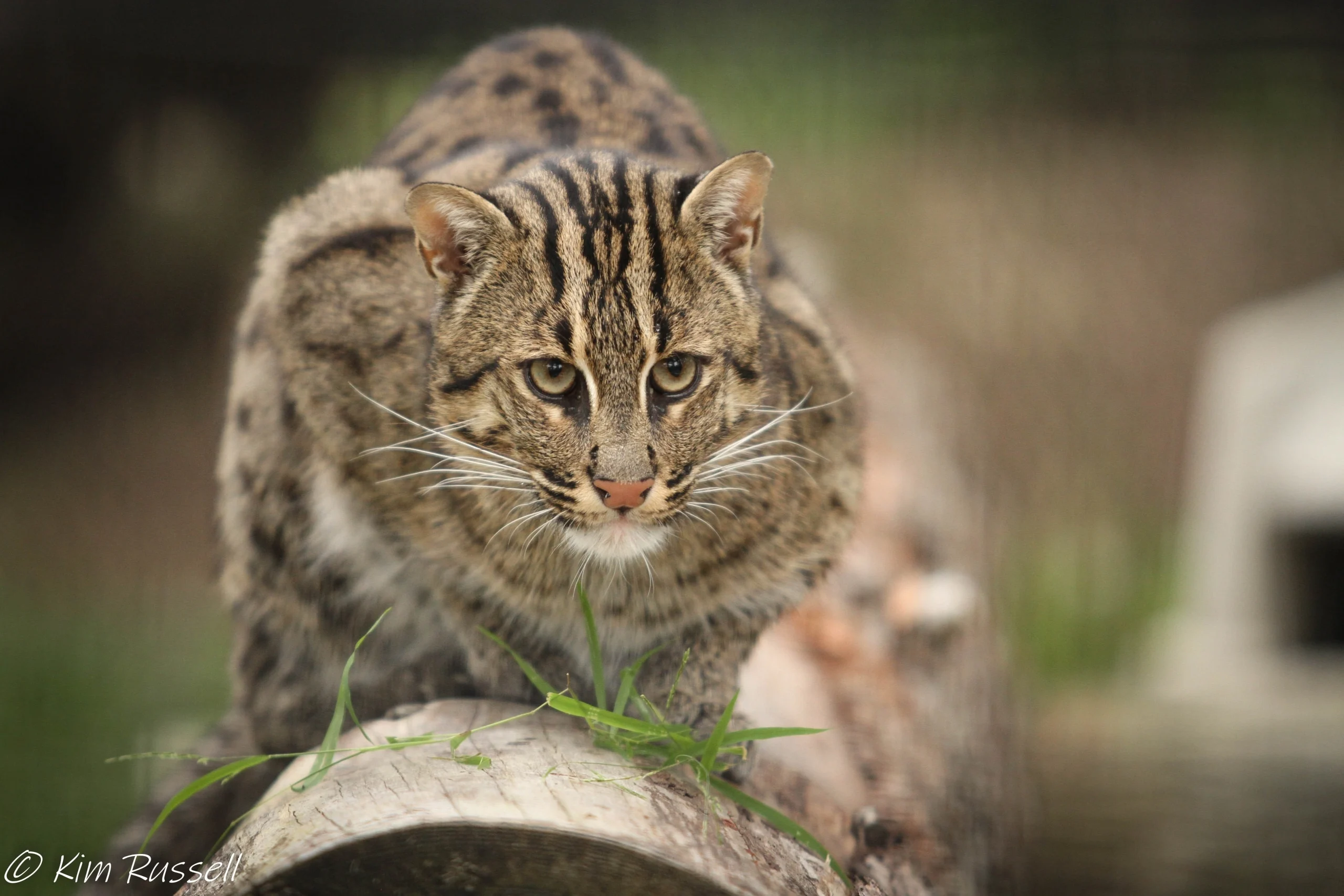
Every year on March 3, the global community observes World Wildlife Day, an event established by the United Nations General Assembly in 2013 to celebrate the world’s wild animals and plants. This year, the international focus rests firmly on the theme of "Partnerships for Wildlife Conservation," highlighting the collaborative efforts required to reverse the alarming decline of biodiversity. Among the species currently at the center of these collaborative initiatives is the fishing cat (Prionailurus viverrinus), an elusive, medium-sized wild cat whose existence remains largely unknown to the general public despite its precarious status as a vulnerable species on the IUCN Red List.
At the heart of a unique conservation partnership is River, a six-year-old fishing cat residing at the Hawk Creek Wildlife Center. As an ambassador animal, River serves as a vital bridge between scientific researchers and the public, providing rare insights into the behavior of a species that is notoriously difficult to track and study in its native Southeast Asian habitats.
The Ecological Context and the Status of the Fishing Cat
The fishing cat is a specialized predator, uniquely adapted to survive in wetland ecosystems, including swamps, marshes, and mangrove forests. Unlike most members of the feline family, the fishing cat is an adept swimmer, possessing partially webbed toes that facilitate movement in aquatic environments. Their diet consists primarily of fish, though they are known to consume crustaceans, mollusks, and occasionally small mammals.
However, the rapid degradation of wetlands—driven by agricultural expansion, urbanization, and the depletion of fish stocks—has led to a significant contraction of their natural range. According to data from the IUCN, the population of fishing cats is in a steady decline. The species is currently listed as vulnerable, meaning they face a high risk of extinction in the wild if the threats to their habitats are not effectively mitigated. Because they are shy and nocturnal, gathering accurate population counts remains a daunting challenge for conservationists, often necessitating the use of remote camera traps and indigenous knowledge to estimate local densities.
Bridging the Gap: The Role of Ambassador Animals
The collaboration between Hawk Creek Wildlife Center and the Fishing Cat Conservancy exemplifies the modern conservation strategy of utilizing ambassador animals to advance scientific understanding. During a recent field visit, the founder of the Fishing Cat Conservancy traveled to Hawk Creek to conduct observational studies on River.
The primary objective of this research was to analyze the mechanics of the fishing cat’s movement and its specialized hunting techniques. By observing how River utilizes her paws to maneuver through water and capture prey in a controlled environment, scientists can extrapolate critical data that informs the creation of more effective protection strategies for wild populations. This research is instrumental in understanding the behavioral requirements of the species, which in turn dictates how land must be managed and preserved to ensure the survival of future generations.
Chronology of Conservation Efforts
The trajectory of fishing cat conservation has shifted significantly over the past decade. Historically, the species received far less attention than larger, more charismatic "flagship" species like tigers or leopards.
- 2008: The IUCN Red List officially elevated the status of the fishing cat to vulnerable, citing the loss of at least 50% of wetland habitats across their range in Asia.
- 2013: The inaugural World Wildlife Day was held, providing a platform for organizations like the Fishing Cat Conservancy to bring visibility to lesser-known species.
- 2020-2022: Increased efforts were made to integrate local communities into conservation programs, recognizing that the long-term survival of the species depends on the cooperation of landowners who share the landscape with these cats.
- 2023-2024: The partnership between institutional facilities like Hawk Creek and field-based conservancies became a benchmark for "Partnerships for Wildlife Conservation," moving beyond simple education to active, data-driven research.
Official Perspectives and Institutional Response
Conservationists argue that the success of these programs is predicated on a multi-tiered approach. Representatives from the Fishing Cat Conservancy have noted that while direct habitat protection is the ultimate goal, the educational component provided by ambassador animals is indispensable.
"When people see a fishing cat, they begin to care about the wetlands they call home," a spokesperson for the conservation initiative noted. By fostering an emotional connection through individuals like River, organizations are able to secure the funding and public support necessary to lobby for legislative protections. The scientific community has reinforced this sentiment, noting that the data gathered from captive-observation studies serves as a baseline for the development of "nature preserves" designed to mimic the natural requirements of the species.
The Broader Impact: Ecosystem Services and Human Connection
The implications of protecting the fishing cat extend far beyond the species itself. As a top predator in the wetland ecosystem, the fishing cat acts as an indicator species; their health and presence reflect the overall vitality of the environment. Wetlands are critical carbon sinks and essential for water filtration, providing services that are inherently valuable to human populations living nearby.
The Fishing Cat Conservancy is currently spearheading initiatives to create protected corridors, working directly with local landowners to implement sustainable farming practices that do not encroach upon the feline’s hunting grounds. These partnerships are designed to be mutually beneficial, ensuring that the human population can continue to thrive while the ecological integrity of the wetland is maintained.
The strategy includes:
- Habitat Restoration: Replanting native vegetation in degraded swamp areas to provide cover and breeding grounds.
- Community Education: Implementing programs that reduce human-wildlife conflict, such as providing secure enclosures for domestic poultry.
- Policy Advocacy: Working with local governments to categorize critical wetland areas as protected zones.
Moving Forward: The Importance of Sustained Engagement
As the world marks World Wildlife Day, the story of River and the ongoing efforts of the Fishing Cat Conservancy serve as a reminder that conservation is not a static endeavor. It requires continuous funding, rigorous scientific inquiry, and the active participation of the public.
Donations provided to institutions like Hawk Creek are directly channeled into these conservation efforts, supporting everything from veterinary care for ambassador animals to the purchase of tracking equipment for field researchers. The integration of public awareness and scientific research remains the most effective tool in preventing the extinction of the fishing cat.
For those looking to engage with the cause, the Fishing Cat Conservancy continues to publish updates and research findings via their portal, fishcat.org. As research continues to refine the understanding of how these cats interact with their environment, the hope remains that through coordinated global partnerships, the fishing cat will remain a permanent fixture in the wild landscapes of Asia. The case of River, therefore, is not merely an anecdote about a single animal, but a microcosm of a larger, systemic effort to safeguard the biodiversity of the planet before the window of opportunity closes. The success of these programs in the coming decade will likely serve as a blueprint for the conservation of other vulnerable, cryptic species that have yet to capture the public’s full attention.
