
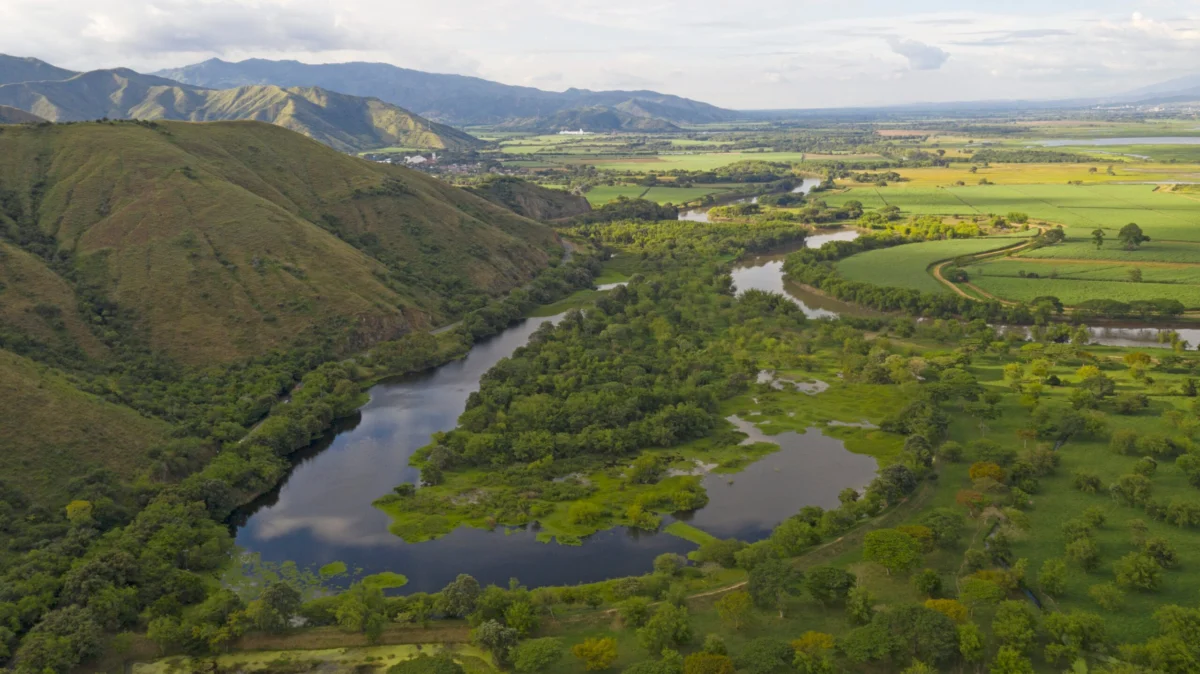
The Cauca Valley, a sprawling region in Colombia known for its extraordinary biodiversity, is serving as the primary testing ground for a revolutionary conservation model that integrates ecology, agricultural production, and local socio-economic development. Over the past five years, a coalition led by the National Audubon Society and various international partners has moved away from traditional, isolated protected area strategies, instead prioritizing the creation of a "connected landscape." This approach posits that the most effective way to preserve avian populations—and the ecosystems they inhabit—is to view mountains, forests, farms, and wetlands as a singular, functional system.
A Chronology of Collaborative Conservation
The initiative, branded under the "Blueprint Landscapes" framework, began with a fundamental shift in philosophy: conservation must be led by science but implemented through local communities and the private sector. The program’s trajectory reflects a deliberate, multi-phased approach to regional environmental stewardship.
In the early years, the primary objective was the stabilization of critical habitats through the Conserva Aves initiative. Launched as a collaborative effort between Audubon, BirdLife International, the American Bird Conservancy, Birds Canada, and RedLAC, the program sought to bridge the gap between regional environmental funds and on-the-ground implementation. By 2022, the program had achieved a significant footprint, supporting nearly 180 local projects across nine countries.
In the Cauca Valley specifically, this translated into the formal establishment of the Regional Integrated Management Districts (RIMD) of Alto Calima and Atuncela. Covering over 19,400 hectares, these areas were not merely designated on a map; they were established through long-term stewardship agreements with local organizations. Following this, the focus shifted toward "living laboratories," where modern technology like acoustic monitoring via the Escucha Aves program allowed for high-precision data collection at a fraction of the cost of traditional field surveys.
Data-Driven Environmental Stewardship
The ecological significance of the Cauca Valley cannot be overstated. With over 900 recorded bird species, the region serves as a vital corridor for both Andean endemics and migratory shorebirds. The migratory route of the Lesser Yellowlegs—a species that traverses the distance between the North American boreal forest and the Colombian tropics—has become a central focus for researchers. By utilizing satellite telemetry to track individuals like "Cholao," scientists have gathered empirical evidence showing that these birds rely on a patchwork of agricultural lands, particularly rice paddies and sugarcane fields, as essential stopover points.
This data has fundamentally altered the conversation regarding agricultural land use. In the Cauca Valley, where agriculture occupies the vast majority of the landscape, the strategy has moved from demanding land set-asides to fostering "bird-friendly" agricultural practices. The partnership with Asocaña (the National Association of Sugar Cane Mills and Growers of Colombia) represents a critical milestone in this transition. Through the implementation of a Bird-Friendly Best Management Practices Manual, nearly 240,000 hectares of sugarcane cultivation are now being managed with biodiversity in mind. This includes the maintenance of riparian buffers and the preservation of native vegetation corridors that physically connect fragmented protected areas.
Scaling Through Sustainable Economics
The economic viability of these conservation efforts is anchored in the "water-nature-people" nexus. Recognizing that healthy watersheds are necessary for both regional agriculture and wildlife, Audubon has collaborated with organizations such as the Fondo Agua por la Vida y la Sostenibilidad to promote silvopastoral systems.
These systems, which integrate trees and shrubs into cattle grazing lands, have yielded tangible results. By improving soil moisture retention and providing shade for livestock, these transitions increase farm productivity while simultaneously enhancing water regulation. With new funding from the UK’s Global Centre on Biodiversity for Climate (GCBC), this model is currently being scaled into broader watersheds. Economic analysis suggests that such transitions provide a dual benefit: they bolster climate resilience against erratic rainfall patterns while providing a direct financial uplift to the local ranching communities involved.
Policy Integration and National Impact
The success of the Cauca Valley model has transitioned from a local experiment to a national policy driver. The development of Colombia’s National Bird Strategy 2030 (ENCA 2030) serves as the most prominent example of this influence. Facilitated by Audubon in partnership with the Humboldt Institute and the Ministry of Environment, the strategy involved over 2,000 stakeholders, ranging from indigenous leaders to private sector representatives.
The strategy’s impact is already visible in regional governance. The Cauca Valley departmental government recently passed an ordinance formally categorizing birdwatching tourism as a strategic pillar of regional development. This move provides a legislative framework for the growth of eco-tourism, which has already seen the training of over 200 local birding guides. These guides now generate consistent income by showcasing the region’s biodiversity, thereby creating a permanent, community-led incentive to protect the habitats that tourists travel to see.
Societal Integration: The Cultural Dimension
Perhaps the most unique aspect of the Cauca Valley Blueprint is its focus on cultural assimilation. Conservationists have long struggled with the "us versus them" narrative, but in the Cauca Valley, the bird has become a symbol of civic pride. The proliferation of murals depicting local and migratory species across urban and rural spaces is not merely decorative; it is a manifestation of environmental literacy.
Educational programs have been integrated into local school curricula, and the "Colombia BirdFair" has evolved into a premier international event, drawing experts and enthusiasts from across the globe. This cultural shift ensures that conservation is not seen as an external imposition but as an intrinsic part of regional identity. As noted by field experts, the fact that schools in the Cauca Valley have engaged in direct student exchanges with counterparts in Connecticut and Ohio underscores the global nature of these ecological connections.
Implications and Future Outlook
The broader implication of the Cauca Valley project is that it offers a scalable template for tropical regions worldwide. The primary lesson is that biodiversity loss cannot be halted by land acquisition alone; it requires the active participation of the human populations that share those spaces.
However, the model faces significant challenges. Maintaining the balance between intensive agricultural production and the ecological requirements of migratory species requires constant monitoring. The use of the Bird Friendliness Index (BFI) will remain critical, as it provides an objective metric to determine whether conservation investments are yielding actual biological gains or simply existing as "green-washing" initiatives.
Furthermore, the long-term success of the project rests on the durability of the partnerships formed. The involvement of organizations like the GCBC and the Bezos Earth Fund highlights the importance of sustained international financial support for local environmental initiatives. Without this capital, the transition toward sustainable ranching and agricultural practices would likely stall due to the significant upfront costs.
As the Cauca Valley continues to refine its approach, it serves as a living proof-of-concept for the theory of "landscape-scale" conservation. By knitting together disconnected pockets of forest, farm, and field, the region is successfully demonstrating that human economic activity and the preservation of global migratory routes are not mutually exclusive. As the next generation of residents grows up surrounded by murals of the birds that travel thousands of miles to reach their home, the "Blueprint" will have achieved its most important goal: ensuring that the future of the landscape is held in the hands of those who live within it. The path forward remains non-linear and complex, yet the Cauca Valley suggests that by focusing on connections, conservation can achieve a permanence that isolated projects never could.
