
The Hawk Creek Wildlife Center, a prominent institution dedicated to wildlife rehabilitation, environmental education, and species conservation, has unveiled a robust schedule of public engagements for the month of June. These events—Animal Play Day, Wild Photo Day, and the Wild Wines of the World fundraiser—are designed to bridge the gap between human visitors and the diverse wildlife species under the center’s care. By facilitating up-close interactions with raptors, corvids, wild cats, and exotic mammals, the center aims to foster a deeper understanding of animal behavior, enrichment protocols, and the critical importance of global conservation efforts.
The Institutional Mission and Educational Framework
Hawk Creek Wildlife Center operates on the principle that direct observation is one of the most effective tools for conservation education. The facility houses a wide array of animal ambassadors—animals that, due to various circumstances such as permanent injury or human imprinting, cannot be returned to the wild. These ambassadors serve as the focal point for all public programming.
The upcoming June events represent a significant portion of the center’s annual outreach strategy. By opening their doors for immersive experiences, the center provides the public with a window into the complex behavioral patterns of species that are rarely seen in domestic or urban settings. Behavioral enrichment, a key component of these events, involves providing animals with stimuli that encourage natural behaviors, such as stalking, foraging, and problem-solving. Observing these activities allows researchers, students, and the general public to gain insights into how these animals navigate their environments, hunt, and socialize.
Animal Play Day: Bridging the Gap Between Science and Observation
The first event, Animal Play Day, is scheduled for June 14 from 1:00 p.m. to 4:00 p.m. This event is specifically engineered to be family-friendly, offering an accessible entry point for children and adults to learn about zoological care.
The core objective of this event is to demystify the training and enrichment process. Many visitors are unaware of the daily rigors involved in maintaining the psychological and physical health of captive wildlife. During Animal Play Day, trainers will demonstrate how they keep their animals mentally engaged through puzzle-solving tasks for corvids, foraging activities for mammals, and simulated hunting sessions for wild cats.
From an educational standpoint, this event serves as a practical demonstration of cognitive science in non-human species. Corvid intelligence, for example, is a subject of significant interest in the scientific community; observing these birds manipulate puzzles offers attendees a tangible example of tool use and spatial reasoning. Similarly, the flying raptor demonstrations provide a rare opportunity to witness the aerodynamic efficiency and power of birds of prey, such as hawks, eagles, and owls, in a controlled, safe environment.
Ticket pricing is structured to maximize accessibility for families, with adult entry at $16, reduced rates for veterans and seniors at $14, and child admission at $10. A family pass option is also available for $45, covering up to two adults and three children. Children aged four and under are admitted free of charge, reflecting the center’s commitment to early childhood environmental exposure.
Wild Photo Day: Ethical Wildlife Documentation
On June 17, from 10:00 a.m. to 12:30 p.m., the center will host Wild Photo Day, an event catering specifically to the photography community. This program addresses the growing demand for high-quality, barrier-free wildlife photography, which is often difficult to achieve in the wild without specialized equipment or significant environmental disturbance.
By providing a setting where photographers can capture images of raptors, owls, and wild cats without the presence of fencing or cage barriers, the center creates a controlled environment that mimics natural aesthetics. This event is open to recreational, amateur, and professional photographers. Pre-registration is mandatory, as the center limits the number of participants to ensure the animals are not stressed by large crowds.
This event holds particular value for wildlife photographers who seek to document species detail—such as plumage texture, eye coloration, and skeletal structure—that is often lost in long-distance, candid wildlife photography. The inclusion of bird flight demonstrations adds a kinetic element to the event, providing photographers with the opportunity to practice motion-tracking and high-shutter-speed techniques. The fee structure is tiered: $60 for participants carrying cameras and $30 for non-photographers wishing to observe.
Wild Wines of the World: Conservation through Philanthropy
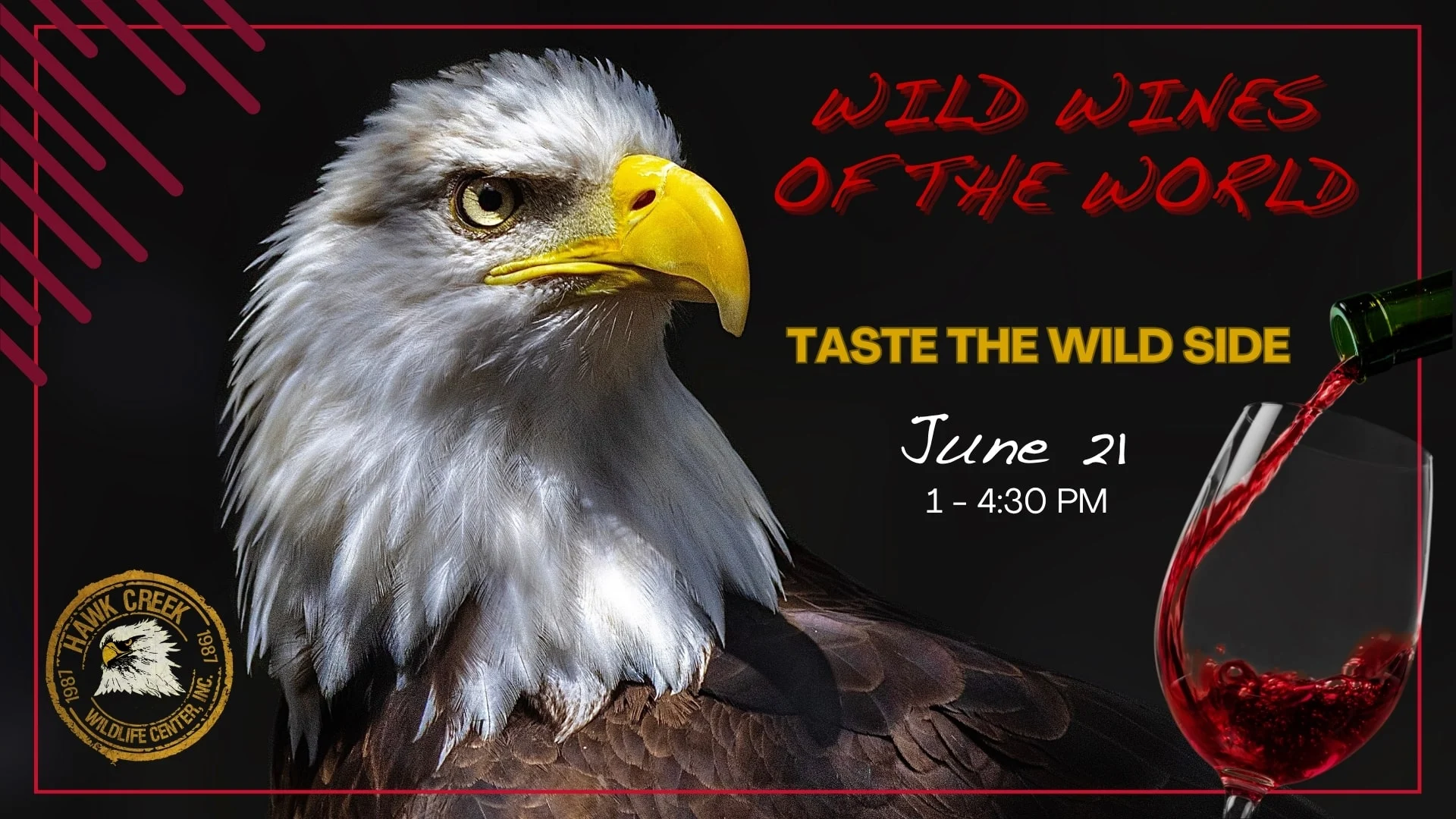
The third major event, Wild Wines of the World, is scheduled for June 21, from 1:00 p.m. to 4:30 p.m. Now in its third year, this event functions as a cornerstone fundraiser for the center. The conceptual framework for the event is geographical; guests are invited to sample wines from the same regions where the center’s animal ambassadors originate.
For instance, the inclusion of wines from Northern Africa and the Middle East serves to highlight the natural habitats of species like the Egyptian Vulture. By pairing the sensory experience of wine tasting with the visual experience of meeting animals like Rufus the Bobcat, the center creates a memorable narrative about the global connectivity of ecosystems.
The event is strictly for guests aged 21 and older, offering a more exclusive, VIP-style atmosphere. Attendees receive a commemorative wine tumbler, access to four tasting stations, live musical entertainment, and exclusive opportunities such as the chance to hold a non-native raptor or feed a porcupine. The event also provides a critical revenue stream, as the proceeds from ticket sales and charcuterie purchases go directly toward the operational costs of the facility, including veterinary care, specialized diets, and habitat maintenance.
The Broader Impact and Economic Implications
The operational model employed by Hawk Creek Wildlife Center is reflective of a wider trend among zoological and rehabilitation institutions: the transition from static exhibits to interactive, educational, and experience-based programming. This model is supported by findings in environmental psychology, which suggest that individuals are more likely to support conservation initiatives if they have had a positive, personal encounter with animal life.
The economic implications for the local region are also notable. By hosting these events, Hawk Creek attracts visitors from beyond the immediate vicinity, contributing to local tourism and commerce. Furthermore, the use of a facility as a venue for professional photography and social fundraising demonstrates an efficient use of assets. The center is not merely a rehabilitation site; it is a multi-functional community asset that provides value through education, recreation, and professional services.
From an environmental standpoint, the message delivered during these events is one of stewardship. By focusing on the individual lives of their animal ambassadors, Hawk Creek emphasizes that every species plays a specific role in the global ecosystem. When a visitor watches a raptor soar, or a wild cat interact with a puzzle, they are witnessing the culmination of thousands of years of evolutionary adaptation. The center’s staff underscores that the preservation of these species requires both scientific intervention and public awareness.
Conclusion and Future Outlook
The scheduled June programming at Hawk Creek Wildlife Center offers a diverse range of opportunities for the public to interact with the natural world. Whether through the lens of a camera, a glass of wine, or a family afternoon of educational play, the common thread remains the same: the empowerment of the public through knowledge.
As the center continues to navigate the challenges of wildlife rehabilitation and public engagement, these events serve as a vital link between the institution and the community. By maintaining high standards of animal welfare while simultaneously providing transparent and immersive public experiences, Hawk Creek continues to solidify its reputation as a leading organization in the field of wildlife education. For those interested in attending, the center encourages early registration and ticket purchase through their online portal to ensure capacity limits are respected and animal welfare protocols are upheld throughout the month.
