
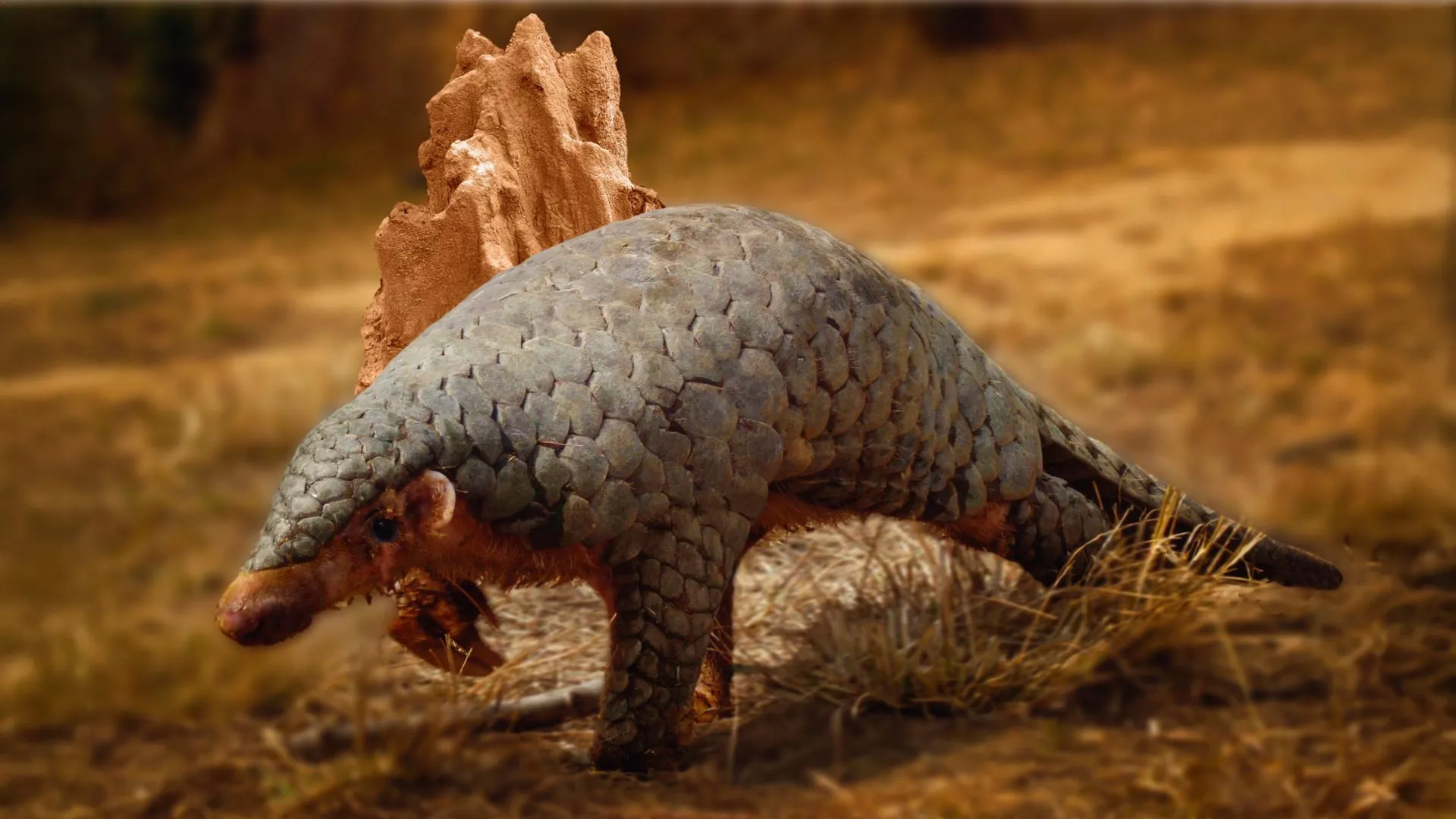
With overlapping scales that evoke a prehistoric pinecone, powerful curved claws, and elongated tails, pangolins are among the most visually distinct creatures on Earth. Found exclusively across tropical and subtropical regions of Africa and Asia, these solitary, nocturnal insectivores play a critical ecological role by consuming millions of ants and termites annually, thereby regulating insect populations and aerating soil. Yet, their unique armor has tragically made them a prime target for illicit global commerce. Considered the most heavily trafficked mammals in the world, pangolins are relentlessly hunted to supply international black markets, driving multiple species dangerously close to the brink of extinction.
Now, an international team of researchers has confirmed a major scientific breakthrough that could alter the trajectory of conservation efforts. A previously unrecognized Asian pangolin species, scientifically designated as Manis aurita, has been verified as living natively in Nepal and Northern India. Published in the peer-reviewed journal Communications Biology, the findings finally untangle decades of taxonomic confusion regarding how different Asian pangolin lineages are related, precisely where their geographic habitats lie, and how they can be physically distinguished from one another. Beyond its monumental importance to evolutionary biology, this discovery provides critical forensic tools for law enforcement agencies, empowering authorities to trace the geographic origins of confiscated illegal wildlife products and significantly bolster targeted anti-poaching initiatives.
"We can’t protect what we do not know, and now that we have confirmed that this other species of pangolin exists, we can use that information to help protect these endangered animals," states Anderson Feijó, the Negaunee Assistant Curator of Mammals at the Field Museum and co-corresponding author of the comprehensive study.
The scope of this achievement represents the culmination of exhaustive, multi-year scientific dedication spanning multiple continents, combining modern genomic analysis with historical archive research.
A Chronology of Discovery and Taxonomic Confusion
The journey toward recognizing Manis aurita as a distinct, valid species has been a winding road marked by historical records, modern genetic breakthroughs, and international scientific collaboration. The timeline of this discovery sheds light on how science continuously self-corrects as technology advances.
- 1836: The scientific foundation was initially laid when a unique Himalayan pangolin specimen was formally described and cataloged under the name Manis aurita. However, over the ensuing decades and centuries, shifting taxonomic standards and limited genetic tools led scientists to demote the classification, ultimately reclassifying M. aurita as a mere subspecies of the broader Chinese pangolin (Manis pentadactyla).
- 2015–2020: A decade-long investigation quietly begins. Spearheaded by evolutionary biologists and geneticists, researchers like Anderson Feijó and Kai He initiate a comprehensive global review of pangolin lineages, collecting tissue samples, analyzing morphology, and studying mitochondrial and nuclear DNA to map out the entire family tree of the order Pholidota.
- Early 2025: A separate research milestone occurs when a scientific team determines that animals traditionally lumped together as Chinese pangolins actually represent two distinct evolutionary lineages. One population is found primarily within China proper, while the other inhabits the rugged Himalayan foothills spanning parts of Nepal, India, Bhutan, and Myanmar. That mountain-dwelling lineage is provisionally named Manis indoburmanica, or the Indo-Burmese pangolin.
- Late 2025 to 2026: Feijó, alongside first author Narayan Koju of Nepal Engineering College at Pokhara University, Yan Hua of the Guangdong Academy of Forestry, and Kai He of Guangzhou University, cross-reference the newly proposed indoburmanica lineage with historical taxonomic archives. They recognize the ghost of an older name: Manis aurita. Under the strict international rules of zoological nomenclature, the earliest validly published scientific name must take priority over newer designations if they refer to the same animal.
- The Breakthrough (2026): To definitively settle whether indoburmanica and the historical aurita are identical, researchers turn to the Natural History Museum in London. Curators and scientists successfully extract and sequence delicate ancient DNA directly from the original type specimen of aurita—a museum artifact dating back nearly 190 years to 1836.
- Present Day: Modern genetic sequencing of Himalayan pangolin populations yields an exact match with the 1836 ancient DNA profile. Manis aurita is officially revived as the correct, valid scientific name, replacing indoburmanica and providing an undeniable baseline for international conservation frameworks.
"This finding marks the culmination of more than five years of research that began in Nepal, where we first documented evidence suggesting that Himalayan pangolins represented a distinct evolutionary lineage," reflects Narayan Koju, the study’s first author. "The confirmation of Manis aurita as a valid species demonstrates the importance of long-term research, international collaboration, and museum collections. Most importantly, it provides a strong scientific basis for conservation planning, wildlife forensics, and efforts to protect one of the world’s most trafficked mammals from extinction."
Unraveling the Puzzle: Ancient DNA Meets Modern Science
At the heart of the research team’s dilemma was a classic taxonomic riddle: what was the biological relationship between the newly identified Himalayan group and the historical aurita record? Were they completely separate species, mere geographic variants, or identical entities under different names?
Solving this mystery required peering backward nearly two centuries. The breakthrough arrived courtesy of the Natural History Museum in London, which houses the fragile, irreplaceable type specimen collected in Nepal in 1836. Extracting viable genetic material from a specimen nearly two decades old is notoriously difficult due to DNA degradation over time. Nevertheless, the museum’s curation experts and geneticists successfully extracted and sequenced the ancient DNA, providing the definitive Rosetta Stone for the research team.
When modern tissue samples from contemporary Himalayan pangolins were compared against the genetic sequence of the 19th-century specimen, the results were unequivocal. The modern Himalayan animals were genetically identical to the historic aurita records. Consequently, the animals temporarily known as Manis indoburmanica properly reclaimed their original historical designation: Manis aurita.
Morphological analysis further confirmed the distinction between the revived M. aurita and the true Chinese pangolin (M. pentadactyla). While the differences are nuanced to the untrained eye, they are structurally significant.
"Compared to the Chinese pangolin, the Himalayan pangolin has a bigger body, a longer tail, and smaller ears," explains Anderson Feijó. Ironically, the specific epithet aurita—derived from Latin roots—references the animal’s ear structure, a physical trait that helped early naturalists attempt to differentiate it centuries ago. Furthermore, ecological mapping demonstrates that the two species are geographically isolated, with their respective natural ranges maintaining distinct boundaries that do not overlap.
Implications for Combating Illegal Wildlife Trafficking
The confirmation of Manis aurita as a distinct, valid species is far more than an academic exercise for taxonomists; it serves as an immediate, practical weapon in the global war against illegal wildlife trafficking.
Pangolins face staggering poaching pressure primarily driven by traditional medicine markets, particularly in parts of East Asia, where their keratin scales are erroneously believed to possess medicinal properties or act as an aphrodisiac. Despite international trade bans enacted under the Convention on International Trade in Endangered Species of Wild Fauna and Flora (CITES), which strictly prohibits commercial trade in all eight pangolin species, illegal poachers continue to slaughter hundreds of thousands of the animals.
Law enforcement agencies frequently face a major forensic hurdle when intercepting contraband: traffickers rarely transport whole animals. Instead, authorities typically confiscate massive shipments of loose, dried scales packed into shipping containers or hidden in luggage. Once scales are stripped from their bodies, visually identifying which species was poached—and crucially, where the animal was captured—becomes exceptionally difficult.
"In the marketplaces you basically only find pangolin scales, not the whole animals, which makes it hard to know which species are being hunted and where they are coming from," notes Feijó.
By establishing clear genetic profiles and morphological parameters for Manis aurita, the research team provides conservation scientists and wildlife forensic laboratories with a definitive identification framework. Authorities can now extract DNA from confiscated scale shipments, accurately match them to M. aurita, and pinpoint whether the contraband originated from the Himalayan foothills or from regions inhabited by the true Chinese pangolin.
This forensic capability allows law enforcement and international wildlife crime investigators to work backward from seized shipments to identify trafficking syndicates, map active poaching hotspots, and deploy targeted protective resources to vulnerable wild populations.
Furthermore, a rigorous understanding of species boundaries directly benefits conservation breeding and reintroduction initiatives. In the past, well-meaning conservationists occasionally attempted to return rescued or confiscated pangolins to the wild without fully appreciating cryptic species boundaries.
"Before, you might have introduced Chinese pangolins into Nepal, because you didn’t know the difference," Feijó points out. "By defining the differences between the species and the limits of where each species is found, we can make better conservation decisions." Reintroducing the correct native species into its proper geographic and climatic range drastically increases the likelihood of survival for captive-bred or rehabilitated individuals.
The Indispensable Value of Natural History Museums
The success of this landmark study underscores an often-overlooked truth in modern conservation science: natural history museums are not merely passive storehouses of the past, but vital engines for future ecological discovery.
Because wild pangolins are exceptionally rare, elusive, and nocturnal, gathering fresh biological samples directly from living populations across their entire native range is logistically challenging, expensive, and sometimes nearly impossible. Museum collections bridge this critical gap by preserving specimens collected over the past two centuries. These historic archives offer scientists access to genetic diversity and geographic breadth that cannot be replicated through contemporary fieldwork alone.
"Using museum collections allows us to have access to more individuals across the species’ range," Feijó emphasizes. "If you only rely on fresh material, since the animals are so rare to find in the wild, this greatly limits the information that you can gather. We used collections to have a more complete sampling of the species. It’s a big advantage to have this resource available as a repository of material that we can look back and keep learning from."
As environmental pressures mount and biodiversity loss accelerates globally, the intersection of museum archives, advanced genomics, and international cooperation offers a powerful blueprint for safeguarding vulnerable wildlife. The formal recognition of Manis aurita breathes new life into global protection strategies, offering tangible hope that science can outpace the threats driving the world’s most trafficked mammal toward extinction.
This collaborative scientific study was made possible by contributions from a diverse global coalition of institutions, including researchers and specialists from Guangzhou University, Nepal Engineering College, Pokhara University, the Chinese Academy of Sciences, the University of Washington, the Smithsonian National Museum of Natural History, the University of Sevilla, the Guangdong Academy of Forestry, Tribhuvan University, Aspect Ecology Oxfordshire, the Chinese Wildlife Forensic Science Service, the Chengdu University of Traditional Chinese Medicine, and the Field Museum.
