
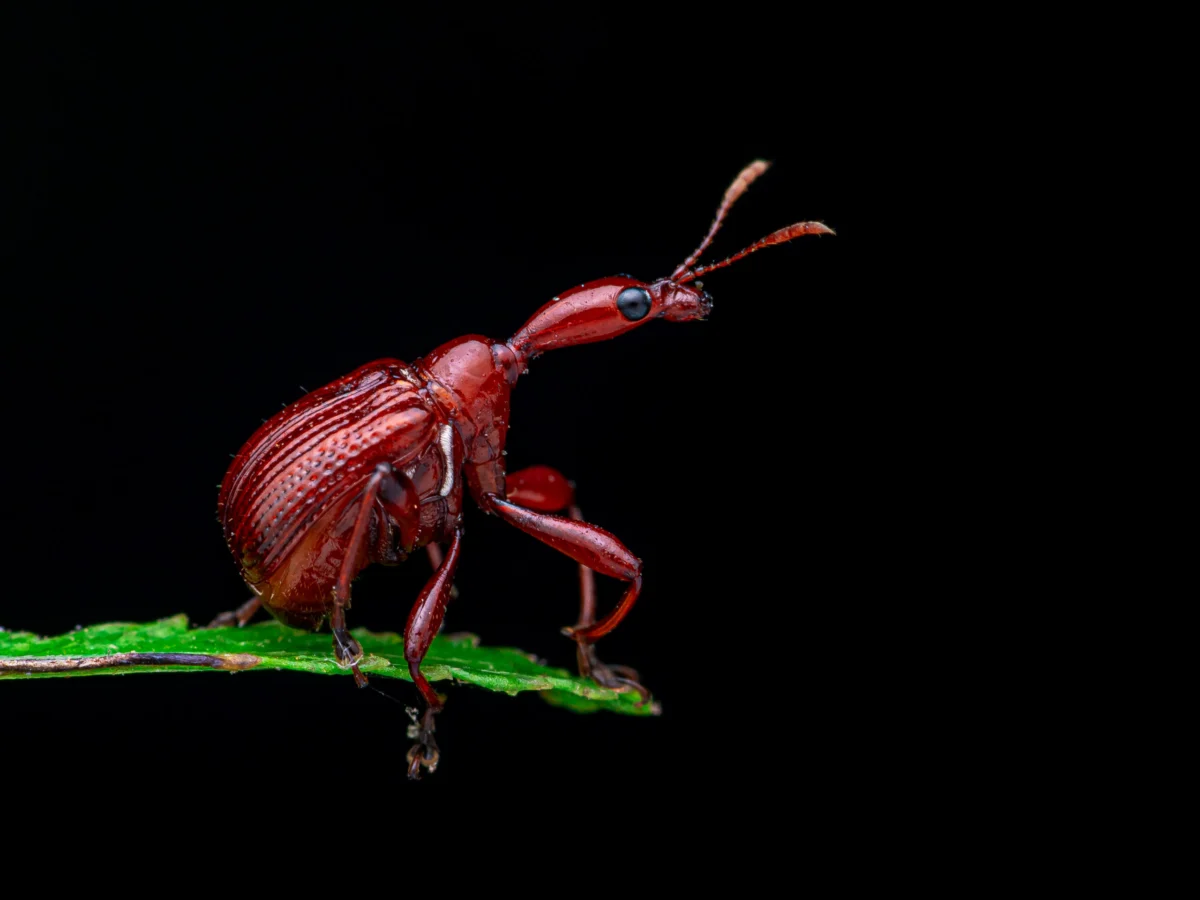
In an era dominated by sweeping landscape photography and long-range wildlife documentation of charismatic megafauna, a quiet revolution is taking place at the microscopic level. For photographers willing to look closely at the spaces immediately surrounding them, an intricate, hidden universe thrives in plain sight. This paradigm shift in wildlife observation is exemplified by the journey of a macro photographer based in Goalpara, Assam, whose meticulous documentation of invertebrate behavior recently earned international recognition at the prestigious 2025 Wildlife Photographer of the Year competition, hosted by the Natural History Museum in London.
The Genesis of a Micro-Observer: From Landscapes to Invertebrates

Before taking up serious nature photography, the artist’s relationship with the natural world mirrored that of the general public: an appreciation of distant mountains, expansive rivers, and soaring birds. However, a significant pivot occurred in 2018 with the acquisition of a first digital single-lens reflex (DSLR) camera, specifically a Canon 1500D. What began as a standard introductory tool for exploring visual arts quickly evolved into a dedicated pursuit of macro photography—a genre that magnifies subjects to a scale larger than life-size.
The turning point arrived during a routine session photographing a common house fly. Upon zooming into the high-resolution digital file, the photographer encountered an architectural and biological marvel previously invisible to the naked eye. The complex lattice of the compound eyes, the microscopic sensory hairs (setae) blanketing the exoskeleton, and the aerodynamic engineering of the wing veins revealed an entirely autonomous ecosystem operating parallel to human existence.
This discovery redefined photography not merely as a medium for image creation, but as a scientific and exploratory tool. The immediate environment—ranging from backyard gardens and agricultural fields to damp ponds and the exterior walls of residential dwellings—was recontextualized. Ordinary botanical elements, such as a fallen leaf or a dried bamboo stem, were revealed to be dynamic ecological zones functioning as hunting grounds, nurseries, and construction sites for diminutive architects.

Chronology of an Award-Winning Frame: The Potter Wasp Project
While the macro world is populated by countless organisms—including spiders, bees, parasitoid wasps, and leafhoppers—certain species exhibit behavioral complexities that command exceptional attention. Among these, solitary wasps of the family Vespidae, particularly potter wasps (subfamily Eumeninae), became a primary focus of prolonged study.
Potter wasps are renowned for their sophisticated architectural capabilities and maternal dedication. Constructing intricate globular nests from mud pellets gathered grain by grain, these insects provision their chambers with paralyzed caterpillars to serve as sustenance for developing larvae. Documenting this behavior requires immense dedication, often demanding five to six hours of daily observation over multiple consecutive days to anticipate fleeting moments of interaction.

The culmination of this methodical approach was a specific project centered on a potter wasp that established a nest on a photograph frame within a domestic interior in Goalpara. Over a multi-week observation period, the photographer tracked the wasp’s tireless routine: traversing the local landscape to capture green caterpillars significantly larger than its own body weight, inspecting the nest architecture, and executing precise flight maneuvers.
This exhaustive fieldwork resulted in the creation of an image titled Special Delivery. The photograph captures a potter wasp mid-flight, carrying a vibrant green caterpillar securely beneath its body. The visual synthesis of sharp focus, behavioral narrative, and compositional precision set the frame apart in global competition.
Global Recognition at the 2025 Wildlife Photographer of the Year

The significance of the work was formally validated when Special Delivery was announced as a Highly Commended entry in the Behavior: Invertebrates category of the 2025 Wildlife Photographer of the Year competition. Administered annually by the Natural History Museum in London, the competition is widely regarded as the most prestigious showcase for international wildlife photography, attracting tens of thousands of entries from professional and amateur naturalists across nearly a hundred countries.
The inclusion of an image captured in a residential setting in rural Assam underscores a broader democratic shift in nature documentation. High-level scientific and artistic wildlife imagery no longer requires expeditions to remote wilderness reserves; instead, it highlights the biodiversity that exists within human-dominated landscapes. Following the announcement, the achievement was celebrated locally among family and peers, before rippling outward through subsequent publications and international media outlets, including platforms such as National Geographic, the BBC, Discovery, and Sanctuary Asia.
Ecological Significance and the Imperative of Invertebrate Conservation

Beyond aesthetic merit, macro photography of invertebrates serves an essential ecological and educational purpose. Insects and other small arthropods form the fundamental trophic foundation of terrestrial ecosystems. They drive critical ecological processes, including primary pollination, nutrient recycling, natural pest regulation, and soil aeration.
Despite their foundational role in maintaining planetary biosphere health, invertebrates suffer disproportionately from habitat fragmentation, pesticide use, and climate change—a phenomenon frequently termed the "insect apocalypse" by conservation scientists. Because of their small stature, these organisms are frequently overlooked or marginalized by conservation initiatives that prioritize larger, charismatic vertebrates.
By utilizing high-magnification lenses to reveal the behavioral traits, parental care, and physical beauty of creatures such as spider-hunting wasps, mud daubers, and leafhoppers, contemporary macro photographers bridge the psychological gap between humans and the invertebrate world. Detailed imagery serves to dismantle common phobias and indifference, replacing them with scientific curiosity and ecological awareness.

Methodological Insights and Advice for Emerging Naturalists
The success of grassroots macro photography projects offers a clear methodological blueprint for aspiring visual naturalists. Technical proficiency with camera gear—such as achieving shallow depths of field, managing diffraction, and utilizing specialized macro lenses or diffusion lighting—is secondary to behavioral understanding. Fieldcraft in macro photography relies fundamentally on patience, ethical restraint, and an intimate comprehension of animal ethology.
Industry experts emphasize that ethical macro photography must prioritize the welfare of the subject over image acquisition. Invasive techniques, such as chilling insects to induce torpor or damaging micro-habitats, compromise the integrity of natural history documentation. Sustainable macro photography relies on passive observation, allowing natural behaviors to unfold organically over extended periods.

As demonstrated by the trajectory of the Goalpara-based photographer, the most compelling stories in the natural world do not require transcontinental travel. They unfold continuously in gardens, agricultural borders, and urban peripheries. By slowing down to observe the infinitesimal details of ecosystems, observers unlock narratives of survival, adaptation, and resilience that prove indispensable to our broader understanding of the natural world.
