
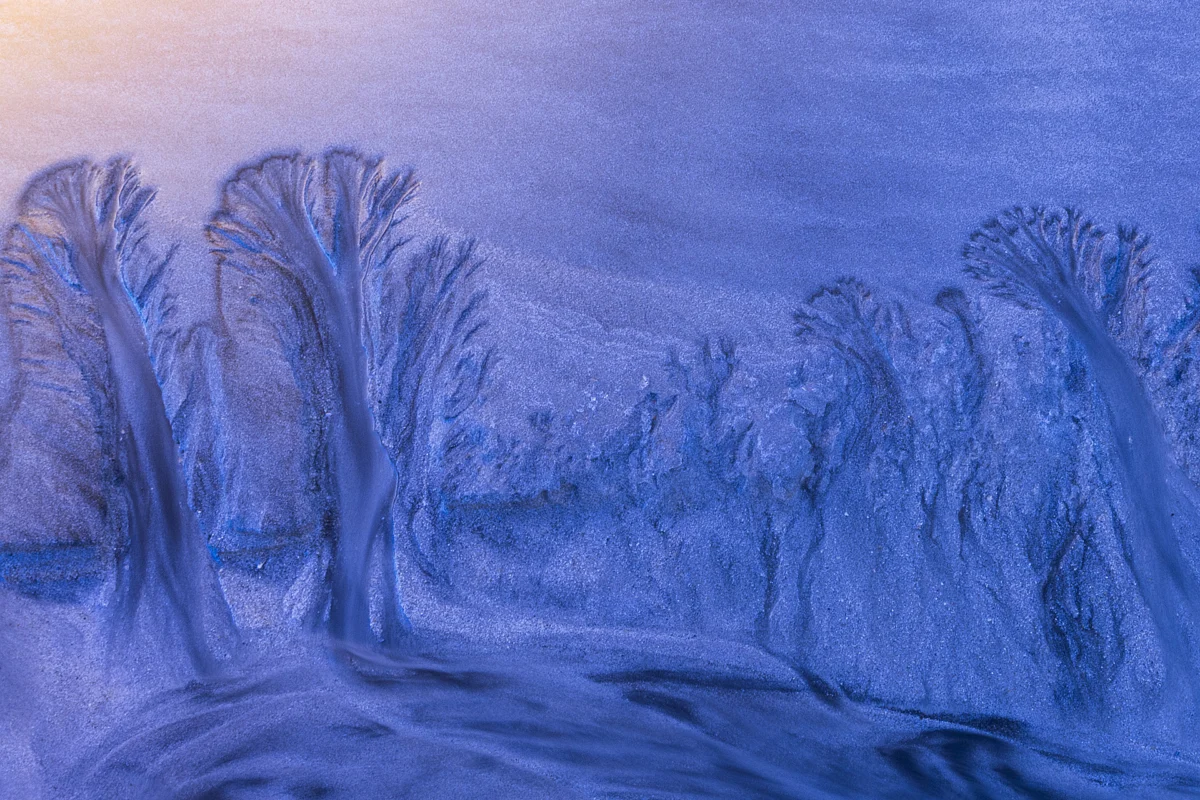
Artistic photography has long served as a medium not merely for documentation, but for profound personal expression and the complete reinterpretation of the physical world. While photojournalism and traditional landscape photography strive for absolute fidelity to what the human eye encounters, fine art nature photography embraces a more malleable approach. By manipulating technical parameters at the moment of capture—such as white balance, specialized glass filters, vintage optics, and multiple exposure workflows—contemporary practitioners can reshape everyday environments into subjective narratives. This philosophy of in-camera transformation underpins a new portfolio of five distinct fine art photographs recently shared by nature photographer Martín Alonso, offering a comprehensive look into how ordinary natural elements are elevated into striking visual metaphors.

The methodology relies heavily on reducing reliance on post-processing software by baking intentional artistic decisions directly into the digital negative. This approach revives traditional darkroom philosophies within a modern digital framework, challenging the notion that a photograph must be a literal transcript of reality. Below is an examination of the techniques, locations, conceptual frameworks, and broader implications of this unique body of work.

Methodological Framework and Conceptual Roots
The creation of these five distinct images stems from long-term photographic essays that explore specific natural motifs, including water movements, plant geometries, avian behavior, and overlooked micro-ecosystems. Rather than hunting for grand, iconic vistas, the underlying philosophy focuses on extracting extraordinary compositions from transient, mundane occurrences.

In-camera techniques—such as additive double exposures, deliberate color-temperature shifts, and the integration of vintage lenses—allow the artist to strip away chaotic background elements and evoke specific emotional resonances. By altering variables like shutter speed and white balance prior to exposure, the photographer constructs a self-contained world where physical realities are superseded by psychological impressions.

Chronology of Captures: From Norway to Argentina
The portfolio spans diverse geographic and climatic zones, documenting a creative timeline that highlights the adaptability of these techniques across vastly different ecosystems.

1. Sunrise at Skagsanden (Norway)
Originating from the ongoing photo essay Ephemeral, the Language of Water, this image captures a fleeting coastal phenomenon that exists for mere minutes. Working on the sub-arctic sands of Skagsanden beach during early morning light in Norway, the photographer sought to capture water tracing forest-like patterns as it receded across the sand.

- Technical Execution: Utilizing a 16mm wide-angle lens mounted on a sturdy tripod for absolute sharpness, the exposure time was set to 0.8 seconds. This slow shutter speed transformed the moving water at the frame’s base into a silky, ethereal texture contrasting against the rugged grit of the sand.
- Color and Filtering: An intentional white balance setting of 3500 Kelvin cast a cool, wintry blue across the scene. To neutralize unwanted sunlight glare reflecting off the sand while injecting warmth into the upper composition, a Singh-Ray Gold-N-Blue polarizing filter was employed, effectively merging contrasting thermal tones into a single cohesive frame.
2. Black Alders Creating Artistic Symmetries (Río Negro, Argentina)
Part of the Plant Designs series, this piece was captured during an overcast afternoon along the riverbanks of Viedma, in the Argentine province of Río Negro. The subject matter focused on black alders (Alnus glutinosa), specifically their small, pinecone-like fruits dangling in delicate equilibrium against the bright backdrop of the river water.

- Technical Execution: Employing a telephoto lens to isolate the subject, the photographer utilized the camera’s internal "double exposure in the shadows" mode, a setting designed to superimpose the darkest regions of sequential frames.
- Camera Settings: The white balance was deliberately pushed to an unusually warm 8000 Kelvin. The first exposure was captured normally, followed by a precise 180-degree rotation of the camera via the lens mounting ring before the second exposure. This in-camera superimposition generated an abstract botanical design characterized by rhythmic symmetry and stark tonal contrast.
3. Whirlwind of Ferns (Puerto Iguazú, Misiones, Argentina)
Documented during a steady drizzle along a jungle trail in Puerto Iguazú, this image addresses the common landscape photography challenge of distracting, chaotic backgrounds. While the moisture-laden ferns exhibited vibrant green hues against a bed of decaying leaves, the cluttered forest floor detracted from their visual delicacy.

- Technical Execution: To visually eliminate the disruptive background without digital masking, an additive double exposure mode was utilized with careful underexposure to prevent blown highlights.
- Optics: The distinctive, swirling bokeh surrounding the ferns was achieved using a vintage Helios 44-2 lens. The first exposure focused on filtered sunlight piercing dense overhead foliage to create soft perimeter glints while leaving the center dark. The second exposure centered the sharp fronds within the frame, merging the elements in-camera to dissolve the chaotic background entirely.
4. The Great Escape (El Cóndor Beach, Argentina)
Drawn from the long-term essay Escape and Evasion, which utilizes avian subjects as symbols of liberation from modern anxieties, this photograph was captured along the towering fifty-meter cliffs of El Cóndor beach. The location hosts the world’s largest colony of burrowing parrots (Cyanoliseus patagonus), comprising over 74,000 birds whose collective movement fills the coastal airspace.

- Technical Execution: Working from the clifftop with a 400mm telephoto lens, the artist executed an in-camera double exposure combining two distinct moments of coastal turmoil.
- Compositional Mechanics: The first exposure recorded the raw kinetic energy of violent ocean waves crashing against the shoreline. The second exposure was shot freehand with an open aperture for a rapid shutter speed, capturing backlit parrots scrambling upward against a cloudy sky. The resulting blend places the birds near the lower frame margin, visually fleeing the rising chaos of the sea below within an ochre-toned, 8000 Kelvin atmosphere.
5. The Moth in Its Galaxy (Puerto Iguazú, Argentina)
This intimate macro composition developed shortly after arrival at a riverside cabin complex near the Paraná River. Noticing a tiny moth resting on a balcony glass pane covered in accumulated dust and atmospheric grime, the photographer envisioned transforming the insect into a celestial body.

- Technical Execution: Enlisting familial assistance, a flashlight was beamed through the glass from the opposite side to illuminate the microscopic dust particles, turning the dirty windowpane into a glittering starfield.
- Camera Settings: Shot freehand with a macro lens, the exposure was underexposed by three full stops, and the white balance was locked at 3000 Kelvin to emphasize deep, cool cosmic tones. The resulting image elevates a common household insect into a solitary entity suspended within a simulated galaxy.
Technical Analysis and Industry Implications
The techniques highlighted in this portfolio represent a deliberate pushback against the homogenization of digital photography. In an era dominated by advanced computational photography on mobile devices and heavy post-processing suites like Adobe Photoshop and Lightroom, the choice to execute complex layering and filtering entirely in-camera highlights a commitment to traditional craftsmanship.

Industry analysts note a growing niche appreciation for analog-inspired digital workflows. By relying on hardware-based solutions—such as vintage glass adapters, specialized polarizers, and in-camera multiple exposure algorithms—photographers retain a tangible connection to the physical moment of capture. This approach not only preserves the spontaneity of field photography but also ensures that each final frame possesses a unique, unrepeatable physical fingerprint that cannot be easily replicated through automated software scripts.

Ultimately, these five visual studies demonstrate that compelling subject matter is not dependent on exotic travel or grand spectacles. Through deliberate technical manipulation and a shifting perspective, everyday phenomena—a moth on a dusty pane, a receding wave, or a jungle fern—transcend their ordinary status to become enduring visual metaphors.
