
Human language is a complex tapestry of thousands of distinct tongues and countless regional dialects, a system that facilitates intricate social cohesion while simultaneously creating barriers to cross-cultural understanding. Yet, despite this linguistic fragmentation, humans possess a rudimentary, non-verbal "lingua franca"—a set of universal gestures and vocalizations, such as a sharp shout or a frantic wave, that transmit the immediate presence of danger regardless of the speaker’s origin. Recent scientific inquiry suggests that this phenomenon is not unique to the human experience. A landmark 2025 study conducted by an international coalition of researchers from Cornell University, the Doñana Biological Station in Spain, and other global institutions has provided compelling evidence that birds share an innate, cross-species "universal language" specifically evolved to broadcast threats.
The study, which examined the acoustic responses of 21 distinct avian species, offers a profound validation of Darwinian theories regarding the evolution of interspecies communication. By demonstrating that birds across disparate continents respond to identical alarm calls, the research suggests that evolution has hard-coded survival signals into the avian genome, effectively bypassing the need for cultural learning or geographic interaction.
The Mechanism of Brood Parasitism: An Evolutionary Arms Race
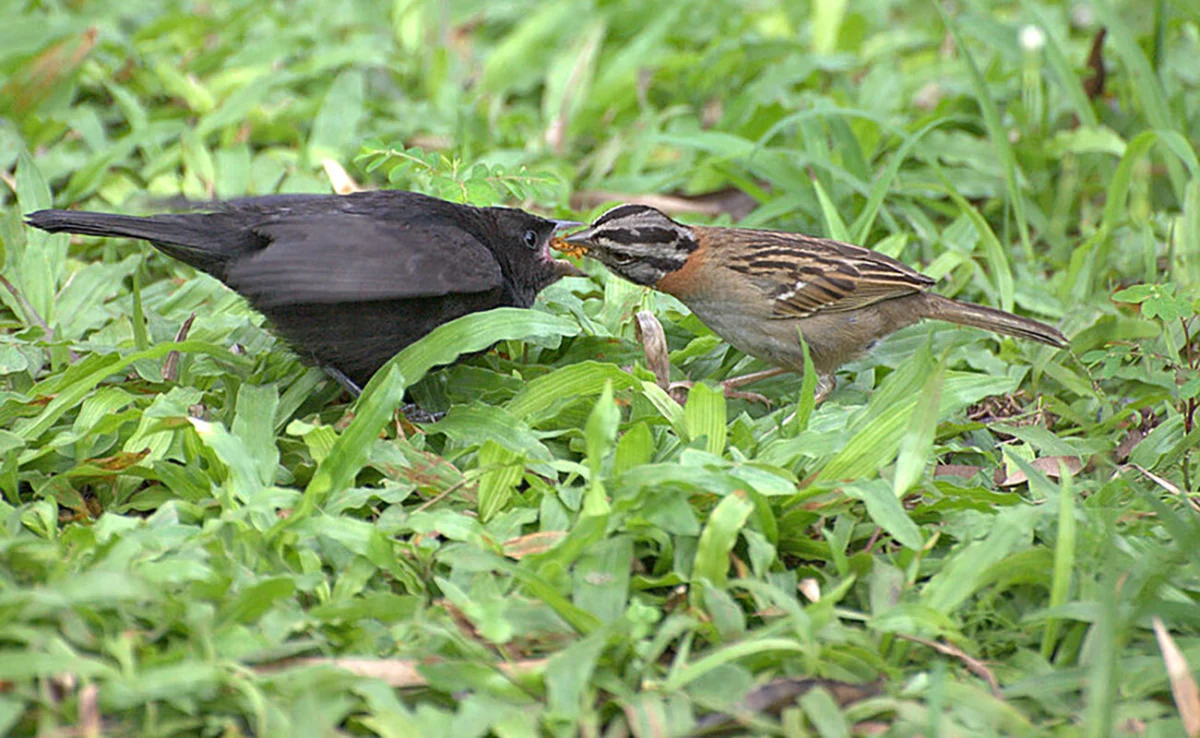
To understand the stakes of this avian communication, one must first examine the pressure cooker of brood parasitism. Brood parasites—such as the common cuckoo in Europe or the cowbird in the Americas—are birds that have outsourced the grueling labor of parental care. Rather than constructing nests, incubating eggs, or foraging for their own offspring, these species infiltrate the nests of "host" birds.
The strategy is often ruthless. Upon depositing an egg in a host’s nest, the parasitic bird may remove or destroy the host’s own eggs to ensure that the host’s resources are directed entirely toward the intruder. For the host species, the stakes could not be higher; failing to identify and defend against these interlopers results in total reproductive failure. This "evolutionary arms race" has forced host birds to develop sophisticated defense mechanisms, primary among them the ability to recognize and sound the alarm when a parasitic threat approaches.
Research Methodology and Chronology of the 2025 Study
The research team, seeking to determine if these alarm calls were learned or innate, focused on the "whining alarm" signal. The chronology of the investigation unfolded over several phases:
- Selection Phase (2023): Researchers identified 21 host species across Asia, Australia, Europe, and North America. These species were chosen specifically because they occupy vastly different ecological niches and have no shared evolutionary recent history, minimizing the possibility of "cultural" transmission of vocalizations.
- Observation Phase (2024): Field researchers recorded the vocal responses of these birds when exposed to standardized auditory playbacks of parasitic warning calls.
- Data Synthesis (Early 2025): The team analyzed the frequency, pitch, and temporal structure of the "whining" vocalizations. The results showed that, despite the geographic isolation of the species involved, the acoustic structure of the alarms remained strikingly uniform.
- Peer Review and Publication (Mid-2025): The findings were synthesized into a comprehensive report, highlighting the discovery of a conserved "alarm syntax" that transcends species boundaries.
The data indicated that when a bird from a forest in China emits the whining alarm, a bird in the American Midwest—having never encountered that specific species—responds with the same defensive urgency. This suggests that the signal is not a learned behavior acquired from elders, but rather a "built-in" feature of the avian brain, refined by natural selection over millions of years.
Supporting Data and Acoustic Analysis
The scientific significance of this study lies in the uniformity of the data. In traditional animal behavior studies, vocalizations are often categorized as "learned," similar to how songbirds learn melodies from their parents. However, the 2025 study found that the "whining alarm" does not follow the erratic variations typically seen in learned vocalizations. Instead, the acoustic profile was consistent across the tested species.

Researchers noted that the vocalizations operate on a low-frequency band that is easily transmitted through dense foliage, a functional necessity for warning calls in complex habitats. Furthermore, the duration of the calls was remarkably consistent, with most signals falling within a specific millisecond range. This consistency provides a mathematical basis for the claim that these signals are innate; if they were learned, the variations caused by environmental noise and individual "dialects" would have resulted in significantly more divergence over the millions of years these species have been separated.
Official Perspectives and Academic Implications
Dr. Elena Vance, a lead researcher on the project, noted in a post-study briefing that the findings force a re-evaluation of how we categorize animal intelligence. "We are observing a phenomenon that mirrors the early development of human language in toddlers," Vance stated. "Just as human infants have an innate capacity to interpret tone and urgency before they can form sentences, these birds possess a neurobiological architecture that prioritizes the processing of specific, high-stakes alarm signals."
The academic community has largely reacted with intrigue. Evolutionary biologists point out that this study effectively bridges the gap between innate behavioral patterns and adaptive evolution. By identifying these "universal alarm signals," scientists may now be able to map the genetic pathways that control these vocalizations, potentially identifying the specific regions of the avian brain responsible for signal recognition.
Broader Impact: Beyond the Nest
The implications of this discovery extend far beyond the study of brood parasitism. If birds have evolved a universal language to communicate danger, it raises the possibility that other species—mammals, amphibians, or even fish—may share similar "hidden" communication networks that have been largely overlooked by human observers.
Furthermore, this research provides a new tool for conservationists. As climate change and habitat loss drive bird populations into closer proximity, understanding how they communicate—and how they might misinterpret the signals of foreign species—is critical. If a native bird species can understand the alarm call of an invasive, non-native predator or parasite, it may adapt more quickly than previously thought.
However, researchers remain cautious about over-extrapolating the findings. While the "whining alarm" appears universal for parasitic threats, it is unclear if this universality extends to other types of communication, such as courtship, territorial disputes, or food gathering. The researchers emphasize that these "survival-critical" signals are likely the most conserved, as the cost of failing to understand them is extinction.
The "Language" of Survival
Ultimately, the 2025 study serves as a poignant reminder of the interconnectedness of the natural world. While humans focus on the complexities of syntax and grammar, the animal kingdom operates on a foundation of shared, survival-oriented communication. The whining call of a host bird is not merely a noise; it is a legacy of millions of years of evolutionary trial and error, a shorthand for danger that has been etched into the avian code.
As we continue to decode these signals, we gain not only a better understanding of our feathered counterparts but also a deeper appreciation for the ancient, silent rules that govern life on Earth. The research from Cornell and the Doñana Biological Station suggests that, in the face of existential threats, the language of survival is universal—a truth that humans, despite our sophisticated vocabulary, are only just beginning to fully understand. The "whining alarm" remains a testament to the idea that, in nature, the most important messages are often those that require no translation at all.
