
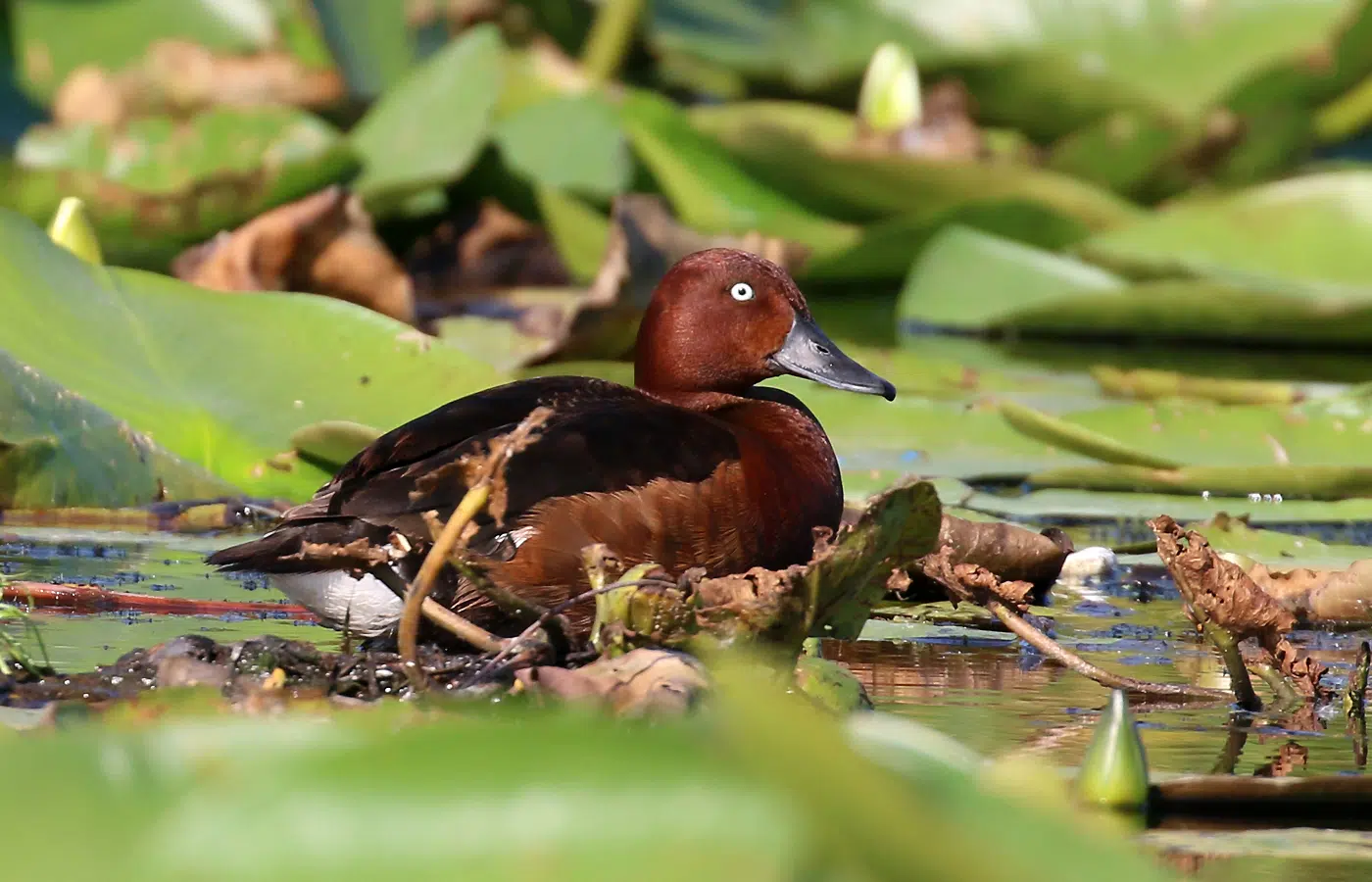
The African-Eurasian Flyway serves as a gargantuan ecological corridor, a migratory superhighway that binds the disparate landscapes of the Arctic, Europe, the Middle East, and Africa. Within this vast network, the Ferruginous Duck (Aythya nyroca) functions as a sentinel species. Currently listed as Near Threatened by the International Union for Conservation of Nature (IUCN), this diving duck’s survival is inextricably linked to the integrity of a chain of wetlands that spans thousands of kilometers. Protecting this species requires a sophisticated, transnational approach to conservation, focused on the preservation of Key Biodiversity Areas (KBAs) that act as essential fueling and breeding stations for millions of migratory birds.
An Anatomy of the African-Eurasian Flyway
The flyway encompasses a staggering geographic range, supporting approximately 465 migratory bird species and facilitating the movement of over 2 billion individual birds annually. It is a biological lifeline, but it is also a highly vulnerable one. The migration process is inherently dangerous, requiring birds to navigate shifting weather patterns, habitat fragmentation, and a host of anthropogenic threats.

The Ferruginous Duck, characterized by its deep chestnut plumage and distinctive white wing bars, relies on high-quality, undisturbed freshwater habitats. As a species, it serves as a barometer for the health of the flyway; where the duck thrives, the wetland ecosystem is typically functional. However, the degradation of its preferred habitats—primarily shallow, vegetated wetlands—has led to a steady decline in its population. The bird’s reliance on specific, geographically dispersed sites means that the loss of a single major stopover can have catastrophic consequences for an entire migratory sub-population.
A Chronology of Conservation Efforts
The history of conservation within the African-Eurasian Flyway has evolved from localized protection efforts to a more integrated, landscape-level strategy.
- 1990s – Early 2000s: Initial documentation of the Ferruginous Duck’s decline prompted international concern, leading to the identification of critical sites across its range.
- 2010 – 2020: Increased monitoring of the Pokuplje Basin and Lake Nasser highlighted the disparity in conservation success, as some areas suffered from over-exploitation while others saw successful hunting bans.
- June 2026: BirdLife International secured a £7.5 million grant from the Ecological Restoration Fund (ERF), marking a new era of large-scale financial support for flyway-wide habitat restoration.
- Late 2026: Implementation of the three-year ERF initiative begins, with a focus on transboundary cooperation between European and African nations to ensure consistent policy frameworks for water management and anti-poaching.
European Strongholds: The Pokuplje Basin
The Pokuplje Basin in Croatia stands as a primary example of a critical European breeding and stopover site. Spanning roughly 350 square kilometers, this wet lowland is a mosaic of oak forests, expansive meadows, and a network of traditional carp fishponds. Sites such as Crna Mlaka and Draganic provide the necessary shallow-water conditions for the Ferruginous Duck to forage and rear its young.

Data from local ornithological surveys indicate that the basin hosts over 20,000 waterbirds during peak migration. The site is a biodiversity hotspot, providing nesting grounds for the White-tailed Sea-eagle and the Collared Flycatcher. However, the sustainability of the Pokuplje Basin is under constant pressure from the intensification of aquaculture and agricultural runoff, which threatens to degrade the water quality essential for the duck’s survival.
The African Sanctuary: Lake Nasser
Upon crossing the Mediterranean, the Ferruginous Duck enters the arid landscapes of North Africa, where the human-made expanse of Lake Nasser in Egypt acts as an oasis. As one of the largest reservoirs in the world, the lake is an indispensable wintering ground. It is estimated that Lake Nasser can support upwards of 200,000 wintering waterbirds.
The importance of Lake Nasser transcends biology. It is a cornerstone of the Egyptian economy, providing hydroelectric power through the Aswan High Dam and essential irrigation for agricultural lands. The coexistence of industrial-scale human activity and wild migratory populations is a delicate balance. Nature Conservation Egypt (NCE) has played a pivotal role in this, successfully lobbying for a complete hunting ban within the lake’s territory. This regulatory shift has already yielded measurable improvements, with the return of species like the Long-tailed Cormorant to areas where they had been absent for decades.

Broader Implications and Statistical Realities
The status of the African-Eurasian Flyway is a reflection of global environmental health. Current data suggests that 8% of the species within the flyway are globally threatened with extinction, and a concerning 44% are experiencing population declines. These figures are not merely statistics; they are indicators of systemic failures in land and water management.
Major threats to the flyway include:
- Habitat Degradation: The conversion of wetlands into industrial agricultural or urban zones.
- Illegal Killing: Unregulated hunting and poaching that target migratory species during their most vulnerable stopover periods.
- Disease Transmission: The spread of avian influenza and the West Nile virus, which can decimate local populations, particularly in high-density wetland habitats.
The recent £7.5 million grant provided by the Ecological Restoration Fund is intended to address these systemic issues. By focusing on the restoration of an "ecologically coherent network," the initiative aims to ensure that birds can traverse the flyway with minimal risk. This approach acknowledges that conservation is not merely about protecting specific species in isolation, but about safeguarding the infrastructure of the environment—the wetlands, forests, and river basins that serve as the flyway’s nodes.

Perspectives on Integrated Conservation
Conservationists argue that the success of projects at Lake Nasser and the Pokuplje Basin provides a roadmap for future interventions. The involvement of local communities is central to this strategy. When local stakeholders—such as fishermen in Egypt or land managers in Croatia—see the economic and ecological value of a healthy wetland, they become the most effective guardians of that habitat.
The restoration of the flyway is also a matter of shared heritage. The Ferruginous Duck is a traveler that ignores political borders, and its protection necessitates a diplomatic and scientific collaboration that spans the Arctic to the Sahara. The integration of local knowledge with international scientific oversight has been identified by experts as the most effective path forward. By treating the flyway as a single, interconnected unit, the current conservation framework seeks to mitigate the impacts of climate change and habitat loss on a continental scale.
Future Outlook
The next three years will be critical for the Ferruginous Duck and the hundreds of other species that rely on the African-Eurasian Flyway. The focus will shift toward scaling up successful local interventions and applying them to broader regional contexts.

As the Ecological Restoration Fund project gains momentum, the emphasis will remain on ensuring that these ecosystems remain functional in the face of increasing climate volatility. The survival of the Ferruginous Duck serves as a tangible metric for the success of these broader environmental ambitions. If the current momentum toward habitat restoration is maintained, there is a viable path to stabilizing populations and ensuring that this migratory superhighway remains a vibrant, functional bridge between continents for generations to come. The effort is not merely an act of environmental charity; it is a pragmatic necessity for maintaining the ecological balance of three continents.
