
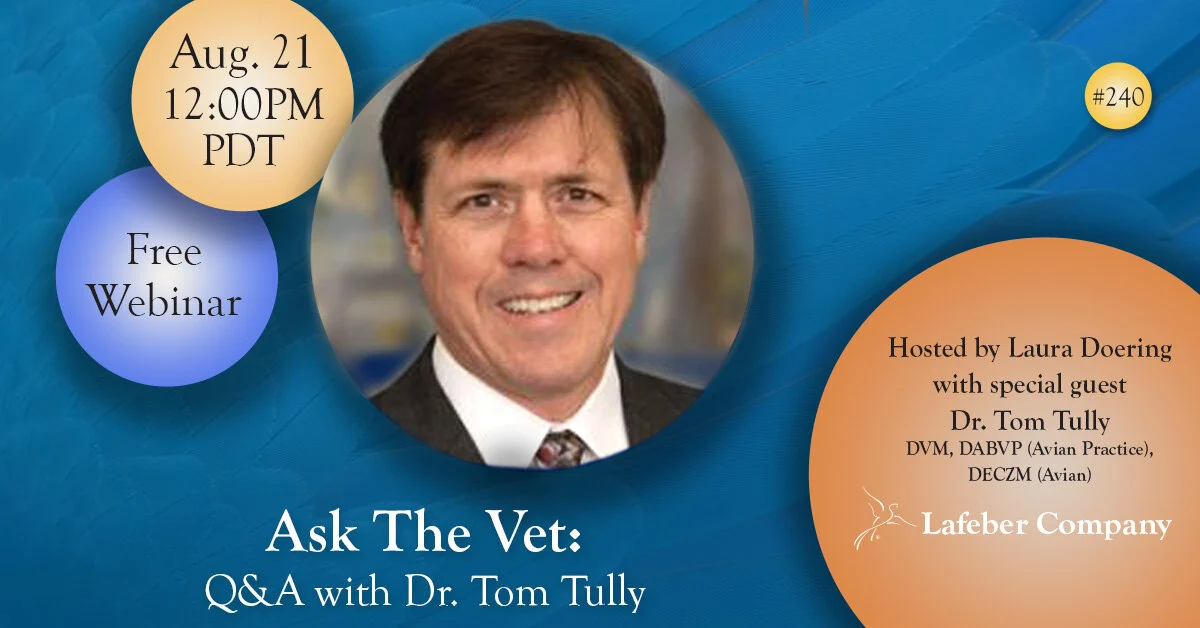
The landscape of avian healthcare is set to undergo a significant interactive expansion on Friday, August 21, 2026, as renowned veterinary expert Dr. Tom Tully hosts a live, complimentary webinar aimed at addressing the complex nuances of pet bird maintenance. Moderated by Laura Doering, the former editor of the industry-standard publications Bird Talk and Birds USA, the session serves as a critical bridge between specialized clinical knowledge and the practical, day-to-day challenges faced by bird owners. As the pet bird industry continues to evolve, with an increasing emphasis on welfare and preventative medicine, access to experts of Dr. Tully’s caliber—a Diplomate of the American Board of Veterinary Practitioners (Avian Practice) and the European College of Zoological Medicine (Avian)—represents a pivotal resource for the community.
Professional Background and Clinical Expertise
Dr. Tom Tully’s participation in this webinar series is predicated on the philosophy that the most effective bird stewardship is rooted in owner education. His professional credentials establish him as one of the leading voices in avian medicine. By operating at the intersection of clinical practice and public outreach, Dr. Tully aims to mitigate common errors in husbandry that often lead to chronic health issues in parrots and other exotic birds.
The distinction of his board certification is significant. Achieving Diplomate status in the ABVP for Avian Practice requires rigorous post-doctoral training and a comprehensive examination process that covers the entirety of avian biology, physiology, and pathology. For the average pet owner, having direct access to a clinician with this depth of expertise is typically limited to specialized referral hospitals or academic institutions. The webinar format effectively democratizes this level of medical consultation, allowing for real-time diagnostic guidance and nutritional counseling that is otherwise difficult to obtain outside of a traditional clinical appointment.
The Role of Education in Avian Welfare
In the broader context of avian medicine, the primary cause of morbidity and mortality in captive birds is often linked to sub-optimal husbandry rather than acute infectious disease. Nutrition, in particular, remains a focal point of debate and investigation within the veterinary community. Many species of parrots, when removed from their natural foraging environments, are prone to obesity, vitamin A deficiencies, and metabolic bone disease due to improper seed-based diets or a lack of environmental enrichment.
Dr. Tully’s objective for this session is to provide a fact-based framework for owners to differentiate between behavioral manifestations—such as feather destructive behavior or screaming—and underlying physiological ailments. This distinction is often the most challenging aspect of avian ownership, as birds are evolutionarily predisposed to mask signs of illness to avoid predation in the wild. Consequently, by the time an owner observes clinical signs of sickness, the condition is frequently in an advanced state. This webinar aims to provide the tools necessary for earlier detection and proactive management.
Chronology of the Webinar Series
This event is part of an ongoing initiative to improve standards of care for companion birds through digital accessibility. The webinar series has seen consistent growth since its inception, responding to a rising global interest in exotic pet ownership.
- Initial Concept: Development of a high-access, low-barrier platform for bird owners to interact with veterinary specialists.
- Expansion Phase: Implementation of interactive Zoom-based webinars, allowing for live Q&A segments that mirror a clinical consultation environment.
- Current Iteration (August 21, 2026): A continuation of the series featuring high-level academic expertise, focusing on the intersection of nutrition and behavioral psychology.
The transition to virtual formats has proven effective, with data suggesting that webinar participants demonstrate higher adherence to veterinary recommendations regarding diet and habitat setup following these sessions. The use of digital tools like time zone converters and pre-registration portals indicates a mature infrastructure designed to accommodate a global audience of avian enthusiasts.
Supporting Data and Industry Implications
The pet bird market has experienced steady fluctuations, with a notable increase in the adoption of rescue and rehomed birds. According to current veterinary research, the primary hurdles for new owners include understanding the dietary complexity of psittacines and the significant psychological needs of highly intelligent species.

Research published in the Journal of Avian Medicine and Surgery highlights that owners who participate in educational workshops report a 40% reduction in emergency visits for non-urgent nutritional imbalances. The implication is clear: when owners are empowered with the knowledge of what constitutes "normal" behavior and optimal physiological health, the long-term success rate of the human-animal bond increases, and the rates of bird abandonment decrease.
Analyzing the Impact of Specialized Veterinary Outreach
The decision to offer these sessions at no cost to the public is a strategic move to raise the baseline standard of care. By providing direct access to a DVM (Doctor of Veterinary Medicine), the webinar acts as an educational conduit that supplements, rather than replaces, the need for a primary care veterinarian.
Industry analysts note that as the costs of specialized veterinary care rise, virtual education serves as a vital safeguard. By addressing nutritional inquiries—such as the efficacy of pellet-based diets versus fortified seed mixes—Dr. Tully can influence the consumption habits of thousands of owners, indirectly impacting the market for commercial bird products. Furthermore, the focus on behavioral health addresses the number one reason for bird relinquishment: the inability of the owner to manage the bird’s innate psychological needs.
Official Stance and Expectations
While the webinar is intended for educational purposes, the organizers emphasize that it does not replace a physical examination. The professional expectation is that attendees will come prepared with specific questions regarding their bird’s history, diet, and symptoms.
From a clinical perspective, Dr. Tully’s involvement signals a broader shift in the veterinary profession toward telemedicine and digital health consulting. While traditional medicine requires a physical presence, the ability to analyze history and provide guidance via digital platforms is becoming a standard feature of modern veterinary practice. This session, therefore, stands as a model for how specialized medical fields can utilize modern technology to improve outcomes for non-traditional companion animals.
Future Outlook for Avian Care
Looking forward, the integration of these webinars into the regular calendar of the bird-keeping community suggests that the industry is prioritizing long-term health over short-term ownership. The continued partnership between industry professionals and veterinary experts is expected to result in better-informed owners who are capable of identifying the subtle cues of avian health.
As the August 21, 2026, date approaches, interest in the session is expected to remain high, particularly among those who manage complex species such as African Greys, Cockatoos, and Macaws, which require highly specific environmental and dietary inputs. The event serves as a reminder that the health of a pet bird is not merely a matter of chance, but a product of informed management and continuous access to qualified professional advice.
For those planning to participate, the registration process is facilitated through a centralized portal, ensuring that all attendees have access to the materials and the ability to submit inquiries prior to the live event. This structured approach ensures that the time spent with Dr. Tully is optimized for high-value information exchange, benefiting both the individual pet and the broader community of avian caregivers. The success of this initiative will likely dictate the frequency and scope of future sessions, as the demand for expert-led avian education continues to climb in a globalized pet care economy.
