
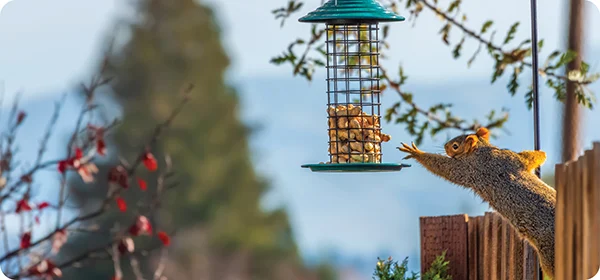
The suburban backyard has increasingly become a contested frontline between well-meaning wildlife enthusiasts and an extraordinarily resourceful coalition of urban fauna. Across North America, millions of households invest time and capital into backyard bird feeding, transforming residential green spaces into vibrant ecosystems. However, this philanthropic endeavor routinely attracts unintended guests. From acrobatic eastern gray squirrels to aggressive flocks of blackbirds and European starlings, opportunistic critters have turned residential feeding stations into all-you-can-eat buffets. According to wildlife management experts and industry groups, the resulting conflict often leaves homeowners frustrated, out-of-pocket, and ready to abandon their hobby entirely. Fortunately, modern ornithological supply specialists and wildlife conservation advocates emphasize that a combination of strategic hardware, intelligent food selection, and spatial engineering can restore harmony to the backyard ecosystem.
The Anatomy of the Backyard Conflict: Main Facts and Scale of the Problem
Backyard bird feeding is a multi-million-dollar hobby that provides vital supplemental nutrition for native songbirds while offering humans a direct connection to local wildlife. Yet, the very features that attract desirable species—high-energy seeds, suet, and nectar—also act as powerful beacons for wildlife populations that have adapted exceptionally well to human-dominated landscapes.
Wildlife biologists note that foraging is a full-time, high-stakes occupation for animals like squirrels and chipmunks. Driven by the biological imperative to cache food and maintain fat reserves, these rodents view unprotected bird feeders as jackpot discoveries. Similarly, large flocks of gregarious avian species can descend upon a residential yard, rapidly depleting a week’s worth of seed in a matter of hours while physically intimidating smaller, more delicate songbirds such as chickadees, goldfinches, and titmice.
The economic and psychological toll on homeowners is significant. Beyond the recurring financial cost of constantly replacing expensive seed blends, homeowners frequently report structural damage to wooden and plastic feeders chewed through by persistent rodents. Recognizing these friction points, industry leaders such as Wild Birds Unlimited (WBU) have dedicated extensive educational resources—including dedicated blog advisories and podcast episodes like "Episode 76: Critter Solutions"—to help citizens reclaim control of their outdoor spaces without harming local wildlife.
The Evolution of Deterrence: A Chronology of Backyard Engineering
The struggle to protect bird feed is as old as the backyard feeder itself, evolving through distinct technological eras as manufacturers and naturalists sought more humane and effective solutions.
In the early decades of organized backyard feeding, pest management relied heavily on crude physical barriers or discouraged participants simply giving up. Early wooden boxes and rudimentary hanging platforms offered zero resistance to determined mammals.
By the late 20th century, the introduction of specialized hardware revolutionized the market. The implementation of stovepipe baffles and hanging domes marked a significant turning point. Rather than relying on harmful chemical repellents or dangerous traps, engineers applied principles of physics and animal behavior. Smooth metal cylinders and slick polycarbonate barriers were designed to remove the traction and grip required for climbing mammals to reach their targets.
In recent years, the chronology of backyard defense has entered a sophisticated mechanical era. Today’s market features weight-sensitive mechanisms, calibrated closing ports, and precision-engineered exclusion cages. These modern innovations represent a shift from reactive measures to proactive design, allowing homeowners to selectively feed targeted species while structurally excluding heavier mammals and aggressive avian bullies.
Tactical Defenses: Baffling Squirrels and Managing Space
Addressing the mammalian component of the backyard dilemma requires an understanding of squirrel athleticism. Gray squirrels, red squirrels, and chipmunks possess remarkable leaping abilities, exceptional problem-solving skills, and a tenacity that defies simple deterrence.

According to wildlife feeding specialists, effective squirrel-proofing relies on two primary methodologies: physical barriers and spatial positioning.
For pole-mounted feeder systems, stovepipe baffles are considered the gold standard. When positioned properly—typically at least five feet above the ground—these smooth, vertical metal cylinders prevent squirrels from securing a grip or climbing past them. However, hardware alone is insufficient if placement is flawed. Experts advise that pole systems must be situated at least ten feet away from any launch pads, including overhanging tree branches, porch railings, fences, or garden sheds. Without this critical ten-foot buffer, squirrels easily bypass even the most expensive hardware by launching themselves directly onto the feeder platform.
For situations where feeders must be suspended from tree branches, a different tactical approach is required. In these scenarios, homeowners utilize standard tube or hopper feeders paired with a domed squirrel baffle suspended directly above the unit. This overhead barrier prevents animals from sliding down or climbing down the hanging wire or chain.
Alternatively, retrofitting existing feeders with exterior exclusion cages offers a robust physical barrier. These metal or heavy-duty wire cages feature openings specifically dimensioned to permit smaller, favored songbirds while completely blocking larger squirrels and bulky nuisance birds from reaching the food source.
Rebalancing the Avian Hierarchy: Managing Nuisance Birds
While furry rodents often receive the bulk of homeowners’ frustrations, avian bullies present an equally challenging problem. Defined broadly as any bird species that congregates in numbers large enough to monopolize a feeder, prevent desired songbirds from participating, and rapidly exhaust food supplies, "nuisance" birds require a targeted dietary and structural response.
The core principle of avian management is favoring specific desired species through deliberate dietary choices. Many common nuisance birds, such as grackles, blackbirds, and starlings, exhibit strong preferences for inexpensive filler grains commonly found in low-quality seed mixes.
Industry analysts and feeding specialists strongly recommend eliminating cracked corn and millet from backyard menus. Replacing these ingredients with safflower seed yields immediate results; while many favored songbirds readily consume safflower, blackbirds generally dislike its bitter taste and thick hull. Similarly, offering pure suet cakes—as opposed to blended suet formulations containing added grains or fruits—frequently deters starlings while remaining a high-value attraction for woodpeckers, nuthatches, and other woodland species.
Beyond diet, hardware engineering plays a pivotal role in managing avian dynamics. Weight-sensitive perches represent a triumph of applied mechanics in modern feeder design. These devices feature an adjustable spring mechanism calibrated to the weight of lighter songbirds. When a heavier bird, such as a pigeon, jay, or starling, lands on the perch, its weight triggers a drop-down or shutter system that physically closes off access to the feeding ports. Once the heavier bird departs, the port reopens for lighter visitors. Additionally, feeders equipped with very short perches—or no perches at all—favor agile, hovering species like goldfinches while making it mechanically difficult for larger birds to maintain a stable feeding position.
Official Guidance and Industry Perspectives
Organizations dedicated to nature specialty and backyard conservation emphasize that managing backyard wildlife is not about exclusion for the sake of eradication, but rather about achieving ecological balance in a shared suburban landscape.
Certified Bird Feeding Specialists frequently advise consumers to view backyard challenges through an educational lens. Rather than engaging in an endless escalation of frustration, homeowners are encouraged to analyze the specific behavior and physical capabilities of the animals visiting their yards. By identifying the exact species causing the disruption, consumers can select the precise combination of baffles, exclusionary cages, and seed modifications required to solve the issue efficiently.

Furthermore, educational platforms such as specialized nature podcasts and franchise advisories stress that consistency is critical. Wildlife quickly learns to associate human environments with high-calorie rewards; therefore, maintaining proper clearance distances, keeping feeding stations clean, and adhering strictly to non-preferred seed types are ongoing responsibilities for anyone maintaining a backyard sanctuary.
Broader Impact and Environmental Implications
The implications of effectively managing backyard feeding stations extend far beyond the immediate satisfaction of a suburban homeowner. When implemented correctly, these critter-management strategies contribute to safer, healthier urban ecosystems.
Unprotected feeders that allow large populations of rodents or aggressive flocking birds to congregate unchecked can inadvertently create artificial congregation points. These dense gatherings can elevate the risk of disease transmission among local wildlife populations, including pathogens like avian pox, salmonella, and trichomoniasis. By utilizing exclusion devices, proper pole spacing, and appropriate seed selection, homeowners help disperse feeding activity, reducing the likelihood of disease outbreaks at the feeder site.
Additionally, reducing the loss of wasted seed to non-target species minimizes pest attraction. Unattended seed that spills onto the ground and remains uneaten by birds often serves as an unintended attractant for nocturnal wildlife, including raccoons, opossums, and rodents, which can create secondary property management concerns for homeowners.
Ultimately, the science of critter solutions bridges the gap between human enjoyment and wildlife management. By understanding animal behavior, investing in durable, well-designed hardware, and making informed nutritional choices, homeowners can successfully navigate the challenges of backyard feeding, ensuring that their residential green spaces remain a welcoming, safe haven for the diverse array of native wildlife they set out to support.
