
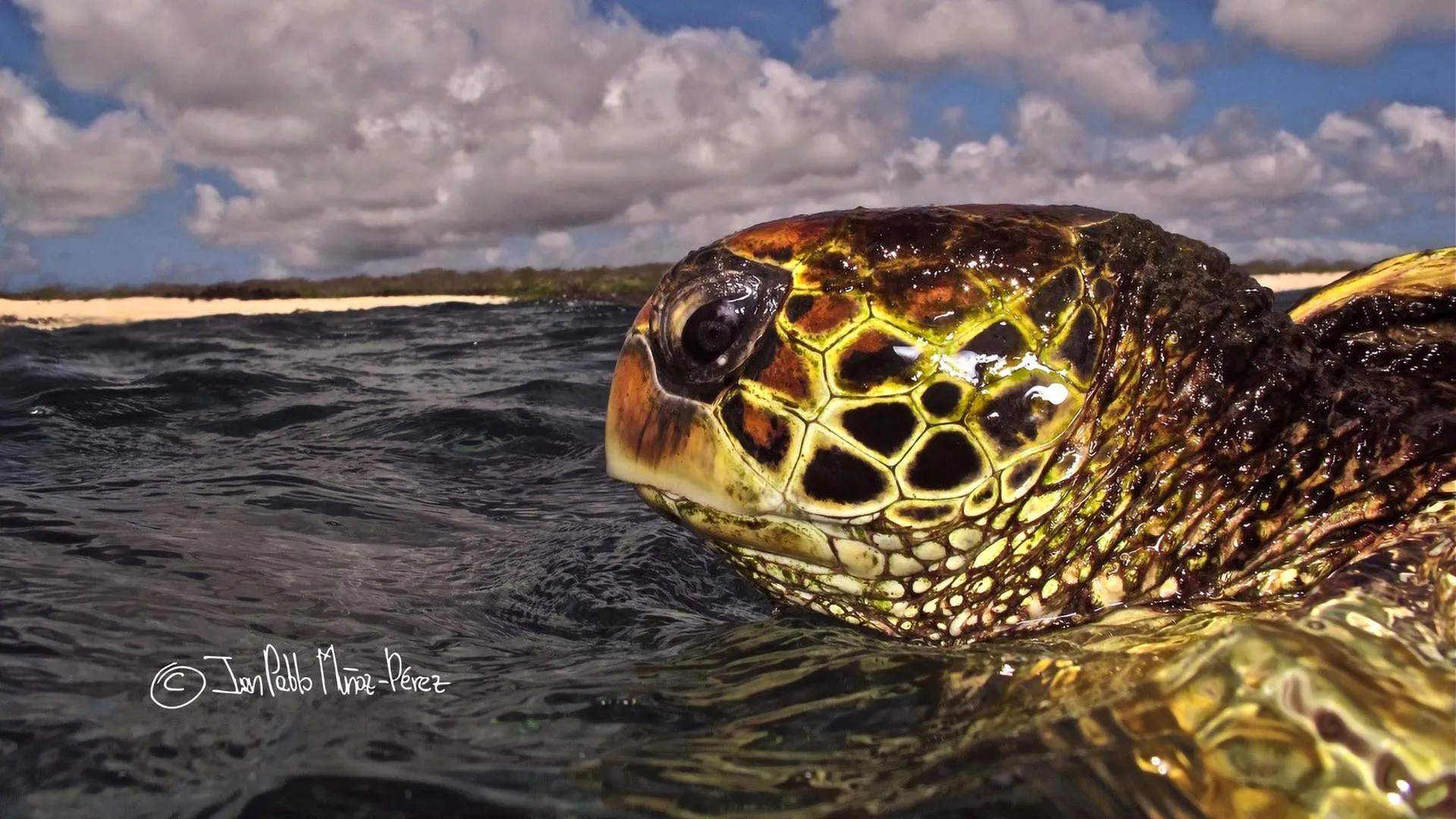
For generations, the global scientific community has looked upon sea turtles as the ultimate endurance travelers of the marine realm. These ancient mariners are celebrated for orchestrating epic ocean crossings, relying on an intricate biological compass tuned to the Earth’s geomagnetic field, the trajectory of the sun, and the pulse of deep-sea currents. Their life cycle typically dictates vast migratory routes, carrying them thousands of kilometers across open waters from feeding grounds to their native nesting beaches.
However, a groundbreaking long-term study centered in the remote waters of the Galápagos archipelago has upended these long-held assumptions. Researchers investigating the behavior of green sea turtles within this volcanic sanctuary have discovered a surprisingly sedentary population, challenging the textbook narrative of endless oceanic wandering and offering vital new insights for marine conservation.
Unraveling the Mysteries of the Galápagos Marine Reserve
The recent findings, published in the journal Frontiers in Amphibian and Reptile Science, focus on the behavior of "yellow-morph" green sea turtles. These animals represent one of two genetically distinct forms of the green sea turtle (Chelonia mydas) inhabiting the tropical and subtropical regions of the world. While green sea turtles are widely recognized for their unique herbivorous diet in adulthood—shifting from a carnivorous juvenile diet to graze primarily on seagrasses and marine algae—the behavioral ecology of specific regional morphs has remained largely under-explored.
Dr. John W. Rowe, a professor at Alma College in the United States and the corresponding author of the study, noted the astonishment of the research team when the telemetry data began to pour in. Scientists had initially hypothesized that these yellow-morph individuals would mirror their Pacific counterparts, undertaking vast migratory loops to reach distant nesting beaches in the western Pacific.
Instead, the reality captured by satellite tracking revealed a starkly localized existence. Over the multi-year investigation, none of the study’s satellite-tagged yellow-morph turtles crossed the boundaries of the expansive 198,000-square-kilometer Galápagos Marine Reserve. Rather than traversing ocean basins, these marine reptiles maintained tightly defined home ranges, demonstrating a profound regional fidelity that caught marine biologists completely off guard.
A Unique Ecological Melting Pot in the Pacific
To fully appreciate the significance of the recent Galápagos discovery, context regarding the broader taxonomy and geography of green sea turtles is essential. Among the seven recognized species of sea turtles, Chelonia mydas stands apart due to its specialized herbivorous lifestyle. Young hatchlings begin life as opportunistic omnivores, but as they mature, their serrated jaws adapt to shearing seagrasses and scraping algae from rocky substrates.
Globally, genetic lineages of green sea turtles diverge into distinct morphs or regional stocks. In the Pacific, the yellow-morph green sea turtle is traditionally associated with the western expanses of the ocean, while the "black-morph" variant typically dominates the eastern Pacific, ranging west of the Americas down from southern California.
The Galápagos Islands represent a rare and fascinating ecological intersection. It is the only known location on Earth where these two distinct genetic forms converge, sharing the same nutrient-rich waters and grazing on identical marine vegetation. Despite sharing overlapping foraging grounds, the two morphs retain distinct physiological and developmental traits. For instance, juvenile yellow morphs exhibit faster early growth rates than their black-morph counterparts, hinting at underlying physiological divergences that continue to puzzle researchers.
Chronology and Methodology of the Galápagos Tracking Project
The initiative to monitor the spatial ecology of yellow-morph green sea turtles began taking shape in 2015. Recognizing a critical gap in regional data, an international team of scientists—led by researchers from Alma College and the Universidad San Francisco de Quito in Ecuador—set out to determine how these animals utilize the archipelago’s marine habitats.
In 2015, the research team initiated a delicate field operation. Operating in shallow coastal waters near four distinct islands within the Galápagos chain, scientists successfully captured nine healthy adult yellow-morph green sea turtles. The cohort comprised seven males and two females. In keeping with field research traditions, the turtles were assigned descriptive nicknames to facilitate tracking and identification.
Once secured, the researchers outfitted each turtle with advanced electronic satellite transmitters securely attached to their carapaces. These tracking devices were programmed to interface with the low-orbit Argos satellite network, relaying precise geolocation data whenever the turtles surfaced to breathe.
The tracking duration varied depending on biological factors and equipment longevity, with individual turtles monitored for up to 418 days. The observation window officially concluded when a transmitter naturally detached, ceased functioning, or battery depletion ended signal transmission.
Patterns in the Deep: Coastal Preferences and Island-Hopping
As the satellite telemetry data accumulated, a clear behavioral portrait emerged. The yellow-morph turtles displayed an overwhelming preference for shallow coastal habitats. While occasional exploratory forays took individuals as far as 25 kilometers offshore, the vast majority of tracked locations clustered tightly around the volcanic shorelines.
The spatial analysis revealed diverse movement strategies among the study participants:
- Site Fidelity: Five of the nine turtles spent the vast majority of the monitoring period confined to the waters surrounding a single island.
- Bilateral Movement: Individuals named Bernardo and Sara regularly commuted between the coastal zones of Isabela and San Cristóbal islands. Leandro was similarly documented moving between Isabela and Española.
- Extended Roaming: The title of most adventurous turtle went to an individual named Ainoa. Initially tagged near San Cristóbal, Ainoa subsequently journeyed to Santa Cruz before finally establishing presence near Isabela.
Furthermore, the data unveiled a distinct temporal pattern governing these inter-island movements. Relocation between different islands occurred strictly during the cooler seasonal window spanning from April through October. During warmer months, movement largely stagnated, suggesting that oceanographic shifts or water temperature fluctuations heavily influence their local commuting habits.
On average, each individual utilized a home range spanning approximately 1,498 square kilometers, though the total area varied significantly from one animal to another based on individual foraging preferences and local resource availability.
Insights and Speculations from the Research Front
The persistent homebound behavior of these yellow-morph turtles has opened new avenues of scientific inquiry. However, researchers emphasize that the tracking data captures only a specific snapshot in the animals’ multi-decade lifespans, leaving open the possibility of long-distance migrations occurring outside the study window.
This caveat is particularly critical when considering the female population. Co-author Dr. Juan Pablo Muñoz Pérez, a professor at the Universidad San Francisco de Quito, highlighted the enduring mystery surrounding female reproductive cycles in the region.
"Since female yellow-morph green sea turtles are not known to lay eggs on the beaches of the Galápagos, we believe that they will eventually leave the area to return to their natal beaches in the western Pacific," Dr. Muñoz Pérez explained.
This behavior stands in sharp contrast to the black-morph population residing in the same waters. Certain female black morphs actively nest on Galápagos beaches. Depending on the individual, these black-morph females may act as year-round resident archipelago dwellers, undertake medium-range journeys to neighboring oceanic islands, or embark on massive migrations toward distant mainland feeding grounds off the coasts of Central and South America.
Conservation Implications: Protecting Interconnected Habitats
Beyond academic curiosity, the findings carry profound implications for regional wildlife management and marine conservation strategies. Historically, marine protected areas have often been designed around static focal points—such as known nesting beaches or concentrated feeding hotspots.
However, the discovery that individual yellow-morph turtles routinely traverse waters across multiple island boundaries demonstrates that localized protection is insufficient. If a turtle relies on resources distributed across a network of islands, the ecological integrity of the entire transit corridor must be maintained.
"Since individual turtles may rely on waters around multiple islands, the quality of habitat that is available for foraging should be maintained intact across all islands, and not allowed to degrade anywhere," Dr. Rowe emphasized.
Conservation planners must now factor in these multi-island movement corridors when designing management frameworks for the Galápagos Marine Reserve. Preserving the ecological health of shallow coastal zones, mitigating vessel strike risks along common transit routes, and preventing localized marine pollution are paramount to ensuring the survival of these unexpectedly homebound reptiles.
As researchers continue to analyze the complex interactions between the yellow-morph and black-morph populations in the Galápagos, these findings serve as a powerful reminder of nature’s adaptability. Even within species renowned for planetary-scale migrations, localized populations can carve out unique, place-based niches, underscoring the necessity of nuanced, science-driven conservation policies in one of the world’s most treasured marine ecosystems.
