
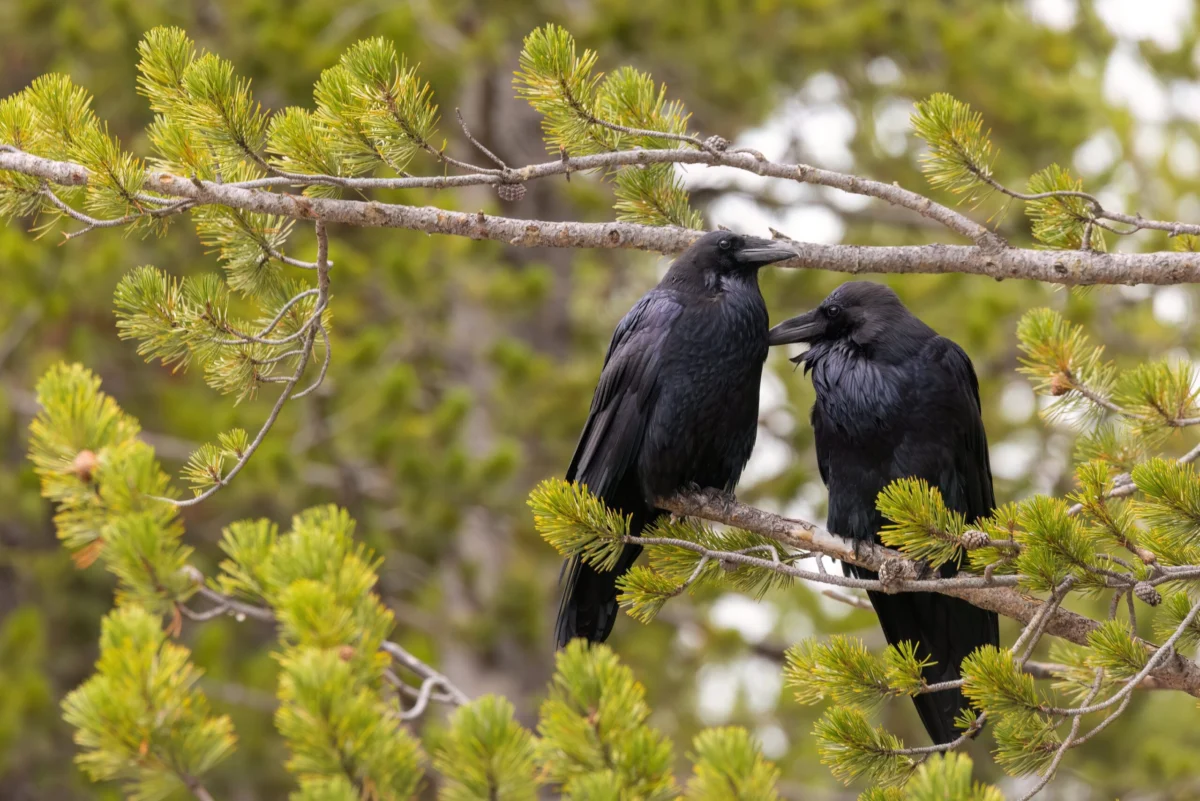
The Common Raven, scientifically known as Corvus corax, has been designated as the Audubon Southwest Bird of the Month for October, an acknowledgment that brings renewed focus to one of the most intelligent and misunderstood species in the North American ecosystem. While often relegated to the realm of folklore, literature, and superstition, these highly adaptable corvids are increasingly being viewed by ornithologists as critical indicators of environmental health. Their presence, behavior, and survival patterns in the arid landscapes of the American Southwest offer a unique window into the broader challenges facing the Colorado River Basin.
Evolutionary Intelligence and Behavioral Adaptability
The Common Raven is renowned for its cognitive capabilities, which rival those of many primates. Studies have demonstrated that these birds possess the ability to solve complex multi-step puzzles, use tools, and exhibit social learning. Their aerial acrobatics—which include rolls, dives, and even sustained inverted flight—are not merely displays of vanity but are deeply integrated into their complex social and reproductive behaviors.
These birds are quintessentially opportunistic. For millennia, they have thrived in proximity to human settlements, a symbiotic relationship that has facilitated their expansion across diverse climates. Their diet is exceptionally varied; as omnivores, they consume everything from carrion, insects, and rodents to berries and anthropogenic waste. This dietary flexibility has allowed them to survive in environments where more specialized species have struggled or faced local extinction.
The raven’s reliance on observational learning is particularly pronounced in the wild. Research has documented instances of ravens memorizing the movement patterns of apex predators, such as grey wolves, to scavenge the remnants of kills. This behavioral strategy of "working smarter, not harder" minimizes the energy expenditure required for survival, a necessity in the harsh, resource-scarce conditions of the high desert.
The Historical and Cultural Duality of the Raven
The history of the human-raven relationship is bifurcated between admiration for the bird’s intellect and fear of its perceived omens. In many Indigenous cultures of the American Southwest, the raven is revered as a clever trickster, a figure of wisdom, and a creator spirit. Conversely, Western literature—most notably Edgar Allan Poe’s 1845 poem "The Raven"—solidified the bird’s reputation as a "grim, ungainly, ghastly, gaunt, and ominous bird of yore."
This cultural baggage has historically impacted how society manages the species. While the Common Raven remains a species of "Least Concern" according to the International Union for Conservation of Nature (IUCN), their population dynamics are shifting alongside the landscape. Ornithologists emphasize that the transition from viewing the raven as a pest or a harbinger of doom to recognizing it as an essential ecological actor is vital for conservation efforts.
Environmental Stressors in the Colorado River Basin
The habitat of the Common Raven, particularly within the Grand Canyon and the surrounding Colorado River Basin, is currently undergoing significant transformation. The ecological integrity of this region is being compromised by a convergence of factors that threaten both avian and aquatic life.
The Proliferation of Invasive Species
The introduction and spread of invasive plant species, most notably Tamarix (salt cedar), have fundamentally altered river corridors. These non-native plants are highly efficient at drawing water from the soil, effectively choking out native riparian vegetation. This loss of native habitat displaces the diverse insect and plant life that many birds, including the raven, rely on for their nutritional needs.
Hydrological Decline and Climate Forcing
The Colorado River, the lifeblood of the Southwest, is facing a historic drought. Diminishing water flows have altered the thermal properties and chemical composition of the river, creating a hostile environment for native fish and aquatic invertebrates. As the climate warms, the reduction in winter snowpack in the Rockies has led to lower spring runoff, causing soil desiccation that further degrades the regional ecosystem.
Comparison with Vulnerable Corvid Cousins
While the Common Raven has displayed a remarkable capacity for adaptation, its cousins have fared worse. The Pinyon Jay (Gymnorhinus cyanocephalus), for example, has seen significant population declines linked to the loss of pinyon-juniper woodlands. The juxtaposition of the stable raven population against the declining Pinyon Jay serves as a warning: adaptability has its limits, and the degradation of the Colorado River Basin is accelerating toward a tipping point.
Chronology of Ecological Change (1970–2024)
- 1970s–1980s: Expansion of invasive Tamarix across the Southwest creates monocultures in riparian zones, leading to the gradual displacement of native willows and cottonwoods.
- 1990s–2000s: Increased human development and urban sprawl in the desert Southwest lead to a surge in available anthropogenic food sources, artificially inflating local raven populations.
- 2010s: The onset of a "megadrought" begins to severely impact the Colorado River, with water levels in Lake Mead and Lake Powell reaching historic lows.
- 2020–2024: Scientific consensus shifts toward the necessity of large-scale watershed restoration and improved water management as essential tools for biodiversity conservation.
Data-Driven Perspectives on Water Security
The intersection of avian health and water policy is becoming increasingly clear. A recent poll conducted in Arizona revealed that approximately 75% of voters support urgent action to ensure the security of the Colorado River. This overwhelming public mandate reflects a growing awareness that the health of the desert ecosystem—including the species that inhabit it—is intrinsically linked to water management.
Public policy experts suggest that the solution lies in a multi-faceted approach. This includes:
- Investment in Infrastructure: Upgrading water delivery systems to reduce evaporation and leakage.
- Watershed Restoration: Removing invasive species and reintroducing native vegetation to restore the natural water-holding capacity of the landscape.
- Collaborative Funding: Leveraging a mix of federal, state, and private philanthropic capital to support long-term environmental sustainability.
Implications for Future Conservation
The Common Raven acts as a sentinel species. If the environment is changing to the point where even this highly adaptable bird faces long-term risks, the implications for less resilient species are dire. The focus of modern conservation is shifting away from species-specific intervention and toward holistic landscape management.
Audubon Southwest and other environmental advocacy groups have launched initiatives like the "Western Water Action Network" to translate public interest into policy change. By engaging citizens in the legislative process, these organizations aim to ensure that water management decisions are made with the needs of the entire ecosystem in mind, rather than solely prioritizing industrial or municipal consumption.
As the Common Raven continues to soar above the South Rim of the Grand Canyon, its presence remains a symbol of both the enduring resilience of nature and the fragility of the systems upon which it depends. Whether these birds will continue to thrive in the coming century depends largely on the effectiveness of the current efforts to stabilize the water security of the American West. The raven is not a harbinger of doom, but rather an invitation to act—a call to preserve the complex, interconnected web of life that defines the Southwestern landscape.
