
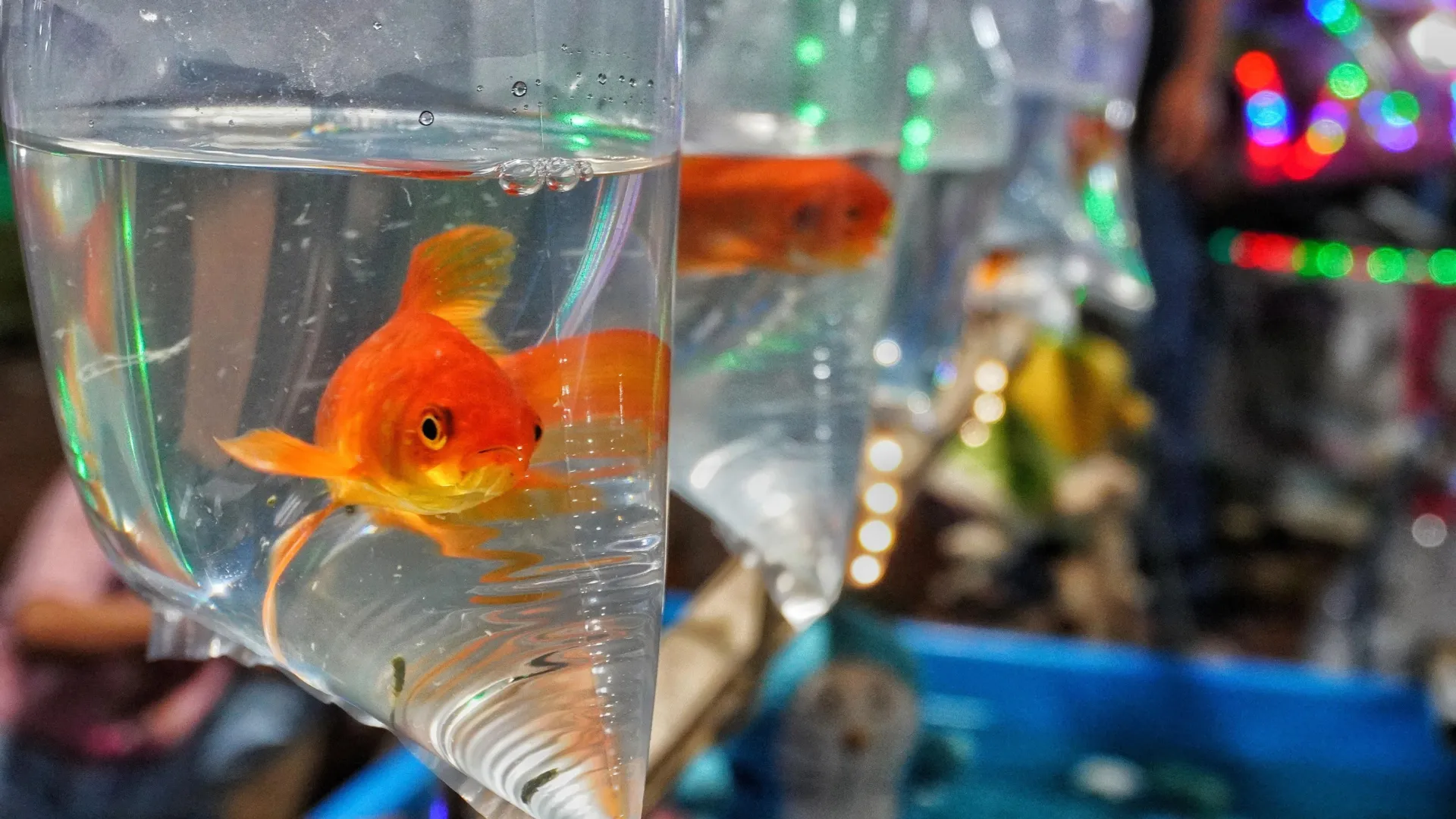
What begins as a seemingly harmless act of compassion—releasing an unwanted childhood pet into a local pond or lake—can trigger a cascade of ecological destruction that permanently alters freshwater habitats. According to groundbreaking new research published in the Journal of Animal Ecology, common goldfish (Carassius auratus) are far more than docile aquarium ornaments. When introduced into the wild, these resilient fish transform into aggressive invasive species capable of engineering widespread ecological collapse across diverse lake environments.
The comprehensive study, spearheaded by researchers at The University of Toledo (UToledo) and the University of Missouri (Mizzou), delivers some of the most rigorous experimental evidence to date regarding the dangers of discarded pet fish. By utilizing large-scale outdoor freshwater mesocosms that accurately simulate natural lake conditions, the scientific team tracked the systematic degradation caused by goldfish across varying aquatic ecosystems. The findings serve as an urgent warning to pet owners, conservationists, natural resource managers, and policymakers who grapple daily with the rising tide of biological invasions driven by the global pet trade.
"It is critically important to inform the public that their pets can become pests that will harm freshwater ecosystems," stated Dr. William Hintz, associate professor in UToledo’s Department of Environmental Sciences and Lake Erie Center and lead investigator of the study. "The evidence is now clear—releasing a goldfish into the wild might be seen as an act of kindness, but it can turn into a major ecological threat."
Replicating Real-World Ecosystems: The Methodology Behind the Study
To arrive at these definitive conclusions, the research team—comprising Dr. Hintz, Hannah Barrett, and Dr. Rick Relyea—eschewed small laboratory aquariums in favor of outdoor freshwater mesocosms. These large-scale experimental tanks allowed scientists to replicate complex, real-world lake ecosystems while maintaining precise control over variables such as nutrient levels, biological communities, and fish populations.
The researchers specifically evaluated how goldfish impact two distinct types of freshwater environments: oligotrophic (nutrient-poor) waters, which typically feature clear water and sparse plant growth, and eutrophic (nutrient-rich) waters, which are prone to heavy algal blooms and murky conditions. By testing goldfish within both trophic states, the team could determine whether the fish caused uniform damage or if their impacts varied depending on the baseline health and chemistry of the lake.
Furthermore, the study employed sophisticated experimental designs—incorporating both additive and substitutive approaches—to isolate the specific behavioral and biological impacts of goldfish from the general effects of having a higher overall density of fish in an aquatic system. The analysis revealed that while certain shifts in aquatic vegetation correlated with total fish abundance, the most severe and destructive ecological alterations were directly attributable to the presence of goldfish.
Anatomy of a Catastrophe: How Goldfish Trigger Regime Shifts
One of the most alarming revelations of the study is the documentation of what aquatic scientists define as a "regime shift." In ecology, a regime shift occurs when an ecosystem absorbs stress up to a critical threshold, beyond which it rapidly reorganizes into a fundamentally different, highly degraded, and self-reinforcing state. Once a lake crosses this threshold, restoring it to its original condition is exceptionally difficult, time-consuming, and financially draining for municipalities and conservation agencies.
Goldfish are exceptionally well-equipped to drive these dramatic environmental changes. Despite their modest size in home aquariums, wild goldfish can grow exponentially larger when given access to unlimited resources and open space in natural waterways.
"If goldfish are released into the wild, they rapidly grow into very large fish that stir up lake sediments, consume large numbers of prey, and compete with native fish," explained Dr. Rick Relyea, professor in the University of Missouri College of Agriculture, Food and Natural Resources and director of Mizzou’s Johnny Morris Institute of Fisheries, Wetlands and Aquatic Systems, as well as a co-author of the study.
As goldfish forage along lake beds, their benthic-feeding habits disturb settled sediments, suspending fine particulate matter into the water column. This chronic bioturbation increases water turbidity, blocking sunlight essential for submerged aquatic vegetation. Simultaneously, the physical disruption of the sediment releases sequestered nutrients like phosphorus and nitrogen back into the water, fueling explosive growths of filamentous algae and phytoplankton. The combination of murky water, diminished native flora, and nutrient overload creates a feedback loop that suffocates native aquatic life, outcompeting indigenous species for food and habitat.
The Global Scope of the Invasive Species Crisis
The new findings arrive against the backdrop of a booming global pet trade that moves millions of aquatic organisms across international borders and domestic watersheds every year. While international commerce heavily regulates major agricultural and aquaculture imports, the ornamental pet trade remains a notoriously porous pathway for the introduction of non-native species.
Goldfish represent one of the most widely distributed ornamental fish species on Earth, possessing a history of domestication that spans more than a millennium, originating in ancient China. Their hardiness, tolerance for a wide range of temperatures, and low oxygen requirements—traits that make them popular for casual pet owners—also make them supreme survivalists when introduced to the wild.
In addition to direct releases by well-meaning owners who no longer wish to care for their pets, goldfish frequently enter public waterways through accidental escapes. Severe weather events, heavy rainfall, and flooding can cause backyard garden ponds, ornamental fountains, and aquaculture holding facilities to overflow, washing fish directly into local streams, rivers, and interconnected lake systems. Once established, these populations reproduce rapidly, forming self-sustaining colonies that are notoriously difficult to eradicate.
Economic and Environmental Implications for Natural Resource Managers
The financial burden of managing invasive species in North American and European freshwater systems runs into the billions of dollars annually. When species like goldfish establish themselves, local and federal governments are often forced to implement aggressive eradication programs, which can include chemical treatments (such as piscicides like rotenone), physical removal via netting, or habitat restoration projects.
For natural resource managers, the study provides vital empirical data to shift strategies away from reactive containment and toward proactive prevention. Wildlife agencies have long suspected that released aquarium pets contribute to biodiversity loss, but the definitive link established by the UToledo and University of Missouri research offers policymakers the scientific backing needed to enact stricter regulations on pet disposal and strengthen public outreach campaigns.
Conservation groups argue that educational initiatives must target points of sale. Pet stores, commercial breeders, and online vendors play a critical frontline role in shaping consumer behavior. Ensuring that every goldfish sold is accompanied by explicit warnings regarding the dangers of release could significantly curb the influx of unwanted pets into natural ecosystems.
Practical Alternatives for Unwanted Aquarium Pets
To combat the rising tide of biological invasions, researchers and wildlife officials are urging pet owners to adopt responsible relinquishment practices. Releasing an animal into a local park, pond, or river should never be considered an act of mercy. Instead, pet owners facing lifestyle changes, tank closures, or the natural growth of their animals should explore sustainable alternatives:
- Return to Retailers: Many local pet stores and specialty aquarium shops will accept healthy surrendered fish, either to re-home them or to manage them through established internal protocols.
- Community Adoption Networks: Local hobbyist clubs, school science classrooms, and community aquarium societies often maintain large setups capable of accommodating larger or unwanted fish.
- Animal Shelters and Rescues: A growing number of specialized non-profit organizations and amphibian/reptile/aquarium rescues exist specifically to rehome surplus aquatic life.
- Humanely Euthanize When Necessary: While difficult for owners to contemplate, veterinary professionals emphasize that humane euthanasia by a qualified professional is infinitely preferable to releasing a non-native species into a wild ecosystem where it will cause widespread suffering, disruption, and potential starvation for native wildlife.
A Call for Heightened Awareness and Action
As anthropogenic pressures on freshwater ecosystems continue to mount—driven by climate change, pollution, and habitat fragmentation—the introduction of invasive species represents an avoidable compounding crisis. The collaborative study from The University of Toledo and the University of Missouri underscores a sobering reality: humanity’s relationship with nature is reflected not only in industrial policy and climate legislation, but also in the everyday decisions made in living rooms across the globe.
By recognizing goldfish as formidable ecological disruptors rather than harmless novelties, society can take a vital step toward protecting fragile freshwater habitats. Scientists hope that the clear, undeniable evidence presented in the Journal of Animal Ecology will inspire a cultural shift in how ornamental pets are viewed, managed, and ultimately retired from care.
