
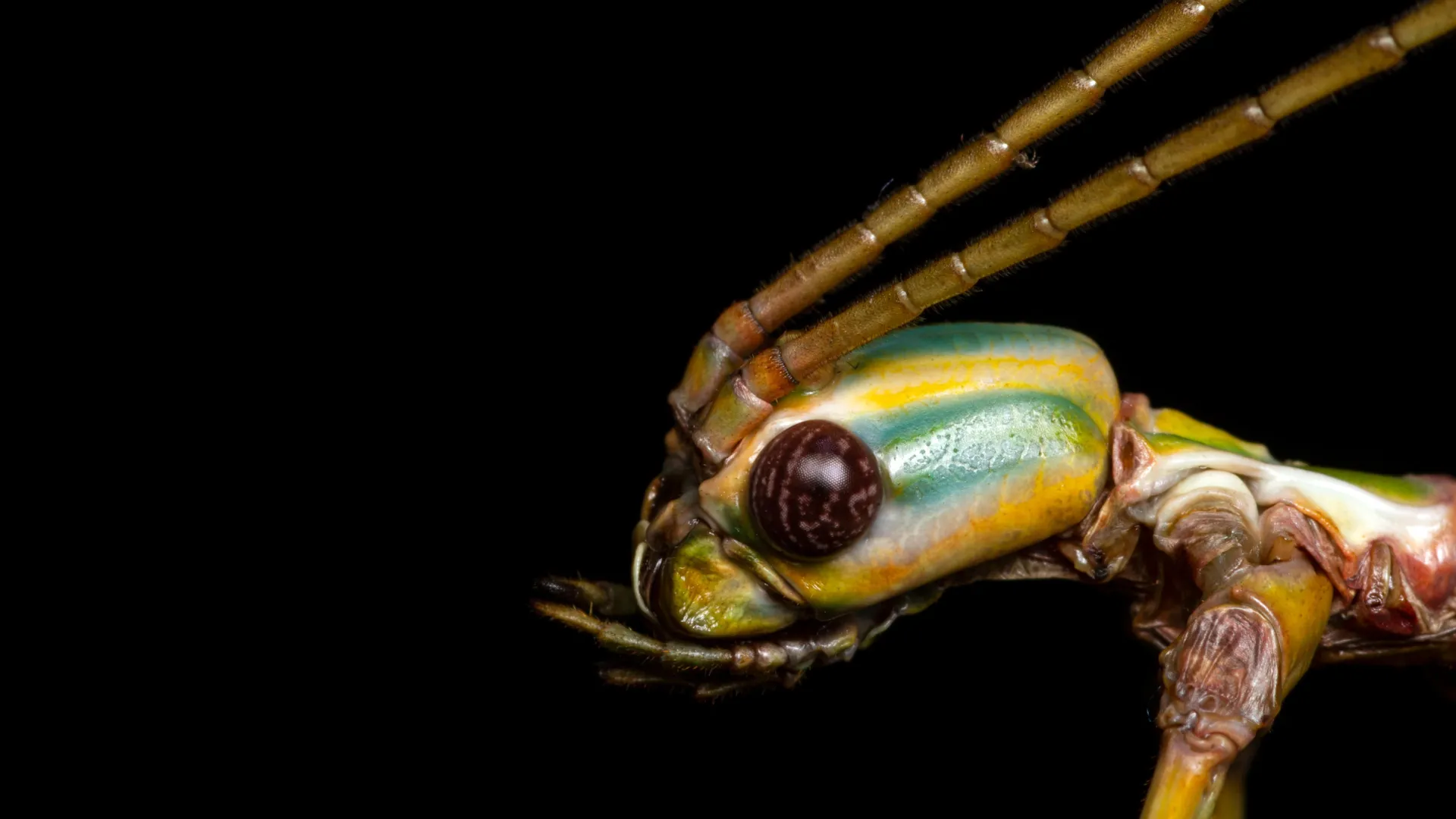
In a striking reminder of the vast, undocumented complexities lingering within the natural world, a team of researchers at the University of Sydney has officially identified two previously unrecognized species of large stick insects in Australia. The discovery, published in the peer-reviewed journal Austral Entomology, upends decades of taxonomic assumptions regarding the genus Anchiale. It demonstrates that even within heavily photographed, closely monitored, and frequently reported ecosystems, significant biodiversity remains entirely hidden from formal science.
The breakthrough comes at a critical juncture for conservation biology. As human activity, climate change, and habitat fragmentation accelerate rates of biodiversity loss across the globe, understanding the precise taxonomy of native fauna is more urgent than ever. By reevaluating museum specimens, deploying modern genetic sequencing tools, conducting extensive field surveys, and leveraging the massive influx of data provided by modern citizen science platforms, the Australian research team has rewritten the evolutionary ledger for a familiar group of insects.
Unraveling Decades of Taxonomic Confusion
For generations, entomologists and amateur naturalists alike assumed that the Australian members of the genus Anchiale were well understood. Traditionally, insects within this group were classified as just two distinct species. However, a comprehensive reexamination by the University of Sydney research team revealed that these classifications were grossly oversimplified. What science previously understood as two species actually encompasses five separate, genetically distinct species distributed across a wide geographic range spanning from northern New South Wales, along the coastal expanses of Queensland, and deep into the tropical ecosystems of northern Australia.
At the heart of the investigation was a multidisciplinary approach that blended twenty-first-century genomic technology with classical taxonomic detective work. Dr. Braxton Jones, a Postdoctoral Research Associate in the Molecular Ecology, Evolution and Phylogenomics Laboratory and lead author of the study at the Aola Richards Sydney Insect Hub, noted that taxonomy often mirrors criminal investigations.
"Taxonomy is often a bit like detective work," Dr. Jones explained. "Even among some of Australia’s most photographed and frequently reported insects, we’re still finding species that have escaped scientific recognition."
The most striking taxonomic correction involved a large stick insect that had been familiar to scientists and enthusiasts for decades. Through a rigorous combination of DNA analysis, morphology studies of historical museum archives, field observations, and the monitoring of captive-bred populations, the team proved that this widespread insect had been systematically misidentified. It has now been formally reclassified as a separate species, designated as Anchiale robusta.
In addition to reviving and clarifying Anchiale robusta, the researchers formally described a brand-new species to science: Anchiale mabiensis. Discovered within the critically endangered Mabi rainforest on the Atherton Tablelands of Queensland, this newly minted species possesses a biological trait that immediately baffled and fascinated researchers. Anchiale mabiensis produces eggs featuring an unusual, highly distinctive structural lidlike mechanism—an evolutionary adaptation that has never before been documented in any known stick insect or its closest phylogenetic relatives.
Furthermore, the team’s ongoing spatial and genetic mapping hinted at yet another potential species residing on Cape York. While researchers strongly suspect this population represents an entirely undescribed taxon, they have exercised scientific restraint, noting that additional physical specimens and further genetic sequencing are required before a formal classification can be published.
The Role of Citizen Science and Big Data
One of the most remarkable aspects of the discovery is that it occurred despite intense, decades-long scrutiny from both professional biologists and amateur entomologists. In the digital age, Australia’s unique flora and fauna are subject to unprecedented levels of observation. More than 1,000 individual citizen science observations relating to these specific stick insects have been uploaded to public repositories such as iNaturalist and the Atlas of Living Australia.
These platforms have transformed modern biological research. By crowdsourcing photographs, geographic coordinates, and behavioral notes from hikers, photographers, and nature enthusiasts across the continent, researchers gain access to massive datasets that would be impossible to compile through traditional academic fieldwork alone. Yet, despite thousands of public sightings and photographs, the subtle morphological differences and deep genetic divergences separating these five species went unnoticed by human observers until molecular tools were applied.
This juxtaposition highlights a central paradox in modern conservation: while public engagement with nature is at an all-time high, the specialized skills required to taxonomically differentiate cryptic species are increasingly scarce. The integration of big data from citizen science initiatives with rigorous laboratory analysis represents a powerful new paradigm for twenty-first-century entomology, bridging the gap between public enthusiasm and institutional scientific rigor.
Implications for Forestry, Agriculture, and Biosecurity
While the discovery of new insect species is fundamentally a victory for basic science and evolutionary biology, the University of Sydney study carries significant practical implications for forestry, agriculture, and regional land management.
Among the insects previously lumped together under older classifications was a species notorious for occasionally reaching plague-like population densities. During these population explosions, the insects can strip vast quantities of foliage from trees, inflicting considerable stress on native forests, commercial timber plantations, and agricultural orchards.
By parsing out the broader taxonomic group into five distinct species, researchers and land managers now possess the granular data necessary to understand the distinct ecological behaviors, host-plant preferences, and population dynamics of each individual species. Because species-level management is vital for effective pest control, knowing which specific organism is driving a localized outbreak allows environmental authorities to deploy targeted interventions rather than broad, ineffective measures. Misidentifying pest species can lead to failed control strategies and unintended ecological consequences; therefore, correcting the taxonomic baseline is an essential first step toward safeguarding commercial and natural forestry assets.
Conservation Urgency and Protecting Threatened Ecosystems
Beyond immediate economic and agricultural concerns, the study serves as a stark warning regarding the state of Australia’s fragile and rapidly changing environments. The formal description of Anchiale mabiensis highlights the biological importance of restricted, threatened habitats like the Mabi rainforest. Once covering vast tracts of the Atherton Tablelands, the Mabi rainforest has been reduced to a mere fraction of its pre-settlement distribution due to historical land clearing for agriculture. Finding a uniquely specialized insect species within such a heavily fragmented ecosystem underscores the precarious nature of local biodiversity.
Dr. Jones emphasized that the discovery of hidden species should galvanize conservation efforts. "These findings demonstrate the importance of protecting threatened ecosystems and documenting Australia’s extraordinary biodiversity before we lose species without us having even discovered them," he stated.
As climate change intensifies, habitat loss accelerates, and invasive species encroach upon native flora and fauna, the window to document Australia’s unique evolutionary history is narrowing. Many invertebrate species possess highly localized distributions, meaning a single localized environmental disaster—such as an intense bushfire or commercial land development—could drive an undescribed species to extinction before science even knows it exists.
Funding and Institutional Support
The successful completion of this intricate taxonomic revision was made possible through collaborative financial and institutional support. Primary funding for the research was provided by the Australian Biological Resources Study (ABRS), operating through the National Taxonomy Research Grant of the Commonwealth Department of Climate Change, Energy, the Environment and Water (DCCEEW). Additional support was rendered through a CSIRO postgraduate scholarship, reflecting a national commitment to fostering early-career researchers in the vital field of taxonomy.
The research team’s findings have set a new benchmark for how Australian entomologists approach cryptic insect diversity. By combining historical museum collections—some dating back over a century—with cutting-edge DNA sequencing, field ecology, and citizen science data, the University of Sydney has demonstrated that the age of discovery is far from over.
As taxonomists continue to reexamine other major insect groups across the continent, it is becoming increasingly clear that Australia’s rich natural heritage holds many more secrets. Whether hidden deep within the remnants of ancient tropical rainforests or moving quietly among the branches of suburban backyards, these undiscovered organisms form the complex web of life that sustains healthy ecosystems. Safeguarding them requires not only the preservation of their physical habitats, but a renewed, well-funded dedication to the foundational science of taxonomy itself.
