
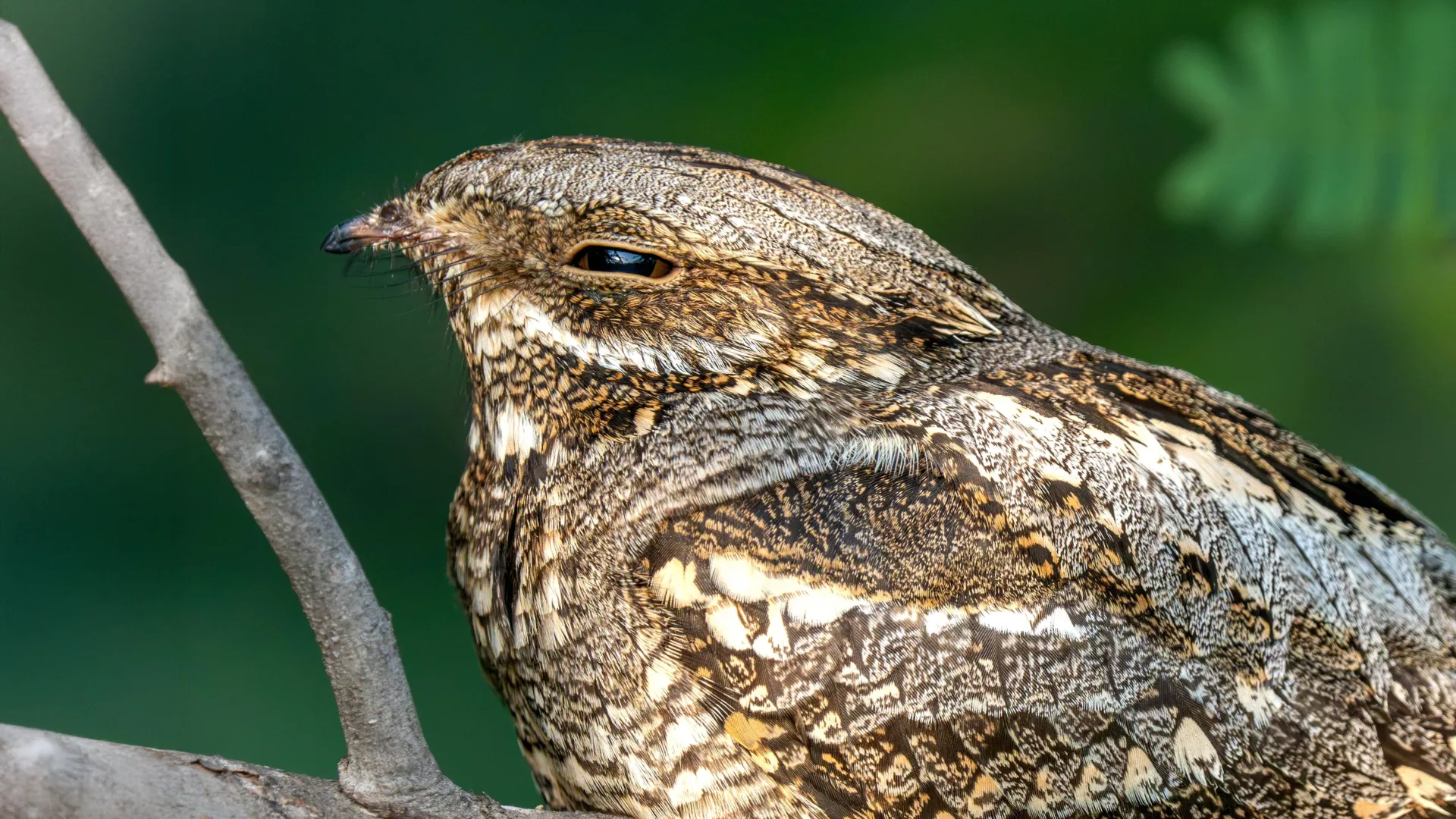
The European nightjar, known scientifically as Caprimulgus europaeus, has long fascinated ornithologists and ecologists with its enigmatic nocturnal habits, cryptic plumage, and extraordinary transcontinental migrations. Spanning thousands of miles between its breeding grounds in Europe and its wintering habitats in southern Africa, this insectivorous bird faces immense physical demands twice a year. However, recent scientific investigations have upended long-held assumptions regarding avian migration and aerodynamics. Researchers at Lund University in Sweden have discovered that the nightjar deliberately sacrifices optimal flight efficiency during its marathon journeys to maintain exceptional aerial agility. Furthermore, these birds utilize a specialized wingbeat technique previously thought to be exclusive to bats and insects, challenging foundational understandings of how diverse flying species conquer the skies.
The findings, derived from rigorous wind-tunnel experiments and advanced airflow measurements, offer a compelling look into the evolutionary compromises that shape the natural world. Far from being a perfectly streamlined, high-speed migrant, the nightjar represents a masterclass in biological multitasking, balancing the need for long-distance endurance with the precise maneuverability required to hunt elusive insects in the dead of night.
The Dual Demands of Migration and Predation
To fully appreciate the significance of the Lund University study, one must examine the ecological pressures under which the European nightjar lives. Weighing typically between 50 and 100 grams, with a wingspan stretching approximately 55 to 60 centimeters, the nightjar is a specialized aerial hawker. It feeds almost exclusively on flying insects, such as moths, beetles, and flying ants, which it captures on the wing during twilight and nocturnal hours.
Catching erratic prey in low-light conditions requires supreme agility. The bird must execute sharp turns, sudden stalls, and rapid accelerations close to the ground or through cluttered woodland edges. At the same time, the species is a long-distance migrant. Every autumn, populations breeding across Europe—ranging from the Iberian Peninsula to Scandinavia and deep into western Siberia—embark on a perilous journey across the Mediterranean Sea and the Sahara Desert to reach the savannas and open woodlands of southern Africa. In spring, they retrace this immense route.
Traditionally, aerodynamic theory dictated that animals undertaking such vast migrations must possess wings meticulously optimized for energy efficiency at cruising speeds. Long-distance migrants like albatrosses, swifts, and certain shorebirds showcase long, narrow wings designed to minimize aerodynamic drag and conserve precious metabolic energy. Yet, when researchers examined the nightjar’s flight mechanics, they uncovered a stark deviation from this established biological paradigm.
Unlocking the Wind Tunnel: How the Study Was Conducted
To evaluate the aerodynamic performance of Caprimulgus europaeus, a team of biomechanics researchers at Lund University designed a controlled experimental framework. The study utilized specialized wind tunnels where individual nightjars could fly freely under monitored conditions. High-speed cameras recorded the birds’ movements across a range of simulated flight speeds, while particle image velocimetry—a technique that tracks microscopic particles in the airflow—allowed scientists to map the complex wake patterns and vortices left behind the flapping wings.
The data gathered inside the wind tunnel revealed unexpected inefficiencies. The nightjar’s broad wing tips, which provide the high lift and low-speed maneuverability necessary for hunting insects, become a distinct aerodynamic liability as flight speed increases. At higher cruising velocities, these broad structures generate excessive drag and reduce the overall efficiency of lift production—the upward aerodynamic force that opposes gravity and sustains the bird in the air.
This discovery directly challenges the intuitive image of long-distance migrants as perfectly tuned aerodynamic machines. Instead, the nightjar’s morphology stands as a clear evolutionary compromise. By prioritizing the ability to maneuver and hunt during its breeding and foraging seasons, the species accepts a penalty in high-speed flight efficiency during its migratory phases.
An Unexpected Kinship with Bats and Insects
The revelations regarding the nightjar did not stop at wing morphology. During the analysis of the airflow patterns generated by the birds, the Lund University research team identified a striking and unprecedented behavioral mechanism in avian flight: active upstroke thrust generation.
In standard bird flight, the wingbeat cycle is typically divided into two primary phases: the downstroke, which generates both lift and forward propulsion (thrust), and the upstroke, which reposition the wings for the next power stroke. During the upstroke, avian wings are generally partially folded or feathered to minimize air resistance, acting primarily as a passive recovery phase or contributing minimally to lift.
However, the high-speed footage and airflow mapping demonstrated that European nightjars continue to actively generate thrust even as they raise their wings during the upward portion of each wingbeat. This active upstroke is a biomechanical trait previously documented primarily in bats and flying insects, such as dragonflies and moths, which possess vastly different skeletal structures and muscle architectures compared to birds.
This convergence of aerodynamic strategy among distantly related taxonomic groups highlights the power of evolutionary adaptation in overcoming physical constraints. Animals operating in fluid dynamics environments often arrive at similar functional solutions to identical physical problems, regardless of their evolutionary lineage.
Expert Insights and the Mechanics of Compromise
The implications of the Lund University study have resonated across the fields of evolutionary biology, biomechanics, and aerospace engineering. Christoffer Johansson, an associate professor and leading researcher on the project, emphasized the profound nature of these findings in academic commentary surrounding the publication.
"This runs counter to the intuitive image of a long-distance migrant as a perfectly optimized flying machine," Johansson stated, explaining the core thesis of the research. "Instead, the nightjar’s wings appear to be a compromise between several different demands. The bird can fly slowly and maneuver while hunting, but the trade-off is reduced efficiency in lift generation at higher speeds."
Addressing the unusual wingbeat mechanics observed during the study, Johansson elaborated on the broader biological significance of active upstrokes. "What’s interesting is that the same type of aerodynamic solution seems to appear in quite different animals. This suggests that the upstroke does not have to be merely a passive or lift-generating part of the wingbeat. It can be actively used to generate thrust when the wings cannot be folded very much."
This inability to significantly fold the wings during the recovery phase appears to be the driving mechanical constraint that forced the nightjar into adopting insect- and bat-like flight kinematics. Because the bird’s wing structure is tailored for wide, sweeping movements necessary for low-speed agility, the upward recovery phase cannot utilize traditional avian folding techniques without disrupting stability. Consequently, the musculature adapts to extract propulsive force from the upward motion itself.
Broad Implications for Evolutionary Biology
The study of the European nightjar serves as a case study in the complex realities of natural selection. Popular misconceptions of evolution often assume that organisms achieve perfection or absolute optimization for a single, dominant life-history trait. In reality, organisms are constantly buffeted by conflicting evolutionary pressures.
A migratory bird must survive the journey, but it must also eat upon arrival, defend territory, evade predators, and rear offspring. If the morphology required for foraging directly contradicts the morphology required for long-distance travel, natural selection must forge a middle ground. The nightjar’s wings do not represent a failure of evolutionary design, but rather an optimal compromise that allows the species to thrive across multiple ecological niches throughout its annual cycle.
This perspective shifts how conservationists and biologists evaluate the resilience and vulnerability of migratory species. Understanding the precise energetic and mechanical costs of migration can provide critical data on how environmental changes, habitat fragmentation, and climate shifts might impact species that rely on delicate physiological balances to complete their life cycles.
Inspiring the Future of Aviation: Bio-Inspired Drones and Robotics
Beyond the realms of behavioral ecology and evolutionary theory, the aerodynamic secrets unlocked by the European nightjar hold substantial promise for technological innovation, specifically in the development of unmanned aerial vehicles (UAVs) and robotic aircraft.
In recent years, aerospace engineers have increasingly turned to nature for inspiration, developing micro-air vehicles and flapping-wing drones (often referred to as ornithopters) designed to mimic the agility, stealth, and efficiency of biological flyers. However, replicating natural flight has proved immensely challenging, particularly when dealing with the mechanical restrictions of wing articulation, folding mechanisms, and power distribution during complex maneuvers.
Mechanical flapping-wing systems often struggle with the same constraints observed in nightjars: limitations on how far and fast wings can be folded or manipulated during a continuous stroke cycle. By demonstrating that an avian species can successfully utilize an active upstroke to generate vital thrust under similar structural constraints, the nightjar provides a proven biological blueprint for engineers seeking to optimize robotic flight dynamics.
Incorporating principles of active upstroke thrust could allow engineers to design more responsive, agile drones capable of navigating cluttered indoor environments, dense forests, or urban landscapes without requiring overly complex internal folding linkages. Such advancements could transform applications in search-and-rescue operations, environmental monitoring, and aerial cinematography.
Future Research Directions
As the scientific community digests the implications of the Lund University findings, researchers are already looking toward the horizon to expand upon this work. The primary objective for the immediate future is to determine how widespread these aerodynamic mechanisms are within the broader avian family tree.
"We now want to investigate how common this way of generating force is among other birds and flying animals," Johansson noted, outlining the next phase of the research initiative. "It could help us understand which aerodynamic principles are specific to the nightjar and which are more general. This knowledge may also inspire the development of new types of flapping aircraft."
By broadening the scope of wind-tunnel and airflow-tracking experiments to include other species—particularly those with intermediate migration patterns or unique foraging styles—scientists hope to map out a comprehensive taxonomy of avian flight mechanics. Such an undertaking will not only deepen humanity’s understanding of the natural world but will continue to bridge the gap between biological evolution and human engineering innovation.
Ultimately, the European nightjar—a secretive creature of the dusk, often heard long before it is seen through its distinctive churring call—has proven that even the most thoroughly studied aspects of the natural world retain profound secrets. In compromising its flight efficiency for the sake of survival, agility, and successful reproduction, the nightjar has carved out a unique evolutionary niche that continues to challenge, surprise, and inspire science.
