
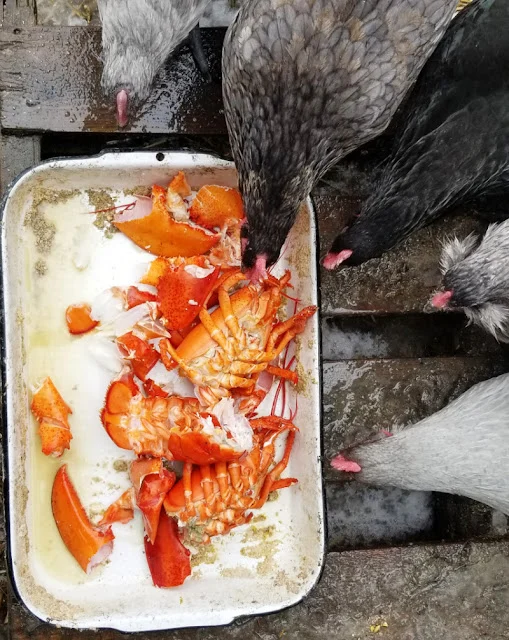
The question of whether backyard poultry can safely consume crustacean remnants has moved from obscure homesteading forums into the mainstream as urban and rural chicken keepers look for sustainable ways to manage food waste. Recent anecdotal evidence from poultry enthusiasts in coastal regions, particularly in Maine, suggests that lobster, when offered in moderation, serves as a high-protein supplement that provides both dietary benefits and cognitive enrichment for domestic flocks. While chicken owners often focus on grains and standard feed, the integration of marine-based proteins into a bird’s diet presents a unique case study in poultry nutrition and waste reduction.

Evolutionary Biology and Poultry Diets
From a biological perspective, chickens are omnivorous foragers. In their ancestral state, the red junglefowl—the wild progenitor of the modern domestic chicken—subsisted on a diet consisting of seeds, fruit, vegetation, and small invertebrates, including insects, larvae, and occasionally small reptiles or amphibians. This evolutionary background explains why chickens are biologically capable of processing animal-based proteins. Crustaceans like lobster are nutritionally dense, providing essential amino acids, minerals, and fatty acids that can support feather health and egg production. However, because lobster is not a natural component of a land-based bird’s historical diet, it must be viewed as an occasional treat rather than a primary food source.
The Economics of Coastal Poultry Keeping
The trend of feeding lobster to chickens is largely tied to regional economics. In states like Maine, where the lobster industry is a pillar of the economy, the availability of lobster is high, and prices fluctuate based on seasonal demand. During the peak summer tourist season, market prices for lobster meat can reach premium levels, often exceeding $30 per pound for prepared rolls. Conversely, during the off-season, prices can drop significantly—sometimes to $7.99 per pound or lower. This price variance makes lobster a surprisingly cost-effective source of protein compared to conventional commercial poultry feed, which has seen price volatility in recent years due to global supply chain issues and rising grain costs.

Nutritional Analysis of Crustacean Supplements
Lobster meat is classified as a lean protein. A standard 3-ounce serving of cooked lobster meat contains approximately 19 grams of protein and is rich in essential nutrients, including selenium, zinc, copper, and vitamin B12. Selenium is particularly vital for poultry, as it acts as an antioxidant and plays a critical role in reproductive health and immune function.
However, the nutritional profile also includes sodium and, in some specimens, trace amounts of heavy metals like mercury. Because chickens have a relatively high sensitivity to sodium—which can lead to kidney strain and electrolyte imbalances if consumed in excess—it is imperative that any lobster fed to a flock is fresh or boiled without added salt, butter, or seasonings. Butter and heavy oils, commonly used in human culinary preparations of lobster, are detrimental to avian digestive health, as chickens lack the complex systems required to process high volumes of dairy fat.

Shells as a Calcium Resource
Beyond the meat, the shell of the lobster offers a secondary benefit: calcium. The exoskeleton of a crustacean is primarily composed of chitin and calcium carbonate. For laying hens, calcium is the most important mineral for eggshell formation. Most backyard keepers provide supplemental calcium through crushed oyster shells or grit. Once lobster shells have been sun-dried or heat-treated to ensure they are brittle, they can be processed—typically using a mortar and pestle or a heavy-duty food processor—into a powder or coarse meal. When added to the flock’s diet, this provides a natural, organic source of calcium that aids in maintaining strong eggshells and skeletal density.
Chronology of a Culinary Trend
The practice of utilizing seafood scraps in poultry management has existed for decades in coastal fishing communities. Historically, these practices were born out of necessity rather than design. In the mid-20th century, before the industrialization of specialized chicken feed, small-scale farmers would use whatever high-protein waste was available to ensure their flocks remained productive throughout the winter months.

In the last decade, social media platforms have accelerated the visibility of these practices. Since approximately 2014, when the "backyard chicken movement" began to gain traction in suburban America, documentation of unconventional feeding practices has increased. Experts in avian science note that while these trends are generally safe, they highlight a shift in how modern keepers view their birds—transitioning from purely utilitarian livestock to pets that are integrated into the household’s food waste loop.
Veterinary and Expert Perspectives
Veterinary nutritionists often advise caution regarding the "humanization" of animal diets. While chickens can process lobster, the primary risk lies in the lack of consistency. An inconsistent diet can cause digestive distress in poultry, whose systems are designed to process specific, predictable ratios of fiber, protein, and carbohydrates.

Dr. Aris Thorne, a specialist in avian health, notes: "The primary concern isn’t the toxicity of the lobster itself, but the ‘treat’ culture. When owners begin substituting commercial feed with scraps—no matter how nutrient-dense those scraps may be—they risk creating a nutritional imbalance. A bird that fills up on lobster may not consume enough of its formulated feed, which is specifically balanced with amino acids like methionine and lysine that are essential for growth."
Consequently, the consensus among poultry experts is that lobster should be treated as a "foraging stimulant" rather than a dietary staple. By scattering small pieces of meat or shell in the coop, keepers provide enrichment that keeps the birds active. The act of pecking at the shells and foraging for bits of meat serves as a form of mental stimulation, which can reduce stress and curb negative behaviors like feather picking in confined flocks.

Broader Implications for Sustainability
The practice of feeding lobster to chickens aligns with the growing movement toward circular agriculture. By diverting protein-rich waste from landfills and converting it into eggs, poultry keepers are engaging in a form of local resource recovery. In coastal regions, the byproduct of the seafood industry—the shells and the "tomalley"—is often discarded as waste. If this waste is properly handled and integrated into a balanced diet for livestock, it reduces the environmental footprint of the household.
However, environmental scientists urge consumers to be mindful of the "food miles" and ecological impact of the lobster industry itself. While using the byproduct is sustainable, the demand for the primary product continues to place pressure on marine ecosystems. The sustainability of this practice is only as strong as the sustainability of the sourcing of the lobster.

Standard Safety Protocols for Poultry Keepers
For those looking to introduce lobster into their flock’s diet, the following protocols are recommended:
- Purity: Ensure the lobster is free from butter, garlic, salt, or other seasonings, which can be toxic to birds.
- Preparation: The shells should be cleaned and dried to prevent bacterial growth. Boiling is the safest method for preparation to ensure no pathogens remain.
- Portion Control: Treat consumption as a small percentage of the total daily intake. No more than 5% of a bird’s total diet should consist of "table scraps."
- Observation: Monitor the flock for changes in stool consistency or behavior. If a bird appears lethargic or displays digestive issues, discontinue the supplement immediately.
The integration of lobster into a chicken’s diet is a testament to the adaptability of the species. While it may seem counterintuitive to feed a high-end crustacean to a bird that historically feeds on insects and seeds, the nutritional benefits—when managed with scientific rigor—are undeniable. As urban farming continues to evolve, the use of locally available, nutrient-dense organic waste will likely remain a hallmark of responsible, small-scale poultry stewardship. By prioritizing nutritional balance and adhering to safety guidelines, keepers can turn the remains of a coastal feast into a meaningful, health-promoting activity for their flocks.
