
As the last vestiges of winter recede from the Central Platte River Valley, the Iain Nicholson Audubon Center at Rowe Sanctuary once again becomes a vibrant stage for one of nature’s most spectacular annual migrations. The arrival of spring heralds the return of countless waterfowl, transforming the tranquil river landscape into a dynamic canvas painted with the iridescent plumage of various duck species. This seasonal influx, which commences as early as February and often extends into the summer months for breeding, underscores the critical ecological role of the Platte River and the dedicated conservation efforts of Rowe Sanctuary.
The Platte River: A Lifeline on the Central Flyway
The Platte River, a braided river system flowing through Nebraska, is a quintessential component of the Central Flyway, one of North America’s four major migratory bird routes. This geographical corridor serves as a vital stopover and breeding ground for millions of birds, including an impressive diversity of waterfowl, shorebirds, and cranes. For ducks, the Platte River offers crucial resources: shallow, nutrient-rich waters for foraging, isolated sandbars for resting, and diverse riparian habitats for nesting. The river’s unique hydrological characteristics, particularly its wide, shallow channels and numerous islands, create an ideal environment for dabbling and diving ducks alike.
Rowe Sanctuary, nestled near Kearney, Nebraska, plays an indispensable role within this larger ecosystem. Established to protect the critical habitat for sandhill cranes, its mission has expanded to encompass the broader biodiversity of the Platte River, including its significant waterfowl populations. The sanctuary’s management practices, which include maintaining healthy river flows, restoring wetland habitats, and controlling invasive species, are instrumental in ensuring the Platte remains a viable lifeline for these migratory species. Its designation as an Important Bird Area (IBA) by Audubon further solidifies its status as a globally significant site for bird conservation.
A Symphony of Species: Common Migrants of the Platte
The spring migration brings a remarkable array of duck species to Rowe Sanctuary, each contributing its unique color and behavior to the seasonal spectacle. While some species, like the Mallard, are year-round residents, their numbers swell dramatically with the arrival of their migratory counterparts. The diversity observed is a testament to the health and productivity of the Platte River ecosystem.
Among the most frequently sighted are:
- Wood Duck ( Aix sponsa ): Renowned for their stunning, iridescent plumage, especially the males, Wood Ducks are cavity nesters often found in wooded swamps, marshes, and along rivers. Their distinctive crests and intricate patterns of green, purple, and chestnut make them easily recognizable. They typically arrive in early spring and may stay to breed, utilizing tree cavities or artificial nest boxes provided in suitable habitats. Their diet primarily consists of acorns, seeds, and aquatic insects.
- Mallard ( Anas platyrhynchos ): Perhaps the most iconic and widespread duck species, Mallards are a common sight across Nebraska, including year-round at Rowe Sanctuary. Males are instantly identifiable by their glossy green heads, yellow bills, white neck rings, and reddish-brown chests. Females exhibit a mottled brown plumage, providing camouflage during nesting. Mallards are quintessential dabblers, foraging opportunistically on plant material, insects, earthworms, small fish, and tadpoles by tipping their bodies upside down in shallow water. Their adaptability allows them to thrive in a variety of aquatic environments, from urban parks to pristine river systems. While common, their presence in large numbers during migration, particularly from December to June, remains a delight for observers.
- Hooded Merganser ( Lophodytes cucullatus ): These small, striking diving ducks are characterized by their prominent, fan-shaped crests. Males boast a dramatic black-and-white crest with a white body, black back, and rufous flanks, while females are duller brown with a smaller, rufous crest. Hooded Mergansers are skilled divers, preying on small fish, crustaceans, and aquatic insects. They are typically seen in forested wetlands and along rivers, often arriving in early spring.
- Bufflehead ( Bucephala albeola ): Small and compact, Buffleheads are agile diving ducks with disproportionately large heads. Males have a distinctive white patch behind their eye, contrasting with their iridescent purple-green-black head and mostly white body. Females are darker gray-brown with a smaller white cheek patch. They are known for their energetic diving behavior, feeding on aquatic invertebrates and small fish. They are common migrants through the Platte River, particularly in early spring.
- Blue-winged Teal ( Spatula discors ): Among the earlier spring migrants, Blue-winged Teals are small, fast-flying dabbling ducks. Males in breeding plumage have a slate-blue head with a white crescent patch in front of the eye, a brown body, and a conspicuous sky-blue patch on their forewing (visible in flight). Females are mottled brown with the same distinctive blue wing patch. They prefer shallow wetlands and feed primarily on seeds and aquatic invertebrates. Their early arrival often signals the true onset of spring.
- Redhead ( Aythya americana ): A medium-sized diving duck, the male Redhead is easily identified by its rounded, rufous-red head, blue bill with a black tip, and gray body. Females are a more uniform brown. They feed by diving for aquatic plants, seeds, and some invertebrates. Redheads are often seen in large rafts on open water.
- Green-winged Teal ( Anas crecca ): The smallest dabbling duck in North America, Green-winged Teals are swift fliers. Males have a chestnut-colored head with an iridescent green eye patch, a speckled breast, and a vertical white stripe on their side. Both sexes display a brilliant iridescent green speculum (a patch on the wing) in flight. They feed on seeds, aquatic invertebrates, and plant material in shallow waters.
- Northern Shoveler ( Spatula clypeata ): Unmistakable due to their oversized, spatulate bills, Northern Shovelers are specialized filter feeders. Males have a striking green head, white breast, chestnut flanks, and a large blue patch on their forewing. Females are mottled brown. They use their unique bills to strain small invertebrates and plant material from the water’s surface.
- Northern Pintail ( Anas acuta ): Elegant and slender, Northern Pintails are known for the male’s long, pointed tail feathers, from which they derive their name. Males have a chocolate-brown head, a white neck stripe extending up the side of the head, and a gray body. Females are mottled brown with a somewhat elongated tail. They are dabblers, feeding on seeds and aquatic plants.
- Gadwall ( Mareca strepera ): A subtly beautiful dabbling duck, the male Gadwall is primarily gray-brown with fine vermiculations, a black rear end, and a distinctive white speculum on its wing (visible in flight). Females are similar but browner. They feed heavily on aquatic vegetation and are often found in marshes and shallow lakes.
These species, individually captivating, collectively form a vibrant tapestry of life that relies on the Platte River for sustenance and survival during their arduous migratory journeys.
The Enigmatic Cinnamon Teal: A Rare Platte River Sighting
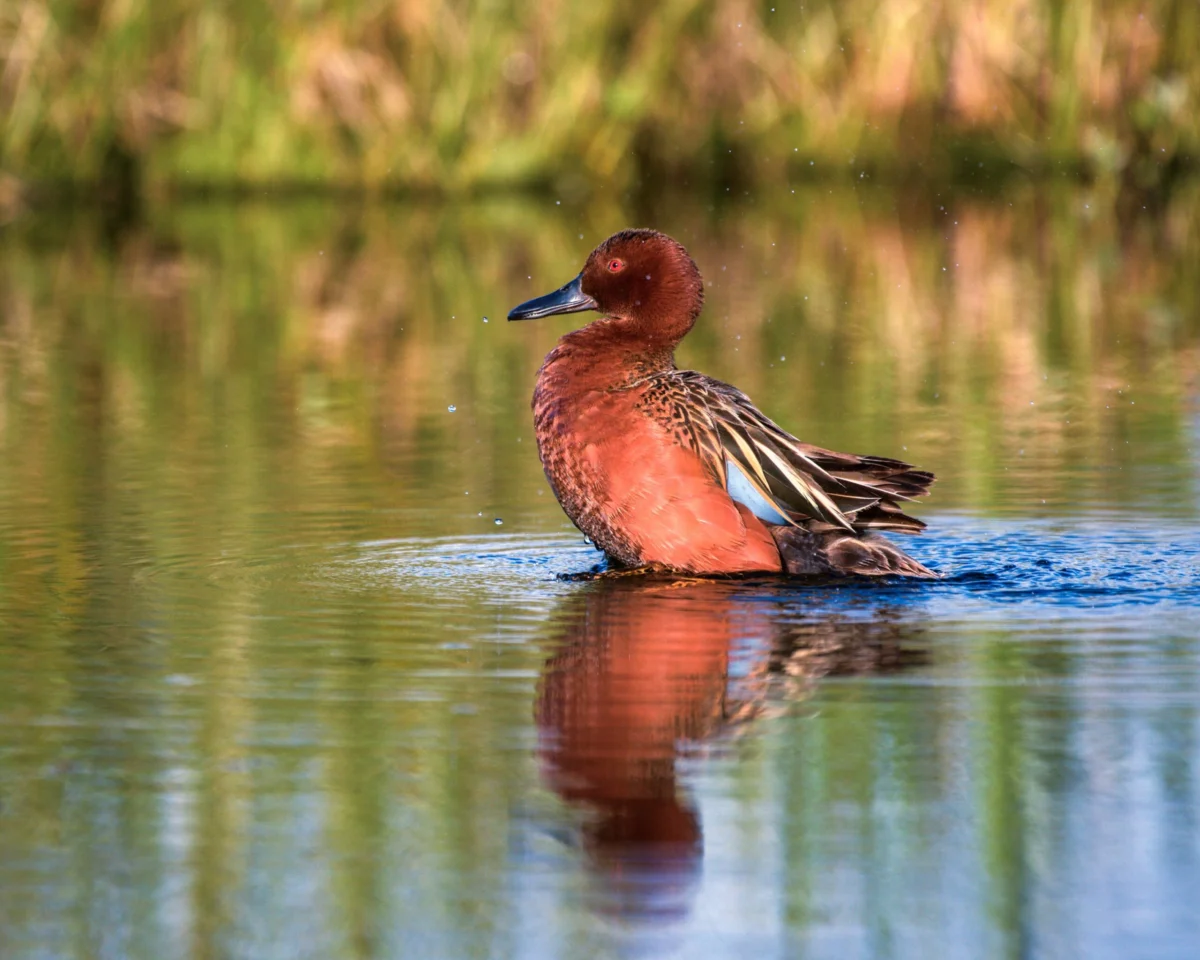
While the return of common species is an annual assurance, nature occasionally presents a delightful surprise. This spring, observers at Rowe Sanctuary were treated to multiple sightings of a Cinnamon Teal (Spatula cyanoptera), an individual that repeatedly appeared alongside a group of Blue-winged Teals. This observation is particularly noteworthy because the Cinnamon Teal’s typical migration pattern lies further west, primarily through Western Nebraska and Eastern Colorado, making its consistent presence in Central Nebraska a rare and exciting event.
Cinnamon Teals, like many duck species, exhibit sexual dimorphism, though less pronounced than in Mallards, especially in the fall when males and females appear remarkably similar. During the breeding season, however, the males are striking: they possess red eyes and a rich, reddish-brown coloration covering their head, chest, and stomach, contrasting with a mottled brown back. Their most distinctive feature, often revealed in flight, is a vibrant display of blue and green feathers on their wings. Females are more subdued, uniformly mottled brown across their bodies, but also display the light blue wing feathers during flight, a key identifier shared with Blue-winged Teals.
These shallow foragers predominantly consume plant material, supplemented by occasional insects or small crustaceans. The consistent association of the individual Cinnamon Teal with a group of Blue-winged Teals offers a compelling hypothesis: interspecies breeding. Cinnamon Teals are known to hybridize with Blue-winged Teals, and such mixed-species associations can be precursors to or indicators of such genetic mixing. This potential hybridization adds another layer of intrigue to the sighting, suggesting possible range expansion or genetic exchange driven by environmental factors or chance encounters during migration. Ornithologists and sanctuary biologists will undoubtedly monitor for any further observations or evidence of successful breeding.
Understanding Sexual Dimorphism and Foraging Strategies
The distinct physical differences between male and female ducks, known as sexual dimorphism, serve crucial ecological purposes. The vibrant plumages of male ducks, particularly during breeding season, are adaptations for attracting mates. These elaborate displays signal health and genetic fitness. Conversely, the more cryptic, camouflaged coloration of female ducks is vital for their survival during nesting, allowing them to blend seamlessly into their surroundings and protect their eggs and young from predators.
Ducks also exhibit diverse foraging strategies tailored to their morphology and habitat. Dabbling ducks, like Mallards and Teals, feed in shallow waters by tipping their bodies forward, keeping their tails in the air, and sifting through sediment or skimming the surface for food. Their lamellated bills are adapted for filtering small organisms and plant matter. Diving ducks, such as Mergansers and Buffleheads, plunge entirely underwater to pursue fish or retrieve aquatic vegetation from deeper substrates. Their denser bones and rear-set legs facilitate efficient underwater propulsion. These specialized feeding behaviors reduce interspecies competition and allow a greater diversity of waterfowl to coexist within the same ecosystem.
The Broader Implications: Climate, Conservation, and Ecosystem Health
The annual spring migration to the Platte River is more than just a beautiful spectacle; it is a critical ecological event with broader implications for conservation, climate monitoring, and ecosystem health. The timing of migration, the species observed, and their overall health can serve as indicators of environmental changes.
- Climate Change Indicators: Shifts in migration timing, the appearance of species outside their typical range (like the Cinnamon Teal), or changes in breeding success can all be subtle signals of a changing climate. Warmer winters might prompt earlier migrations, while altered precipitation patterns could impact wetland availability, affecting food resources and breeding success. Monitoring these avian populations provides invaluable data for understanding the ecological impacts of climate change.
- Conservation Imperatives: The continued health of migratory waterfowl populations depends entirely on the availability and quality of their habitat across their entire flyway. Loss of wetlands, habitat degradation due to agricultural runoff, urbanization, and altered river flows pose significant threats. Organizations like Audubon and dedicated sanctuaries like Rowe are at the forefront of habitat preservation and restoration efforts. These efforts include land acquisition, water management to ensure adequate river flows, wetland creation, and community engagement to foster a broader understanding of conservation needs.
- Ecosystem Health: Healthy duck populations are integral to a thriving aquatic ecosystem. They play roles in seed dispersal, nutrient cycling, and insect control. Their presence indicates a robust food web, from aquatic invertebrates and plants to the larger predators that also rely on these environments. The "kaleidoscope of color" brought by the ducks is thus a vivid representation of a balanced and functioning ecosystem.
Expert Perspectives on the Spring Migration
Sanctuary biologists at the Iain Nicholson Audubon Center at Rowe Sanctuary emphasize the profound importance of this annual phenomenon. "Every spring, the Platte River reminds us of its enduring power as a migratory corridor," states a Rowe Sanctuary ornithologist. "The arrival of these ducks, from the common Mallard to the rarer Cinnamon Teal, is a testament to the ongoing success of conservation efforts and the incredible resilience of nature. It also underscores the need for continuous monitoring and habitat protection to ensure these journeys can continue for generations."
Conservation experts highlight that the unusual sighting of the Cinnamon Teal serves as a reminder of the dynamic nature of bird populations and the potential for species to adapt or shift their ranges. "While exciting, such anomalies also prompt deeper investigation into potential drivers, whether it’s simply a navigational error, an exploration for new resources, or a subtle response to broader environmental shifts," notes a regional wildlife biologist. The detailed data collected by birdwatchers and researchers at sites like Rowe Sanctuary is crucial for tracking these trends and informing future conservation strategies.
Looking Ahead: The Enduring Cycle of Life
As the spring progresses into summer, some of these migratory ducks will continue their journey northward to more distant breeding grounds, while others will remain at Rowe Sanctuary, establishing nests and raising their broods. The sight of ducklings, guided by their watchful mothers, will add another layer of charm to the Platte River’s dynamic ecosystem.
The annual return of waterfowl to the Platte River is a powerful symbol of renewal and continuity. Each year, they arrive, bringing their vibrant feathers and energetic presence, transforming the subdued winter landscape into a celebration of spring. This enduring cycle serves as a poignant reminder of the interconnectedness of nature and the vital role that places like Rowe Sanctuary play in safeguarding these magnificent migratory journeys, ensuring that the Platte River continues to paint the landscape with a kaleidoscope of color for years to come. The collective effort to protect these habitats and the species that depend on them remains a paramount objective, ensuring that future generations can also witness this breathtaking natural spectacle.
