
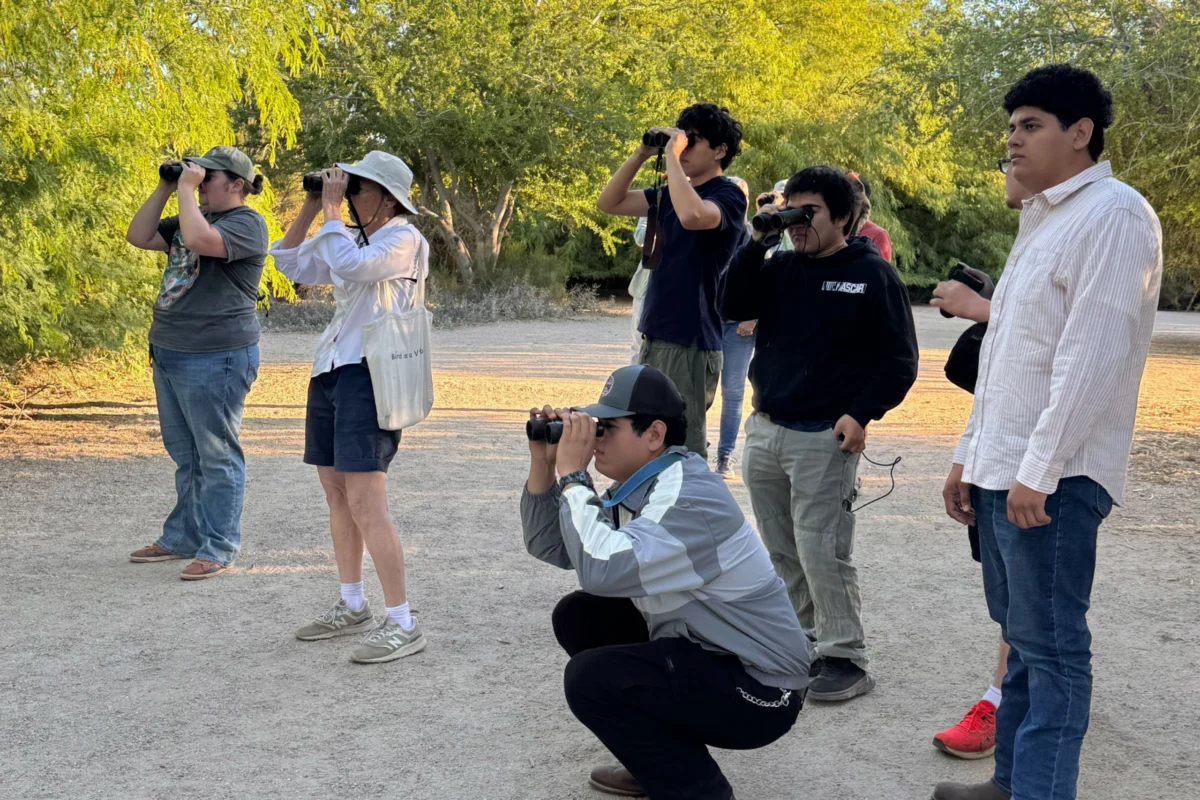
Local chapters of Audubon Southwest in New Mexico and Arizona are actively spearheading a diverse array of conservation initiatives, educational programs, and community engagement efforts, underscoring their vital role in protecting the region’s unique avian populations and their habitats. From strategic regional gatherings to species-specific protection programs, public outreach, and innovative fundraising, the twelve independent chapters operating within the Audubon Southwest region are demonstrating a robust commitment to their shared mission. These concerted actions not only foster deeper connections between communities and their natural environments but also contribute significantly to the broader objectives of the National Audubon Society’s Flight Plan.
Regional Collaboration and Strategic Planning: The 2026 Joint State Chapter Gathering
Earlier this month, from April 2nd to April 4th, 2026, a pivotal biannual meeting convened over fifty chapter members, representing nine of the twelve independent Audubon Southwest chapters, in Phoenix, Arizona. This gathering served as a critical forum for fostering collaboration, sharing best practices, and strategizing future conservation actions across the two states. The palpable energy throughout the event highlighted the importance of these face-to-face interactions, allowing established colleagues to reconnect and facilitating the formation of new partnerships among conservationists. A notable presence at the gathering was the contingent from the newest campus chapter, hailing from Arizona Western College (AWC) in Yuma, signaling a promising expansion of Audubon’s reach into collegiate communities and youth engagement.
Background and Objectives of the Gathering
These biannual meetings are cornerstones of Audubon Southwest’s regional strategy, designed to harmonize the efforts of independent local chapters with the overarching goals of the National Audubon Society. The southwestern United States, characterized by its arid landscapes, vital riparian corridors, and diverse ecosystems, presents unique conservation challenges and opportunities. Effective regional coordination ensures that local initiatives are aligned with broader scientific priorities and advocacy campaigns. The agenda for the 2026 gathering was meticulously crafted to address key contemporary issues in conservation. Presentations covered a spectrum of topics, including an in-depth review of the National Audubon’s Flight Plan, a comprehensive strategic framework guiding the organization’s conservation priorities across North America. This plan emphasizes climate action, habitat protection, and community engagement, providing a unified direction for all chapters.
Another significant presentation focused on the Audubon Conservation Ranching Program, an initiative that partners with ranchers to implement bird-friendly land management practices on working lands. In a region where vast tracts of land are privately owned and utilized for agriculture, this program is critical for creating and maintaining habitat for grassland birds and other wildlife, demonstrating how economic activity and conservation can coexist. Discussions also delved into the power of storytelling as a tool for elevating conservation action, recognizing that compelling narratives can inspire public support, attract volunteers, and influence policy decisions more effectively than raw data alone. Furthermore, sessions addressed strategies for increasing chapter membership and, crucially, enhancing the diversity of members, acknowledging that a broader, more inclusive membership base strengthens the movement and ensures its long-term relevance.
Breakout Sessions and Experiential Learning
The gathering incorporated interactive breakout groups that allowed participants to delve into specific operational and strategic areas. These sessions covered critical topics such as fundraising, a perpetual necessity for sustaining local chapter activities; effective conservation activities, ranging from local habitat restoration projects to advocacy for protective legislation; and campus chapter development, aimed at nurturing the growth and impact of nascent collegiate groups like the one at AWC.
A highlight of the gathering was the Saturday birding excursions, offering participants a chance to apply their knowledge and passion in the field. One such excursion to the Gilbert Riparian Preserve proved particularly fruitful, with the team tallying an impressive 47 bird species. Riparian areas, though often narrow, are disproportionately vital for biodiversity in arid regions, acting as magnets for migratory and resident birds. A unique and unexpected addition to the species count was a "wayward rooster," which, in a moment of spontaneous camaraderie, was adopted by one of the Arizona Western College students. Affectionately named "Gilbert" after its discovery site, the rooster is now reportedly settling into its new home with the AWC club in Yuma, serving as a charming and memorable mascot for the nascent campus chapter. This anecdote exemplifies the blend of serious conservation work and joyful community building that defines Audubon’s local efforts.
The successful participation of the Arizona Western College campus chapter underscores a strategic push by Audubon Southwest to engage younger demographics and cultivate the next generation of conservation leaders. By integrating new voices and perspectives, the organization aims to ensure the longevity and adaptability of its mission in the face of evolving environmental challenges.
Safeguarding Endangered Species: The Western Yellow-billed Cuckoo Internship
Complementing the broad strategic discussions, individual chapters are executing targeted programs to protect specific species. The Sonoran Audubon Society (SAS) exemplifies this commitment through its ongoing efforts to conserve the Western Yellow-billed Cuckoo, a species federally listed as threatened since 2014. SAS is currently recruiting recent college graduates and upper-level college students for its 2026 Western Yellow-Billed Cuckoo Survey Certification Paid Internship Program. This immersive program, scheduled to run from mid-June through mid-August 2026, is critical for monitoring populations of this elusive bird.
The Plight of the Western Yellow-billed Cuckoo
The Western Yellow-billed Cuckoo (Coccyzus americanus occidentalis) is an iconic yet imperiled bird of the American Southwest. This subspecies relies almost exclusively on dense, mature riparian forests – areas alongside rivers and streams – for breeding and foraging. Its distinctive, guttural "kowlp" call is a hallmark of healthy riverine ecosystems. However, these vital habitats have been severely fragmented and degraded across its range due to water diversion, agricultural development, urbanization, and invasive species like tamarisk. Historically, the Western Yellow-billed Cuckoo ranged widely across 12 western states, but its populations have plummeted by an estimated 70-90% in some areas, making robust conservation efforts imperative.
The purpose of these surveys is twofold: to accurately assess current population numbers and distribution, and to gather data on habitat use, breeding success, and potential threats. This information is crucial for informing conservation management plans, identifying critical habitats for protection, and evaluating the effectiveness of ongoing restoration efforts. The internship program offers an unparalleled opportunity for aspiring biologists and conservationists to gain hands-on experience in field research and contribute directly to the recovery of a threatened species. Interns will accompany experienced Audubon biologists on established survey transects in central Arizona, learning specialized survey techniques, data collection protocols, and the nuances of working in challenging field conditions.
Internship Details and Broader Impact
The internship requires participants to possess reliable transportation, though carpooling options are often available to facilitate access to remote survey sites. This practical requirement underscores the logistical challenges inherent in extensive field research. Beyond the immediate data collection, the internship serves as a vital training ground, developing the next generation of conservation professionals. Participants gain expertise in avian identification, survey methodologies, and understanding complex ecological systems.
According to a spokesperson for the Sonoran Audubon Society, "The Western Yellow-billed Cuckoo internship is more than just a summer job; it’s a critical investment in the future of this species and in the development of dedicated conservationists. The data our interns help collect directly informs regional and national strategies for protecting our precious riparian corridors, which are lifelines for so many species in the desert Southwest." The program’s focus on central Arizona highlights the region’s importance as a stronghold for remaining cuckoo populations and a priority area for habitat restoration. The long-term implications of this internship extend to the continued survival of the cuckoo and the broader health of southwestern riparian ecosystems, which face increasing pressure from climate change and human development.
Bridging Conservation and Outdoor Recreation: Continental Divide Trail Days in Silver City
Public education and outreach are fundamental pillars of conservation, and local chapters frequently leverage community events to engage a broader audience. The Bird Alliance of Southwestern New Mexico is set to participate in the Continental Divide Trail (CDT) Days Speaker Series in Silver City on April 24th. This event provides an excellent platform to connect with outdoor enthusiasts and raise awareness about the rich avian biodiversity found along one of the nation’s premier long-distance trails.
The Continental Divide Trail and Its Ecological Significance
The Continental Divide Trail, often referred to as the "King of Trails," is one of the most significant long-distance trails in the world. Spanning approximately 3,100 miles from Mexico to Canada, it traces the spine of the North American continent, traversing diverse landscapes from high mountain passes to desert basins. In New Mexico, the CDT meanders through arid grasslands, pinyon-juniper woodlands, and sky island mountain ranges, offering a unique cross-section of southwestern ecosystems. Hikers, known as "thru-hikers" or "section hikers," spend weeks or months immersed in these environments, making them ideal recipients for environmental education.
On April 24th, birder extraordinaire Brian Dolton will present as part of the speaker series, sharing invaluable information about the birds that hikers and outdoor enthusiasts may encounter along the Continental Divide Trail in southern New Mexico. His presentation will likely cover not only common and easily identifiable species but also those endemic to the region or species of conservation concern that rely on the trail’s diverse habitats. Topics could include identification tips, unique behaviors, and the ecological roles these birds play. For example, hikers might learn about raptors soaring overhead, various species of sparrows and juncos foraging in grasslands, or the specialized birds of the pinyon-juniper forests like the Pinyon Jay.
Engaging the Public for Conservation
The Bird Alliance of Southwestern New Mexico’s participation in CDT Days underscores the importance of integrating conservation messaging into popular outdoor activities. By educating hikers, the chapter aims to foster a greater appreciation for the natural world and encourage responsible outdoor ethics, such as minimizing disturbance to wildlife and staying on marked trails. This outreach effort can transform casual observers into citizen scientists and advocates for habitat protection.
A representative from the Bird Alliance of Southwestern New Mexico highlighted the value of such events, stating, "Connecting with the hiking community at CDT Days allows us to reach a passionate group of outdoor enthusiasts who are already deeply engaged with nature. By showcasing the incredible avian diversity along the trail, we hope to inspire them to become even greater stewards of these landscapes, recognizing the intrinsic value of every bird they encounter." The event in Silver City, a gateway community to a significant section of the CDT, is strategically positioned to maximize its impact on both local residents and transient hikers. It serves as a reminder that conservation is a shared responsibility, extending beyond dedicated birdwatchers to anyone who enjoys and benefits from healthy natural environments.
Community Engagement and Fundraising Success: Tucson’s Birdathon 2026
Fundraising and community engagement are crucial for the sustainability and impact of local conservation efforts, and the Tucson Bird Alliance has demonstrated remarkable success in both areas with its annual Birdathon 2026. This popular event, a blend of competitive birding and philanthropic giving, comes on the heels of a significant achievement for the city: Tucson earned its Urban Bird City designation on February 21st, 2026, further cementing its reputation as a haven for avian life.
Tucson: An Urban Bird City
The Urban Bird City designation, a program recognizing communities committed to bird conservation through habitat protection, education, and community engagement, is a testament to Tucson’s unique ecological setting and the concerted efforts of its residents and conservation organizations. Situated in the Sonoran Desert, Tucson is a biodiversity hotspot, home to numerous resident species and a critical stopover point for migratory birds traveling along the Pacific Flyway. The designation acknowledges the city’s proactive measures, such as maintaining urban green spaces, promoting native plant landscaping, controlling invasive species, and minimizing light pollution, all of which contribute to creating a bird-friendly urban environment. This achievement provides a powerful backdrop for the Birdathon, amplifying its message and appeal.
The Birdathon: A Fun and Impactful Fundraiser
The Birdathon is an annual tradition where teams and individuals compete in a friendly contest to identify and tally the most bird species within a specific timeframe, typically a 24-hour period. Participants solicit pledges from sponsors, with funds directly supporting the Tucson Bird Alliance’s local conservation, education, and advocacy programs. The event is renowned for its creative and often humorous team names, such as "Owl By Ourselves," "The Blue-footed Noobies," and "Vermillion Dollar Women," which add a layer of lightheartedness to the serious business of fundraising. These names reflect the community’s enthusiasm and engagement, turning a competitive event into a vibrant celebration of local birdlife.
Funds raised through the Birdathon are instrumental in supporting a range of vital projects. These include habitat restoration initiatives in local parks and preserves, educational programs for children and adults, citizen science projects that contribute valuable data to regional conservation efforts, and advocacy for policies that protect birds and their habitats within the city and surrounding areas. The Sonoran Desert ecosystem, with its unique flora and fauna, requires specialized conservation strategies, and local funding ensures that these tailored approaches can be implemented effectively.
Community Impact and Future Prospects
The Birdathon is more than just a fundraiser; it is a significant community-building event that unites bird enthusiasts, nature lovers, and concerned citizens around a common cause. It provides an accessible entry point for individuals to contribute to conservation, regardless of their birding expertise. The celebratory atmosphere, particularly following Tucson’s Urban Bird City designation, fosters a sense of collective pride and shared responsibility.
A spokesperson for the Tucson Bird Alliance expressed immense gratitude for the community’s participation, stating, "Our annual Birdathon is a cornerstone of our efforts, not only raising essential funds but also bringing our community together to celebrate the incredible avian diversity of Tucson. The Urban Bird City designation has energized our members and supporters, providing a fantastic platform to showcase the impact of our collective actions. Every gift, no matter the size, directly supports our work to make Tucson an even better place for birds and people." The success of the Birdathon and the city’s recent designation highlight the power of local engagement in achieving significant conservation outcomes, demonstrating how urban environments can be transformed into thriving ecosystems for both humans and wildlife.
Broader Impact and Future Outlook for Audubon Southwest
The diverse activities undertaken by the Audubon Southwest chapters in New Mexico and Arizona—ranging from regional strategic planning and species-specific research to public education and community-driven fundraising—collectively underscore the profound impact of grassroots conservation efforts. These initiatives are not isolated events but interconnected components of a comprehensive strategy aimed at preserving the unique ecological heritage of the Southwest. By fostering collaboration among chapters, investing in scientific research and youth development, engaging the public through educational outreach, and mobilizing community support, Audubon Southwest is actively shaping a more sustainable future for the region’s birds and their habitats. The dedication of these independent chapters, empowered by a shared mission and a passion for nature, ensures that the vital work of conservation continues to thrive, adapting to new challenges and inspiring future generations of environmental stewards across New Mexico and Arizona.
