
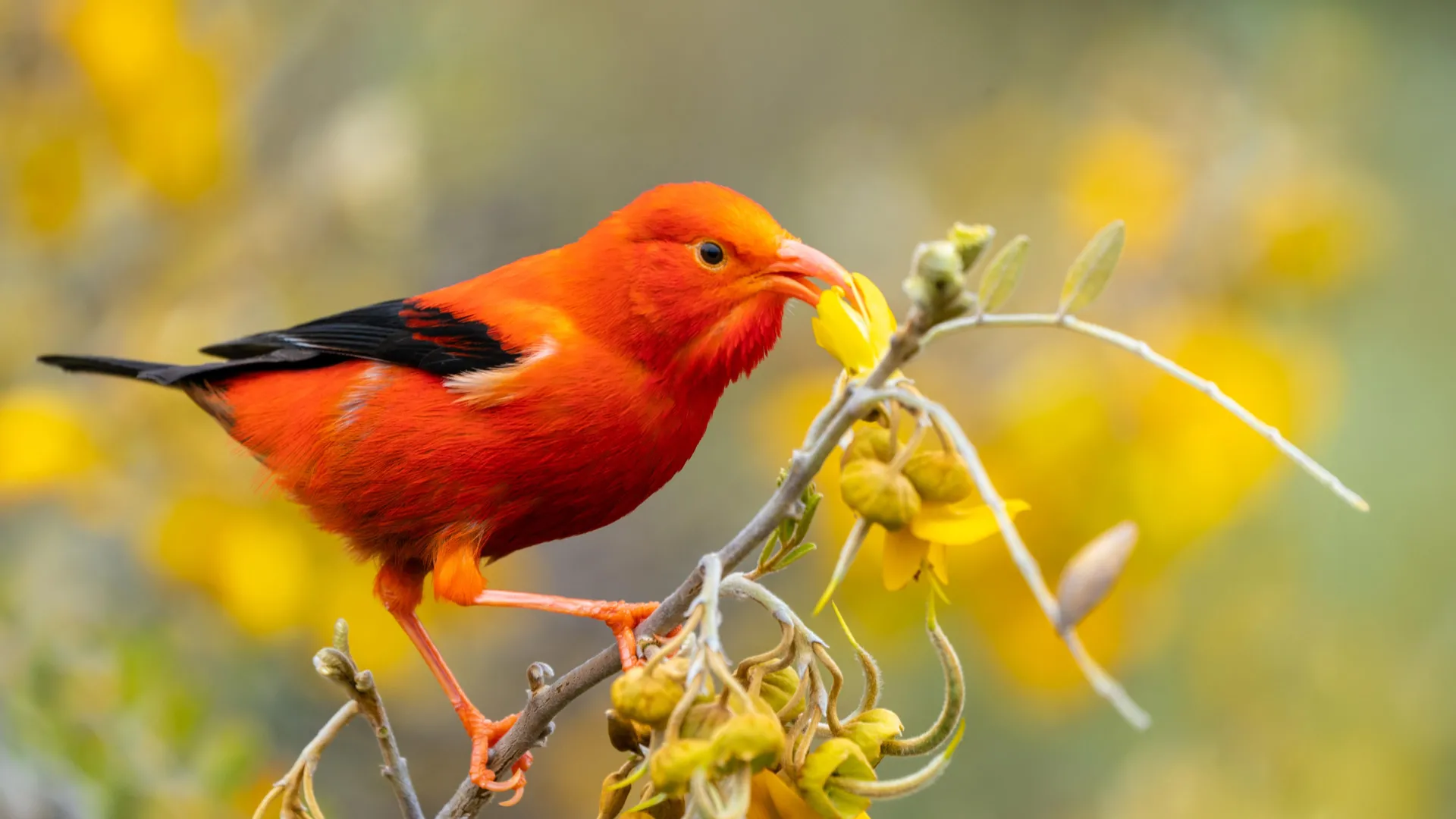
The groundbreaking findings, published on February 10 in the prestigious journal Nature Communications, detected the presence of avian malaria at 63 of 64 locations tested statewide. These sites encompassed a remarkable diversity of forest ecosystems, featuring vastly different mixes of bird species, both native and introduced. This pervasive illness, caused by the generalist parasite Plasmodium relictum, has been unequivocally identified as a primary driver behind the precipitous declines and outright extinctions of Hawaiʻi’s iconic native honeycreepers, pushing many to the brink of non-existence. The study underscores a grim reality: the parasite’s silent, ubiquitous spread is far more entrenched than previously understood, demanding urgent and comprehensive intervention.
"Avian malaria has taken a devastating toll on Hawaiʻi’s native forest birds, and this study critically illuminates why the disease has proven so extraordinarily difficult to contain," stated Christa M. Seidl, mosquito research and control coordinator for the Maui Forest Bird Recovery Project, who spearheaded this pivotal research as part of her PhD at the University of California, Santa Cruz. Seidl emphasized the profound implications of the findings: "When an overwhelming number of bird species, even those seemingly unaffected, can quietly sustain transmission, it drastically narrows the viable options for safeguarding our native avifauna. This makes widespread, strategic mosquito control not merely helpful, but an absolutely essential, non-negotiable component of any effective conservation strategy." The research unequivocally points to a systemic challenge, where the very fabric of Hawaiʻi’s avian communities inadvertently facilitates the disease’s persistence.
The Devastating Reach of a Silent Killer
Avian malaria operates as a insidious assailant, attacking the red blood cells of infected birds. This parasitic assault can precipitate severe anemia, lead to organ failure, drastically lower survival rates, and, in many susceptible species, culminate in a swift and agonizing death. The consequences for Hawaiʻi’s irreplaceable endemic birds have been catastrophic, contributing significantly to the islands’ unenviable status as the "extinction capital of the world." For the vibrant ʻIʻiwi (pronounced ee-EE-vee), also known as the scarlet honeycreeper, studies have revealed an alarming mortality rate of approximately 90 percent if infected with Plasmodium relictum. This breathtakingly beautiful bird, a symbol of Hawaiʻi’s unique biodiversity, is now classified as endangered, its populations fragmented and increasingly confined to shrinking high-elevation refugia.
Even more dire is the fate of the ʻAkikiki (ah-kee-KEE-kee), a small, critically endangered honeycreeper endemic to the island of Kauaʻi. Once a vibrant component of Kauaʻi’s forest ecosystem, the ʻAkikiki is now considered functionally extinct in the wild, its last few individuals clinging to survival in a desperate race against time, primarily due to the unrelenting pressure of avian malaria. Similarly, species like the ʻAkekeʻe and Kauaʻi ʻAmakihi have faced significant population declines, highlighting the widespread vulnerability across the honeycreeper lineage. The profound impact of avian malaria extends beyond individual species; it fundamentally alters ecological dynamics, potentially disrupting pollination services and seed dispersal, critical functions performed by these native birds.
A Complex Web of Transmission: Generalist Parasites and Ubiquitous Vectors
A common characteristic of many infectious diseases is their reliance on a limited number of specific host species to maintain their spread. This new research, however, paints a starkly different picture for avian malaria in Hawaiʻi. The study conclusively demonstrates that most forest bird species across the islands, irrespective of whether they are native or introduced, possess at least a moderate capacity to infect southern house mosquitoes (Culex quinquefasciatus), which serve as the disease’s primary and most efficient vector. Crucially, the research found that even birds carrying very small, almost undetectable amounts of the parasite were fully capable of transmitting it to mosquitoes. This revelation signifies that a remarkably broad spectrum of bird communities, encompassing both robust native populations and well-established introduced species, can effectively sustain ongoing transmission of the disease across the landscape.
"We often understandably think first of the birds when we consider the ravages of avian malaria, focusing on their suffering and decline," Seidl elaborated. "However, it is vital to remember that the parasite’s life cycle is intrinsically linked to mosquitoes; it absolutely requires them to reproduce and complete its developmental stages. Our work starkly highlights just how adept Plasmodium relictum has become at infecting these vectors through a multitude of different avian hosts, making the challenge of breaking the transmission cycle exponentially more complex." This understanding shifts the focus not just to the infected birds, but equally to the vector and the intricate, widespread host-parasite interactions.
Chronic Infections: The Hidden Engine of Perpetual Spread
To unravel the intricacies of avian malaria transmission, researchers meticulously examined blood samples from over 4,000 birds across four major Hawaiian islands: Kauaʻi, Oʻahu, Maui, and Hawaiʻi Island. These extensive field data were then meticulously paired with controlled laboratory experiments designed to precisely measure how readily mosquitoes became infected after feeding on various bird species. The results were illuminating, revealing that native and introduced birds frequently exhibited similar levels of infectiousness. This critical finding means that both groups, often perceived as distinct components of the ecosystem, contribute significantly and almost equally to the widespread dissemination of the parasite. Introduced species, many of which have developed some level of resistance to avian malaria, act as important reservoir hosts, effectively bridging the gap between susceptible native populations and the mosquito vectors.
The study further unveiled another crucial dimension of the disease: birds can harbor chronic infections for extended durations, often months or even years. During this protracted period, when birds may outwardly appear only mildly infected or even asymptomatic, they paradoxically remain fully capable of transmitting the parasite to mosquitoes. The researchers’ models and estimations suggest that this long-lasting, low to moderate infectious stage accounts for the overwhelming majority of avian malaria transmission statewide. This "silent carrier" phenomenon explains the disease’s pervasive presence even in areas where acute infections might not be immediately apparent, presenting a formidable challenge to traditional surveillance and control efforts.
Hawaiʻi’s Unique Vulnerability: An Ecological History and Timeline of Crisis
Hawaiʻi’s endemic birds evolved in profound isolation, in an environment devoid of avian malaria and its mosquito vectors for millions of years. This evolutionary trajectory left them without the innate immune defenses necessary to combat Plasmodium relictum. The islands were once a sanctuary, a pristine haven where an unparalleled radiation of finch-like ancestors diversified into over 50 unique species of honeycreepers, each occupying a specific ecological niche. These birds were the architects of Hawaiʻi’s forests, vital pollinators, seed dispersers, and insectivores, intricately woven into the fabric of the ecosystem.
The timeline of this ecological crisis is stark:
- Pre-1800s: Hawaiʻi’s ecosystems are largely free of mosquitoes and avian malaria. Native birds thrive across all elevations.
- Early 1800s: The arrival of European and American sailing ships to Hawaiʻi inadvertently introduces the southern house mosquito (Culex quinquefasciatus) via contaminated water barrels. These mosquitoes quickly establish themselves in the warm, moist lowlands.
- Mid-1900s: The first clear evidence of avian malaria emerges, coinciding with noticeable declines in native bird populations in lowland forests. The disease rapidly spreads as mosquito populations expand.
- Late 20th Century – Present: Avian malaria becomes a leading cause of extinction for native Hawaiian birds. Species like the Hawaiian Crow (ʻAlalā) are driven to extinction in the wild, and numerous honeycreepers face critical endangerment. Research intensifies to understand the disease and develop control strategies.
- 2000s onwards: Climate change begins to accelerate the crisis, allowing mosquitoes and the parasite to move into higher elevations, previously safe refuges for native birds. Collaborative efforts like "Birds, Not Mosquitoes" are formed to develop innovative solutions.
The Culex quinquefasciatus mosquito, a non-native species, is an exceptionally efficient vector. It breeds readily in various water sources, from natural pools to artificial containers, and its biting habits ensure frequent contact with avian hosts. The parasite itself, Plasmodium relictum, is also a generalist, capable of infecting a wide range of bird species, further exacerbating the problem in an ecosystem where so many birds are immunologically naïve.
Climate Change: Eroding the Last Safe Havens
The parasite’s capacity to infect a wide array of bird species fundamentally explains the pervasive distribution of avian malaria across the Hawaiian archipelago. The study’s implications are sobering: very few mosquito-infested habitats, regardless of their avian composition, remain truly free of transmission risk. This already dire situation is being compounded and accelerated by the escalating threat of climate change.
Warming global temperatures are having a particularly acute impact on Hawaiʻi’s delicate ecosystems. As temperatures rise, mosquitoes and the avian malaria parasite are able to expand their ranges into higher elevation areas that historically served as crucial thermal refuges for vulnerable native birds. These cooler, mosquito-free zones, often above 4,000 feet, provided a sanctuary where native birds could thrive without exposure to the disease. However, with every increment of warming, the isotherm for mosquito survival and parasite development creeps higher up the mountain slopes. For instance, researchers predict that by the end of the century, areas like the high-elevation forests of Haleakalā on Maui, currently home to some of the last remaining populations of species like the Kiwikiu (Maui Parrotbill) and ʻAkikiki, could become fully hospitable to mosquitoes and avian malaria, effectively eliminating their final strongholds. This relentless erosion of safe havens presents an existential threat, pushing these species closer to the precipice of extinction.
The Imperative of Mosquito Control: A Path Forward Through Innovation
Given the widespread nature of avian malaria and the relentless march of climate change, the study’s findings unequivocally underscore the urgent and essential need for innovative and aggressive mosquito control strategies. The traditional methods of pesticide application are often impractical and environmentally undesirable in vast, sensitive forest ecosystems. This pressing need has galvanized a collaborative effort known as "Birds, Not Mosquitoes," a robust partnership comprising academic institutions, state and federal agencies, non-profit organizations, and industry partners. This coalition is dedicated to advancing sophisticated mosquito control technologies specifically tailored to the unique challenges of Hawaiian bird conservation.
One of the most promising and extensively researched solutions is the Incompatible Insect Technique (IIT), which utilizes naturally occurring Wolbachia bacteria. Wolbachia are common bacteria that infect a wide range of insects, including mosquitoes, but are harmless to birds, humans, and other animals. The IIT strategy involves releasing male mosquitoes infected with a specific strain of Wolbachia into the wild. When these Wolbachia-infected males mate with wild female mosquitoes that either lack Wolbachia or carry a different strain, the eggs produced do not hatch, effectively preventing reproduction. This approach offers a targeted, environmentally sound, and self-sustaining method to suppress Culex quinquefasciatus populations without introducing harmful chemicals into the ecosystem. Pilot projects and research are currently underway to scale up this technology for widespread deployment across critical bird habitats.
Official Responses and Broader Implications
The findings from Dr. Seidl’s research have elicited strong reactions from conservation leaders and academic institutions alike. Dr. David Bruno, Dean of the College of Natural Sciences at the University of Hawaiʻi at Mānoa, commented, "This study provides a chillingly clear picture of the immense challenge we face. It reinforces the critical need for collaborative, science-driven solutions, and underscores the University’s commitment to protecting Hawaiʻi’s unique biodiversity through cutting-edge research and partnerships."
From the University of California, Santa Cruz, Dr. Erika Zavaleta, Professor of Ecology and Evolutionary Biology and Seidl’s former PhD advisor, added, "Christa’s work is a testament to rigorous scientific inquiry applied to one of the most pressing conservation crises globally. Her findings provide the empirical foundation necessary to guide effective management strategies and give us a fighting chance to save these irreplaceable birds."
The Hawaiʻi Department of Land and Natural Resources (DLNR) also acknowledged the urgency. A spokesperson for the DLNR’s Division of Forestry and Wildlife (DOFAW) stated, "The pervasiveness of avian malaria, as highlighted by this study, demands an all-hands-on-deck approach. We are actively engaged with the ‘Birds, Not Mosquitoes’ coalition, exploring every viable option, including the Wolbachia initiative, to safeguard our native forest birds. The cultural and ecological value of these species is immeasurable, and their loss would be an irreversible tragedy for all of Hawaiʻi."
The broader implications of losing Hawaiʻi’s native forest birds extend far beyond their intrinsic value. These species are integral components of the islands’ unique ecosystems, performing vital ecological services such as pollination of native plants, seed dispersal, and insect control. Their disappearance creates trophic cascades, potentially leading to the decline of native flora that rely on them for reproduction, further unraveling the delicate balance of the Hawaiian forest. Culturally, these birds hold deep significance for Native Hawaiians, featuring prominently in chants, legends, and traditional practices. The loss of these living treasures represents an irreparable severing of ancient connections and a profound diminishment of Hawaiʻi’s natural heritage.
The Maui Forest Bird Recovery Project, operating under the auspices of the Pacific Cooperative Studies Unit in the College of Natural Sciences, stands at the forefront of these efforts. All birds included in this comprehensive study were captured and handled with the utmost care and ethical consideration by highly trained ornithologists, operating strictly under state and federal permits. This commitment to scientific rigor and ethical practice ensures the validity and reliability of the research, which now serves as a critical blueprint for the future of Hawaiian bird conservation. The battle against avian malaria is not merely a scientific endeavor; it is a race against time to preserve a living legacy for future generations.
