
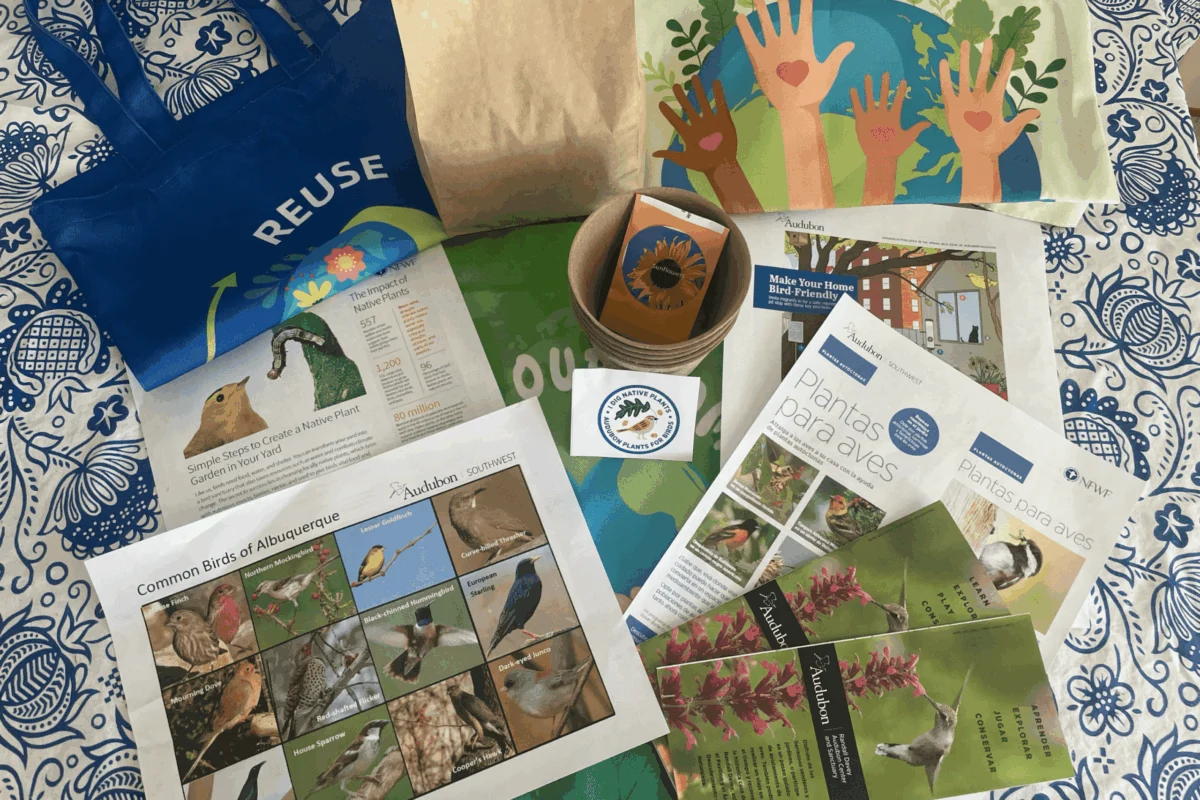
Throughout April, Audubon Southwest orchestrated a comprehensive series of conservation initiatives and educational programs across Arizona and New Mexico, engaging over 2,650 individuals directly. This widespread effort, driven by staff, volunteers, and community partners, underscored the organization’s philosophy that "every day is Earth Day," transforming environmental awareness into tangible action. From planting native species at critical wildlife refuges to fostering a love for nature among preschoolers and advocating for water conservation in rural classrooms, the month-long push aimed to inspire a new generation of environmental stewards and fortify vital bird habitats in the arid Southwest.
A Month of Unprecedented Engagement and Action
April, traditionally observed as Earth Month, saw Audubon Southwest’s dedicated education team immerse themselves in a flurry of activities, capitalizing on the region’s beautiful spring weather, the arrival of migratory birds, and the burgeoning growth of native plants. The organization’s outreach spanned diverse demographics and geographies, encompassing hands-on activities at Earth Day festivals, expert-led bird walks, immersive student field trips at the Rio Salado Audubon Center in Phoenix and the Randall Davey Audubon Center in Santa Fe, and impactful visits to classrooms and afterschool programs throughout both states. This extensive engagement highlights a strategic commitment to cultivating environmental literacy and active participation in conservation, fostering connections between communities and the natural world around them. The anecdotal reports of community members sharing their favorite bird sightings or newly sprouted plants in their yards serve as powerful affirmations of the programs’ resonance, demonstrating a growing collective appreciation for biodiversity and ecological health. These personal narratives, gathered from participants of all ages, provide a hopeful outlook on the future of conservation, indicating a broad-based willingness to contribute to the well-being of the planet and the myriad bird species that depend on its delicate ecosystems.
Cultivating Future Habitats at Valle de Oro National Wildlife Refuge
Earth Day, April 22nd, was marked by a significant habitat restoration event at the Valle de Oro National Wildlife Refuge in Albuquerque, New Mexico. Sixteen dedicated volunteers, including families with young children, converged on the refuge to plant 86 native plants across three basins situated near the refuge’s entrance. This effort is crucial for the refuge, which holds the distinction of being the Southwest’s first urban national wildlife refuge. Established on the site of a former dairy farm, Valle de Oro represents a monumental success in converting a degraded landscape into a thriving ecosystem, serving as a vital stopover for migratory birds along the Rio Grande flyway. The choice of native plants is strategic, providing essential food sources and shelter while being adapted to the region’s arid climate, requiring less water than non-native species.
Cathy Wise, Senior Manager for Community Building at Audubon Southwest, highlighted the intergenerational nature of the event, noting, "Volunteers included families and young ones who enjoyed making seed balls." These seed balls, a simple yet effective method of dispersing native plant seeds, allow participants to directly contribute to future habitat creation. Beyond the planting, Audubon Southwest distributed thirty "Grow Your Own Sunflowers" bags, encouraging participants to cultivate backyard habitats throughout the summer. This initiative underscores the critical role of urban green spaces in supporting migratory bird populations, which often rely on these "pockets" of habitat as they traverse vast distances along the Rio Grande corridor. The event at Valle de Oro was a component of a year-long project generously supported by the National Fish and Wildlife Foundation (NFWF) and its Urban Bird Conservation Program. The NFWF program aims to conserve native birds and their habitats in urban and suburban landscapes, recognizing that human-dominated areas can provide significant ecological value when managed thoughtfully. The success of the Valle de Oro initiative was also bolstered by robust partnerships with organizations such as the Ciudad Soil and Water Conservation District, which provides expertise in sustainable land management and water conservation, further amplifying the project’s impact on local ecological resilience.
Nurturing Environmental Literacy in Santa Fe
At the Randall Davey Audubon Center (RDAC) in Santa Fe, New Mexico, the month of April was dedicated to inspiring the next generation of conservationists. Senior Education Coordinator Meghan Baker led a group of preschoolers and their families on an exploratory hike through the center’s diverse ecosystems on Earth Day. Baker articulated the profound impact of these early experiences, stating, "One of my favorite parts of these programs is getting to see their little eyes get wide and excited when they notice a bird or spot a butterfly. Introducing young kids to nature, helping them get comfortable, and explore our ecosystems is so important!" The RDAC, nestled in the foothills of the Sangre de Cristo Mountains and bordering the Santa Fe National Forest, offers a unique outdoor classroom setting, allowing children to engage directly with diverse flora and fauna.
Throughout April, the Randall Davey Audubon Center welcomed over 400 students, ranging from preschoolers to high schoolers, for various field trips. A significant aspect of this outreach was the provision of free access for most students, a testament to the Outdoor Equity Fund from the State of New Mexico’s Outdoor Recreation Division. This grant-funded scholarship program is a vital mechanism for removing financial barriers, ensuring that Title 1 schools—those with a high percentage of students from low-income families—can participate in hands-on outdoor science field trips. This commitment to outdoor equity is crucial in a state where access to natural spaces can be limited by economic circumstances, thereby democratizing opportunities for environmental education.
These outdoor science adventures covered a broad spectrum of ecological topics, including the critical roles of pollinators, the migratory patterns of birds, and the intricate dynamics of forest ecosystems. Each field trip culminated with students learning practical ways to become "conservation champions" within their own schools and neighborhoods, fostering a sense of personal responsibility and agency. Beyond the structured field trips, the RDAC also concluded a year-long partnership with Santa Fe Prep, where middle and high school students regularly contributed to service projects. These projects included repairing outdoor classroom spaces, raking lawns, and maintaining the Nature Discovery Area, providing students with practical skills and a deeper appreciation for the effort involved in managing natural spaces. Such programs instill a work ethic alongside environmental principles, bridging classroom learning with real-world application.
Extending Reach Across Northern New Mexico
Audubon Southwest’s commitment to community engagement extended beyond its established centers, with robust outreach efforts reaching diverse communities across Northern New Mexico. Kanah Waltman, Community Outreach Coordinator, spearheaded these initiatives, emphasizing the transformative power of local learning. "Giving young people the opportunity to learn about and explore the place where they live can be one of the most impactful parts of growing up," Waltman shared. "Whether it’s learning about new careers or getting exposed to different parts of their world that they may not even know exist, even when it’s just down the road from their house!" This philosophy drove efforts to bring conservation education directly to communities that might face logistical or financial hurdles in traveling to the Audubon centers.
In April alone, Waltman’s outreach efforts engaged over 1,000 individuals across Northern New Mexico, visiting schools and events in towns such as Española, Las Vegas, and Gallina, in addition to numerous locations around Santa Fe. This extensive community outreach is particularly vital in a large, rural state where geographical distances can often impede access to specialized educational resources. One particularly resonant interaction occurred during a visit to Carlos Vigil Middle School, where discussions centered on freshwater conservation. Waltman recounted, "It really hit home to some students that we are talking about a finite resource. There’s not that much of it to go around, and if we want to have a future where the Rio Grande still runs through their community, we all need to be working together to conserve that water." This direct connection to local environmental challenges, such as the ongoing drought and the critical importance of the Rio Grande to both human and ecological communities, highlights the immediate relevance of Audubon Southwest’s educational messaging, empowering young people to become active participants in addressing pressing regional issues.
Fostering Community and Conservation in Phoenix
In Phoenix, Arizona, the Nina Mason Pulliam Rio Salado Audubon Center served as a vibrant hub for community engagement and conservation action throughout April. Juliana Gomez, Senior Education Coordinator, characterized the month as "a great month of meeting and teaching people all around Phoenix," noting the palpable enthusiasm for learning about birds and getting involved in conservation programs. The Rio Salado Audubon Center is uniquely positioned within an urban riparian corridor, representing a remarkable ecological restoration project that has transformed a degraded riverbed into a thriving wildlife habitat, serving as a critical green space for the greater Phoenix metropolitan area and a crucial stop for migratory birds.
Since the beginning of 2024, Gomez has hosted 13 distinct groups for field trips and conducted numerous offsite school programs, demonstrating a consistent rhythm of community engagement. Her outreach efforts also extended to significant cultural events and institutions, including those within the Gila River Indian Community and the Salt River Pima Maricopa Indian Community, as well as the Desert Botanical Garden and Odysea Aquarium. This broad engagement reflects Audubon Southwest’s commitment to reaching diverse audiences and integrating conservation messages into various community contexts.
Further enriching the center’s offerings, Gomez piloted two innovative new programs: a "Guided Nature Walk" on Thursdays, designed for a slower pace, encouraging deeper observation and reflection on the natural surroundings, and "Nature Explorers," a Saturday family hike program aimed at fostering curiosity and discovery among younger participants. On Earth Day itself, Gomez engaged young learners at the Phoenix Children’s Museum, sparking curiosity about bird adaptations. That evening, the center hosted its inaugural collaborative teacher training with Arizona Project WET (Water Education for Teachers). This partnership introduced educators to the wonders of wetlands and demonstrated how these ecosystems translate into real-world conservation efforts directly at the Rio Salado Audubon Center, equipping teachers with the knowledge and resources to integrate water and wetland education into their curricula.
Habitat Restoration and Volunteer Mobilization at Rio Salado
Beyond festivals and educational programs, the Rio Salado Audubon Center also galvanized hundreds of community members for intensive volunteer days throughout April. These dedicated volunteers, working alongside community partners, made significant strides in habitat restoration. Their collective efforts resulted in the removal of hundreds of bags of invasive weeds, which outcompete native plants and degrade habitat quality, and the strategic installation of many new native plants. These ongoing restoration efforts are fundamental to Audubon Southwest’s mission to enhance and restore the native habitat around the Rio Salado, ensuring it remains a robust and resilient ecosystem capable of supporting diverse wildlife.
Volunteers also contributed to critical center improvement projects, including the installation of new signage to enhance visitor experience and education, and meticulous trail clean-up efforts to maintain the aesthetic and ecological integrity of the grounds. The profound gratitude for these contributions was extended to a wide array of corporate and community partners, including Wells Fargo, Microsoft, AZSA, Tiger Mountain Foundation, and Sundt, among others. These partnerships underscore the shared responsibility of corporations and non-profits in advancing environmental stewardship and community well-being. The volunteers’ donation of their time and effort represents an invaluable investment in the health of the local environment and the future of conservation in the region.
The Broader Impact and Future Implications
Audubon Southwest’s comprehensive Earth Month initiatives in April represent a significant investment in both ecological restoration and human capital development. The direct engagement of over 2,650 individuals, coupled with the hundreds of volunteers who dedicated their time, speaks to the profound reach and resonance of the organization’s mission. The planting of 86 native plants at Valle de Oro, the removal of invasive species, and the installation of new native flora at Rio Salado are not merely isolated acts; they are critical components of a larger, sustained effort to reverse habitat degradation and bolster biodiversity in two rapidly urbanizing states.
The emphasis on youth education, particularly through programs supported by New Mexico’s Outdoor Equity Fund, highlights a strategic vision for long-term impact. By removing financial barriers and providing immersive outdoor experiences to Title 1 schools, Audubon Southwest is actively fostering a diverse and inclusive cohort of future environmental champions. These early experiences in nature have been scientifically linked to improved academic performance, reduced stress, and a greater propensity for environmental stewardship in adulthood. The discussions on water conservation, particularly poignant in the arid Southwest, equip young people with the knowledge to address immediate environmental challenges facing their communities.
The partnerships forged with government agencies like the National Fish and Wildlife Foundation, local conservation districts, and corporate entities exemplify a collaborative model of conservation that leverages diverse resources for maximum impact. These collaborations extend the reach of Audubon Southwest’s work, ensuring that conservation efforts are integrated into broader regional planning and community development.
Ultimately, the enthusiasm encountered across communities during Earth Month, whether for birds, habitat, or the sheer joy of nature, reinforces the enduring power of connection to the natural world. These efforts lay the groundwork for a more environmentally conscious and resilient future, demonstrating that collective action, rooted in education and hands-on engagement, can indeed inspire meaningful and lasting conservation change. Audubon Southwest’s work in April serves as a powerful reminder that every single day offers an opportunity to contribute to the health of our planet, extending the spirit of Earth Day throughout the year and into the generations to come. For those interested in contributing to these vital projects or participating in educational programs, further details on volunteer opportunities and local initiatives are available through Audubon Southwest’s official channels.
