
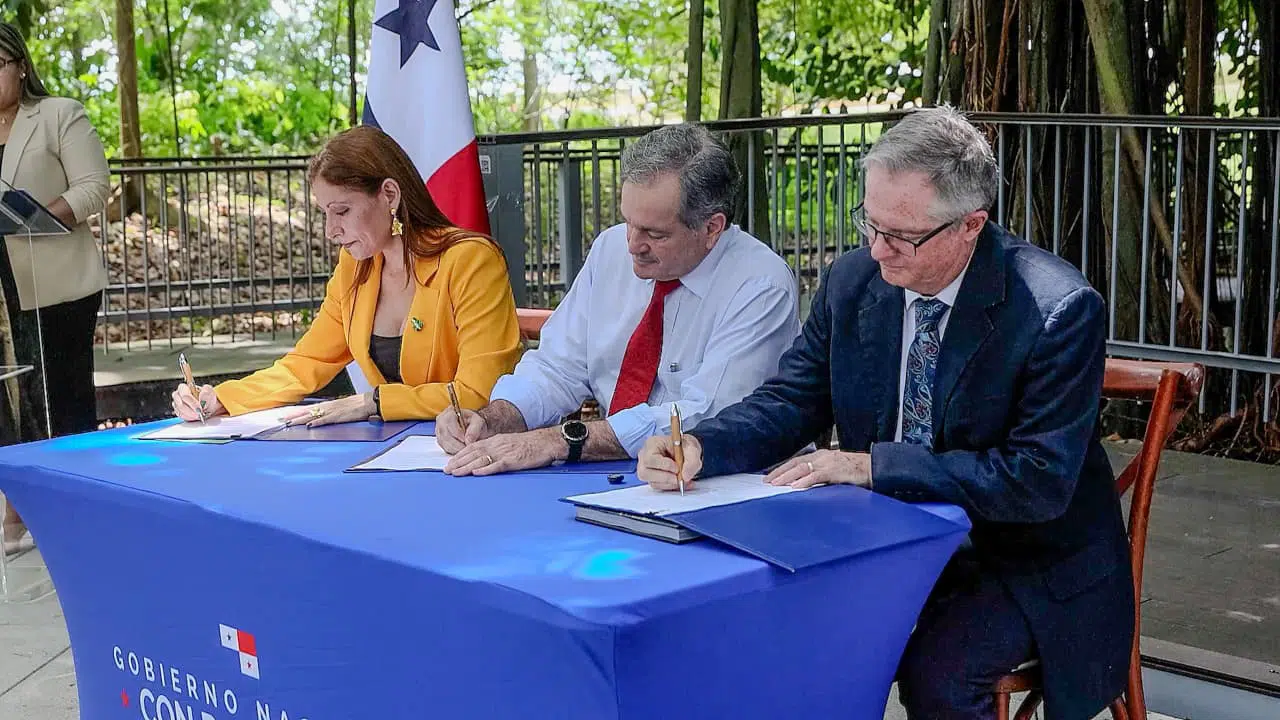
Panama has embarked on a pivotal initiative to bolster its biodiversity conservation efforts, formally committing to a comprehensive evaluation and update of its Key Biodiversity Areas (KBAs). This strategic move, solidified by a Memorandum of Understanding (MOU) signed on May 18, 2026, marks a significant stride towards fulfilling the nation’s commitments under the ambitious Kunming-Montreal Global Biodiversity Framework (KMGBF), particularly the ’30×30′ target aimed at protecting at least 30% of terrestrial and marine areas by 2030.
The agreement, inked between Panama’s Ministry of Environment, the KBA Association, and the Amphibian Survival Alliance (ASA), underscores the government’s dedication to scientifically informed conservation. By systematically identifying, mapping, and documenting sites crucial for the persistence of biodiversity, Panama aims to create a robust framework for its National Biodiversity Strategy and Action Plan (NBSAP) and to safeguard its unique natural heritage.
The Strategic Importance of Key Biodiversity Areas
Key Biodiversity Areas (KBAs) are sites contributing significantly to the global persistence of biodiversity, identified through a standardized set of criteria and thresholds. These criteria, developed by a global partnership of leading conservation organizations and formally adopted in 2016, ensure a consistent and scientifically rigorous approach to identifying the most critical places for life on Earth. KBAs are not merely areas with high species richness; they are sites identified for their irreplaceability and vulnerability, meaning they host species that are highly threatened or found nowhere else, or they support significant populations of species that are vital for ecological processes.
Panama, a narrow land bridge connecting two continents and flanked by two oceans, boasts an extraordinary level of biodiversity. Its geographical position as an ecological corridor has fostered a rich tapestry of ecosystems, from dense tropical rainforests and cloud forests to expansive marine environments, including coral reefs and mangrove forests. This unique blend supports an incredible array of flora and fauna, many of which are endemic. The country is recognized globally as a biodiversity hotspot, home to over 10,000 plant species, more than 1,000 bird species, and hundreds of mammal, reptile, and amphibian species. However, like many biodiverse nations, Panama faces significant threats from habitat loss, deforestation, climate change, and unsustainable development. The formal identification and protection of KBAs are therefore paramount to ensure the long-term survival of this natural wealth.
A National Commitment to Global Biodiversity Goals
The signing of the MOU on May 18, 2026, was a landmark event, attended by key figures dedicated to environmental conservation. H.E. Juan Carlos Navarro, Panama’s Minister of Environment, represented the government’s commitment, while Dr. Andrew Plumptre, Head of the KBA Secretariat, and Dr. Gina Della Togna, Executive Director of the Amphibian Survival Alliance, signed on behalf of their respective organizations. This trilateral partnership signifies a collaborative approach, blending governmental policy with scientific expertise and targeted conservation action.

The initiative directly addresses several targets within the Kunming-Montreal Global Biodiversity Framework (KMGBF), adopted in December 2022. The KMGBF outlines 23 global targets for 2030, aimed at halting and reversing biodiversity loss. Central among these is Target 3, known as ’30×30,’ which calls for effective conservation and management of at least 30% of the world’s terrestrial and inland water areas, and of coastal and marine areas. By updating its KBAs, Panama will gain the precise geographical data needed to identify areas for effective protection and conservation, ensuring that its efforts align with these ambitious global objectives. Beyond the 30×30 target, the KBA assessment will also inform spatial planning (Target 1), ecosystem restoration (Target 2), and the reduction of species extinction risk (Target 4), providing a foundational layer of information for comprehensive biodiversity management.
Minister Navarro emphasized the nation’s proactive stance: "This Memorandum of Understanding represents a profound commitment by Panama to safeguard our invaluable natural heritage. Our biodiversity is not just a national treasure; it is a global asset. By systematically identifying and protecting our Key Biodiversity Areas, we are not only fulfilling our international obligations but also laying the groundwork for sustainable development that benefits all Panamanians."
Chronology: A History of Identifying Critical Sites
Panama’s journey in identifying and protecting critical biodiversity sites is rooted in decades of dedicated conservation efforts, evolving with international best practices:
- 1995: The Genesis of Important Bird Areas (IBAs) in Panama: The Audubon Society of Panama, a long-standing partner of BirdLife International, initiated the Important Bird Areas (IBA) Program in Panama. This pioneering effort was made possible through crucial funding secured from the Natura Foundation, marking the country’s first systematic approach to identifying sites critical for bird conservation. The IBA program focused on identifying areas that are vital for bird populations, particularly those that are globally threatened, restricted-range, or congregatory.
- 2009: Documenting Important Bird Areas of the Americas: The culmination of years of fieldwork and scientific analysis resulted in the publication of "IBAs of the Americas." This seminal document brought significant visibility to Panama’s important bird sites, identifying 53 global IBAs within the country. These sites collectively covered an impressive 2,501,046 hectares, equating to nearly 29% of Panama’s total land area, highlighting the nation’s immense avian diversity and the extent of areas critical for its survival.
- 2016: Evolution to the KBA Standard: A pivotal moment occurred with the official adoption of the Global Standard for the Identification of Key Biodiversity Areas. This new standard provided an overarching framework that expanded beyond birds to encompass sites important for all forms of biodiversity, including mammals, amphibians, reptiles, fish, invertebrates, and plants, across terrestrial, freshwater, and marine realms. Following this global adoption, all of Panama’s existing IBAs were automatically recognized as KBAs, forming the foundational dataset for the current, more comprehensive assessment process. This transition acknowledged the broader ecological significance of these sites.
- May 18, 2026: Formalizing the Update Process: The recent signing of the MOU between the Ministry of Environment, the KBA Association, and the Amphibian Survival Alliance officially launched the national process to evaluate and update Panama’s KBA network, leveraging the 2016 framework.
- May 19, 2026: Establishing the National Coordination Group (NCG): As a crucial follow-up to the MOU, a meeting was convened to discuss and formalize the creation of the National Coordination Group (NCG) for KBAs. This multi-sectoral group is designed to be the operational backbone of the assessment. It comprises a diverse collective of experts in various species groups (e.g., ornithologists, herpetologists, botanists), ecologists, and public policy professionals. The NCG’s mandate is to guide the rigorous scientific identification and assessment of key biodiversity sites across Panama. In a subsequent phase, the NCG will also play a critical role in developing strategies for the effective conservation and management of these identified KBAs.
The KBA Standard and Its Global Partnership
The Global Standard for the Identification of Key Biodiversity Areas is a robust, evidence-based framework that employs 11 criteria, organized into five categories: threatened biodiversity, ecological integrity, biological processes, irreplaceable sites, and connectivity. These criteria allow for the identification of sites that are vital for maintaining the planet’s biodiversity, irrespective of their legal protection status. For instance, a KBA might be designated because it holds a significant population of a critically endangered species, or because it is the only known location for a particular endemic species.
The KBA Partnership, a collaborative initiative, comprises 13 of the world’s leading conservation organizations, including the International Union for Conservation of Nature (IUCN), BirdLife International, Conservation International, World Wildlife Fund (WWF), Wildlife Conservation Society (WCS), and the Zoological Society of London (ZSL). This partnership provides the technical guidance, scientific rigor, and global coordination necessary for the consistent application of the KBA standard worldwide. Dr. Andrew Plumptre, representing the KBA Secretariat, articulated the significance of this global framework: "The KBA standard offers a globally consistent, scientifically defensible approach to identifying the most important places for biodiversity. Panama’s commitment to this standard ensures that its conservation efforts are aligned with international best practices and contribute meaningfully to global biodiversity targets."
The involvement of the Amphibian Survival Alliance (ASA) is particularly pertinent given the global amphibian crisis. Amphibians are among the most threatened vertebrate groups, facing rapid declines due to habitat loss, climate change, pollution, and the devastating chytrid fungus. Panama’s diverse amphibian populations, including many endemic species, have been severely impacted. Dr. Gina Della Togna, Executive Director of the ASA, highlighted this critical aspect: "Panama is a crucial stronghold for amphibian diversity, yet many species face imminent extinction. Our collaboration in the KBA assessment will ensure that these incredibly vulnerable species and their habitats receive the focused attention and protection they desperately need."

Voices from the Forefront of Conservation
The initiation of this KBA update process has garnered widespread positive reactions from various stakeholders within the conservation community. Minister Juan Carlos Navarro’s leadership signals a strong political will to prioritize environmental protection, viewing it not as an impediment to development but as a cornerstone of sustainable progress. His emphasis on aligning national priorities with global frameworks like the KMGBF positions Panama as a responsible actor on the international stage.
Dr. Andrew Plumptre’s presence at the MOU signing underscores the scientific credibility and global recognition associated with Panama’s efforts. His involvement ensures that the process adheres to the highest scientific standards, guaranteeing that the identified KBAs are truly critical and warrant protection. Dr. Gina Della Togna’s engagement brings a vital focus on highly vulnerable species groups, ensuring that the KBA identification process is inclusive and addresses specific biodiversity crises.
Gabriela Toscano, Biodiversity Conservation Manager for BirdLife Americas, who participated in the NCG meeting, captured the sentiment of many conservationists: "We are witnessing a historic milestone for nature in Panama! The beginning of this process fills us with joy and optimism, as it represents a great opportunity to unite science and action in favour of the country’s incredible biodiversity." Her statement reflects the enthusiasm for a data-driven approach that promises to translate scientific knowledge into tangible conservation outcomes. The wider scientific community and non-governmental organizations are expected to commend Panama’s commitment, while also stressing the importance of robust implementation, adequate funding, and continuous monitoring to ensure the long-term success of the initiative.
Implications for Panama’s Future and Beyond
The comprehensive KBA assessment and subsequent update hold far-reaching implications for Panama and serve as a model for other nations:
- Enhanced Conservation Planning and Resource Allocation: By precisely identifying critical sites, Panama can optimize its conservation strategies and allocate resources more effectively. This will enable the government to expand its network of protected areas strategically, strengthen management in existing ones, and develop targeted conservation actions for threatened species and ecosystems. It moves beyond a reactive approach to a proactive, evidence-based one.
- Integration into Sustainable Development: The KBA data will be invaluable for spatial planning, informing land-use decisions, and guiding infrastructure development projects. Integrating KBAs into national development plans can help minimize negative impacts on critical biodiversity, promoting a more sustainable pathway for economic growth. This includes encouraging sustainable tourism, responsible agriculture, and environmentally conscious urban planning.
- Strengthening Climate Change Resilience: Protecting biodiverse areas, especially those identified as KBAs, is crucial for maintaining essential ecosystem services. These services, such as water purification, carbon sequestration, and natural hazard mitigation (e.g., protection from storm surges by mangroves), are vital for adapting to and mitigating the impacts of climate change. Healthy ecosystems provide natural buffers and enhance the resilience of both human and natural systems.
- International Leadership and Collaboration: By demonstrating a strong commitment to KBA identification and conservation, Panama positions itself as a leader in biodiversity protection within Central America and globally. This can foster greater international collaboration, attracting funding, technical support, and knowledge exchange, which are crucial for scaling up conservation efforts.
- Challenges and the Path Ahead: While the signing of the MOU is a monumental step, the implementation phase will present its own set of challenges. These include securing sustained funding for fieldwork, data analysis, and long-term monitoring; building local capacity among scientists and conservation practitioners; ensuring meaningful engagement with indigenous communities and local stakeholders whose livelihoods may depend on KBA resources; and developing effective legal and enforcement mechanisms to protect identified sites. Overcoming these challenges will require a sustained multi-sectoral effort and unwavering political will.
Ultimately, the process of updating Panama’s Key Biodiversity Areas is not merely an administrative exercise; it is a foundational step towards securing the nation’s natural capital for future generations. It underscores a profound understanding that biodiversity is inextricably linked to human well-being, economic prosperity, and environmental stability. By embracing this scientific and collaborative approach, Panama is charting a course towards a future where nature and people can thrive in harmony, making a significant contribution to the global effort to reverse the tide of biodiversity loss and achieve the ambitious goals of the Kunming-Montreal Global Biodiversity Framework.
