
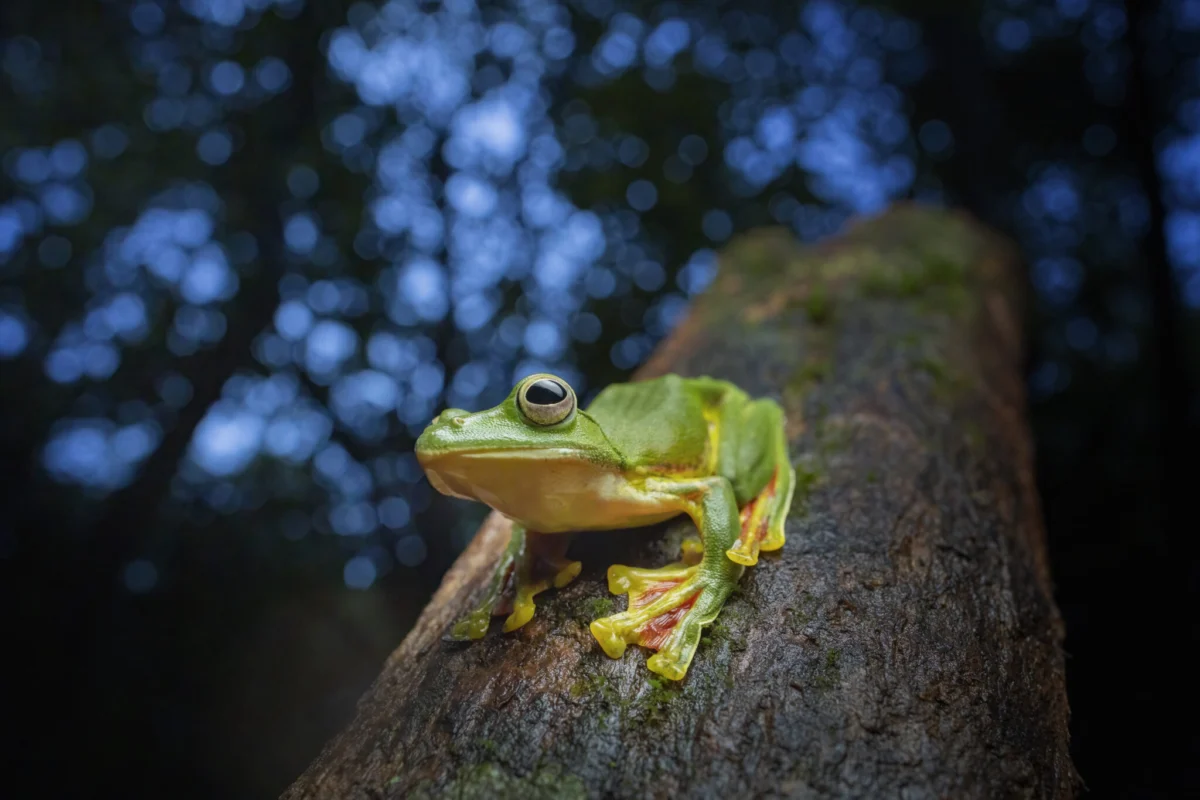
Wide-angle macro photography stands as a powerful and increasingly popular technique for crafting immersive, storytelling images of small subjects within their natural habitats. This specialized approach transcends traditional close-up photography by not merely revealing the intricate details of an organism but by seamlessly integrating it into its surrounding environment. The resulting perspective transports the viewer directly into the scene, fostering a profound sense of connection and allowing them to experience the world from the subject’s intimate vantage point. This method effectively highlights the delicate balance between the subject and its ecosystem, delivering visually striking images that resonate deeply and contribute to a richer understanding of biodiversity.
A New Perspective: The Evolution of Macro Photography

The history of photography has seen a continuous quest to explore and document the natural world, with macro photography emerging as a critical discipline for capturing the minute. Traditionally, macro photography focused on achieving high magnification ratios, often 1:1 or greater, to reveal textures, patterns, and anatomical features invisible to the naked eye. This scientific precision, while invaluable, often isolated the subject from its context, rendering the background into an indistinct blur.
The advent of wide-angle macro photography represents a significant evolution in this field. It shifts the emphasis from pure magnification to contextual storytelling. While the term "true macro" traditionally refers to lenses capable of 1:1 magnification, wide-angle lenses, when used at extremely close focusing distances, achieve a similar effect of subject enlargement while simultaneously encompassing a broad sweep of the background. This technique, though technically distinct from classic macro, has become widely accepted and celebrated for its unique narrative capabilities. Early experimentation with reversed lenses and extension tubes paved the way, but modern optical engineering has delivered purpose-built wide-angle macro lenses, allowing photographers to bridge the gap between microscopic detail and panoramic habitat. This blending of perspectives allows for a more holistic portrayal of nature, showcasing not just what a creature looks like, but where and how it lives, and its integral role within its environment.
The Technical Canvas: Essential Gear for Immersive Imagery

Achieving compelling wide-angle macro photographs requires a thoughtful selection of specialized equipment and a nuanced understanding of its capabilities.
Camera Bodies: The Foundation of Precision
While the adage "the best camera is the one you already own" holds true for beginners, modern mirrorless cameras offer distinct advantages for wide-angle macro. Features such as advanced autofocus systems with animal eye detection and focus tracking significantly ease the challenge of acquiring and maintaining sharp focus on often fast-moving or elusive subjects at extremely close distances. Live view capabilities combined with articulated or tilt screens are invaluable, allowing photographers to compose shots from low or awkward angles without contorting themselves, thereby reducing disturbance to the environment and the subject. Furthermore, cameras with excellent dynamic range facilitate balancing exposure between a brightly lit background and a potentially flash-illuminated foreground. Robust weather sealing is paramount, especially when working in humid rainforests or wet environments where many macro subjects thrive. A high burst rate can also be beneficial for capturing fleeting moments of animal behavior. However, it’s crucial to reiterate that strong images are ultimately born from vision and technique, not solely from the latest gear.
Lenses: The Gateway to the Habitat
The lens is arguably the most critical component. Standard wide-angle lenses designed for landscape photography typically have a minimum focusing distance (MFD) too long to achieve the necessary magnification for macro subjects. The key is a wide-angle lens with an exceptionally low MFD, allowing the photographer to get very close to the subject while still capturing a wide field of view. Several manufacturers, including specialist brands like Laowa, have innovated in this area, producing lenses that are explicitly designed for wide-angle macro, sometimes even achieving true 1:1 magnification. These specialized optics often feature unique barrel designs, allowing the front element to be positioned inches from the subject. The ability to fill the frame with the subject while retaining environmental context is directly tied to a short MFD. Without it, the subject can become a tiny, insignificant detail lost within the expansive background, undermining the immersive intent of the technique.

Illumination Mastery: Harnessing Light and Shadow
Even in daylight, external flash units are often indispensable in wide-angle macro photography. The necessity of narrowing the aperture (e.g., f/11 to f/22) to extend the depth of field and keep both the subject and its environment in focus invariably leads to significant light loss and potential underexposure of the background. A dedicated flash compensates for this, providing the necessary illumination for the subject while allowing for correct exposure of the ambient background. Key flash features include:
- ETTL (Evaluative Through-The-Lens) and Manual Modes: ETTL offers automated exposure, while manual mode provides precise control over flash output, crucial for complex lighting scenarios.
- Fast Recycle Time: Essential for capturing sequences of images without delay.
- Guide Number (above 60): Indicates flash power; a higher number provides more light output.
- High-Speed Sync (HSS): Allows flash synchronization at shutter speeds faster than the camera’s native sync speed, enabling the use of wider apertures in bright conditions or freezing fast motion.
- Remote Operation: Wireless triggers (radio-based being most reliable) allow flashes to be positioned off-camera, offering immense flexibility in lighting direction and quality.
Diffusers: Sculpting the Light
Diffusers are vital for softening the harsh, direct light from a flash, preventing unsightly hotspots and creating a more natural, pleasing illumination, particularly on reflective or wet subjects. However, standard macro diffusers, typically designed for longer macro lenses, often present challenges with wide-angle setups. Their size can lead to the diffuser edges appearing in the frame, or the front section might droop without adequate support.
To counter these issues, photographers employ various strategies:
- Smaller Diffusers: Dome diffusers or mini softboxes can be effective, though they may offer less diffusion surface, a trade-off for avoiding frame intrusion.
- Custom Diffusers: Many wide-angle macro enthusiasts fabricate their own diffusers, tailored to their specific lens and flash setup, using materials like craft foam, translucent plastics, or fabric.
- Innovative Mounting: Elevating the flash and diffuser assembly using a trigger-mounted bracket can prevent the diffuser from dipping into the frame. Disc-style diffusers, positioned above the subject, can provide broad, top-down lighting.
- Off-Camera Flash with Diffuser: While challenging to manage solo, this setup offers the greatest control over light direction and quality, allowing the photographer to position the diffused flash precisely where needed. This might involve a separate light stand or a flexible arm.
Field Preparedness: Beyond the Optics
Beyond the core photographic equipment, practical field gear is essential for safety, comfort, and ethical practice. Robust rain gear is crucial for protecting both the photographer and the sensitive electronics from moisture, particularly in rainforest environments. Appropriate footwear, such as waterproof boots, provides traction and protection from uneven terrain and potential hazards. Leech guards are highly recommended in many tropical regions, safeguarding against parasites and allowing confident movement through undergrowth. Finally, insect repellents are indispensable for minimizing distractions from mosquitoes and other biting insects, allowing the photographer to focus on the intricate task at hand.

Timing is Everything: Optimizing for Day and Night
The time of day plays a significant role in the approach and outcome of wide-angle macro photography, particularly in balancing the subject’s illumination with the ambient light of its habitat.
Daylight Narratives: Revealing the Ecosystem
The primary objective of wide-angle macro photography is to showcase the subject within its habitat, and this is often best achieved during daylight hours when the environment is naturally illuminated. The ambient light allows for the detailed rendering of foliage, textures, and the overall atmospheric conditions that define a creature’s home. However, a significant challenge arises when photographing nocturnal creatures, such as many reptiles and amphibians, which are often at their most active and photogenic in the darkness of a rainforest night. Traditional flash photography at night typically results in a subject well-lit against a stark, dark, and featureless background, effectively stripping away the environmental context that wide-angle macro aims to preserve.

To overcome this, extensive research into a location, its species, and their diurnal behavior is paramount. Understanding if a nocturnal species exhibits any crepuscular (dawn/dusk) activity or if there are specific daytime resting spots that allow for ethical observation can be invaluable. Collaborating with local naturalists or field guides provides unparalleled insight into species behavior and habitat, maximizing photographic opportunities while minimizing disturbance. It is a fundamental ethical principle in nature photography to never disturb, relocate, or captivate an animal for the sake of a photograph. If the subject is not encountered in situ and behaving naturally, the integrity of the image and the photographer’s commitment to conservation are compromised.
Nighttime Strategies: Illuminating Hidden Worlds
When photographing nocturnal subjects, simply relying on a single, on-camera flash will invariably lead to the "subject in a black box" effect, failing to capture the rich background. To render the habitat effectively at night, creative lighting solutions are required. The most common "hack" involves using multiple flashes or constant lights positioned strategically around the scene.
- Multiple Flash Setup: A master trigger on the camera can wirelessly activate several slave flashes. One flash, often diffused, illuminates the primary subject. Other flashes can be positioned further back, aimed at key elements of the background (e.g., foliage, tree trunks, water features) to reveal the environment. This technique requires careful balancing of flash power and positioning to achieve a natural-looking illumination without creating distracting hot spots or shadows.
- Constant Lights: Powerful LED panels or headlamps can be used to continuously illuminate the background, allowing the camera to capture ambient details even at lower ISOs or longer exposures. This provides real-time feedback on lighting and can be combined with a flash for the primary subject, offering a hybrid approach to illumination.
- Exposure Blending: In some complex scenarios, multiple exposures (one for the subject with flash, another for the ambient background) can be combined in post-processing to achieve a perfectly balanced image, although this requires careful technique in the field to ensure consistent framing.
The goal is to recreate, or at least suggest, the natural ambiance of the nocturnal habitat, showcasing the subject not as an isolated entity but as an integral part of its dark, vibrant world.

Crafting the Narrative: Principles of Wide-Angle Macro Composition
Composition in wide-angle macro photography extends beyond merely placing the subject in the frame; it involves creating a visual narrative that draws the viewer into the subject’s world. While universal compositional rules apply, special emphasis is placed on the interplay between the subject and its environment.
- Balancing Elements: The unique perspective of wide-angle macro means foreground elements appear larger, while background elements recede rapidly. The photographer must meticulously balance the prominence of the subject with the contextual details of the foreground and background. This often involves careful framing to ensure no single element overwhelms the others.
- Layers and Depth: Incorporating multiple layers of visual interest, from a sharp foreground leading to the subject, and then to a discernible background, adds depth and dimension. This can be achieved by utilizing natural elements like leaves, branches, or rocks to create visual pathways.
- Experiment with Angles: The exaggerated perspective of a wide-angle lens can be leveraged for dramatic effect. Shooting from a very low angle can emphasize the scale of the immediate surroundings, perhaps including a canopy of trees far above, making the small subject appear even more grounded in its vast world. Conversely, a slightly higher angle might reveal the intricate patterns of the forest floor or the flow of a stream.
- Leading Lines and Natural Frames: Seek out natural leading lines – a blade of grass, a fallen branch, a ripple in water – that guide the viewer’s eye directly to the subject. Similarly, using leaves, flowers, or natural crevices to frame the subject can enhance focus and create a sense of intimacy, effectively creating a "window" into the scene.
- Storytelling Through Context: Every compositional choice should contribute to the narrative. Is the subject camouflaged? Is it hunting? Is it seeking shelter? The surrounding environment provides the clues and the stage for this story, transforming a simple portrait into a compelling glimpse of natural behavior.
Navigating the Intricacies: Overcoming Common Challenges

Wide-angle macro photography, for all its rewards, presents a unique set of technical and practical challenges that demand patience and ingenuity.
Distortion: Wide-angle lenses inherently exaggerate perspective, making objects closer to the lens appear disproportionately large. While this can be creatively used to emphasize a subject, it can also lead to unnatural or distracting distortions if not carefully composed. Post-processing software offers lens correction profiles to mitigate optical distortion, but managing perspective distortion often relies on careful in-field framing and understanding how the lens renders space.
Depth of Field: At macro distances, the depth of field becomes incredibly shallow, even with a wide-angle lens. Achieving sharpness across both the subject and a significant portion of the background can be difficult. The primary solution is to use the narrowest possible aperture (e.g., f/16, f/22, or even f/32). However, pushing apertures too far can introduce diffraction, which reduces overall image sharpness. This necessitates a careful judgment to find the sweet spot. For subjects that remain still, focus stacking is a powerful technique. By taking multiple images at slightly different focus points and combining them in post-processing, photographers can achieve an unprecedented depth of sharpness from foreground to background.

Lens Flare and Corner Softness: Wide-angle optics, especially older designs or when combined with extension tubes or adapters (which can compromise optical performance), can be prone to lens flare and exhibit reduced sharpness at the edges of the frame. Modern wide-angle macro lenses are better corrected, but vigilance is still required. Using a lens hood, shading the lens with a hand or piece of card, and being mindful of direct light sources can minimize flare. Avoiding extension tubes or adapters unless specifically seeking a particular aesthetic effect can help maintain corner sharpness.
Blocking Light: Due to the extremely close working distances, the lens barrel itself, or even the photographer’s body, can cast shadows on the subject, blocking ambient or flash light. This is where creative diffuser placement and off-camera flash setups become crucial. Articulating flash arms and flexible light modifiers allow precise positioning of light sources to circumvent obstructions.
Balancing Lighting: The disparity between the lighting requirements of a macro subject (often needing strong, close illumination) and a wide background (needing natural, even exposure) is a core challenge. Solutions include:

- Flash-to-Ambient Ratio: Carefully adjusting flash power relative to ambient exposure.
- Diffusers and Fill Lights: Using diffusers for the main subject flash and potentially a secondary, lower-power fill light (either flash or constant LED) for subtle background illumination.
- Exposure Blending: As mentioned, combining separate exposures for subject and background in post-processing.
- Gel Filters: Using color gels on the flash to match the color temperature of the ambient light, ensuring seamless integration.
Working Distance: Wide-angle macro setups often necessitate extremely short minimum focusing distances, sometimes just a few centimeters from the subject. This makes it challenging to position the camera without disturbing the subject, introducing unwanted shadows, or even risking damage to the equipment or the subject itself. Patience, slow movements, and a deep understanding of animal behavior are essential.
Size of the Gear: While larger diffusers generally produce softer, more appealing light, an oversized setup can be cumbersome in dense environments and easily disturb sensitive subjects as the photographer approaches. There’s a practical trade-off: a smaller, more maneuverable diffuser might offer slightly less ideal diffusion but allows for closer, less intrusive shooting. The choice depends on the subject’s temperament and the specific field conditions.
Stability: Shooting at such close distances with a wide-angle lens requires immense precision in focus and rock-solid camera positioning. Even minor camera shake or subject movement is greatly magnified. While many wide-angle macro shots are handheld, leveraging in-body image stabilization (IBIS) in modern cameras and optical stabilization in lenses can significantly improve sharpness. For static subjects, a sturdy tripod or monopod, especially one that allows for low-angle shooting, coupled with a focusing rail for minute adjustments, can be invaluable.

Ethical Photography and Conservation: A Mandate for Nature Photographers
Central to the practice of wide-angle macro photography, and indeed all nature photography, is an unwavering commitment to ethical conduct and conservation. The original article’s strong stance against captivating or disturbing animals is a fundamental principle that cannot be overstated. "Leave No Trace" principles must be rigorously applied: do not alter the environment, do not harass subjects, and always prioritize the well-being of the wildlife over the photograph.
The immersive images created through wide-angle macro photography serve a powerful dual purpose. They are not merely aesthetically pleasing; they are vital tools for conservation. By showcasing small creatures within their intricate ecosystems, these photographs raise public awareness about the rich biodiversity that often goes unnoticed. They can highlight the fragility of microhabitats, the intricate web of life, and the urgent need for environmental protection. When a viewer feels transported into the world of a tiny frog or viper, they are more likely to care about its survival and the preservation of its home. Expert photographers and conservation scientists frequently collaborate, using such imagery to document species, educate the public, and advocate for policy changes. The images become ambassadors for the natural world, inspiring appreciation and action.

The Broader Impact: Reshaping Our View of the Natural World
Wide-angle macro photography is more than a technical niche; it is a movement that is reshaping how we perceive and interact with the natural world. Its unique blend of intimacy and expansiveness offers fresh perspectives on creatures often overlooked.
- Scientific Documentation: For biologists and ecologists, these images provide invaluable contextual data, illustrating species-habitat relationships in a way traditional close-ups cannot.
- Education and Outreach: Museums, educational institutions, and conservation organizations increasingly utilize wide-angle macro photographs to engage audiences, particularly younger generations, making the wonders of the micro-world accessible and compelling.
- Public Engagement: By allowing viewers to "step into" the scene, these photographs foster empathy and a deeper connection to nature, potentially inspiring a new generation of naturalists, conservationists, and photographers.
- Photographic Trends: The growing popularity of this genre is influencing lens design and photographic accessory development, spurring innovation in optics and lighting solutions.
In conclusion, wide-angle macro photography occupies a fascinating intersection of technical prowess, artistic vision, and ecological storytelling. While it demands a mastery of lighting, depth of field, and compositional balance, the challenges are precisely what forge its distinct character. By embracing these complexities with the right equipment, creative diffuser use, and unwavering ethical fieldcraft, photographers can transcend mere documentation. They create images that are both deeply personal and expansively contextual, capturing not only the exquisite details of nature’s smallest inhabitants but also the vibrant, interconnected worlds in which they thrive. This technique offers a profound way of connecting the often-unseen wonders of the natural world with the larger ecosystems they belong to, enriching our understanding and appreciation of life on Earth.
