

An extensive 11-day ornithological expedition across Southern and Central Ontario has concluded with the documentation of 190 distinct bird species, underscoring the province’s status as a critical corridor for avian migration. The journey, which spanned from the urban shorelines of Toronto to the Boreal-influenced forests of Algonquin Provincial Park, provided a comprehensive survey of both migratory "fallout" events and the establishment of early-season breeding territories. Led by professional guides, the group navigated various high-priority conservation areas, including the UNESCO-recognized Point Pelee National Park and the globally significant Carden Alvar. The record of 190 species is considered a robust representation of Ontario’s spring biodiversity, particularly given the inclusion of 26 species of wood-warblers (family Parulidae) and several rare vagrants seldom seen in the Great Lakes region.
The Lake Erie Corridor and the Carolinian Zone
The expedition commenced in Toronto on May 11, strategically timed to coincide with the peak of the spring migration. The initial field observations began at Colonel Samuel Smith Park on the city’s western shoreline. As a prominent urban hotspot, this location serves as a vital stopover for birds crossing Lake Ontario. Early sightings included a breeding colony of Red-necked Grebes (Podiceps grisegena) and a solitary Horned Grebe, alongside a variety of diving ducks. The presence of these species indicates the continued importance of protected waterfronts in densely populated metropolitan areas.
From Toronto, the group transitioned into the Carolinian forest zone, a unique ecological region in Canada that supports a higher diversity of flora and fauna than any other part of the country. This zone, which follows the northern shore of Lake Erie, is the primary destination for birders during the month of May. En route to Leamington, the team conducted surveys at Roth Park in Woodstock before making an initial assessment of Point Pelee National Park. Point Pelee is a renowned "funnel" for migratory birds; as they fly north across Lake Erie, the peninsula provides the first available land for rest and refueling.
Intensive Surveys at Point Pelee and Hillman Marsh
From May 13 through May 15, the expedition focused on the Point Pelee peninsula and the adjacent Hillman Marsh Conservation Area. The "Tip" of Point Pelee is globally recognized by birders as one of the best locations in North America to observe migratory passerines. On the morning of May 13, the group documented the American Woodcock (Scolopax minor) performing its characteristic "peenting" displays, a critical early-spring breeding behavior.
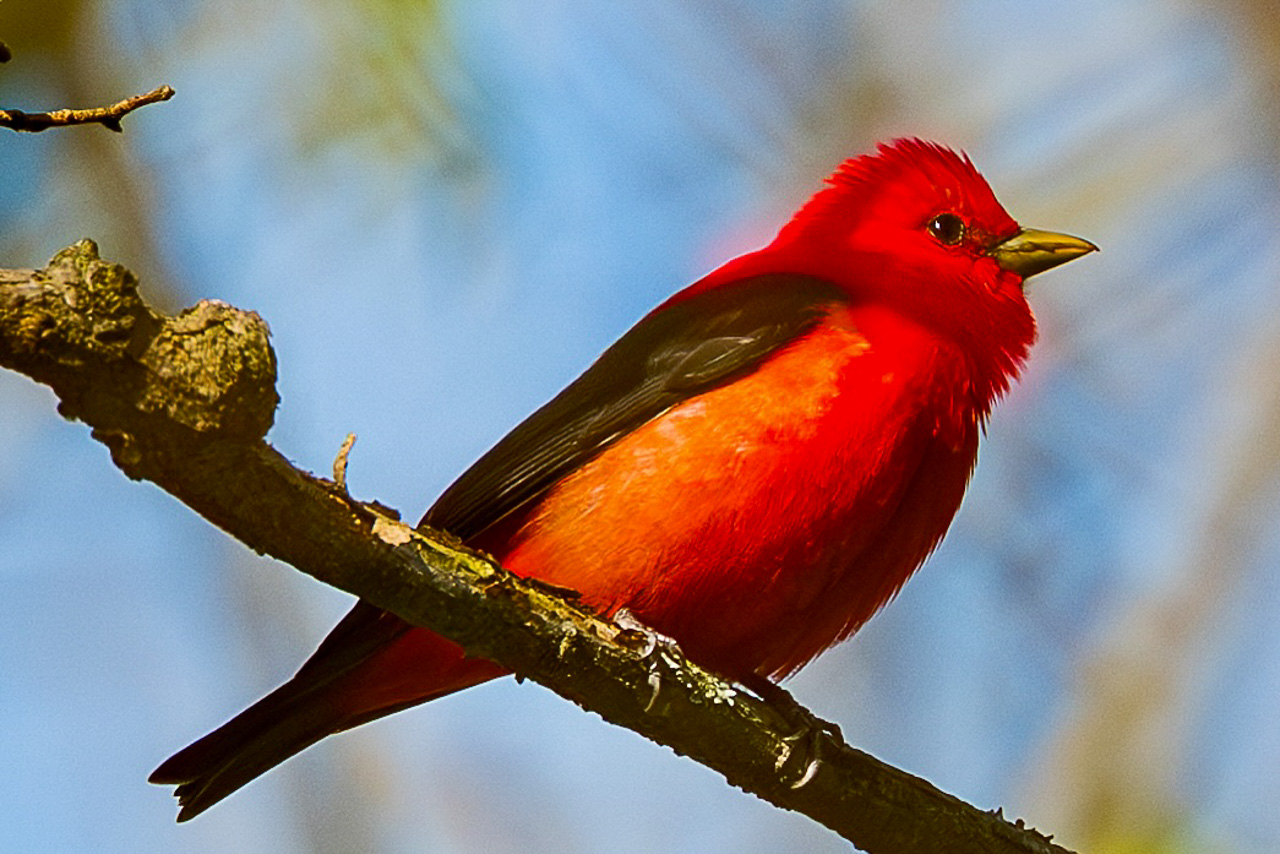
The migration event at the Tip yielded a high volume of warblers and tanagers, including the Scarlet Tanager (Piranga olivacea) and the rare Golden-winged Warbler (Vermivora chrysoptera). The latter is currently listed as a species at risk in Canada due to habitat loss and hybridization with the Blue-winged Warbler. The documentation of such species provides valuable data points for ongoing conservation monitoring.
Further north at Hillman Marsh, the group observed a significant concentration of shorebirds. A flock of approximately 300 Short-billed Dowitchers was recorded, representing a major migratory movement. Subsequent visits to the marsh produced sightings of the Willet and the White-faced Ibis (Plegadis chihi), a species typically found in the western United States and rarely seen in Ontario. The presence of the Ibis, along with a Summer Tanager found later in the week, suggests the occasional "overshooting" of southern species driven by warm weather fronts.
One of the definitive highlights of the Point Pelee leg was the extended observation of a Prothonotary Warbler (Protonotaria citrea) along the Woodland Nature Trail. This species is an icon of the Carolinian swamp forests and is extremely rare in Canada, with only a few dozen breeding pairs estimated to remain in the province. The cooperative nature of this individual allowed for detailed study of its plumage and behavior, a rare opportunity for the participants.
Rondeau Provincial Park and the Long Point Biosphere
On May 16, the survey moved eastward to Rondeau Provincial Park, another sandspit formation on Lake Erie. Rondeau’s ancient hardwood forests provide a different habitat profile than Pelee. Despite a passing weather system, the group successfully located the Red-headed Woodpecker (Melanerpes erythrocephalus), a species that has seen significant population declines across its range. A nesting pair was observed, confirming active breeding within the park’s boundaries.
The itinerary then progressed to the Long Point region, a designated World Biosphere Reserve. At the Long Point Bird Observatory (LPBO), the oldest bird observatory in the Western Hemisphere, the group observed the scientific process of bird banding at the Old Cut station. This experience allowed for close-range examination of the Ovenbird and Northern Waterthrush, species that are often heard but difficult to see in the dense undergrowth.
Surveys at the Big Creek National Wildlife Area and West Quarter Line added several grassland and shrubland species to the list, including the Eastern Bluebird, Grasshopper Sparrow, and the elusive Clay-colored Sparrow. The soundscape of this region was dominated by the vocalizations of Blue-winged and Hooded Warblers, further cementing the importance of the Long Point area as a reservoir for Carolinian-specific biodiversity.
Transition to the Carden Alvar and the Limestone Plains
Following a transit day through the Niagara Region—where the group observed Savannah Sparrows and Common Ravens—the focus shifted to the Carden Alvar on May 19. An alvar is a rare ecological community based on a limestone plain with thin or no soil. It is one of the most endangered ecosystems in the world, and the Carden Alvar is one of the best remaining examples in North America.
The habitat change was immediately evident in the species composition. The group recorded numerous Eastern Meadowlarks and Bobolinks, both of which are listed as threatened in Ontario due to the loss of grassland habitat. The alvar also provided sightings of the Upland Sandpiper and the Olive-sided Flycatcher. In the wetland fringes, reclusive species such as the Sora, Virginia Rail, and American Bittern were documented.
A significant find at the northern edge of the alvar was the Brewster’s Warbler, a recognized hybrid between the Blue-winged and Golden-winged Warblers. The study of these hybrids is essential for ornithologists seeking to understand the genetic pressures facing the Golden-winged Warbler population.
Algonquin Provincial Park: The Boreal Influence
The final phase of the expedition took place in Algonquin Provincial Park from May 20 to May 21. Algonquin represents a transition from southern deciduous forests to the coniferous "Northwoods" of the Canadian Shield. This shift brings a different suite of birds, many of which are characteristic of the Boreal forest.
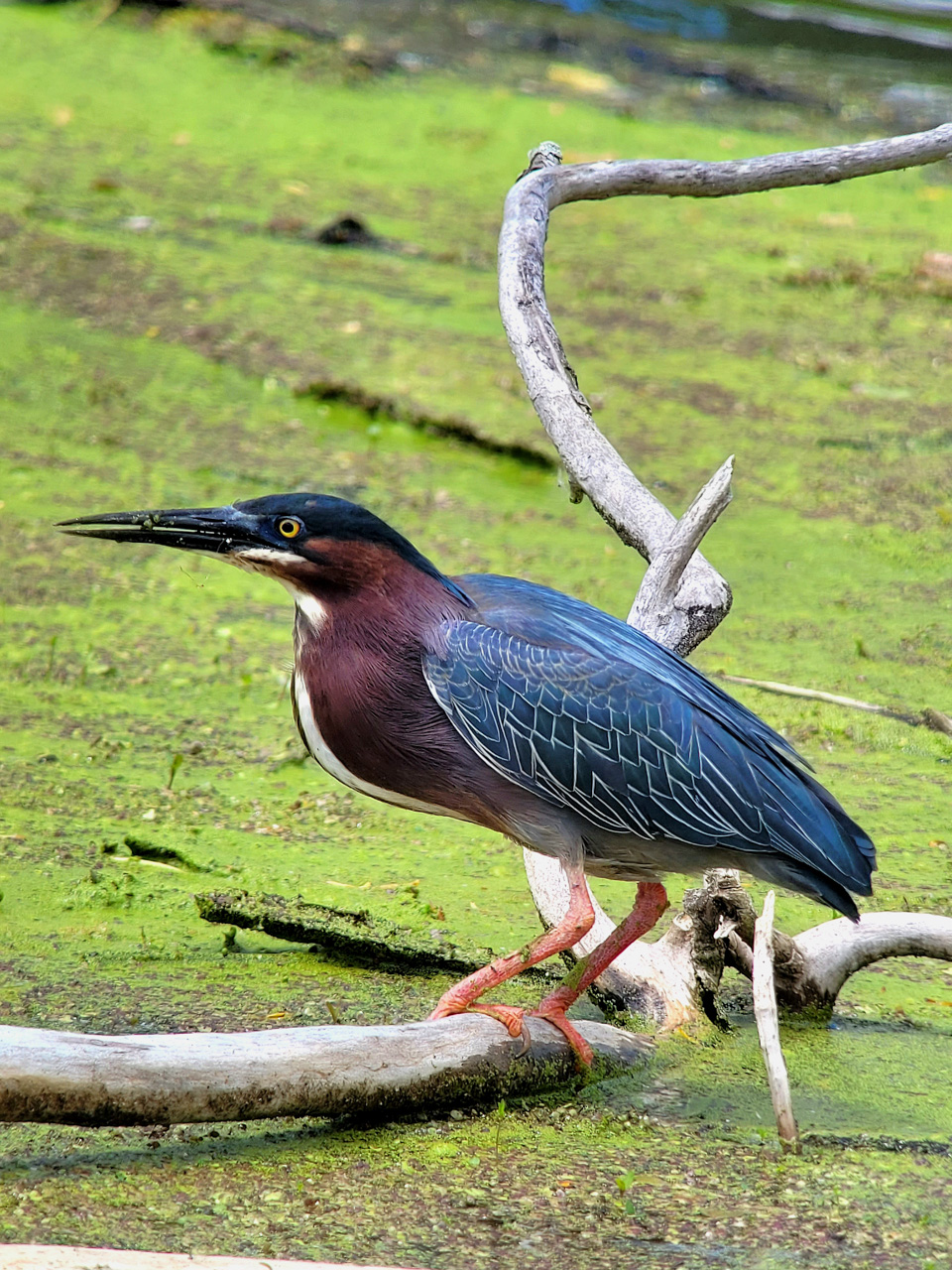
At the Spruce Bog Boardwalk and the Logging Museum trails, the group encountered Ring-necked Ducks, Hooded Mergansers, and specialized finches like the Pine Siskin and Evening Grosbeak. The Evening Grosbeak, in particular, is a species of concern that has experienced drastic population shifts in recent decades.
While a recent storm had unfortunately downed a known nesting tree for the Black-backed Woodpecker—a sought-after Algonquin specialty—the group compensated with sightings of the Common Nighthawk and exceptional views of the American Woodcock’s aerial "sky dance." The survey concluded with observations of the Winter Wren and Veery along the Mizzy Lake Trail, showcasing the rich vocal diversity of the northern woods.
Scientific and Conservation Implications
The documentation of 190 species over 11 days serves as a valuable snapshot of the health and variety of Ontario’s avian populations. The success of the trip highlights the importance of the "Pacific-Atlantic" and "Mississippi" flyways, which converge over Southern Ontario.
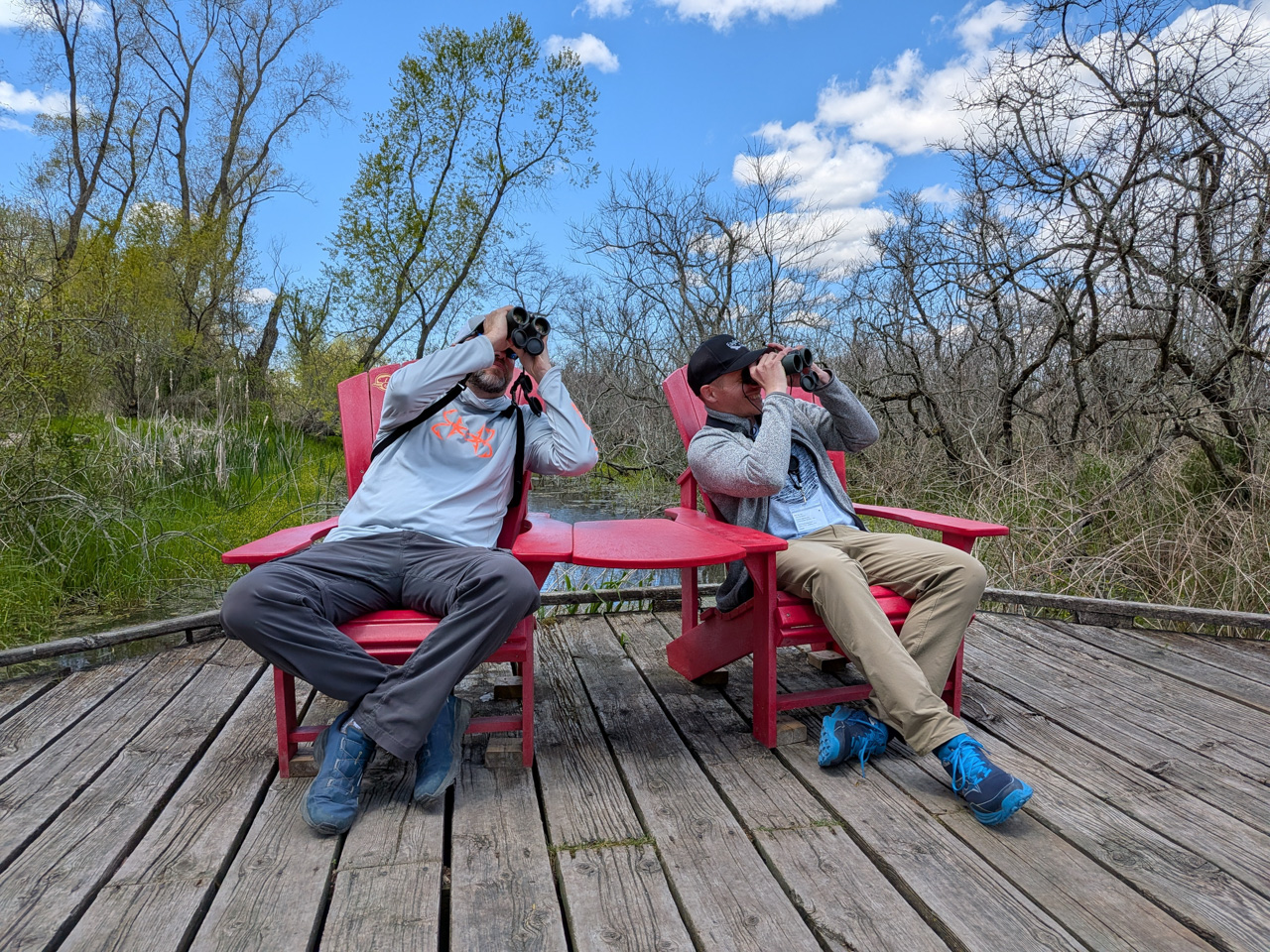
Data collected during such expeditions contributes to the broader understanding of migration timing. In recent years, researchers have noted shifts in arrival dates for many passerines, potentially linked to climate change and the "mismatch" between bird arrival and the emergence of insect prey. The sighting of 26 warbler species—nearly all the species that regularly migrate through or breed in the province—indicates that the timing of the trip was perfectly aligned with the peak movement of these insectivorous birds.
Furthermore, the observation of rare species like the White-faced Ibis and Cattle Egret underscores the dynamic nature of bird ranges. As temperatures fluctuate and habitats change, southern species are increasingly found further north, requiring constant monitoring by both professional biologists and citizen scientists.
The economic and social impact of birding tourism in Ontario is also significant. Destinations like Point Pelee and Algonquin Park attract thousands of visitors annually, generating revenue that supports the maintenance of these protected areas. The presence of "intrepid" birding groups emphasizes the role of ecotourism in fostering a public appreciation for conservation.

Conclusion of the 2026 Survey
The expedition concluded on May 22 in Toronto, having successfully navigated a variety of terrains and weather conditions to document a significant portion of Ontario’s spring birdlife. From the rare Prothonotary Warbler in the south to the Evening Grosbeaks of the north, the 190 species recorded reflect the immense ecological value of Ontario’s protected landscapes. The participants departed with a deeper understanding of the challenges facing migratory birds and the critical necessity of preserving the diverse habitats—marshes, alvars, forests, and shorelines—that sustain them during their arduous annual journeys.
