
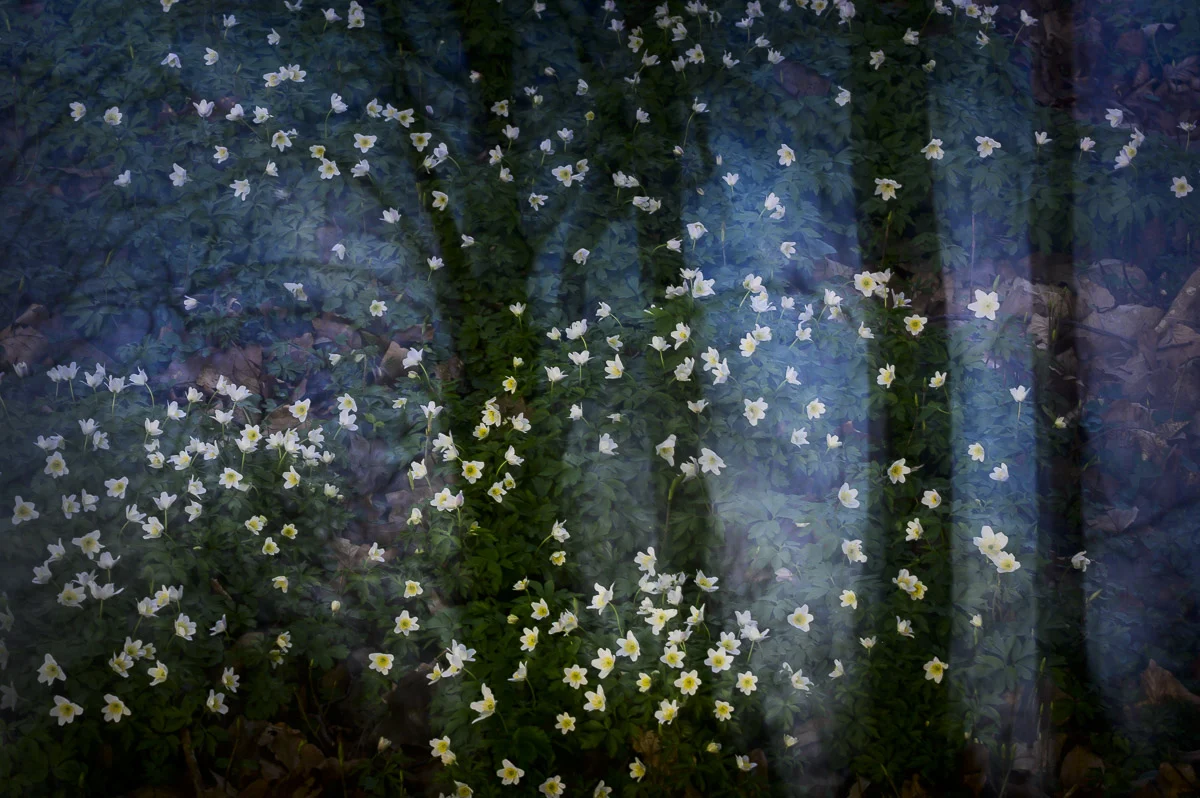
The traditional pursuit of a "good photo" often culminates in a critique of the finished image—its composition, technical prowess, and aesthetic appeal. While these qualities are undeniably integral to a compelling photograph, a growing philosophy within nature photography posits that the true artistry unfolds long before the shutter clicks, embedded within the dynamic process of engagement with the environment. This approach prioritulates responsiveness and an iterative interaction with the scene, challenging the notion of a predetermined "target photo." It emphasizes being receptive to the moment, allowing the route to an image to emerge rather than forcing a conclusion.
This paradigm shift acknowledges that even the most meticulously planned expeditions are subject to the inherent unpredictability of nature. Light shifts unexpectedly, wildlife patterns defy anticipation, and subtle elements within a frame can redirect attention. In such dynamic conditions, the photographer’s role transforms from that of an executor of a plan to a respondent, adapting their vision and technique to the unfolding realities. Experience, knowledge, and technical mastery become not rigid directives, but a flexible toolkit, ready to be deployed as the situation dictates. The essence lies in discovering what the situation yields, rather than imposing a preconceived outcome.
The Triadic Framework: Nature, Perception, and Design
Central to this emergent photographic philosophy is an interactive triad: nature, perception, and design. This framework offers a robust model for understanding how compelling images are forged in the crucible of real-time interaction.

Nature serves as the immutable foundation, providing the raw, unadulterated situation. It is the canvas, the subject, and the source of all variables—from the grand sweep of a landscape to the intricate detail of a micro-organism. Its constant flux and inherent complexity are the primary challenges and opportunities for the photographer. Understanding ecological contexts, weather patterns, and the behaviors of flora and fauna enhances a photographer’s readiness, but never guarantees a specific outcome.
Perception acts as the crucial filter, determining what resonates with the photographer amidst nature’s overwhelming detail. It is an active, evolving process of observation where the gaze lands, what elements are consciously or unconsciously ignored, and what begins to acquire significance. This cognitive process involves reducing complexity, condensing visual information, and continually shifting the focal point of attention. Psychologically, this mirrors a state of "flow," where the photographer becomes deeply immersed and attuned to the subtle cues of the environment. Training one’s eye to perceive patterns, light quality, and potential narratives is paramount, transcending mere visual scanning to a deeper sensory engagement.
Design represents the photographer’s active response to the perceived situation. This is where technical skill and artistic intuition converge. While technique—encompassing composition, exposure, focus, and lighting—is an integral part of this response, it operates in service of the image that is actively forming, rather than rigidly adhering to a pre-conceived mental blueprint. By resisting the urge to lock into a fixed outcome, the photographer creates fertile ground for serendipity. Chance encounters, accidental discoveries, and unforeseen developments often contribute more significantly to the final work than any initial plan. The process is iterative: an initial photograph is rarely the conclusion, but rather a piece of feedback that returns to perception, influencing subsequent observations and decisions in a continuous loop of refinement.
This dynamic interplay can be observed vividly in practical scenarios, demonstrating how real-world conditions shape the photographic journey. The following case studies illustrate this triad in action, highlighting how adaptability, observation, and technical agility converge to create impactful images.

Case Study 1: The Frost Leaf – Serendipity on Ice
The impetus for the "Frost Leaf" image arose from a sudden, sharp drop in nocturnal temperatures. Without a specific destination in mind, the photographer instinctively gravitated towards a local park pond fringed with bald cypress trees, anticipating the visual transformation wrought by freezing conditions. Upon arrival, the scene presented a rich tapestry of ice, branches, stumps, and nascent snow patterns. The initial complexity was overwhelming, a cacophony of detail.
It was amidst this intricate backdrop that a singular bald cypress leaf, encased within the frozen surface, captured the photographer’s attention. This moment exemplifies the initial phase of perception—a specific element emerging from general visual noise. The first photographic attempts focused on capturing the delicate crystalline structure of the ice. However, reviewing these initial frames revealed a disconnect: the leaf appeared isolated, lacking a clear relationship with its icy surroundings. This feedback loop prompted a shift in design strategy.
Recognizing the need to articulate the subject’s connection to its environment, the photographer introduced artificial lighting. A portable flash, paired with a wireless trigger, was strategically positioned directly on the ice, providing low, directional sidelight. This technical choice aimed to enhance texture and create separation. The process became intensely iterative: minor adjustments to the flash’s position were immediately followed by capture and review, observing the image’s evolution on the camera’s display. This precise control over light, a hallmark of studio photography adapted to a natural setting, began to sculpt the ice surface, rendering its contours and intricacies visible.
Further refinement involved the subtle addition of an LED light to gently open up shadows, preventing harsh contrasts and ensuring detail retention. The cycle of "test, reject, adjust" continued. A pivotal moment occurred when the flash inadvertently slipped, altering its direction to aim more directly into the ice. This "accident" was a pure instance of chance entering the design phase. The resulting image on the display was transformative: the leaf now separated from the surface in an entirely new way, and previously unseen structures beneath the ice became strikingly apparent. The entire scene transcended its initial premise of "a leaf on ice," evolving into a complex exploration of leaf, ice, and light as a singular, coherent system. This shift underscored the power of responsiveness and embracing unforeseen developments in the creative process.

Case Study 2: Dragonfly in Backlight – Mastering Motion and Light
The second case study, "Dragonfly in Backlight," illustrates the triumph of adaptability over expectation. The photographer returned to a familiar lake, carrying the memory of previous successful dragonfly shoots and an implicit expectation of similar conditions. However, nature, as always, presented a new set of variables.
The most compelling element upon arrival was the reed grass, bathed in the rich glow of low-angle backlight. The sun’s position transformed the ordinary stems into luminous conduits of light, immediately captivating the photographer’s perception. The initial design focus shifted to isolating this glow, requiring meticulous repositioning to achieve a dark, uncluttered background that would allow the backlit reeds to dominate the frame.
As the photographer worked with the reeds, dragonflies, known for their erratic and rapid flight, began to dart through the scene. Their fleeting appearances and disappearances, combined with the interplay of light and structure, redirected attention. This exemplifies the dynamic nature of perception, where new elements emerge to re-prioritize the photographic objective. The design response was immediate: frame the scene with ample space for the insects to enter, and critically, set a very fast shutter speed—a non-negotiable requirement for freezing the motion of such agile subjects. Dragonflies, unlike more cooperative subjects, do not "hover politely."
Initial bursts of continuous shooting, a common strategy for capturing unpredictable wildlife, proved largely unfruitful. Reviewing the frames revealed that the dragonflies were almost consistently outside the plane of focus. This critical feedback loop necessitated a significant technical adjustment. The photographer transitioned from autofocus to manual focus and, crucially, stopped down the aperture. This decision sacrificed some background blur but achieved a deeper depth of field, creating a broader "corridor" of focus that encompassed both the reeds and the likely flight path of the dragonflies. Furthermore, the photographer consciously softened their gaze, moving beyond "staring" through the viewfinder to a more peripheral awareness, allowing the slightest dart of movement to register sooner.

More waiting, more bursts of rapid-fire capture ensued. The process was a test of patience and persistence, punctuated by constant review and subtle adjustments. Out of hundreds of frames, a single image finally coalesced, perfectly aligning focus, subject position, and the ethereal backlight—a testament to iterative refinement in the face of dynamic natural elements.
Case Study 3: Slime Moulds – Unveiling the Microcosm
The final example, "Slime Moulds," highlights the profound impact of the camera as an extension of perception, revealing the unseen. On an autumn day in the woods, no obvious subject immediately presented itself. The photographer engaged in a general exploration, capturing images of trees, leaves, and mushrooms, constantly checking the camera’s display for feedback. These initial frames, while technically competent, lacked a discernible "weight" or compelling narrative.
It was during the review of one such frame that a detail emerged which had been largely invisible to the naked eye: fine, threadlike structures on a fungus, identified as slime moulds. This was a classic instance of the camera revealing something the photographer hadn’t truly seen in the moment—an artifact of perception being extended by technology. This discovery instantly shifted the photographer’s focus. The design response was to move closer, physically lowering to the forest floor to deliberately frame this tiny, intricate world. The sensory experience deepened, with the distinct scent of earth enhancing the immersion.
As time was spent observing this microcosm, small swellings at the ends of the threads began to reappear, creating a focal point, a "center to orient by." This further refined the photographer’s perception, tightening attention around these specific details. The introduction of an LED light dramatically altered the scene, demonstrating the transformative power of controlled illumination in macro photography. Shadows formed and shifted, creating depth and highlighting textures that were previously flat. The interaction of light, blur, and structure intensified.

The process became a meticulous, frame-by-frame exploration. Each captured image provided immediate feedback, informing subsequent adjustments to lighting, focus, and composition. This continuous loop of observation, capture, and review allowed the photographer to delve deeper into the intricate world of the slime moulds, gradually building an image that captured their ephemeral beauty and complex micro-architecture. This case underscores the importance of patient observation, the camera as a tool for discovery, and the profound narratives that can be found in the smallest corners of nature.
Broader Implications and The Evolving Craft
These three distinct scenarios—the icy leaf, the darting dragonfly, and the microscopic slime moulds—share a common underlying logic. They illustrate how photographic decisions are not pre-ordained but organically grow out of shifting attention and continuous feedback from the environment and the camera itself. This philosophy diverges from a rigid, rule-based application of photographic principles, advocating instead for a dynamic interplay between intuition and technical skill.
Technical competence, in this context, is not an end in itself but a means to liberation. The more fluent a photographer becomes in composition, exposure, and lighting, the less mental bandwidth is consumed by these mechanics on location. This fluency allows for greater presence and responsiveness to what is genuinely unfolding in the scene. Rules, established techniques, and accumulated experience are thus understood as tools—resources to be deployed when they serve the emerging image, and to be set aside when they become constraints on creative exploration.
The enduring centrality of the triad—nature setting the scene, perception directing the gaze, and design responding—provides a robust framework for this approach. It highlights that the most compelling photographs often arise from a genuine dialogue with the subject, where the photographer is an active participant in an unfolding narrative, rather than a mere documentarian. Furthermore, the allowance for chance, for those serendipitous moments where an accidental slip or an unexpected shift transforms the entire vision, underscores the organic and often unpredictable nature of the creative process.

This emergent philosophy has significant implications for both aspiring and seasoned nature photographers. It encourages a deeper, more mindful engagement with the natural world, fostering patience, acute observation, and technical flexibility. In an era where digital tools often tempt photographers towards excessive post-processing, this approach champions the artistry of the capture itself, emphasizing real-time problem-solving and an authentic connection to the environment. It positions nature photography not just as a technical craft, but as an ongoing journey of discovery, where every outing offers the potential for an unscripted moment to shift everything and reveal an unforeseen beauty.
