
Many of the skills and tools developed in the pursuit of bird photography translate effectively to capturing the intricate world of smaller subjects, yet achieving exceptional images of insects and other arthropods often necessitates a distinct set of considerations and specialized approaches. While often overshadowed by larger, more charismatic fauna, the realm of entomological photography is gaining significant traction among wildlife enthusiasts and professional photographers alike, drawn by the astonishing diversity, vibrant hues, bizarre forms, and complex behaviors exhibited by these often-overlooked creatures. Indeed, their relative abundance and, at times, cooperative nature can present unique opportunities for photographers seeking to delve into a new dimension of natural history.
The Allure of the Miniature World: Why Photograph Insects?
Insects and other arthropods constitute the vast majority of known animal species on Earth, an estimated 5.5 million species, with only a fraction formally described by science. Their ecological roles are indispensable, ranging from vital pollinators and decomposers to predators and prey, underpinning virtually every terrestrial ecosystem. This immense biodiversity, coupled with their often-dazzling colors, intricate anatomical structures, and fascinating life cycles, makes them compelling subjects for the camera lens. Beyond their aesthetic appeal, photographing these creatures serves a critical function in an era marked by widespread insect decline, offering a visual record and fostering public appreciation for their ecological significance.
The transition from avian to entomological photography often feels intuitive for experienced wildlife photographers. Core principles such as understanding animal behavior, mastering light, and composing compelling images remain paramount. However, the scale shift introduces new technical demands. Whereas a bird photographer might prioritize reach and stabilization for distant subjects, the insect photographer seeks extreme magnification and precise control over depth of field for subjects often measured in millimeters. The ability to observe and anticipate movement, crucial for capturing a bird in flight, becomes equally vital for documenting the rapid darting of a dragonfly or the intricate dance of ants.
Essential Gear: Bridging the Gap from Telephoto to Macro
The equipment spectrum for insect photography spans from versatile zoom lenses to highly specialized macro optics, catering to different subject sizes and photographic styles. For larger insects such as butterflies, dragonflies, and many species of bees, the long telephoto lenses or powerful zoom cameras favored by bird photographers can still be highly effective. These lenses allow photographers to maintain a respectful distance, minimizing disturbance to skittish subjects while still achieving a reasonable level of detail. A 300mm to 500mm telephoto lens, paired with a full-frame or APS-C sensor camera, can provide excellent working distance and subject isolation for these more sizable arthropods. The compression offered by telephoto lenses can also create pleasing, softly blurred backgrounds, helping the subject stand out.
However, for the truly microscopic world—beetles, spiders, tiny flies, or the intricate details of a compound eye—the telephoto lens reaches its limits. This is where macro lenses become indispensable. As renowned nature and conservation photographer Noppadol Paothong emphasizes, macro lenses are specifically designed to capture close subjects with the finest possible detail, often achieving a 1:1 (life-size) or greater magnification ratio. These lenses allow photographers to fill the frame with subjects that might otherwise appear as mere specks. Common focal lengths for macro lenses range from 60mm to 180mm. A 100mm macro lens, for instance, offers a good balance between working distance and magnification, making it a popular choice among enthusiasts and professionals. Longer macro lenses, like 150mm or 180mm, provide greater working distance, which can be advantageous for photographing shy or potentially dangerous insects, such as wasps or large spiders, without invading their space.
-
Camera Bodies: The Foundation: Both DSLR and mirrorless camera systems are well-suited for insect photography. Mirrorless cameras, with their advanced autofocus systems, electronic viewfinders (EVFs) that show exposure in real-time, and often lighter form factors, are increasingly popular. High-resolution sensors are beneficial for capturing fine detail, and cameras with good high-ISO performance are advantageous when natural light is scarce or high shutter speeds are required. Many modern cameras also feature focus stacking capabilities, either in-camera or through software, which is crucial for extending the depth of field in macro photography.
-
Lighting Solutions: Mastering Illumination: Proper lighting is paramount in insect photography, given the often-minute size of subjects and the need for high shutter speeds to freeze motion. Natural light is often preferred for its soft, pleasing quality. The optimal times for natural light photography are typically mornings or late afternoons when the sun is lower in the sky, casting a warmer, more diffuse light. Overcast days can also be ideal, providing a large, soft light source that minimizes harsh shadows. When using natural light, positioning oneself so the light source is behind the photographer can illuminate the subject effectively.
However, natural light alone is often insufficient, especially for very small subjects or when working in dense foliage. Many photographers choose to augment natural light with artificial sources. On-camera flashes, often diffused with softboxes or custom diffusers, are a common tool. A flash attached to the camera with a movable arm allows for precise control over the direction and intensity of light, helping to illuminate intricate details and add a catchlight to the subject’s eyes. Ring flashes, which encircle the lens, provide even illumination but can sometimes produce flat-looking results. LED continuous lights are another option, offering a constant preview of the lighting effect, though they may not be powerful enough for very high shutter speeds. The key is to diffuse any artificial light source to avoid harsh reflections and create a more natural look.
-
Accessories: Stability and Control: Beyond cameras and lenses, several accessories significantly enhance the macro photography experience. A sturdy tripod or monopod is essential for maintaining stability, especially when using slower shutter speeds or focusing precisely. Focus rails, which allow for minute adjustments to the camera’s position, are invaluable for achieving critical focus in macro photography and for focus stacking. Remote shutter releases help to eliminate camera shake. Reflectors and diffusers can be used to bounce natural light onto the subject or soften harsh sunlight, respectively.
Mastering the Art: Camera Settings and Techniques for Intimate Portraits
Dialing in the correct camera settings is a crucial step in translating vision into a striking image. The interplay of aperture, shutter speed, and ISO dictates the exposure and the aesthetic qualities of the photograph.
-
Aperture and Depth of Field: Crafting Visual Narratives: In macro photography, depth of field—the portion of the image that appears acceptably sharp—becomes exceptionally shallow due to the extreme magnification. Taking photos with a shallow depth of field (achieved with wider apertures, e.g., f/2.8 to f/5.6) can artfully isolate the insect subject against a beautifully blurred background, drawing the viewer’s eye directly to the main subject. This technique is often employed for portrait-style shots, emphasizing the insect’s features.
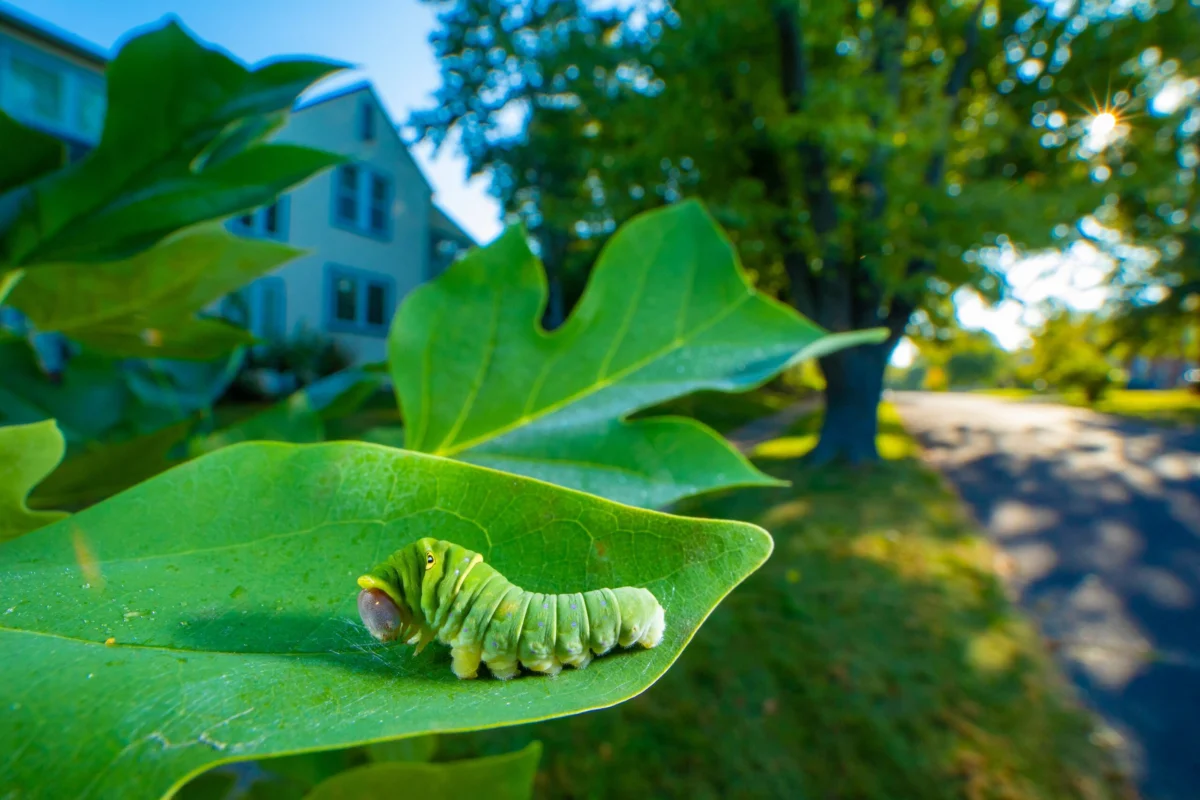
However, as Paothong sometimes opts, keeping more of the surroundings in focus can tell a broader story, calling attention to insects’ roles as predators, prey, and pollinators within their habitats. For this approach, he chooses a higher f-stop (smaller aperture, e.g., f/8 to f/16 or even f/22) or, in some cases, a wide-angle lens, which inherently offers greater depth of field. A wider depth of field can place the insect within its ecological context, revealing the flower it’s pollinating, the leaf it’s camouflaged against, or the prey it’s consuming. This narrative approach underscores the importance of insects within their ecosystems, moving beyond mere aesthetic documentation to environmental storytelling. Modern techniques like focus stacking, where multiple images focused at different depths are combined in software, are also increasingly used to achieve sharp focus across an entire insect while still maintaining some background blur.
-
Shutter Speed and ISO: Freezing Fleeting Moments: Insects are often in constant motion, whether grooming, feeding, or preparing for flight. Consequently, high shutter speeds are frequently required to freeze their movements and prevent motion blur. Speeds ranging from 1/250th of a second to 1/1000th of a second are common. This demand for fast shutter speeds directly impacts lighting requirements; adequate illumination is essential to achieve proper exposure at these speeds. When natural light is insufficient, photographers may need to increase their ISO sensitivity, which amplifies the sensor’s light-gathering capabilities, or rely more heavily on artificial light sources like flash. Balancing shutter speed, aperture, and ISO is a constant dance, with each setting influencing the others.
-
Composition and Perspective: Beyond the Subject: Effective composition elevates an insect photograph from a mere record shot to a work of art. The rule of thirds, leading lines, and negative space all apply. Getting down to the insect’s eye level offers a more intimate and engaging perspective than shooting from above. Experimenting with different angles—from a low-angle shot emphasizing the insect’s dominance to a wide-angle perspective showcasing its habitat—can yield varied and captivating results. The background, even when blurred, plays a crucial role; a clean, uncluttered background helps the subject pop, while a textured background can add context and interest.
Ethical Considerations and Fieldcraft: Respecting Your Subjects and Their Habitats
Beyond the technical prowess, successful insect photography demands a profound respect for the subjects and their natural environment. Ethical considerations guide every interaction, ensuring the well-being of the insects and the integrity of their habitats.
-
Patience and Observation: The Key to Connection: As visual journalist Diana Cervantes, based in New York City, underscores, getting the best shot requires respecting insects as living photographic subjects. Her experience photographing the critically endangered Sacramento Mountains checkerspot butterfly in New Mexico exemplifies this principle. She dedicated countless hours to observing these delicate creatures, learning to recognize their specific quirks, behavioral patterns, and preferred microhabitats. This deep understanding allowed her to anticipate their movements, approach them without causing undue stress, and ultimately capture their essence in compelling photographs. This patient, unobtrusive approach not only yields superior images but also minimizes disturbance to the subjects, which is particularly vital when working with endangered species.
-
Habitat Awareness and Conservation Through the Lens: Photographers are increasingly recognizing their role in conservation. Noppadol Paothong, for instance, actively grows native plants in his garden specifically to attract insects, turning his own backyard into a living laboratory and photographic studio. This practice not only provides him with accessible subjects but also contributes to local biodiversity. He then uses his photography to tell stories about these intricate ecosystem relationships, highlighting the importance of native flora for insect populations and the broader food web. This proactive engagement transforms the act of photography into a tool for environmental advocacy and education. The decline in insect populations globally, often linked to habitat loss, pesticide use, and climate change, makes such photographic documentation and storytelling more critical than ever. Organizations like the Xerces Society for Invertebrate Conservation actively use photography to raise awareness and support their conservation efforts.
The Broader Impact: Photography as a Tool for Science and Storytelling
Insect photography transcends mere aesthetic pursuit; it serves as a powerful tool for scientific documentation, public education, and conservation. High-quality images can aid entomologists in species identification, distribution mapping, and behavioral studies. They can reveal previously unseen details, contributing to scientific understanding. Moreover, these images are instrumental in science communication, making complex ecological concepts accessible and engaging to a broader audience. Through stunning visuals, photographers can spark curiosity, foster empathy for these often-misunderstood creatures, and galvanize support for conservation initiatives. Many photographers contribute to citizen science projects by uploading their observations and images to platforms like iNaturalist, where they can be identified by experts and contribute to global biodiversity databases.
Beyond the Equipment: The Visionary Eye of the Photographer
While specialized equipment undoubtedly facilitates the capture of detailed insect images, Cervantes firmly asserts that "it’s not about the gear." She frequently travels light, opting for portability during hikes, typically carrying just a 100mm f/2.8 lens. Furthermore, she notes that the scientists she collaborates with often capture high-quality images using only their cell phones, leveraging advancements in smartphone camera technology and often supplementary macro clip-on lenses. This perspective underscores that the most critical components of successful insect photography are the photographer’s vision, patience, and ability to connect with the subject and its environment. "It’s just about the way you see and connect with the world," Cervantes concludes, emphasizing the artistic and empathetic dimensions of the craft.
The Future of Insect Photography: Accessibility and Innovation
The field of insect photography continues to evolve, driven by technological advancements and a growing appreciation for the miniature world. Innovations in camera technology, particularly in mirrorless systems, offer improved autofocus, in-body image stabilization, and enhanced low-light performance, making macro photography more accessible. The development of more affordable and capable macro lenses, as well as computational photography techniques like in-camera focus stacking, further democratizes the genre.
As public awareness of insect conservation grows, so too does the demand for compelling imagery that can educate and inspire. Insect photography is no longer a niche pursuit but a vibrant and vital segment of wildlife photography, offering endless opportunities for discovery, artistic expression, and meaningful contribution to our understanding and preservation of the natural world. This story, originally published in the Summer 2026 issue as "Ready for Their Close-Up," continues to resonate as photographers worldwide embrace the challenge and rewards of revealing the hidden beauty of our planet’s smallest inhabitants. To receive our print magazine and support this critical storytelling, consider becoming a member by making a donation today.
