
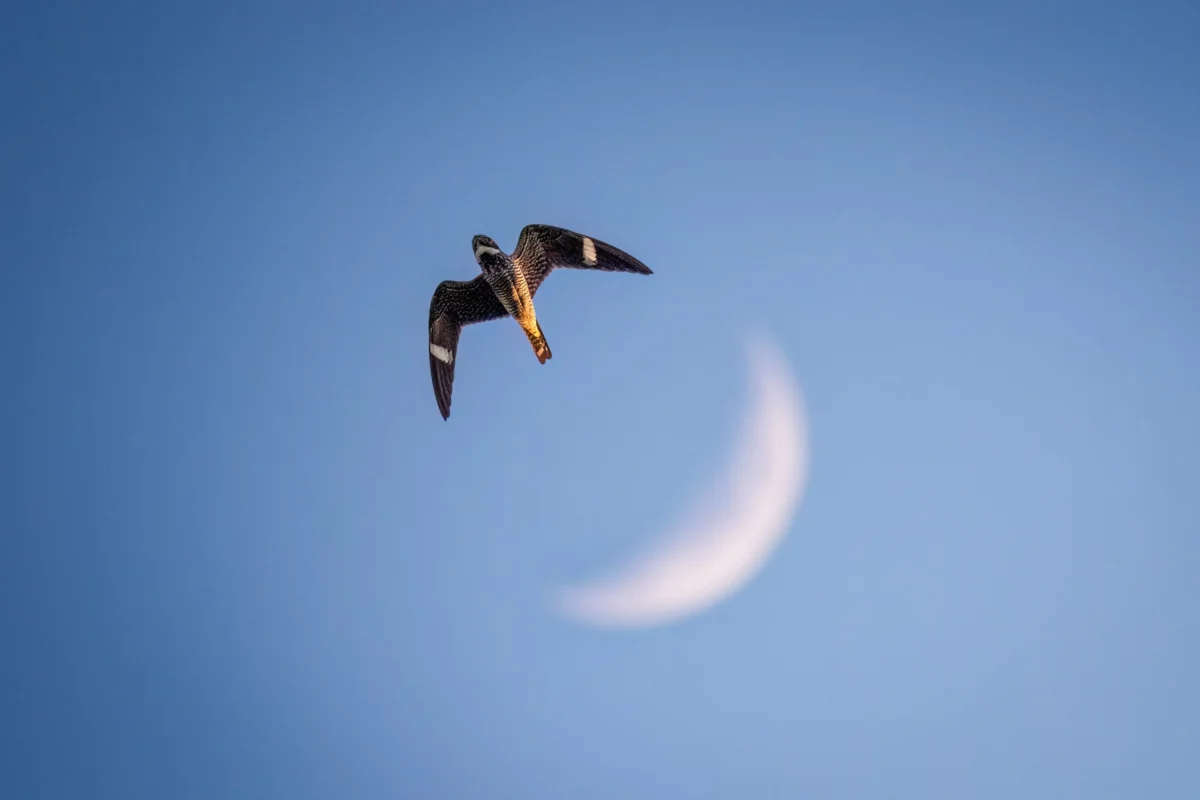
The sharp, nasal cry of "Peerrnt!" slices through the ambient hum of city streets, drawing the gaze upward. There, against the fading light of dusk, a pigeon-sized bird with long, angular wings—brown with a distinctive white slash near each pointed wingtip—cuts a jerky, zigzag path across the sky. Its erratic, fast-slow wingbeats carry it effortlessly above rooftops, a fleeting shadow against the twilight canvas. This is the Common Nighthawk, a creature whose very name, ironically, is a misnomer. It is neither a true hawk, nor is its primary activity strictly nocturnal, preferring the liminal hours of dawn and dusk. More critically, despite its once widespread presence, this iconic species is becoming increasingly less common in North American skies, a concerning indicator for broader ecological health.
Unveiling the Caprimulgidae: A Family Shrouded in Mystery
The Common Nighthawk ( Chordeiles minor) belongs to the avian family Caprimulgidae, a group collectively known as nightjars. This family, comprising nearly 100 species distributed across six continents, is characterized by its members’ cryptic plumage, primarily active during twilight (crepuscular) or night (nocturnal) hours, and their unique feeding strategy as aerial insectivores. The scientific family name itself, "Caprimulgidae," hints at the long-standing confusion and mystery surrounding these birds. It translates roughly to "milkers of goats," a direct reference to an ancient European superstition that the Eurasian Nightjar, observed flitting through pastures at nightfall, was there to steal milk directly from grazing animals. This myth, deeply ingrained in folklore, highlights the historical lack of understanding about these elusive birds. Similarly, the English term "nightjar" refers not to a container, but to the "jarring," discordant, and often repetitive vocalizations characteristic of many species, such as the churring song of the Eurasian Nightjar.
Nightjars are masters of camouflage, a crucial adaptation for their survival. When at rest, often on the ground, a horizontal branch, or even urban rooftops, their mottled brown and gray-brown plumage blends seamlessly with their surroundings. Their large heads, often hunched down onto their shoulders, and long wingtips folded back over the tail, contribute to their cryptic appearance. Even their large, dark eyes, while betraying no obvious expression, are perfectly adapted for low-light conditions, allowing them to navigate and hunt efficiently in dim light. Perhaps their most striking feature, often concealed, is their beak. While appearing absurdly small and trimmed with bristles when closed, it can open into a cavernous, gaping mouth as wide as their head, an evolutionary marvel designed for scooping up large insects in flight with remarkable efficiency. This specialized anatomy underscores their reliance on aerial insects, making them crucial components of ecosystems where they help control insect populations. Males of a few species, such as the glorious Pennant-winged Nightjar of Africa or the Lyre-tailed Nightjar of South America, possess distinctive plumes, but most nightjars worldwide are quite similar in appearance, making field identification a significant challenge even for experienced ornithologists.
North America’s Vocal Nightjars: Names Born from Sound
While many nightjar species globally are visually indistinct, making identification challenging even for experienced ornithologists, North America boasts several species whose names are derived directly from their unmistakable calls. These vocalizations, often heard echoing through moonlit summer nights, provide the most reliable means of identification for these otherwise secretive birds.
The Eastern Whip-poor-will (Antrostomus vociferus) and its western counterpart, the Mexican Whip-poor-will (Antrostomus arizonae), are renowned for their incessant, three-syllable cries that distinctly sound like "whip-prr-WEELL!" These nocturnal serenades are a quintessential sound of temperate forests and woodlands during the breeding season, often repeated hundreds of times without pause. Further south, the Chuck-will’s-widow (Antrostomus carolinensis) chants its name in deep, throaty tones, a resonant call that carries far through the humid southern forests and pine savannas. In the arid canyons and scrublands of the western United States, the Common Poorwill (Phalaenoptilus nuttallii) offers a whistled "poor-WILL-ip," often repeated for extended periods. This species is also notable for its unique ability to enter a state of torpor, a form of hibernation, during periods of cold weather or food scarcity, lowering its body temperature and metabolic rate to conserve energy – a rare adaptation among birds.
Naturalists venturing out at night to seek these callers often rely on their eyeshine, the reflective glow of their eyes caught in headlight or flashlight beams, to locate them. When foraging, they appear as swift, dark shadows swooping and darting to capture insects in mid-air. If discovered during daylight hours, they typically remain motionless, trusting completely in their camouflage. However, if approached too closely, they will flush suddenly from the ground, flying low and erratically to seek another hidden roost. This elusive behavior contributes significantly to the challenge of accurately monitoring their populations.
The Vanishing Act: A Widespread Decline
A century ago, the Common Nighthawk, often affectionately known as the "bullbat" due to its robust flight and occasional booming display dives, was a familiar sight across much of America. Its aerial acrobatics and distinctive calls were common features of summer evenings, not only over open country but also within cities. Nighthawks had adapted readily to urban environments, finding suitable nesting sites on the flat, gravel-covered roofs of buildings, which served as excellent substitutes for their traditional ground-nesting habitats of bare soil or sparsely vegetated areas like prairies and open woodlands. Their wide range and daylight activity made them the most accessible representatives of the nightjar family for the average American.
Today, however, the narrative is starkly different. These once-ubiquitous birds are performing a concerning "vanishing act," becoming increasingly elusive with each passing year. Data from long-term monitoring programs, such as the North American Breeding Bird Survey, indicate a precipitous decline in Common Nighthawk populations. By some estimates, their total numbers have plummeted by over 50 percent since 1970. This dramatic reduction places the species on various watch lists, including the IUCN Red List, which currently classifies it as ‘Least Concern’ but acknowledges its decreasing population trend. This designation reflects the widespread nature of the decline rather than a localized threat, indicating a pervasive problem across its breeding range.
The plight of the Common Nighthawk is not an isolated incident but rather a significant component of a broader ecological crisis affecting aerial insectivores across North America and, indeed, globally. Birds that rely on catching flying insects in the air, such as swallows, swifts, flycatchers, and nightjars, have collectively experienced some of the steepest population declines among all avian groups. For instance, according to a seminal 2019 study published in Science, North America has lost nearly 3 billion birds since 1970, representing a 29% decline in total avian abundance, with aerial insectivores accounting for a disproportionately large share of these losses. Measuring the populations and trends of other nightjar species is even more challenging due to their strictly nocturnal habits and cryptic nature, but conservation biologists widely suspect that most are also experiencing similar, if not more severe, declines, making accurate counts almost impossible without specialized techniques like acoustic monitoring.
Unpacking the Causes: A Multifaceted Threat
The reasons behind the rapid decline of Common Nighthawks and other nightjars are complex and multi-faceted, stemming from a combination of habitat loss, widespread pesticide use, light pollution, and increased predation pressures.
Habitat Loss: For urban-nesting nighthawks, the modernization of building practices has had a direct and detrimental impact. The flat, gravel roofs that once provided safe, camouflaged nesting sites are increasingly being replaced by smooth, reflective, or vegetated "green" roofs. While these new roofing materials offer environmental benefits such as energy efficiency and stormwater management, they are generally unsuitable for nighthawk nesting. The lack of open gravel means no substrate for their eggs, and the potential for increased heat absorption on smooth surfaces can be lethal to eggs and young. In rural areas, the conversion of open grasslands, prairies, and pine barrens—traditional nesting grounds for many nightjar species—into intensive agricultural fields, residential developments, or monoculture forests also contributes to habitat fragmentation and loss. The reduction in open, sparsely vegetated ground diminishes nesting opportunities and foraging efficiency.
Pesticide Use and Insect Decline: Perhaps the most significant driver of decline for aerial insectivores is the widespread reduction in insect populations, often referred to as the "insect apocalypse." Modern agricultural practices heavily rely on systemic pesticides, particularly neonicotinoids, which are absorbed by plants and make the entire plant toxic to insects that feed on them. While designed to target agricultural pests, these chemicals invariably impact non-target insects, including the moths, beetles, mosquitoes, and other flying invertebrates that form the staple diet of nighthawks and nightjars. Even if not directly lethal, sublethal doses can impair insect reproduction, development, and foraging abilities, leading to a diminished food supply for birds. A 2017 study published in PLOS ONE highlighted a staggering 75% decline in total flying insect biomass in German nature reserves over 27 years, a trend echoed in many other regions globally. This reduction directly translates to less food availability, particularly during critical breeding seasons when adults need to find abundant insects to feed their rapidly growing chicks, a period of immense energetic demand.
Light Pollution: The increasing prevalence of artificial outdoor lighting, known as light pollution, poses another significant threat. Nocturnal and crepuscular birds, including nightjars, navigate and forage using natural light cues, such as the moon and stars. Excessive artificial light can disorient them, disrupting their migration patterns, confusing their foraging behaviors, and increasing their vulnerability to predators. For nightjars that hunt insects attracted to lights, while seemingly beneficial, it can draw them into dangerous urban environments where they are more susceptible to collisions with structures or predation. Studies have shown that artificial light at night can alter insect communities, further impacting the food web by disrupting insect flight patterns and reproduction.
Increased Predation: In urban settings, the decline of nighthawks may also be exacerbated by increased predation pressure. Growing urban populations of opportunistic predators such as crows, raccoons, and domestic cats, which thrive in human-altered landscapes, can more easily locate and prey upon nighthawk eggs and young laid on exposed rooftops or even on the ground. This human-induced ecological imbalance adds another layer of vulnerability to an already struggling species. Along migratory routes, birds can also face increased threats from collisions with tall structures, further contributing to population declines.
Expert Perspectives and Scientific Insights
Ornithologists and conservation biologists across North America have voiced significant concern over the accelerating decline of these enigmatic birds. Dr. Sarah Jenkins, a leading avian ecologist specializing in insectivorous birds at a prominent university, states, "The Common Nighthawk serves as a vital ‘canary in the coal mine’ for the health of our insect populations and, by extension, our broader ecosystems. Their decline isn’t just about losing a charismatic species; it signals a fundamental disruption in the food web that supports countless other animals, including ourselves." She further emphasizes the challenges of monitoring these cryptic species: "Their nocturnal and crepuscular habits, combined with their incredible camouflage, make accurate population counts extremely difficult. We rely heavily on acoustic monitoring, where specialized microphones record their calls, and dedicated volunteer efforts to even begin to understand their true numbers and trends across vast landscapes."
Conservation organizations like the National Audubon Society have reiterated their calls for comprehensive strategies to address the root causes of aerial insectivore decline. "The loss of insects is a silent crisis unfolding beneath our noses, impacting every corner of our planet," explains Michael Smith, Director of Conservation Programs at Audubon. "It affects everything from pollination of crops to nutrient cycling in forests, and ultimately, the food sources for birds like nightjars. Protecting nightjars means protecting the very foundation of healthy ecosystems, and it requires a multi-pronged approach that tackles habitat loss, pesticide use, and light pollution simultaneously." These organizations often collaborate with government agencies and local communities to implement conservation strategies and advocate for policy changes.
Towards Conservation: Positive Steps and Community Action
Despite the daunting challenges, there are positive steps being taken and further actions that can help stem the tide of decline for Common Nighthawks and other nightjars. The collaborative efforts of scientists, conservationists, and the public are essential for their future.
Community Monitoring Programs: Citizen science initiatives are proving invaluable in gathering crucial data on these elusive birds. In several cities across North America, including Chicago, community programs annually monitor nighthawks during their peak breeding season in early summer or during fall migration in August and September. Volunteers conduct systematic surveys at dusk, recording sightings and vocalizations, which helps scientists track population trends, identify critical nesting sites, and understand migratory routes. These programs not only contribute vital scientific data but also raise public awareness and foster a sense of stewardship for the species.
Reining in Pesticide Overuse: Addressing the decline in insect populations is paramount. This requires a systemic shift away from the overuse of broad-spectrum pesticides, particularly in agriculture and urban landscaping. Promoting integrated pest management (IPM) strategies, which prioritize biological controls, crop rotation, and targeted pesticide use only when absolutely necessary, can significantly reduce the environmental load of harmful chemicals. Encouraging the planting of native flora to support diverse insect communities and creating pollinator-friendly habitats are also crucial steps. Policy changes at municipal, state, and federal levels that restrict or ban the use of certain harmful pesticides, especially neonicotinoids, could have a profound positive impact on insect populations and, consequently, on the birds that feed on them.
Reducing Unnecessary Outdoor Lighting: Mitigating light pollution is another actionable step. Communities can implement "dark skies" initiatives, promoting the use of shielded, downward-facing lights, motion sensors, and warmer color temperatures (lower Kelvin ratings) for outdoor lighting. Reducing unnecessary lighting, especially during peak migration periods, can help nocturnal birds navigate more safely and reduce disruption to insect communities. Urban planners and developers are increasingly considering bird-friendly lighting designs in new constructions, aiming to minimize light spill and glare.
Habitat Preservation and Creation: Protecting existing open grasslands, savannas, and woodlands where nightjars nest is critical. This involves land acquisition, conservation easements, and responsible land management practices that maintain diverse vegetation structures. In urban areas, where gravel roofs are being phased out, exploring innovative solutions for "nighthawk-friendly" rooftop habitats could be beneficial, perhaps involving designated sections
