
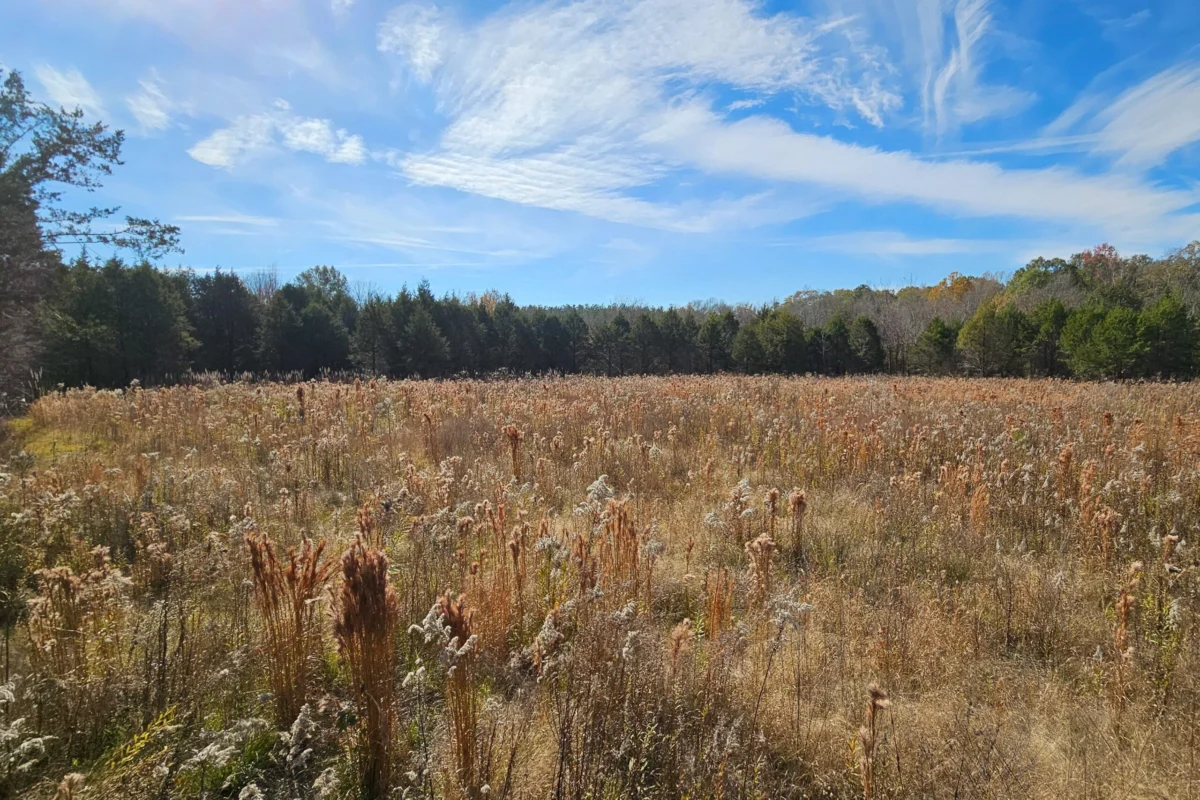
The vast, historic prairies that once stretched across much of the American South have largely vanished, leaving behind fragmented remnants of vital ecosystems. In Alabama, the state’s Audubon chapter is spearheading a critical initiative to understand how birds utilize these remaining grassland patches and, more ambitiously, to piece together a future where such habitats can thrive once more. This monumental task involves scientific research, community engagement, and a deep appreciation for both ecological and human history, aiming not only to safeguard avian populations but also to revitalize communities deeply scarred by past environmental and social injustices.
A Glimpse into the Past and Future: The Black Belt Prairie
Last winter, Lianne Koczur, the astute science and conservation director at Alabama Audubon, embarked on a journey to Central Alabama, seeking not merely a landscape, but a vision—a glimpse of what once was and what could again be. Her destination was a 100-acre field, cloaked in dense, dormant grasses. To an untrained eye, it might have appeared unremarkable, prompting the question, "What’s so special about this? There’s nothing here." Yet, Koczur, armed with a profound understanding of ecological nuance, recognized its immense potential. As the sun ascended, casting a warm glow, the nascent prairie stirred with life, revealing the subtle movements of Sedge Wrens, the vibrant flashes of Common Yellowthroats, and a diverse array of sparrows, all testament to the hidden vitality within.
This particular site, like others in the region, represents a precious fragment of the Black Belt tallgrass prairie. This crescent-shaped swath of fertile land, extending across Alabama and Mississippi, once constituted the largest grassland ecosystem in the eastern United States. Its rich, dark soil—formed over millennia from marine deposits—was historically a beacon of biodiversity, supporting a complex web of life. However, the 19th century brought an era of profound transformation and devastation. The insatiable demand for cotton fueled an agricultural boom, driven by the brutal and forced labor of enslaved people. This intensive cultivation, coupled with exploitative farming practices, relentlessly depleted the prairie’s incredibly fertile soil, transforming a thriving natural landscape into an exhausted agricultural expanse. The legacy of this exploitation extended beyond the environment, leaving behind a region characterized by impoverished landscapes and communities struggling with persistent socio-economic challenges. Today, a stark reality confronts conservationists: less than one percent of the historic Black Belt prairie remains, a sobering indicator of habitat loss unparalleled in the eastern U.S.
Despite its degraded and rare status, these surviving prairie patches continue to serve as crucial refuges, attracting a diverse array of grassland birds. Recognizing this ecological significance, a renewed sense of urgency and commitment has galvanized efforts to restore this essential ecosystem. These conservation initiatives are not solely focused on biodiversity; they also intertwine with broader goals of revitalizing local economies and fostering community resilience in the historically underserved Black Belt region.
Alabama Audubon’s Multifaceted Approach to Restoration
Alabama Audubon’s strategy is comprehensive, blending scientific inquiry with community engagement and historical awareness. The organization understands that true conservation success requires both rigorous data and robust public support.
The Black Belt Birding Festival: Bridging Conservation and Community
To build momentum and foster a deeper connection between the local populace and their natural heritage, Alabama Audubon launched the annual Black Belt Birding Festival in 2021. This event is more than just a celebration of wildlife; it is a carefully curated experience designed to honor both the ecological richness and the profound civil rights history of the area. Held each August, the festival invites visitors to embark on guided tours, offering unique opportunities to spot iconic bird species such as the graceful Swallow-tailed Kites, the vividly colored Painted Buntings, and the distinctive Dickcissels. Beyond birdwatching, participants also gain insights into the dedicated efforts of private landowners who are actively engaged in maintaining and reviving these critical avian habitats.
Mitchell Bell, whose family owns the significant Wild Horse Prairie, articulates a profound sense of responsibility that resonates with many involved in the restoration efforts. "We have this beautiful property," Bell states, emphasizing the intrinsic value of their land. "It’s an obligation, given climate change and all the bad things that are happening in the world, to be part of a wider conservation effort." His perspective underscores a growing recognition among private landowners that environmental stewardship is not just a personal choice but a collective imperative, especially in the face of global ecological crises. The festival, therefore, serves as a vital platform, showcasing these conservation pioneers and inspiring others to join the movement, demonstrating that effective environmental action can indeed be community-driven and locally rooted. The integration of civil rights history tours into the festival further acknowledges the region’s complex past, drawing parallels between the struggles for social justice and environmental equity. This holistic approach helps to build a broader base of support, ensuring that conservation efforts are culturally sensitive and socially relevant.
The Scientific Quest: Understanding Habitat Quality
At the core of Alabama Audubon’s strategy is a rigorous scientific inquiry led by Lianne Koczur. Her primary objective is to move beyond mere presence and to ascertain whether overwintering grassland birds are truly loyal to these prairie plots, indicating high-quality habitat. As R. Scot Duncan, Alabama Audubon’s director, aptly explains, "Just because birds are present in a location doesn’t necessarily mean that location is good for birds." He employs a vivid analogy: "He likens an unfit habitat to a bad restaurant: People will stop, but if the food isn’t good, they won’t return." This analogy highlights the critical distinction between temporary refuge and sustainable habitat. Duncan elaborates, "If birds are staying over the winter and especially if they’re coming back year after year, that tells you that this is a really high-quality site." This loyalty, therefore, becomes a key metric for evaluating the success and effectiveness of restoration efforts. Koczur’s research aims to provide the empirical data needed to validate and refine these conservation strategies, ensuring that resources are directed towards creating truly beneficial environments for birds.
On the Ground: The Rigor of Bird Banding
To gather the necessary empirical data, Koczur’s team initiated a comprehensive bird banding project in the winter of 2024. From November through February, researchers and dedicated volunteers have been actively monitoring bird populations at three distinct sites within the Black Belt. These sites represent a spectrum of prairie conditions and ownership: a 100-acre prairie remnant on the Bells’ property, which preserves a piece of the original, untouched landscape; a 5-acre site at Contentment prairie, meticulously restored by another committed landowner; and a 15-acre section of grasslands nestled within a public preserve.
The methodology employed is both systematic and labor-intensive. At each site, the team meticulously sets up a row of fine, almost invisible mist nets. Volunteers then move in a coordinated line through the hip-high grasses, gently shaking gallon jugs filled with pebbles. This subtle disturbance sends startled birds flying towards the nets, where they are safely captured. Once ensnared, researchers carefully extract the birds, identify their species, determine their age and sex, weigh them, and affix a unique, lightweight metal band to one leg. This band serves as a miniature identification tag, allowing researchers to track individual birds if they are recaptured. After data collection, each bird is promptly and safely released back into its habitat. This precise exercise is repeated every two weeks throughout the winter months, providing a robust dataset on bird presence, movement, and site fidelity.
The initial findings from these banding efforts are already yielding valuable insights. So far, the team has successfully banded a total of 294 individual birds. This diverse cohort includes numerous sparrow species, such as the Savannah, LeConte’s, Field, and White-throated Sparrows, and notably, the rare Henslow’s Sparrow, a species of significant conservation concern. Of the banded individuals, 79 have been recaptured during the same winter season, indicating that these birds are indeed staying within the monitored prairie patches for extended periods. Even more encouragingly, two Swamp Sparrows have been recaptured in the subsequent year, a powerful testament to the high quality of these habitats, suggesting they are not only attracting many birds but also successfully retaining them as overwintering grounds. These recaptures provide crucial evidence that the restoration efforts are creating viable, attractive, and potentially sustainable environments for these vulnerable grassland species.
Leveraging Technology: The Motus Network
Further enhancing their research capabilities, the Bells, in collaboration with the Alabama Department of Conservation and Natural Resources, installed a Motus station on their Wild Horse Prairie remnant during the past winter. Motus, a global collaborative research network, utilizes automated radio telemetry to track the movements of small animals, including birds, bats, and insects. Birds outfitted with tiny, lightweight radio transmitters emit signals that are detected by strategically placed receiving stations.
This advanced technology represents a significant leap forward in understanding avian behavior and habitat use. Koczur plans to leverage the Motus network to gain more granular details about the birds’ whereabouts and movement patterns within and between different prairie patches. Unlike banding, which requires recapturing a bird to gather data, Motus provides continuous, passive detection, offering a more complete picture of how birds utilize the landscape over time. This will allow researchers to ascertain not just if birds are present, but how long they stay, their daily movements, and potentially even their migratory routes, providing invaluable data for targeted conservation strategies. Going forward, Koczur also aims to investigate the complex interplay of environmental factors that influence bird return rates. This includes analyzing how temperature and rainfall patterns, the timing and frequency of prescribed burn cycles (a critical management tool for prairie ecosystems), and the presence of specific prairie plants impact the long-term viability and attractiveness of each habitat. This holistic approach will provide a deeper ecological understanding, enabling more effective restoration and management practices.
Beyond Birds: Ecological and Socio-Economic Implications
The restoration of the Black Belt prairie transcends mere bird conservation; it carries profound ecological and socio-economic implications for the entire region.
Ecological Benefits
Restoring native grasslands offers a multitude of ecological benefits. Beyond providing critical habitat for imperiled bird species, healthy prairies contribute significantly to overall biodiversity, supporting a vast array of insects, small mammals, reptiles, and amphibians. The deep root systems of prairie grasses are instrumental in improving soil health, enhancing water retention, and preventing erosion, which is particularly crucial in a region historically plagued by soil depletion. Furthermore, these robust root systems play a vital role in carbon sequestration, effectively drawing carbon dioxide from the atmosphere and storing it in the soil. This makes prairie restoration a powerful natural climate solution, helping to mitigate the impacts of climate change by reducing greenhouse gas concentrations and increasing ecosystem resilience to extreme weather events like droughts and floods.
Economic Revitalization
The Black Belt region, historically one of the most economically disadvantaged areas in the United States, stands to gain substantially from these conservation efforts. Ecotourism, exemplified by the Black Belt Birding Festival, offers a sustainable pathway for economic revitalization. Drawing visitors interested in birdwatching, nature photography, and cultural heritage generates revenue for local businesses, creates employment opportunities, and promotes community development. Moreover, sustainable land management practices associated with prairie restoration can lead to new agricultural opportunities, such as native seed production or specialty crops, fostering a more diversified and resilient local economy. The increased aesthetic value of restored landscapes can also enhance property values and attract new investments.
Community Engagement
The success of Alabama Audubon’s initiative hinges on strong community engagement. The festival, volunteer programs, and partnerships with private landowners are crucial for fostering a collective conservation ethic. By involving local residents, including students and families, the project builds a sense of ownership and pride in the natural heritage of the Black Belt. This engagement is vital for long-term sustainability, ensuring that conservation efforts are supported and maintained by the communities they benefit. The integration of civil rights history into the festival narrative also helps to heal historical wounds, connecting environmental stewardship with social justice and promoting a more inclusive vision for the region’s future.
The Path Forward: Expanding Restoration and Research
As landowners increasingly recognize the multifaceted value of the prairie—from its scenic beauty and opportunities for recreation to its undeniable contributions to biodiversity and climate resilience—there is a growing investment in restoring these rich landscapes. Scot Duncan notes this encouraging trend, highlighting the shift in perception from degraded land to valuable ecological asset. The researchers at Alabama Audubon hope that their meticulously collected data will provide robust scientific backing for these landowner efforts, guiding them toward the most effective restoration techniques. Their ultimate vision is to transform these currently fragmented patches into robust, interconnected habitats that can sustain thriving bird populations for generations to come.
The work of Alabama Audubon represents a beacon of hope for one of the South’s most imperiled ecosystems. Through dedicated scientific research, strategic community engagement, and a deep respect for history, they are not only striving to bring back the birds but also to cultivate a healthier, more resilient future for the human communities of the Black Belt. This ambitious endeavor underscores the interconnectedness of ecological health, social well-being, and economic prosperity, demonstrating how targeted conservation can yield far-reaching benefits. As the project continues to unfold, its findings and successes will undoubtedly serve as a vital model for grassland restoration across the nation, illustrating that with perseverance and partnership, even the most lost landscapes can begin to bloom anew.
