
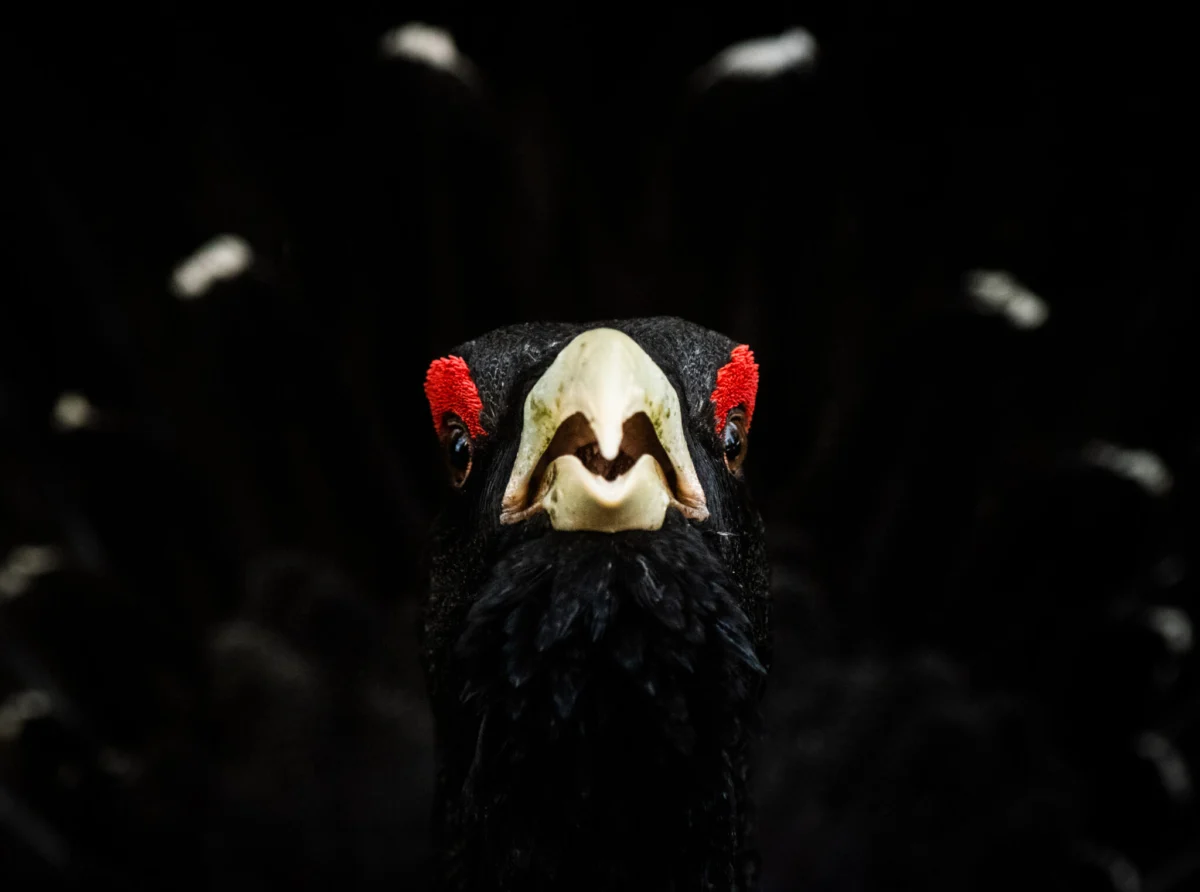
Nature photography, often perceived as a pursuit of capturing pristine landscapes and wildlife in their natural glory, is increasingly embracing a radical shift towards the extreme ends of photographic techniques. This deliberate move, characterized by the use of ultra-wide or super-telephoto lenses, dramatic blackout or whiteout exposures, extended shutter speeds, and unconventional compositions, is transforming the genre from mere documentation to profound emotional expression. By venturing to these technical extremities, photographers are finding that conventional distractions fade, essential elements are powerfully enhanced, and the narrative embedded within an image gains unprecedented strength, allowing them to convey the raw impressions and emotions experienced in nature more effectively.

Photography, at its philosophical core, is an endeavor to impose order upon a seemingly chaotic world. Nature, in its boundless complexity, frequently presents itself as an overwhelming tapestry of elements – dense forests teeming with countless trees, vast animal herds in motion, or the intricate plumage of a bird. For a photographer, the challenge lies in discerning and extracting hidden structures, patterns, and resonant moments from this apparent disorder, translating them into a cohesive visual form. This task, while sounding straightforward, demands immense skill and an acute artistic sensibility. The pursuit of presenting nature’s inherent chaos in a visually compelling manner has spurred many artists to explore the furthest reaches of photographic techniques. This approach enables them to craft a more potent narrative within their images, one that intimately communicates their personal emotions and profound experiences to the viewer.
The Quest for Emotional Resonance: Beyond the Visible Spectrum

In the immersive realm of nature, human experience and perception are shaped by a symphony of sensory inputs. Our senses work in concert, with scents, textures, and sounds often proving as vital to our overall impression as the visual stimuli. Capturing this holistic, multi-sensory experience presents an inherent and formidable challenge for still photographers, who are inherently limited to the visual medium to recreate an entire scene for their audience. It is a common lament among nature photographers to feel a profound sense of inadequacy when reviewing their images after a truly fantastic encounter in the wild. The photographs, despite their technical precision, often fail to evoke the same intensity of emotion, the full spectrum of sensory input, that was felt in the field. This common feeling underscores the need for techniques that can bridge the gap between objective reality and subjective experience.
To successfully recreate and immortalize the unique atmospheres and deeply felt emotions encountered in nature, a growing number of photographers are deliberately manipulating exposure to its extreme limits. This involves crafting dark, moody images through heavy underexposure, or conversely, producing bright, ethereal scenes achieved via significant overexposure. These techniques, widely recognized as "blackout" or "whiteout" photography, are not merely technical adjustments; they are powerful artistic tools designed to amplify and emphasize the emotional core of the experience.

Mastering Light and Shadow: The Power of Extreme Exposure
The conscious manipulation of exposure brightness exerts a profound influence on the expressive qualities of an image. Dark scenes, for instance, inherently carry a dramatic weight, and a blackout exposure can accentuate feelings of mystery, solemnity, and intense atmosphere. Conversely, bright images often convey purity, elegance, and lightness, making the whiteout technique an ideal choice for highlighting these qualities, whether they reside in the species being photographed or its surrounding environment. In this context, exposure transcends a purely technical decision, evolving into a sophisticated language for emotion. By making a deliberate choice about how light or dark to render a scene, photographers actively guide the viewer’s interpretation, steering them towards the specific emotions and sensations experienced during the original encounter.

Historically, the control of light has been central to artistic expression, from the chiaroscuro techniques of Renaissance painters to the high-key and low-key lighting popular in classical portraiture and cinematic works. In photography, the advent of digital sensors with increasingly sophisticated dynamic range has provided unprecedented control over light, allowing photographers to push the boundaries of exposure without losing crucial detail in shadows or highlights. While purists might argue for a "correct" exposure, the artistic community has increasingly embraced intentional over or underexposure as a legitimate means of creative expression. Critics often observe that such approaches challenge viewers to engage with images on a deeper, more emotional level, rather than simply processing factual visual information. The implication is a broader acceptance within the art world for nature photography that prioritizes subjective interpretation over strict documentary adherence.
Reshaping Reality: The Art of Focal Length and Perspective

Just as exposure dramatically shapes the emotional atmosphere of an image, perspective, largely dictated by focal length, defines the viewer’s relationship to the subject itself. Within a photographer’s extensive toolkit, focal length stands out as one of the most potent means to alter the perceived appearance of a subject in relation to its habitat. Each end of the focal length spectrum, from ultra-wide-angle to super-telephoto, tells a distinctly different story. The further one deviates from standard, "normal" focal lengths, the more pronounced and impactful the effect becomes. This inherent power can be strategically harnessed to reinforce the specific narrative a photographer wishes to convey.
In recent years, significant technological developments have dramatically expanded the possibilities available to photographers, particularly concerning extra-long focal lengths. The widespread adoption of mirrorless camera technology has led to the development of telephoto lenses that are not only optically superior but also more affordable and accessible to a wider range of photographers. Crucially, even mid-range telezoom lenses can now be effectively paired with teleconverters while largely maintaining usable autofocus capabilities and good image quality. This technological leap has democratized access to extreme focal lengths, opening up a new universe of perspectives for photographers. Industry data indicates a steady increase in sales of long telephoto lenses and teleconverters, coinciding with the rise of mirrorless systems, suggesting a growing trend towards specialized perspective manipulation in nature photography. This enhanced accessibility has allowed a greater number of photographers to experiment with and master these once-niche techniques.

Consider, for example, the seabird island of Hornøya in Norway, situated above the Arctic Circle. Here, a resilient population of European shags returns each breeding season while the island is still partially blanketed in snow. The conditions are harsh, yet the light is often breathtakingly beautiful as the shags establish territories, engage in elaborate displays, and bravely contend with late-season snowstorms. Photographers visiting such locations now leverage a vast range of focal lengths, perhaps from 24mm to an astonishing 1200mm (achieved with teleconverters), to craft a comprehensive visual narrative. This allows for environmental shots that place the birds within their dramatic, snowy habitat, detailed close-ups that reveal the intricate textures of their plumage and their intense expressions, and creative perspectives that might compress distant elements or expand foreground details, all contributing to a richer, multi-faceted story.
Capturing the Unseen: The Dynamic World of Shutter Speeds

At its very essence, photography is the art of capturing ephemeral moments and preserving movements that collectively tell a story. For many photographers, a particular allure lies in working with shutter speeds that can create images our own eyes are inherently incapable of perceiving, thereby revealing hidden dimensions of reality.
Long exposures, especially when combined with Intentional Camera Movement (ICM), unlock a veritable new world of photographic possibilities. Photographers are no longer confined to merely capturing the static landscape, colors, and shapes surrounding their subject. Instead, they can literally "paint" the image with the fluid structures and energy from the entire scene, all within a single exposure. The deliberate, unique camera movement for each ICM photograph renders these images truly one-of-a-kind and virtually impossible to precisely replicate. While this technique demands considerable patience and a steep learning curve, often resulting in a high number of "failed" images, the rare successes can be profoundly rewarding. The journey of mastering ICM is one of continuous experimentation and discovery.

Furthermore, the latest advancements in mirrorless camera technology have enabled the use of shutter speeds that were previously unattainable. In the era of Digital Single-Lens Reflex (DSLR) cameras, the practical limit for most systems was typically 1/8000th of a second. This often meant that extremely bright scenes, such as those directly facing the midday sun, could not be photographed without irrevocably blowing out highlights, losing all detail in the brightest areas. However, contemporary mirrorless cameras now offer electronic shutter speeds reaching several ten-thousandths of a second (e.g., 1/32,000s or even 1/64,000s). This exponential increase in speed proves invaluable when shooting in intensely bright conditions. While the human eye struggles to discern details in such dazzling scenes, the camera can now capture an intriguing image, revealing surprising nuances in both the sun itself and the backlit clouds surrounding it. This capability expands the creative palette, allowing for dramatic visual effects and unique perspectives on light and shadow that were once beyond the reach of conventional photography.
Redefining Visual Harmony: Breaking Compositional Rules

Composition in photography is traditionally governed by a set of well-established rules, and for very sound reasons. Adhering to principles such as the rule of thirds or the golden ratio often leads to images that are inherently balanced, aesthetically pleasing, and effectively guide the viewer’s eye. However, no artistic rule is absolute or immutable. A rigid adherence to these guidelines, while ensuring consistent and technically sound results, can inadvertently stifle creativity and lead to predictable, uninspired imagery.
The essence of composition, at its heart, revolves around achieving visual balance within the frame. A classic compositional guideline, for instance, dictates leaving ample space in the direction a subject is facing, implying movement or future action. Yet, if one were to slavishly follow this rule in every instance, they might overlook opportunities to create far more intriguing and powerful images. In such cases, another element within the frame, perhaps a strong leading line, a contrasting texture, or a compelling negative space, can skillfully create balance even if the primary subject is positioned unconventionally, perhaps intentionally off-center or partially cropped. For many contemporary nature photographers, composition has evolved beyond a strict checklist of rules and has become a more intuitive understanding of how all the disparate elements within the frame interact dynamically. In certain instances, an unconventional composition can dramatically amplify the impact and emotional resonance of an image. The continuous training of one’s eye to perceive these subtle interactions and relationships among elements within a scene is, arguably, one of the most critical skills for elevating one’s photography from merely good to truly exceptional. This approach challenges both the photographer and the viewer to look beyond superficial beauty and delve into the deeper, often more complex, visual dialogue presented.

The Engine of Innovation: Cultivating Unfettered Creativity
A prevailing norm in photography, particularly in professional circles, is to photograph with clear intention. Every decision, from the choice of lens and composition to the precise shutter speed, is expected to be made with a defined purpose and a pre-visualized outcome. In many contexts, this systematic approach is indeed a sound and effective rule to follow. Such intentionality often yields consistent, predictable, and technically balanced results, which ostensibly aligns with the goal of creating order from chaos. However, this very systematic approach, by its nature, can inadvertently constrain creativity and discourage the kind of playful experimentation that leads to groundbreaking work.

The counterbalancing act of embracing creativity purely for its own sake, devoid of a specific predetermined purpose or a clear final vision, is equally vital to artistic development. This approach liberates the photographer from the strictures of the systematic, allowing for a more fluid and exploratory engagement with the medium. Not every truly impactful photograph can be meticulously pre-visualized; the human eye and mind simply cannot predict the myriad coincidences, random occurrences, and serendipitous interactions that arise in the natural world—such as fleeting reflections, unpredictable movements, or transient atmospheric conditions. Yet, it is precisely these unpredictable elements that can introduce that elusive "missing piece of magic" to an otherwise ordinary image, transforming it into something extraordinary and memorable.
For the vanguard of nature photographers, the practice is fundamentally about relentless exploration and experimentation. What if a photograph of a static subject could be dramatically improved by introducing intentional camera movement? Or why not deliberately underexpose a scene when conventional wisdom would dictate overexposure? This adventurous approach, by its very nature, inevitably leads to a significant number of "bad" shots—a truth readily acknowledged by those who embrace it. However, amidst these numerous throwaways, moments of pure gold can emerge. Sometimes this manifests as a spectacular, singular image that redefines what’s possible. More often, it takes the form of a profound discovery—a new effect, a unique perspective, or an innovative technique that can then be further developed and integrated into the photographer’s evolving artistic repertoire.

Broader Implications and the Future of Nature Photography
When observing the work of innovative photographers, the images that truly captivate are often those that provoke questions about their creation, challenging the viewer to understand the "how." These are the images crafted by artists who possess the courage to disregard established rules, to employ techniques that others have not yet conceived, and to relentlessly explore the intricate interplay between the natural world and the capabilities of their cameras. Whether through the ethereal blur of long shutter speeds, the dramatic compression or expansive scope of extreme focal lengths, or the arresting balance of creative, unconventional compositions, the wellspring for capturing truly unique and impactful images lies in a potent combination of playfulness, rigorous experimentation, and an abiding, deep-seated interest in the natural world. In this evolving landscape of nature photography, curiosity is not merely a trait; it is arguably the most powerful creative tool a photographer can wield, driving innovation and pushing the boundaries of visual storytelling. The ongoing dialogue between technological advancement and artistic daring continues to redefine the genre, inspiring both creators and audiences alike to see nature not just as it is, but as it can be profoundly felt and interpreted.
